Emergency money for SLO County homeless services is about to run out. What happens now?
Emergency federal money allowed San Luis Obispo County’s homeless service providers to expand their programs during the COVID-19 pandemic, but that influx of money is running out — and now they’re wondering what to do next.
During the pandemic, Emergency Solutions Grant CARES Act (ESG-CV) funds were distributed to Continuums of Care — the local homeless service providers in each county — across the country, with the goal of keeping unhoused people safe from COVID-19.
However, Janna Nichols, president of the 5Cities Homeless Coalition, said these expanded services are on less stable footing now as the remaining funding streams start to dry up over the course of 2023.
With a “fivefold increase” in service requests since July 2022 — which Nichols likened to “drinking from a firehose” — service providers are left looking for ways to extend the vital programs started using ESG-CV funds.
“I can’t turn the spigot off,” Nichols said. “Unless I just turn my phone off and just don’t have anybody answer it, the need isn’t gonna go away.”
What makes ESG-CV funding unique?
Nationally, the Coronavirus Aid, Relief, and Economic Security Act (CARES Act) provided around $4 billion in supplemental ESG-CV funding, which functions differently from standard ESG funding that the Department of Housing and Urban Development uses to fund homeless service providers.
Kristin Ventresca, administrative services manager for SLO County’s Homeless Services Division, said ESG-CV funds mostly follow the same guidelines as regular ESG funds, but with some additional flexibilities and limitations to make it easier for grant recipients to use funds specifically for COVID-19 response.
In practice, those funds can be used for rapid re-housing for recently unhoused people, homeless prevention — including some limited rental aid — emergency shelter operations, street outreach, homeless management information systems and administrative costs, Ventresca said.
SLO County’s $11.5 million in total ESG-CV funding came in the form of allocations from both the California Department of Housing and Community Development and HUD, across two rounds of funding in June and October 2020, Ventresca said.
The Community Action Partnership of San Luis Obispo, El Camino Homeless Organization and 5CHC applied jointly for these funds, Nichols said, and allocated funding according to their needs.
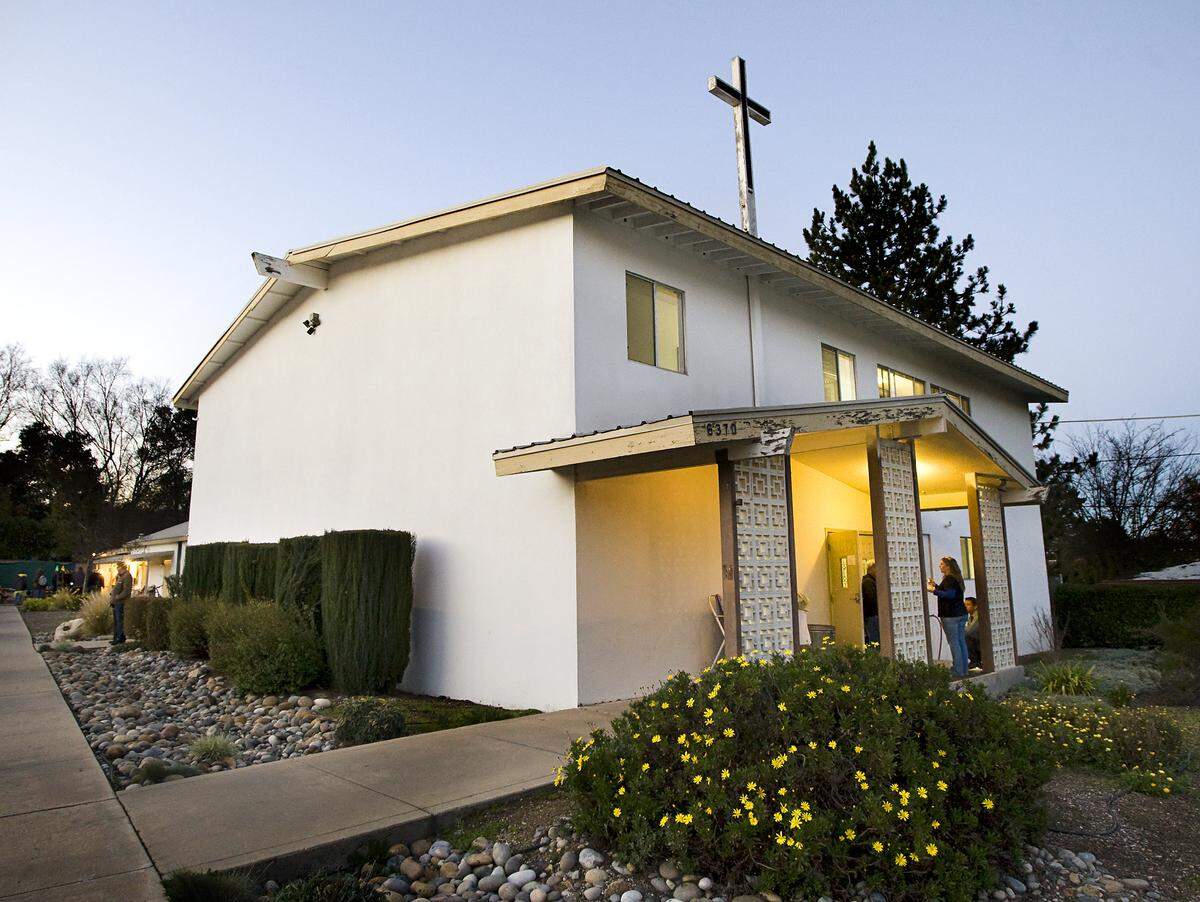
Ventresca said the approximate allocations included $5.5 million for emergency shelter renovations, operations and services, $1.4 million for street outreach activities, $2.5 million in rapid re-housing efforts, $1 million for homeless prevention activities and $1 million in support staffing for Homeless Management Information Systems.
Lahey said the funding CAPSLO received — about $1.09 million — allowed 40 Prado Homeless Services Center to expand its case management and outreach team to five members, which helped them expand their reach.
Those funds also supported hazard pay raises for staff during the most dangerous parts of the pandemic, a benefit that has continued into 2023, Lahey said.
Other CAPSLO efforts, such as the Oklahoma Avenue Safe Parking site, also rely on ESG-CV funding, Lahey said.
“As we lower our barriers and work with more harder-to-reach people, that incentive pay has been critical,” Lahey said. “It’s allowed us to add $2.31 an hour to all of our staff here.”
That investment led to improved outcomes that got homeless services in SLO County “closer to the baseline operating capacity” that Lahey said the county needs.
“We can’t do that without sustainable funding that we can rely on year over year to actually employ people with very specific skill sets to get some people out of homelessness,” Lahey said.
End of funding threatens pandemic-era service expansions
With the last portion of ESG-CV funding awards expiring in September, Lahey said CAPSLO hopes to continue to support its expanded staff and programs via alternate funding streams such as American Rescue Plan Act dollars, California Advancing and Innovating Medi-Cal funding, California Emergency Solutions and Housing funding, California Homeless Housing, Assistance and Prevention grants and increased fundraising initiatives.
As it stands, Lahey said 40 Prado is looking to avoid any staffing cuts from the end of ESG-CV funding.

Decreases in staff — particularly the expanded case management team — would result in a “complete clog” of the system and lead to longer wait times for homeless individuals needing case management.
“Overall, it would be really demoralizing to go back to only having one or two case managers — for staff and for participants — because we’re heading into addressing this severe crisis in the five-year plan with the county,” Lahey said. “It would be really hard to hit the goals that we have if we are just struggling to get back to baseline for a while.”
Farther north, ECHO similarly used its funding to expand its staff, president and CEO Wendy Lewis said.
Lewis said the staff grew from six people operating one shelter to 22 staff operating two shelters over the course of the past two years, thanks to the ESG-CV funding.
The shelter was also able to purchase two vehicles, which Lewis said were “instrumental” in expanding the range of ECHO’s outreach efforts. The shelter went from doing next to no outreach to hiring two outreach case managers.
“Prior to adding what we call an ‘outreach case manager,’ you physically had to get yourself to ECHO in order to receive services and some of these direct aid supplies,” Lewis said. “With those new vehicles and adding outreach to case management, our team was able to go out through North County and even into Cambria and bring supplies during (COVID-19).”
That direct aid was also funded by ESG-CV funding and included masks, hygiene kits, hand sanitizer, food and education on COVID-19 and vaccinations, Lewis said.
Being able to meet unhoused people where they were living allowed ECHO to establish stronger relationships, which made potential clients more receptive to engaging with services.
“We’re worried what’s out there a year from now, what decisions will be having to make,” Lewis said. “At ECHO, we always see the community come up alongside us when we ask (for help), and we’re hoping that continues.”
So far, Lewis said she’s grateful for an increase in ECHO’s number of monthly donors, along with continued aid from the city of Paso Robles, which made a commitment of $220,000 for two years in a row starting in 2020 to support the Paso Robles shelter at the former Motel 6.
ECHO chief operations officer Mimi Rodriguez said the shelter organization received just under $1 million in total between California and federal ESG-CV funds, and has around $100,000 left to spend.
“In terms of long-term costs for spending down, it’s things like our hazard pay for staff, because at both sites they come in contact with so many people still, and COVID is still a very real issue that we’re dealing with in our population of unhoused people that we’re serving,” Rodriguez said.
Funding ‘cliff’ on the horizon for some providers
ECHO wasn’t the only homeless service provider in SLO County to expand its shelter capacity.
The 5Cities Homeless Coalition used some of its $4.8 million in total ESG-CV funding to open its Cabins for Change program in Grover Beach, which Nichols said was created as a direct response to the COVID-19 pandemic.
Nichols said the ESG-CV funding “pushed (5CHC) to grow in ways that I would never have imagined,” but she said she shared Lahey’s concerns about the ongoing reliance on one-time funding.
“Our new cabin program is a case in point,” Nichols said. “I have taken a leap of faith that after the middle of 2024 — so, in about a year — I’m still gonna be able to find funding to operate it.”
Between expanded outreach, housing case management and homeless prevention, Nichols said service providers like 5CHC are doing more to meet demand for services, even as they face a fundraising “cliff” once ESG-CV funds run out.
“Are we keeping people housed? Yes,” Nichols said. “Are we moving people into housing? Yes. Are we finding people on the streets and moving them into housing? Yes. Are we safely sheltering people? Yes .... But I think if you ask anybody in the community, they’ll say we have a problem. So is it sufficient? I don’t know.”
Though Lahey said the ESG-CV funding was useful to service providers across SLO County, more sustainable, reliable long-term funding streams would be a better fit for the county’s homeless service providers’ needs.
Lahey — who previously worked as a leader at Los Angeles Family Housing and Skid Row Housing Trust — said establishing a local bond measure similar to Proposition HHH in Los Angeles would give homeless service providers more reliable funding for years to come.
“That would require political will at the local level to commit to addressing this issue, rather than just cobbling together all the various grants that we have,” Lahey said. “That’s a calculation that is above my head.”
This story was originally published February 17, 2023 at 5:30 AM.