It’s baaa-ack: Storm unearths carcass of whale buried on SLO County beach
The winter storm that recently hammered San Luis Obispo County eroded the sandy grave of a whale carcass that was buried on the beach in Cayucos in July.
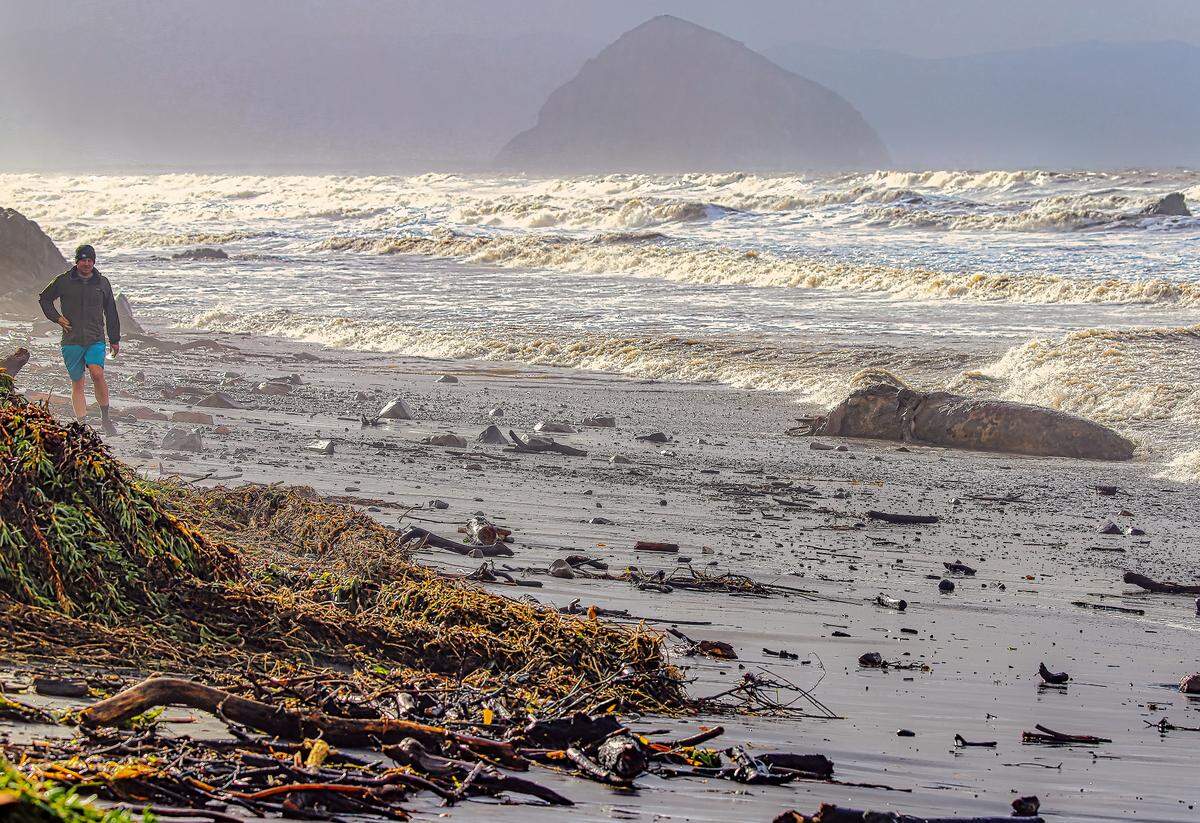
Cayucos locals watched as the storm pushed a piece of the whale carcass up the beach and into a tunnel that runs under Highway 1 near the Old Creek Road intersection, photographer Danna Dykstra-Coy told The Tribune in an email.
Surfers walking through the tunnel discovered the whale had washed almost all the way to the Ocean Avenue opening of the beach, Dykstra-Coy said.
Caltrans has jurisdiction over the tunnel, and workers came out on Jan. 8 to assess the “precariously placed, smelly carcass” to see if moving the whale was even a possibility, she said.
But then, the waters of Willow Creek — which run through the tunnel where the whale was located last weekend — rose considerably due to the Jan. 9 storm.
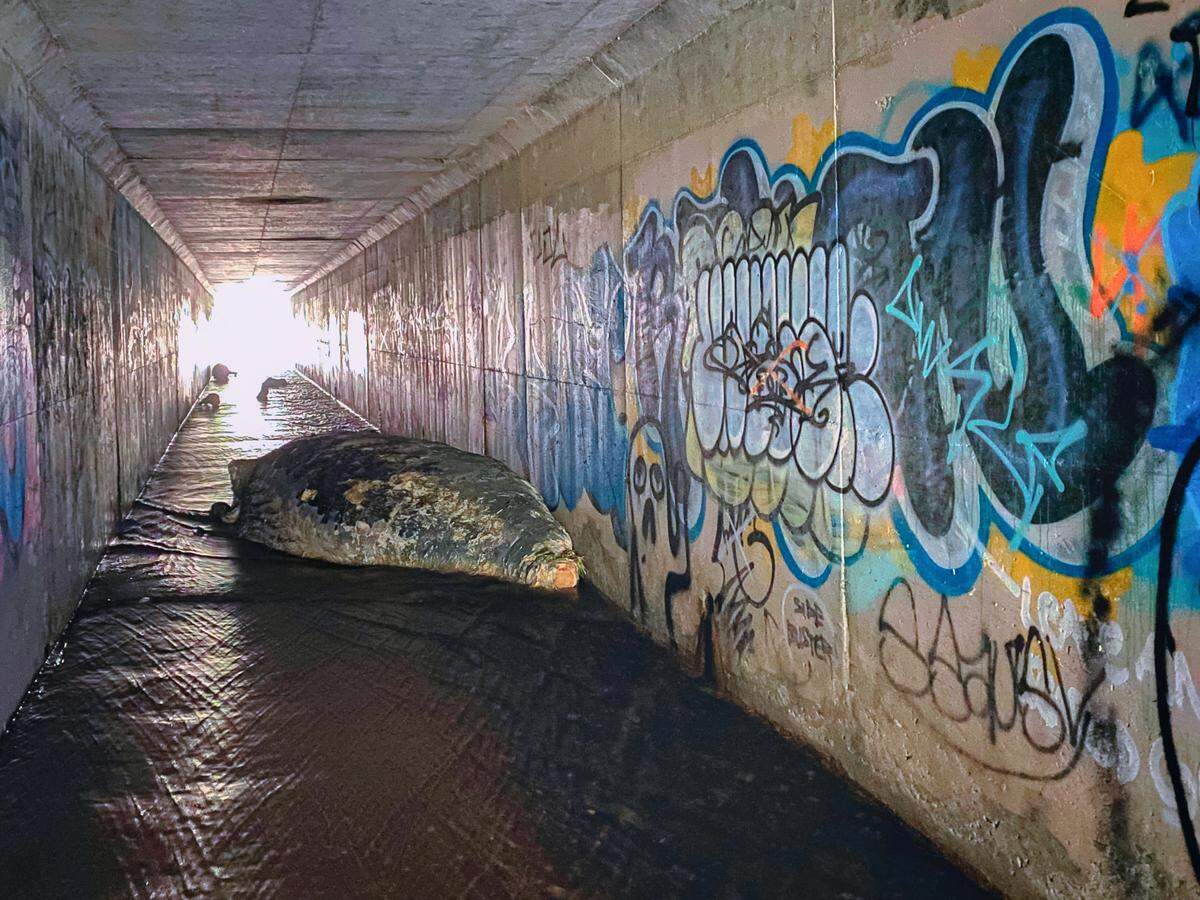
The whale eventually washed out from the tunnel, through the creek and back to the ocean shore.
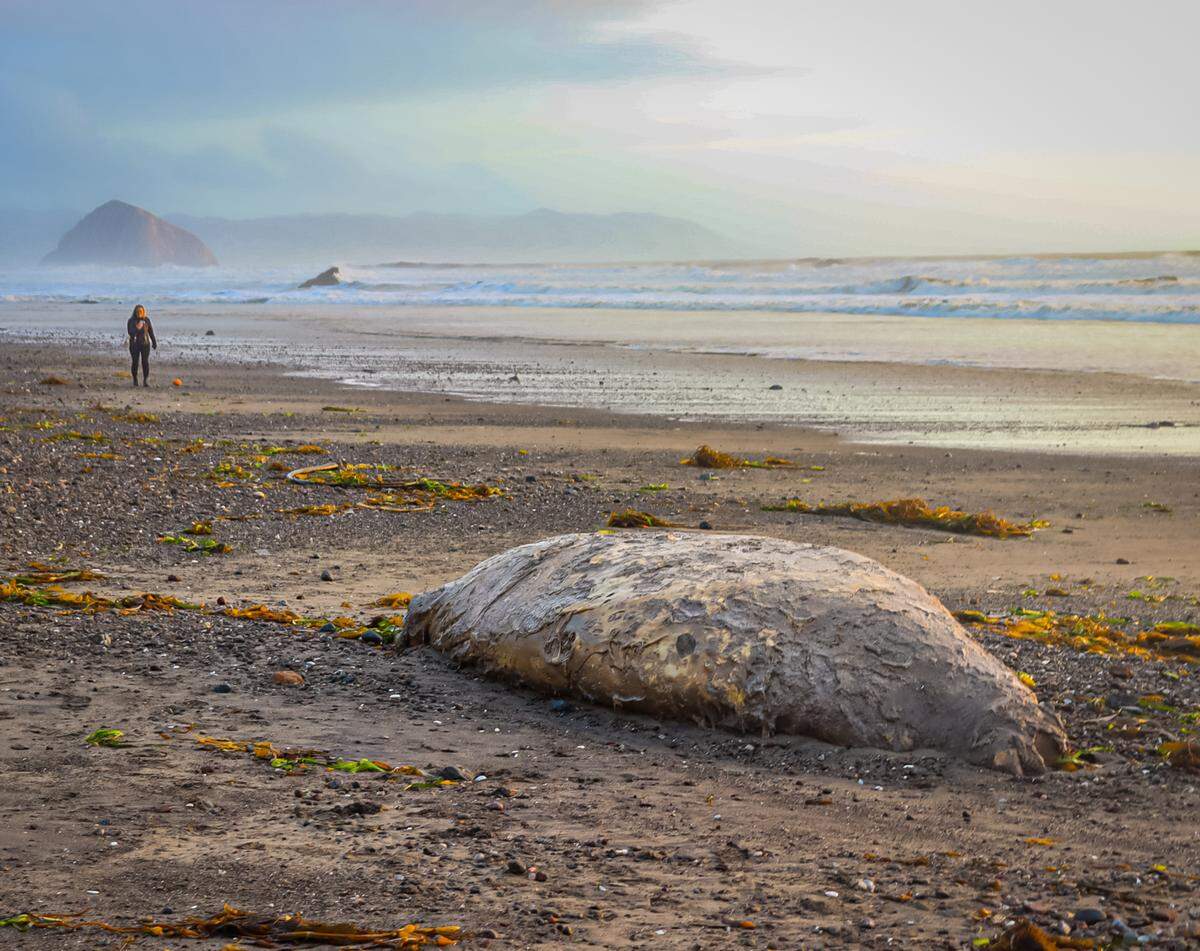
By Jan. 10, the decomposing piece of the whale was rolling around in the high tide not far from where it was originally buried on the beach.
“It’s already getting attention from beachwalkers and surfers,” Dykstra-Coy said.
Eric Hjelstrom, sector superintendent of Morro Bay for California State Parks, said if the whale indeed lands on a State Parks controlled beach, they will handle the remains.
But due to the weather and strained resources State Parks won’t be able to fix this whale of a problem immediately.
“We have a lot going on,” Hjelstrom said.
Why was the whale carcass buried at SLO County beach in July?
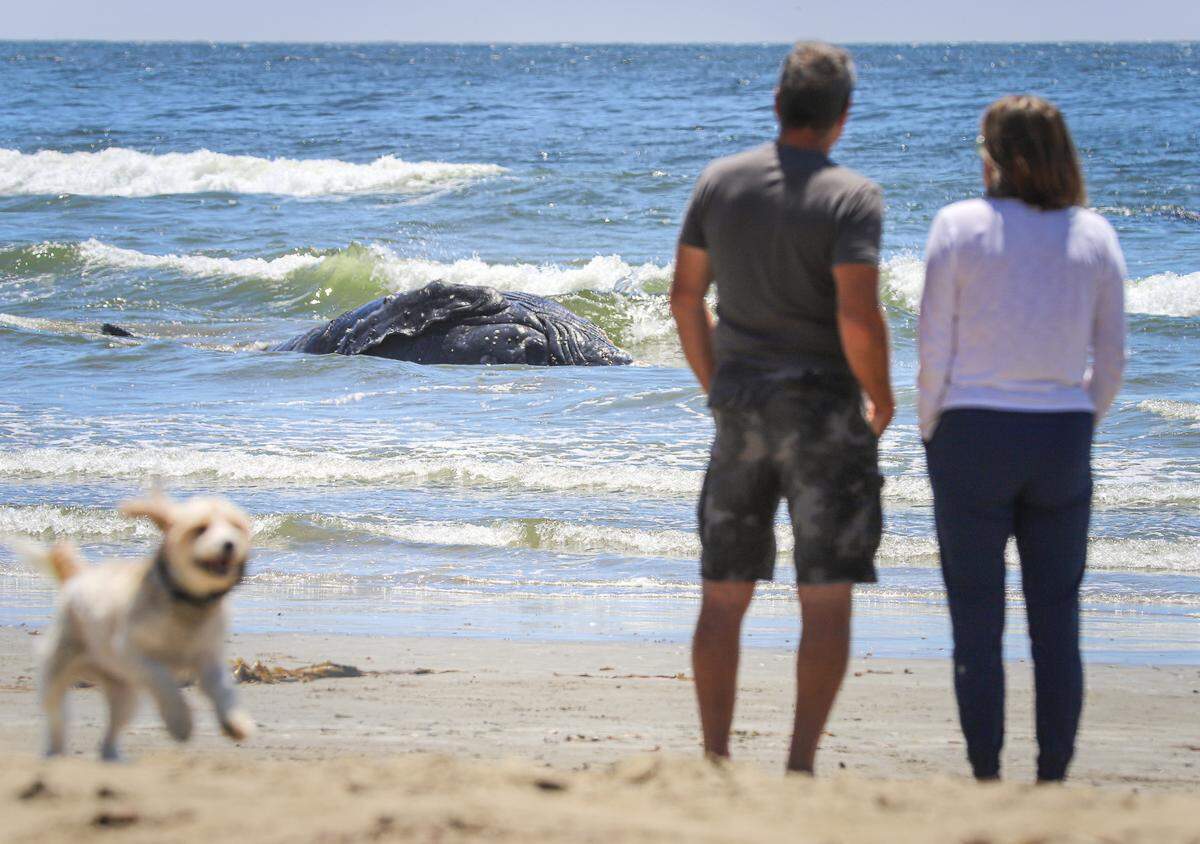
In July, the dead humpback whale washed ashore in Cayucos along Montecito Beach, near Old Creek Road, The Tribune reported at the time.
When the whale carcass was deposited on the shore this summer, State Parks officials consulted with the Department of Fish and Wildlife about the best way to remove the whale’s remains from the beach.
“We had two options: One was to haul it away and the other was the bury it in place,” Hjelstrom said.
Hauling the carcass back to the ocean would require moving the decomposing body using a boat. State Parks doesn’t have boats and would have needed to partner with another agency to move the whale’s body.
Experts agreed the best option was to bury the decomposing whale carcass near where it was discovered, he said.
“I don’t even know where you haul a dead whale anyway,” Hjelstrom said.
There was only one contractor willing to take on the smelly job. By the time they were ready to bury the whale, it had decomposed to the point where it was in pieces, he said.
“I know there was a lot of people who thought that burying it was the wrong choice, but we have to work within the limitations that we had,” he said. “It’s probably what’s going to end up happening again.”
Hjelstrom said that, while this is probably the same whale carcass the agencies buried this summer, nobody has said definitively that it is the same whale.
“I’d be surprised if this whale is not the only stinky thing floating on the beaches right now,” he said.
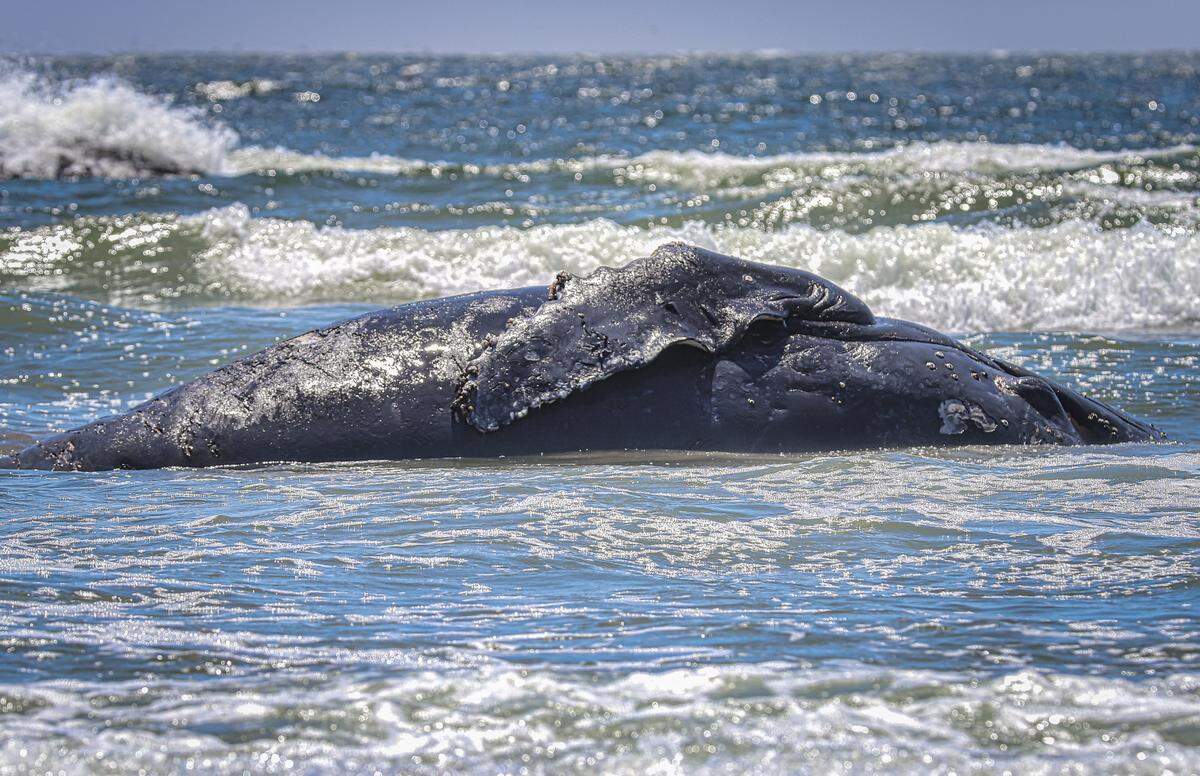
What’s going to happen to the whale carcass now?
The whale’s disinterment comes at a bad time for State Parks, which has been busy with storm-related calls, Hjelstrom said.
Since the “atmospheric river” of storms isn’t abating anytime soon, it makes no sense to rebury the piece of whale if it risks being unearthed again.
“I had heard in the first wave of storm a piece had daylighted,” he said. “Now we’re through wave No. 2 and I’m hearing rumors it’s out on the beach somewhere.”
Another problem? “You’re not going to find a backhoe in the county for another week or two,” he said.
If the whale carcass floats away from the State Parks beach and into another part of Cayucos, it could become a jurisdictional issue.
“We have to wait until we can get to it, whoever ‘we’ is,” he said. “It’s going to get handled. It’s probably going to end up getting buried again.”
This story was originally published January 11, 2023 at 3:15 PM.