Los Osos won’t become a city — here’s what the community will do instead
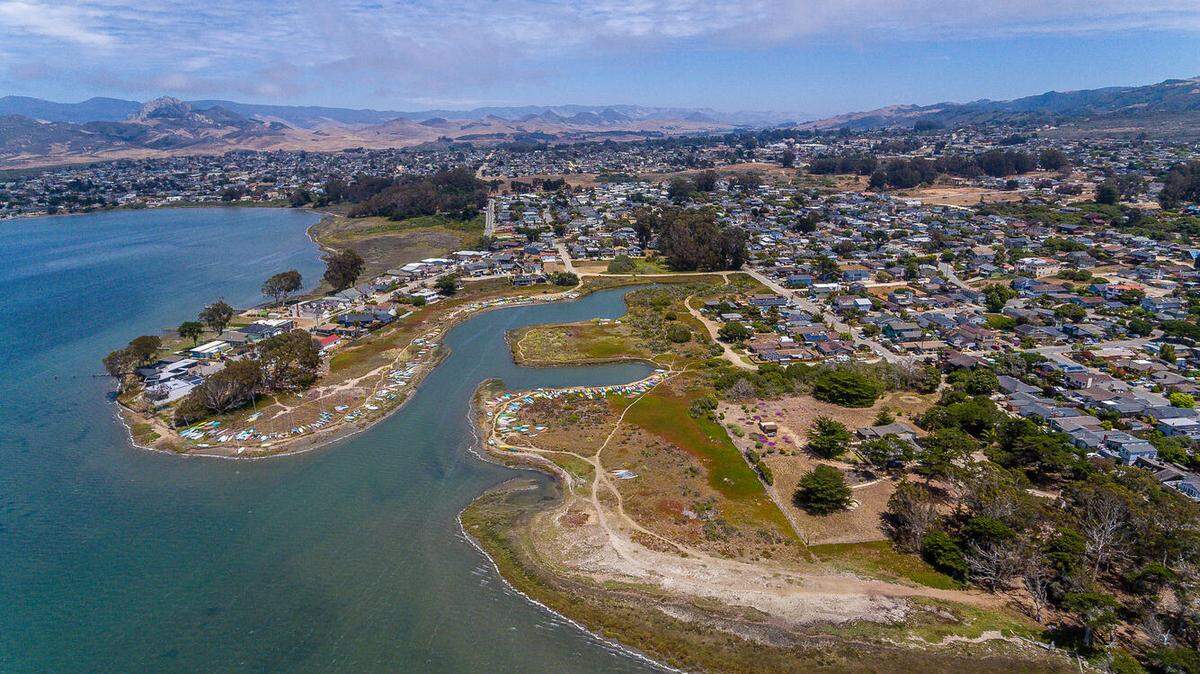
Los Osos will not take any steps to become a city, the Community Services District Board of Directors decided at its meeting on Thursday, after the Committee to Incorporate Los Osos had asked the board to consider the issue.
If Los Osos became a city, it would no longer be governed by the San Luis Obispo County Board of Supervisors. Instead, it would have a City Council to make decisions about everything from land use to city goals.
This would give the community greater autonomy over its funding and problem solving, committee founder Jon-Erik Storm said.
“I think the decisions we make will have more legitimacy if they’re made by locals,” Storm told The Tribune.
Folks at the meeting agreed that Los Osos needed more support from the county, but didn’t think incorporation was the solution.
“I want to find a way to work with the county to get what we need, what we’re deserving of. But maybe without this avenue,” CSD Vice President Charles Cesena said of incorporation.
Instead of pursuing incorporation, the board voted unanimously to direct staff to find ways for the CSD to collaborate with the Los Osos Community Advisory Council (LOCAC) to advocate for the community’s needs at the county.
“We’ve got a lot of things going on in this community that are positive, we just aren’t well-coordinated yet,” CSD General Manager Ron Munds said, mentioning groups like LOCAC, the CSD, the Rotary Club and the Kiwanis Club.
The community could use this group to ask for a greater share of funding to allocate towards projects like the dog park, the board said.
Ten Los Osos residents who spoke at the meeting said that they didn’t support the unincorporated area becoming a city, mostly because of the cost.
But one member of the Committee to Incorporate Los Osos said she thought becoming a city would give the community more autonomy over funding. Kristin Horowitz said she’s concerned that the county doesn’t have more funding to give to Los Osos after it lost money in 2020 along with other local governments across California.
“We can demand things. We can castigate the county staff and castigate the supervisors and say ‘you need to do something.’ They don’t have the resources to do it,” Horowitz said.
Still, Horowitz said she will support Los Osos’ efforts to form a group to negotiate with the county.

What Los Osos would need to become a city
If Los Osos became a city, the community would need to provide services that the county currently manages. This includes tasks from starting a Planning and Building Department to delivering law enforcement services — either by starting its own police department or forming a contract with the SLO County Sheriff’s Office, according to the staff report.
Los Osos would need to prove that it has the revenue to provide “public services and facilities and a reasonable reserve” for at least three fiscal years after incorporation in order to become a city, the staff report said.
To meet these requirements, Los Osos would need to come up with another $1.7 million in tax revenue per year, which breaks down to $118.04 per resident in addition to their current rate of taxes, according to the staff report.
At the meeting, community members said they don’t want to pay the extra taxes.
Los Osos resident Julie Tacker said that the bump in taxes would fund the same level of service that the county already provides, not produce a greater level of service.
“We have to pay more for the same,” Tacker said. “I don’t want to do that.”
Los Osos residents are already struggling with inflation and aren’t prepared to pay higher taxes, Tacker said.
“We all are suffering with the grocery store right now,” Tacker said. “That loaf of bread is more money than it was last week, and we only get a loaf of bread.”
Resident Vita Miller said she doesn’t see how Los Osos could generate enough property tax revenue to cover the costs of city services — including street maintenance, supplying building permits, construction regulations and oversight, police and managing parks and recreation.
A lack of groundwater and strict building regulations from the Coastal Commission limits Los Osos’ ability to grow and build a larger property tax base to fund all of these services, Miller said.
Marshall Ochylski, a member of the CSD Board of Directors, noted that Los Osos would also be required to fund pensions for city staff, a hefty cost that put the City of San Luis Obispo millions of dollars into debt, according to a 2019 Tribune article.
It’s not realistic for Los Osos residents to pay higher property taxes for incorporation, former SLO County Administrator David Edge said. Instead, the community would need a “big box store” like Walmart to move in and generate “a huge amount of sales tax” to help pick up the tab, Edge said, an idea most Los Osos residents are opposed to.
“That isn’t going to happen in Los Osos,” Edge said.

Alternatives to becoming a city
Instead of becoming a city, resident Andrea Lueker suggested that community members form a group to advocate for Los Osos’ needs at the county level.
Los Osos used to reside in District 2, represented by Bruce Gibson. The new district map, however, pushed Los Osos into District 5. Los Osos was supposed to vote for a new District 2 supervisor during the November election but now won’t be able to vote for a supervisor until 2024 when District 5 is on the ballot.
According to the Committee to Incorporate Los Osos, this is a problem because the community no longer has a representative that’s directly accountable to them on the Board of Supervisors.
Unlike the Committee to Incorporate Los Osos, Lueker didn’t think redistricting was that significant of an issue for the community.
“Even with a designated supervisor, he or she is only one vote, and it takes three votes to get anything done,” she said.
Any initiative Los Osos residents want to pass would require the community to convince not just its elected supervisor, but also two others — something the community can still do regardless of what district it’s in, Lueker said.
“I would strongly recommend that we rally with the CSD and other prominent local groups to get what we want,” Lueker said.
The board supported this idea, and Munds, the CSD general manager, will return to the next CSD meeting with a report on ideas for collaborating with other community groups to negotiate with the county.
Storm, the founder of the Committee to Incorporate Los Osos, said that he’s satisfied with the decision.
“You have to do things a little bit at a time,” Storm said. “Advocating for the community and getting everybody together, that’s fantastic.”