5-story development would bring 105 units of affordable housing to downtown SLO
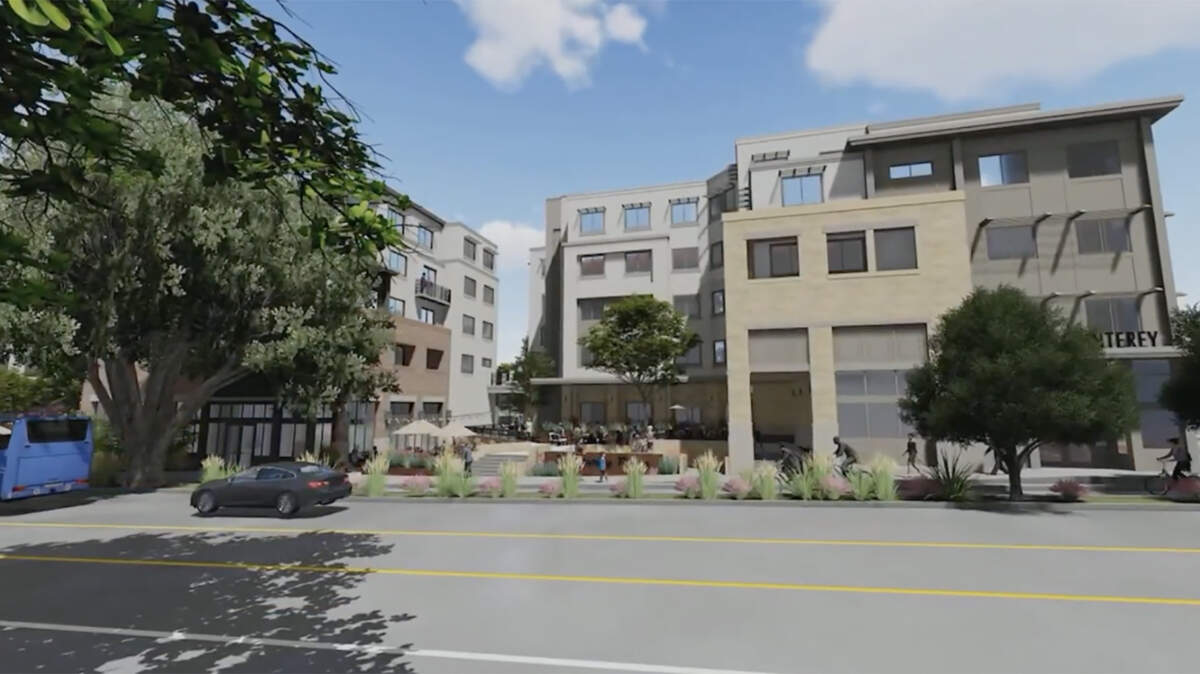
The city of San Luis Obispo could get a boost in its affordable housing stock following the Planning Commission’s approval of a five-story project on upper Monterey Street.
At Wednesday’s meeting, the Planning Commission voted unanimously — with one abstaining vote — to approve a draft version of a new affordable housing-focused, mixed-use development in the heart of SLO.
The 86,180-square-foot development would provide 105 affordable residential units, 56 of which would be set aside for senior housing plus one non-affordable unit for the property’s manager, SLO housing coordinator Kyle Bell said at the meeting.
The project, which is being developed by the Housing Authority of San Luis Obispo (HASLO) and RRM Design Group, still has a ways to go until ground is broken, but it has cleared the seventh of 12 steps for residential developments.
HASLO executive director Scott Smith said the project will allow the city to meet several of its affordable housing goals while helping HASLO reduce its wait lists for available affordable housing.
“Every single (HASLO) program has a long waiting list,” Smith said at the meeting. “We get lots of calls of people that are literally in tears because they’re in a tough situation, and the best we can tell them is maybe we can put you on a list, because some of the lists are closed because they’re just too long.”
Because the project is still in the early stages, no unit prices or income limits have been set at this time.
What will the project look like?
The project is located at 1422 Monterey St. and would run the length of the block between California Boulevard to Pepper Street, including the building that currently houses Central Coast Brewing.
Bell said the brewery will be relocating to 1701 Monterey St, which was approved by the City Council on Sept. 20, ahead of the demolition of the buildings currently located on the site.
“We have been working with the other businesses to find new locations over the last two years. However, since there is no assurances of when HASLO will acquire funding, there is no current schedule for when the existing structures will be demolished,” Bell told The Tribune in an email. “So tenants may continue to occupy the property under their current lease agreements, which may also be extended under the discretion of the property owner (HASLO).”
The development would also include a three-story parking garage for residents’ vehicles, Bell said, with three separate entrances to each level of the garage on Monterey and Palm streets to save internal space.
The project also calls for 4,306 square feet of commercial space on the first floor of the building, Bell said, which will stand 54 feet tall when completed.
As an affordable housing development, Bell said, the project is also entitled to three regulatory concessions to allow for easier construction and better use of space.
Those concessions were used to increase the height of the structure from 45 feet to 54 feet, reduce the number of parking spots in the garage from 100 to 95 to save space and money, and reduce the amount of bike parking to 0.5 units per senior housing unit to save space.
RRM architect David Gibbs, one of the project’s designers, said placing the project in the heart of SLO’s downtown area was important because of the increased access to the city’s public transportation system.
Gibbs said the development will include a new bus stop.
“This is really important for affordable housing to be able to have access to to bus circulation, and we’re really thankful to provide this bus stop for the city,” Gibbs said.
Additionally, as an affordable development, the project was able to forgo certain density laws, allowing the developers to reduce setbacks around the perimeter of the property from 10 feet to 3 feet.
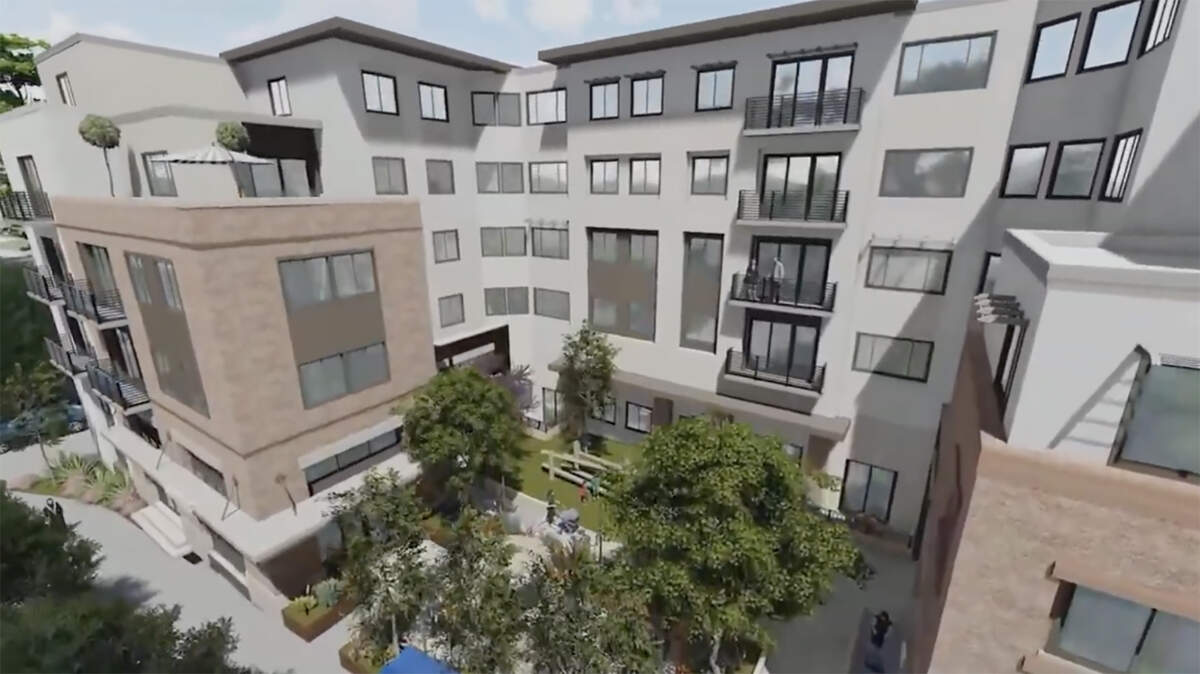
The most recent version of the project that the Planning Commission approved also adopted several recommendations from the Tree Committee and Architectural Review Commission, Bell said.
Currently, 54 trees are growing on the property, and the project will take steps to maintain that number.
Two of the existing trees will remain, while the other 52 will be removed for construction and replaced with smaller trees at varying stages of development.
Importantly, the development will satisfy around 25% of the city of SLO’s low-income housing unit requirement mandated by the city’s Regional Housing Needs Assessment (RHNA) goals, Bell said.
The city is required to meet its RHNA housing goal of 1,735 homes of varying income levels by 2028, Bell said, and has already fulfilled its goals for new market-rate housing.
“We see this project as really fitting in with a number of the city’s goals as well as values, and one of the values that comes to my mind is this diversity, equity and inclusion goal or value that the city has formally adopted,” Smith said. “There have been a lot of really neat things built and developed downtown, but not a lot for people.”
This story was originally published November 18, 2022 at 8:00 AM.