SLO County housing development could add 1,289 homes. Why are neighbors opposed to it?
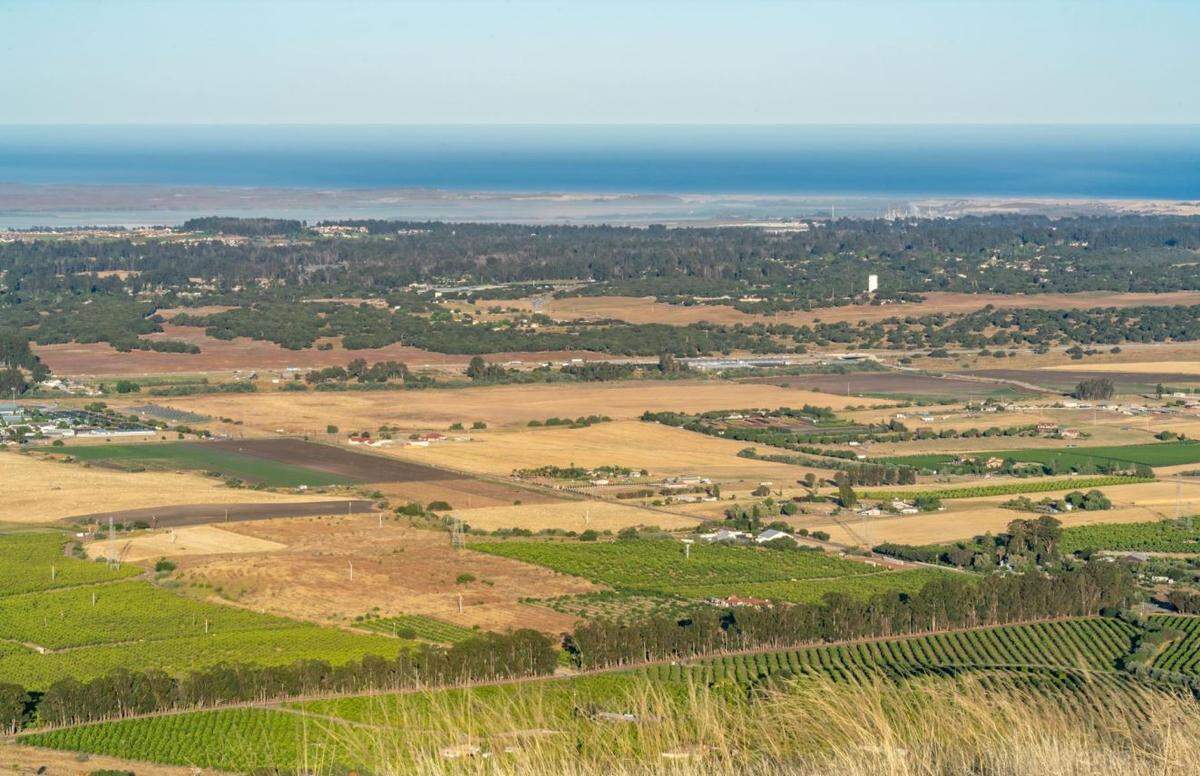
Just off Highway 101 in Nipomo, rolling fields and groves of oak trees stretch for acres.
These fields, which are bordered by the residential neighborhoods of Hetrick Avenue and Pomeroy Road, could become the site of the Dana Reserve housing development.
Led by Nick Tompkins, local developer and owner of NKT Commercial, the project would add some 1,289 homes and thousands of new residents to Nipomo.
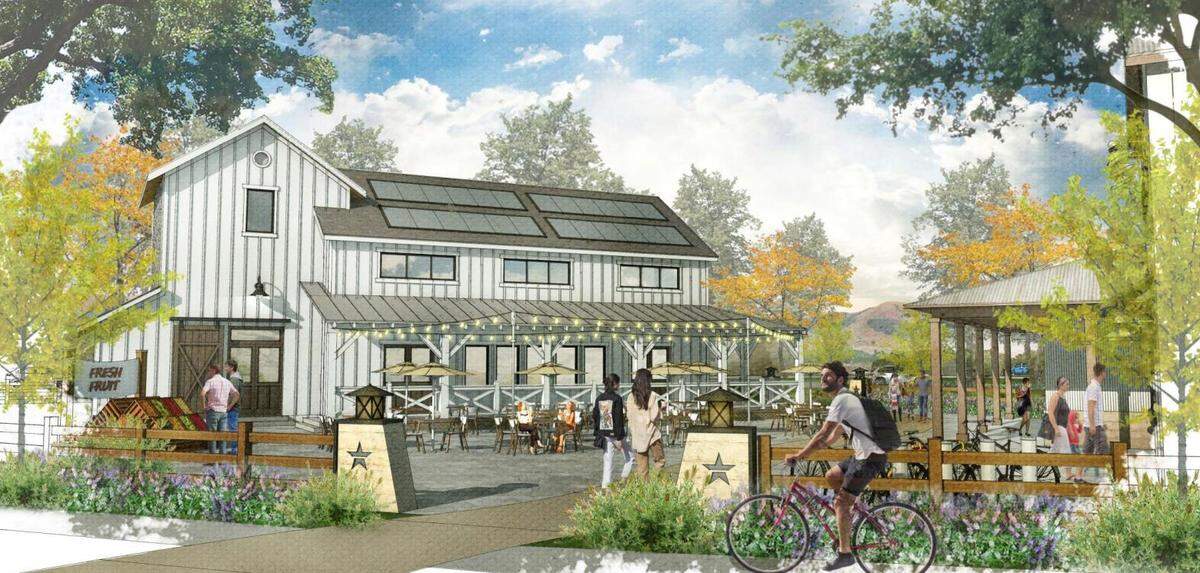
Tompkins said he wants to create an affordable housing development with all the perks of a resort.
His goal? “To create a community within a community,” the fifth-generation Nipomo resident said.
The earliest NKT Commercial would break ground is in 2024 to start connecting the frontage road to Willow Road to remove traffic from Tefft Street. The rest of the project will take about 10 years to build, Tompkins said.
With ambitious projects of that size, there are sure to be supports and detractors. Dana Reserve has its share of each.
Longtime Nipomo resident Cees Dobbe supports the project, mostly because of the market-rate housing it will provide the community.
Too often, Dobbe said, young people from Nipomo are forced to leave the area due to high housing prices and limited availability.
“I have three kids that were born and grown up here. They need a place to live,” Dobbe said.
Meanwhile, many residents of the neighborhoods that border the Dana Reserve property have pushed back against the development — expressing concerns about plans to remove thousands of oak trees and the potential impact of traffic on residential roads.
Signs sponsored by the Nipomo Action Committee urging Nipomo residents to “Say no before it’s too late” dot the front lawns of large ranch-style homes.
“Is it a fit for Nipomo?” committee co-chair Alison Martinez asked. “That’s kind of the question you got to ask yourself.”
What will the development look like?
According to Tompkins, the proposed 288-acre housing development — which is located on a privately owned plot of land — would feature a mix of multi- and single-family homes and affordable housing units.
Proposed amenities include space for commercial business, a hotel, and parks and recreation areas. The development could also feature a Cuesta College satellite campus and a fire station, which were both reserved plots of land by the developers.
Multifamily townhomes and apartments — the least expensive homes in the development — will account for 383 units spread over two of its 10 neighborhoods, with each unit between 1,400 and 1,700 square feet.
Four of the neighborhoods will feature about 419 single-family detached homes on lots ranging from 4,000 and 5,000 square feet.
The multifamily townhomes, apartments and the 290 single-family homes will retail at about $470,000 to $670,000 each, Tompkins said.
The remaining three neighborhoods will feature about 357 single-family homes on lots between 4,500 and 10,000 square feet. These will be the most expensive units in the development, Tompkins said, costing $1 million to $1.2 million.
Tompkins said they have not yet determined how large the actual homes will be.
“The lot size will determine the square footage of the home,” he said. “We have built-in generous setbacks. Having the majority of neighborhoods with smaller lots is one of the ways to keep the home prices in the ‘missing middle’ range. This was done intentionally.”

Tompkins said the development will also feature a neighborhood of 75 to 85 homes for very low-income workers operated by People’s Self-Help Housing of San Luis Obispo. Tompkins sits on the nonprofit organization’s board of directors.
“A full two-thirds of the project will either be extremely affordable through People’s Self Help Housing, or hitting the missing middle,” Tompkins said.
That means most of Dana Reserve’s homes would be priced at $500,000 to $700,000, he said.
Local residents will be given preference over other buyers.
Kenneth Trigueiro, CEO of People’s Self-Help Housing, said developing homes at Dana Reserve from the start could save his organization “a lot of pre-development dollars” and eliminate the cost of buying land and getting the right approvals.
“Our normal process usually takes us a lot longer — and takes a lot more resources of our own — to get to the point where (Tompkins) will sort of jump us to, if you will,” Trigueiro said.
The People’s Self-Help Housing units would be priced at different income levels, based on the area median income (AMI), ranging from households making between 30% and 60% of that amount, Triguero said, to cater to the income needs of the applicants.
“We go as low as we can (on AMI pricing), but it’s kind of a Rubik’s Cube of what those different income levels can be to still make a feasible project,” Trigueiro said.
The units in Dana Reserve would be People’s Self-Help Housing’s first units in Nipomo, he said, noting that the organization has around 2,000 assisted housing units in service across the Central Coast and more than 12,000 people on its waitlist.
“(Young families are) usually wanting to find homeownership opportunities, but there just aren’t any, so that actually exacerbates the affordable housing crisis,” Trigueiro said. “That’s another big pro: that we could add to the price points that are just above where people that we’re trying to serve find themselves right now.”
How proposed development impacts water
Construction of the Dana Reserve project could have a positive impact on Nipomo’s water situation.
During the 1990s, Nipomo overpumped its groundwater basins — causing depressions in the ground below the community, according to Nipomo Community Services District general manager Mario Iglesias.
In 2008, a California court ordered the NCSD, hundreds of property owners and organizations to import a certain amount of water each year from Santa Maria to supplement its groundwater, with the amount increasing over time, Iglesias said.
By 2025, Nipomo must import 2,500 acre-feet of water a year from Santa Maria, Iglesias said.
Nipomo also must pump about 600 to 700 acre-feet of water from its five wells per year “to keep them in a healthy state,” Iglesias said. If the water sits for too long, it can become contaminated with nitrates, he said.
As a result, Nipomo will be required to use to use about 3,100 to 3,200 acre-feet of water in 2025.
By 2025, Iglesias expects demand to increase to 3,125 acre-feet if the project is built, which would help Nipomo reach its water consumption goals.
In addition, sewer costs would decline by about 30% for existing rate payers, and water rates would remain about the same, according to Iglesias.
If the development isn’t built, water rates will increase by about 8% for Nipomo residents, he said.
According to Tompkins, the Dana Reserve project would pay more than $30 million in water and sewer connection fees and $4.5 million in capital charges.
It would make other infrastructure contributions such as fiber-optic internet connections, which Tompkins said are rare in Nipomo due to the community’s sprawling layout.
Nipomo housing development would require removal of oak trees
Martinez and Nipomo Action Committee co-chair Kelly Kephart live in the neighborhoods bordering the Dana Reserve property.
They founded the group with the aim of finding an alternative to the development that addresses their concerns before it gains SLO County approval.
They’ve started a Change.org campaign opposing the development in its current form and passed out petitions. Together, the petitions have garnered more than 2,400 signatures so far.
In order to make room for the 1,289 homes, roads, parks and amenities, Kephart estimated, around 4,000 native oak trees would need to be removed from the property.
“The main issue with this (project) is how many houses are packed in there,” Kephart said. “Because of that, we have to cut down 4,000 oak trees. There’s really no attempt in this development to build around them.”
The project will remove about 3,376 coast live oaks on the property, depending on which design the county chooses, according to Jocelyn Brennan, a spokesperson for the Dana Reserve project.
NKT Commercial must also get a permit from the county to remove the trees, according to an ordinance designed to protect oak woodland.
Tompkins said he will mitigate the loss of these oak trees by planting about 1,500 new oak trees on the property, and conserving a tract of oaks on a ridge several miles from the development. He will also preserve 1,552 oak trees already on the property.
The 400-acre conservation plot is home to 10,600 to 14,000 oak trees, Tompkins said, and will be permanently preserved by a conservation easement managed by a local nonprofit organization — although he isn’t ready to announce which one yet, he said.
Neil Havlik, a member of the San Luis Obispo County chapter of the Native Plant Society, doesn’t agree with Tompkins’ conservation methods.
“We are not opposed to the project, or a project,” Havlik said. “We are opposed to what appears to us to be an unnecessary and overly destructive impact on the oak woodlands on the property.”
“We’re not just losing oak trees. We’re losing a functional habitat that has other plants and lots of animals that live in it and around it,” Havlik said, noting that the Dana Reserve site exists in a Burton Mesa chaparral ecosystem, a plant unique to areas north of Lompoc with sandy soil.
“The Burton Mesa chaparral is rare, has been largely destroyed locally, and it would be very difficult to mitigate for its loss,” Havlik wrote in an email to The Tribune.
Tompkins said concerns over the preservation of chaparral are understandable, but not a reason to halt development.
He noted that the plant life has been removed from the Dana Reserve property since the 1930s for farming and livestock range management.
According to a study conducted by Althouse and Meade Inc, Burton Mesa plant life grows in patches on the Dana Reserve property, and sensitive herbs and shrubs such as spineflower and sand almond covers less thank 1% of the property.
Even though the plants cover only a portion of the property, Havlik said that they’re important to preserve. He called the study “irrelevant.”
Havlik pointed out that the land on the conservation easement is steep and densely wooded, so it’s unlikely to be developed. Conserving those doesn’t make up for the loss of the oak trees on the project site, he said.
“It’s a nice gesture. It’s a community gesture, but it isn’t mitigation,” Havlik said. “You’re not replacing what’s being lost.”
The Native Plant Society and the Nipomo Action Committee want Tompkins and the county to pick a plan that has less of an impact on the ecosystem.
One version of the Dana Reserve project was introduced as part of the draft environmental impact report in March.
Known as the Burton Mesa Chaparral Site Avoidance Alternative, it would significantly roll back the number of homes to preserve high numbers of oaks and the majority of the chaparral habitat. That would result in development about half the size of the current proposed project and confined to the eastern part of the property nearest to Highway 101.
“The Burton Mesa alternative actually puts more low-income housing in the area, so that people can afford to live there,” Martinez said. “Less big houses that are going to be a million dollars, but less density so that we can have a bigger commercial area to bring in jobs.”
The county rejected this plan, however, because some of the homes were too close to the freeway by San Luis Obispo County Air Pollution Control District standards, Tompkins said.
“I don’t like (removing trees and chaparral) either,” Tompkins said. “But if we don’t do it, we don’t achieve attainability and we don’t achieve volume.”
Traffic, fit with surrounding neighborhoods questioned
Critics are also concerned about how the Dana Reserve project would impact traffic on the roads surrounding the property — Hetrick Avenue to the west and Willow Road to the north — along with the Highway 101 on-ramp from Willow Road.
Hetrick Avenue and Pomeroy Road, Martinez said, are already used as bypasses by many drivers.
During the day, Martinez said, Willow Road is “like a freeway,” and there are no plans to add traffic stops beyond the existing stop signs.
In addition, she said, Highway 101 near Nipomo already sees significant congestion every day.
The construction of the Dana Reserve development would add even more stress to Nipomo’s infrastructure, Martinez said.
Tompkins said the developers envision a “three-part plan” to exchange the flow of traffic, made up of the following steps.
The proposed traffic plan would extend the Highway 101 frontage road to reduce traffic on Mary Avenue and Tefft Street, Tompkins said, and connect Willow Road and Pomeroy Road to a traffic flow away from Glenhaven Place.
Two collector roads within the development would also direct traffic to the Highway 101 on-ramp from Willow Road.
NKT Commercial will also install traffic signals on the frontage road that connects to Willow Road and on the the northbound and southbound ramps at Highway 101.
Tompkins said these steps will offset many of the circulation problems that come from the increased volume of cars.
According to SLO County’s 2020 Labor Market Report, 28% of South County residents — 10,219 people — work in the city of SLO.
The July 14 environmental impact report conducted by the SLO County Planning Commission estimated more than 3,000 cars would exit the Dana Reserve project at peak hours.
“As much as we need housing, the housing needs to be near where the jobs are. ... That’s one of the major problems with this project: Everyone has to commute to their job,” Kephart said. “They’re not working in Nipomo, so they’re clogging the freeway and they’re clogging the streets that are within Nipomo that are not developed for this amount of people.”
Tompkins, however, said he thinks building more housing will attract jobs to Nipomo — because employers will have a place to put their workers.
The NAC co-chairs also questioned where the style of the development fits with other housing in Nipomo.
Homes in Martinez’s neighborhood sit on plots ranging from 1 to 5 acres.
In some of the highest-density parts of the Dana Reserve project, there would be as many as eight homes per acre, Martinez said.
The development would place 1,289 homes on 288 acres.
In contrast, the Trilogy at Monarch Dunes community in Nipomo features 1,350 homes on 957 acres, and Nipomo’s Blacklake community has 605 homes on 640 acres. However, those communities are targeted at retirees as opposed to residents in the workforce.
According to Planning Commission division manager Airlin Singewald, the Dana Reserve development would fulfill large portions of the county’s regional housing need allocation (RHNA) goals, which are required by SLO County’s current 2020-28 Housing Element.
The unincorporated parts of the county currently have a goal of 3,256 units by 2028, and Dana Reserve’s roughly 1,200 workforce-priced homes would “nearly accomplish” the entirety of the requirement of 1,365 homes for above-moderate income residents, Singewald said.
“One of the stated objectives of the project was that it would help the county meet its RHNA objectives,” Singewald said. “That played a role in the Board of Supervisors’ decision to authorize the project.”
Because the project is helping the county meet significant portions of its regional housing allocation goals and includes low and very-low income housing, Singewald said the California Environmental Quality Act’s environmental provisions could be waived by the county — as long as the social and economic benefits of the project outweigh the project’s environmental impacts.
Currently, the Planning Department is in the process of responding to public comments, which will be included in the final version of the environmental impact report.
There will be opportunities for public comment on the final version of the project in early 2023.
“The odds of the project being approved as applied for is pretty much, in my opinion, close to zero,” Tompkins said. “I think it’s going to be either our preferred alternative or some minor deviation (from the master plan).”
Singewald agreed with Tompkins’ assessment.
“I think it’s fair to say that, with this commission, they really get into the details on projects and they often come up with recommended changes that improve the overall project,” Singewald said. “I would expect our commission on this project to recommend such changes.”
This story was originally published November 11, 2022 at 11:31 AM.