1 year later, SLO Safe Parking Site has become an indefinite home to some. What can be done?
When Mallory Mejia’s rental home in Nebraska was sold from under her feet in 2020, she and her husband Juan decided it was time for a change of scenery.
Mejia and her family ended up settling in San Luis Obispo, where they remained in a state of homelessness and eventually took shelter at the Oklahoma Avenue Safe Parking Site. She, Juan and her five children live there in their converted school bus.
The Oklahoma Avenue parking site initially opened its doors in August 2021, and the Mejias have been there since the beginning, spending more than a year in what is intended to be a temporary 90-day site.
But Mejia and other residents of the site say their living conditions at the county-owned site — and the housing and support services from Community Action Partnership of San Luis Obispo (CAPSLO) — have not improved compared to their time living on the streets.
“There’s a lot of promises made to a lot of people out there, whether it’s by CAPSLO or county, and they’re not worried about housing people,” Mejia said.
However, CAPSLO director of homeless services Jack Lahey and SLO County Homeless Services Division program manager Jeff Al-Mashat, whose organizations run the site, said the residents’ problems stem from a misunderstanding of the site’s goals and capabilities.
“At the end of the day the goal of safe parking in my mind is the same as the goal of any shelter — to shut itself down,” Lahey said. “We don’t want to have these all these temporary fixes for what we know the real solution is: housing.”
Residents say utilities have not been delivered during extended stays
Contractually, the county must provide showers, toilets and potable water onsite, while CAPSLO services include “auto registration, insurance, gas, vehicle repairs, rental application fees, documentation costs (birth certificate, etc.).“
However, as 90-day temporary stays have given way to seemingly indefinite occupancy, residents say these services have been inconsistent.
RVs and mobile homes comprise the majority of the site’s vehicles, but hookups for gas, water, power and sewage are absent, multiple residents said, leaving them with high costs of living while trying to keep their power on, food cold and water drinkable.
Some local food banks make deliveries to the site each week, Mejia said, but any food that requires refrigeration will quickly go bad because there’s nowhere cold enough to store it.
Al-Mashat said this is an example of the site being pushed beyond its original capacity as a place to safely park and stay in a vehicle, which was tested by a rapid expansion of RVs in use by SLO’s homeless population.
“It’s not a true campsite,” Al-Mashat said. “We don’t have the ability to do hookups for each RV. In many cases, we didn’t even expect to have (RVs) — the site was primarily seen for many of the cars (or) maybe vans that people were living in.”
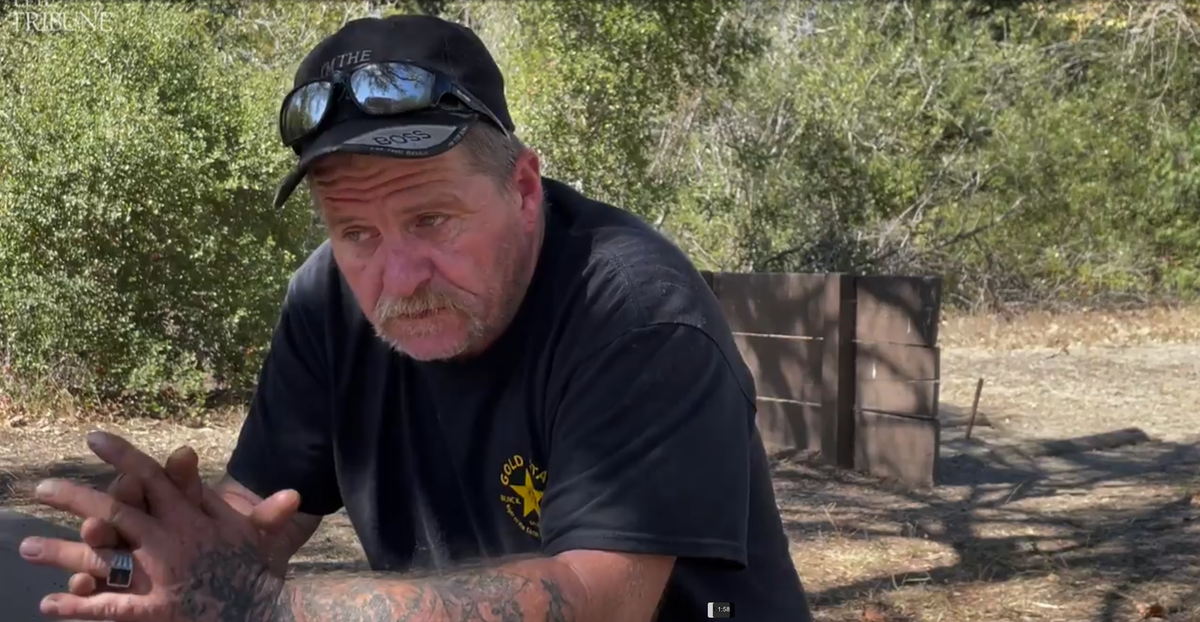
David Richford, who has lived on the site for more than a year with his girlfriend and two dogs, relies on full-time oxygen as a result of his chronic obstructive pulmonary disease. To be comfortable, Richford said, he needs electricity, water and a working restroom, and to get that, his RV first needs gas — to run the RV or power a generator — and a working water hookup.
These days, the price of gas alone can make that prospect prohibitively expensive.
“My health is of great concern to me, my concerns being getting to someplace where I can have my electricity, water (and) sewer. And I don’t have that,” Richford said. “(CAPSLO) is supposed to give us vouchers for gas — I’ve gotten three vouchers the whole time I’ve been there.”
Deana Clarke, a more recent resident at the parking site, said on a day-to-day level it’s “much more expensive being homeless” than it is being housed, and the Safe Parking Site is not making it any cheaper.
“I never thought this would be where I’d be at 58 years old,” Clarke said. “I didn’t save my whole life for this.”
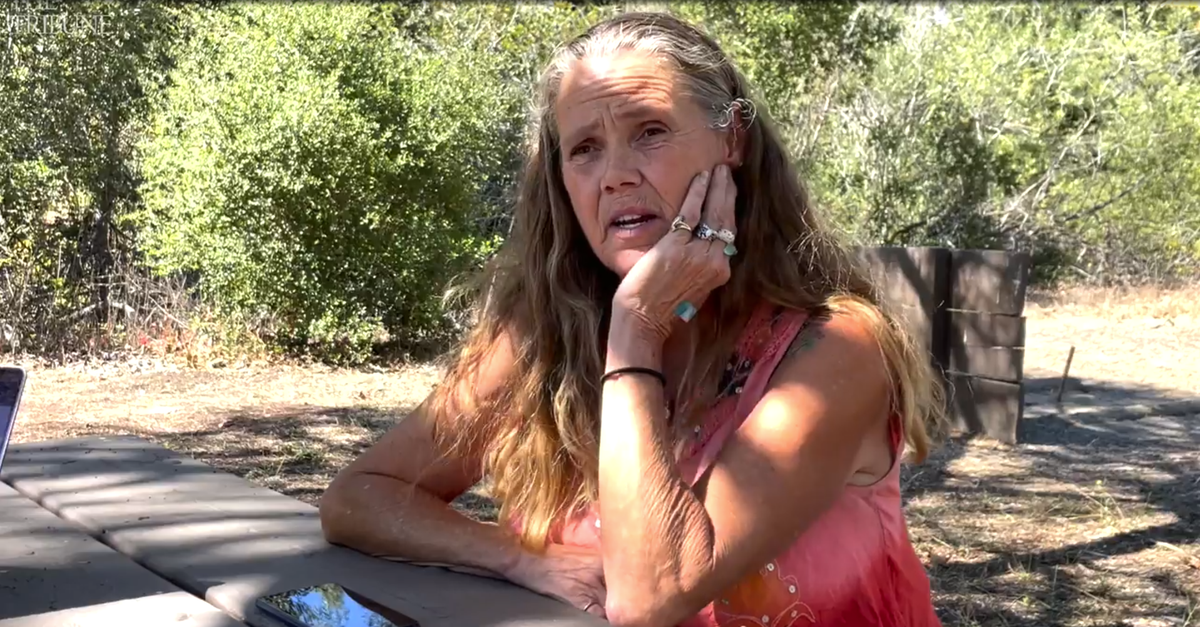
Clarke said the gas cards are distributed around once a month and are usually valued about $20 or $30, though if she runs her generator for around three hours a day, that can add up to $800 to $1,000 a month.
Lahey said providing gas cards comes with difficult decisions about what services CAPSLO can offer.
“We do provide gas cards — we have a limited funding stream for that, and that flexible account (is) connected to our contract,” Lahey said. “We make the choice: (If) we’re giving gas cards, we have less money, then, to pay for vehicle repairs.”
Because of the high cost of gas, Clarke said she’s effectively been without electricity for two years.
Also, at her RV’s previous place of residence on Palisades Avenue in Los Osos, Clarke said, amenities like Rite Aid, convenience stores and groceries were usually within walking distance. Those amenities are now several miles away, which can prove costly.
By Mejia’s estimate, living miles several away from SLO is taxing as a mother of five, as getting her two school-age children to and from school and other activities requires 30 to 40 miles of driving every day.
Residents criticize CAPSLO’s methods, handling of services
Many residents at the site expressed concerns over the support services CAPSLO provides to connect residents to housing programs.
In some cases like Mejia’s, those services have proved to be ineffective in moving residents through the site in the proposed 90-day time frame.
“(My Social Services case worker) has helped me with more than CAPSLO has, and I haven’t worked with her as long as CAPSLO has been out on the site,” Mejia said.
The Mejias have been looking for a permanent home since they moved into the site at its opening.
Despite meeting with her case manager “multiple times a day,” Mejia said she rarely receives direction on how to find housing or move out of the safe parking site, an experience several other residents who spoke to the Tribune shared.
“I hear from (CAPSLO case managers) that they’re trying, that they’re working so hard, but I’m not seeing what they’re working on,” Mejia said. “I’m not seeing how they’re working on things. They’re not showing me different ways of how I can connect with housing — nothing.”
Sometimes, interactions with CAPSLO case workers have even been hostile, Mejia said.
Mejia said her caseworker told her and her husband to “watch your back” after Mejia attempted to speak about the living conditions at the Safe Parking Site at a recent Board of Supervisors meeting.
“It’s really trying, to work with your case manager when there’s no trust involved,” Mejia said.
Mejia also said Al-Mashat and other site workers removed some of the Mejia family’s possessions without their permission, though Al-Mashat said this was “100% inaccurate” and that he has “never thrown anyone’s possessions out.”
Another day-one resident of the parking site, Carol Perez, also said it was difficult for residents to move on from the site.
“They want you to leave in 90 days, but they’re not giving you any help to do so,” Perez said. “We’re gonna end up back on the streets and dealing with the same thing to begin with.”
Perez said communication between CAPSLO and the residents is unreliable, and that the organization has “no follow-through with anything.”
Lahey said while there are exceptions and some cases of extended stays, many of the residents CAPSLO has worked with have landed housing after staying onsite.
By CAPSLO’s most recent count, 40 households have moved through the site so far.
More than half — 52.5% — of households that have moved on from the site have experienced positive outcomes, while 47.5% of the outgoing households experienced negative or neutral outcomes, according to CAPLSO’s September 2022 census.
However, the accuracy and validity of the data was another point of contention between residents, activists and site administrators.
Yael Korin, a community activist who works with the homeless population, said CAPSLO’s data does not reflect residents’ reality.
Korin said the data takes credit for individual successes that residents have achieved without CAPSLO’s help, but Lahey said successes are not strictly defined as a client entering permanent housing, and there are always struggles with maintaining accuracy in entering data into the Homeless Management Information System.
CAPSLO is also not permitted to share some of its data with the residents, which can leave them with an incomplete picture of the site’s performance, Lahey said.
“I think there is doubt on these numbers, but I also think that there’s a misunderstanding about how we can communicate these things (to residents),” Lahey said.
Outside of case management, several residents said the site’s security is a significant concern for many people living there.
Robert Menendez, who moved to Oklahoma Avenue shortly after it opened, said he was evicted over what he said was an act of self-defense when security failed to intervene in a conflict between a drunken intruder and an older resident of the site.
Menendez likened Al-Mashat and CAPSLO’s operation of the site to a “dictatorship” and said attempts to organize self-governance and resident-run site security by him and other residents has been dismissed by Al-Mashat.
“There’s no oversight, there’s no other entity there to kind of keep the the checks and balances,” Menendez said. “It’s just difficult to get anything accomplished in that way.”
Al-Mashat said Menendez and other site residents who wanted more self-governance “don’t speak for the entire community” at the site.
Many of the households who have lived onsite long-term, Al-Mashat said, are extraordinary cases, and pointed to others like Stephen Walters — who lived on the site for around eight months starting in September 2021 — as success stories.
Walters moved to the site after he “ran out of every opportunity” and found himself priced out of SLO.
“(The safe parking site is) a tough place to live, but overall, it was a great experience and I wouldn’t change it,” Walters said.
Walters said his CAPSLO case worker was able to find him a role at Sunny Acres, a sober living community, where he now lives and works as a cook in the nonprofit’s kitchen.
Now, Walters is part of the food deliveries that visit the site several times each week, he said.
Local activists express concern over temporary solution
For the longest-term residents, Korin said the mistrust between the site residents, activists and administrators is keeping the site from performing as intended.
“I don’t think (site administrators are) going to change the way that they treat unhoused people,” Korin said. “They don’t treat unhoused people in the appropriate way.”
Korin said this kind of transitional housing space — regardless of whether or not it was intended as a place to live or as a place to park — is better suited to more permanent solutions like tiny housing villages, which she said she supports.
“Why (the residents are still) there, that’s the easy answer: Because there is no other place to go, there is no affordable housing, and if there was affordable housing, they would not qualify,” Korin said. “We cannot look at this as temporary, if we think that there is no other solution. (The residents are) going to be there until the county can provide them with an alternative.”
The Safe Parking Site is capable of working as a temporary solution, Korin said, and the residents on the site are doing better than the unhoused population on the streets or in the creekbeds, but any future sites will need to have better services and a higher capacity.
In an immediate sense, Lahey said, the contract signed between the county and CAPSLO makes it difficult to provide services beyond the existing parameters of the site.
“If we change goals to be something different, that changes the entire nature of the site, of the funding, of everything,” Lahey said.
If the site managers want to make significant changes to the services being offered, he said, they have to first get approval and funding from all of the partners — from the county to CAPSLO to the Department of Housing and Urban Development — which narrows the scope of what the site can do in its current form.
“If I could turn 40 Prado into 129-unit apartment complex, I guarantee you everybody there would be incredibly happy — I would be happy,” Lahey said. “But I don’t have the resources or the intent to do that, because it’s a homeless shelter.”
Al-Mashat said the site administrators are working hard to build trust with the residents.
“The point I really want to get across is I know firsthand how hard these people are working,” Al-Mashat said. “If people want to be mad at me because I’m with the county, that’s fine, but I don’t want people to think that CAPSLO isn’t working as hard as they can be.”
This story was originally published October 20, 2022 at 11:16 AM.