SLO City Council is upgrading affordable housing rules after 2 decades. What could change?

Developers building in San Luis Obispo will be required to include more affordable housing units under a newly-approved update to the city’s inclusionary housing ordinance.
On Tuesday, Aug. 16, the San Luis Obispo City Council approved the update to the inclusionary housing ordinance in a 5-0 vote.
The ordinance will now go into effect 30 days after its approval, or Sept. 16, 2022.
City Council members voted 4-1 to update the ordinance at its first reading, with San Luis Obispo Mayor Erica Stewart voting against the update.
At the second reading of the updated ordinance, Stewart said the plan felt incomplete, and was missing diversity, equity and inclusion guidelines. She also said the update would lead to local developers losing business to larger, out-of-town builders.
“We’re all here trying to figure out how to get to more housing, and the challenging part is, I’m hearing many different ways to get there that don’t actually equal a puzzle right now that looks complete,” Stewart said.
The inclusionary housing ordinance was initially adopted in 1999 to encourage developers to build affordable housing in new developments, or, in lieu of building the required housing, pay fees to the city to pay for future affordable housing projects.
Updates to the housing ordinance are mandated by the 2020 Housing Element, which lays out the city’s housing goals from 2020-28.
The new inclusive house initiative — which, if passed, will go into effect Sept. 16 — contains several key differences from its predecessor.
Chief among the changes is the removal of Table 2A, which encouraged the construction of market-rate homes and required developers to build a minimum number of inclusionary units. Those are deed-restricted units designed to keep sale and rental prices affordable to very low, low and moderate-income buyers.
Now each development must include a certain percentage of affordable housing units based on its size, as opposed to a set minimum number.
Under the updated ordinance, 10% of units in new for-sale developments and 6% of units in new rental developments must be affordable.
For new developments of homes for sale, that means 5% of those units must be affordable to low-income buyers and 5% must be affordable to moderate-income buyers. Similarly, when new rental developments are built, 3% of those units must be affordable to low-income renters and 3% must be affordable to very low-income renters.
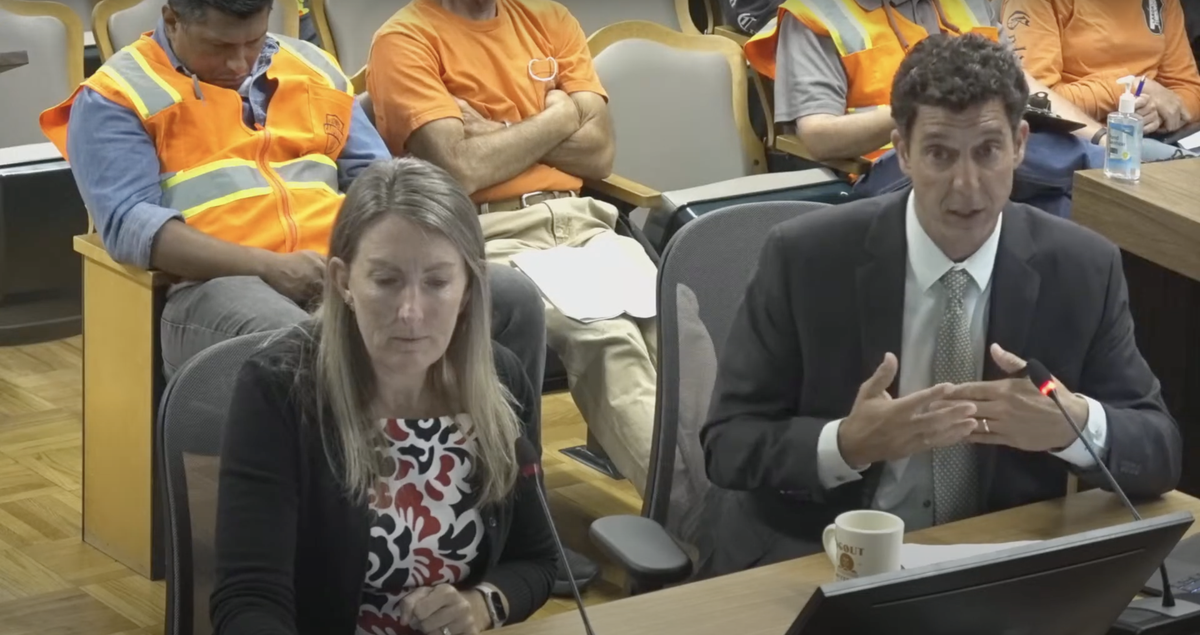
In the case of smaller developments, that may mean rounding up the number of affordable units, explained Michael Codron, community development director.
If there was a development of 11 units, the developer would be required to build two affordable units, not one, Codron said.
The other option would be building one affordable unit and paying an in-lieu fee, he said.
In the case of an 11-unit development, the new ordinance would allow developers to satisfy the requirements by building one affordable unit and 10% of the otherwise-applicable fees.
The new inclusionary housing ordinance also changes in-lieu fees paid by developers who do not want to include inclusionary housing units in their developments.
For every square foot of habitable space that does not meet IHO guidelines, developers will now pay a $20 fee.
The council made two modifications to the San Luis Obispo Planning Commission’s recommended plan, exempting junior accessory dwelling units — smaller versions of ADUs capped at 500 square feet — from inclusionary housing requirements.
During Tuesday’s meeting, the council directed the Planning Commission to incorporate changes, including adding allowances for the Flexible Density Downtown and Missing Middle Housing programs, along with the Subdivision Regulations Update outlined in the city’s 2020 Housing Element.
This means supporting the construction of infill homes such as duplexes and bungalows and efficiency units such as small apartments, as well as approving smaller lots for subdivisions than the current 5,000-square-foot minimum.
Krista Jeffries, lead organizer at SLO County YIMBY, said after the meeting she has concerns about the effects of the revised ordinance. Her organization encourages the construction of as much new housing as possible as a means of alleviating housing shortages.
While Jeffries praised the updated inclusionary housing ordinance for changing the requirements for developers to build affordable housing, she said the new in-lieu fees are too high of a burden for developers to bear and may disincentivize the construction of more homes in general.
“The previous IHO needed reform, but the new policy is too high,” Jeffries wrote in an email. “(SLO County YIMBY is) concerned it will lead to almost no new construction in SLO and workforce housing will be built elsewhere, hurting the city’s climate neutrality and equity goals.”
Jeffries also said increasing the percentage of affordable units required in new developments will push away potential developers.
“Our concern was that not that we don’t want to fund affordable housing development,” she said, “but if you don’t allow the market rate projects to pencil out, then you don’t end up funding that affordable housing development at all.”
This story was originally published July 21, 2022 at 12:46 PM.