Need contraception or an abortion in SLO County? Here’s where to go
The federal right to abortion was overturned by the United States Supreme Court last week, but access to safe and legal abortion is still an option for pregnant people living in San Luis Obispo County.
There are a handful of clinics throughout the county that offer evidence-based health information and access to contraception, but only one clinic that offers abortion services.
The county also has multiple crisis pregnancy centers that offer information about pregnancy, adoption and abortion. These pregnancy centers are not medical facilities and often mislead patients facing unplanned or unwanted pregnancies, according to a consumer alert warning issued by Attorney General Rob Bonta.
The government of California has made efforts to make access to abortion services and contraception a permanent right for everyone in the state.
In November, residents will vote on whether to add an amendment to the state Constitution that codifies reproductive freedom.
The Tribune spoke with Planned Parenthood Central Coast to explain how changes to the law may impact the availability of family planning and abortion services here.
.jpg "Image from iOS (39).jpg")
Abortion is available at one clinic in San Luis Obispo County
There is only one reproductive health clinic in San Luis Obispo County that performs abortions — the Planned Parenthood Central Coast clinic in San Luis Obispo at 743 Pismo St.
The clinic also offers emergency contraception — commonly referred to as “the morning after pill” or Plan B — numerous types of contraception, testing for sexually transmitted infections and HIV, and more.
Patients that identify outside the gender binary or are part of the LGBTQ+ community can expect gender-affirming healthcare at the Planned Parenthood clinic.
“Our health centers are a non-judgmental medical provider,” Planned Parenthood Central Coast Vice President of Community Engagement Luz Reyes-Martín said. “We will provide the healthcare information for each patient to make their own decision.”
Those decisions include whether to seek an abortion.
Patients with questions about abortion can make an appointment at the San Luis Obispo clinic, Reyes-Martín said.
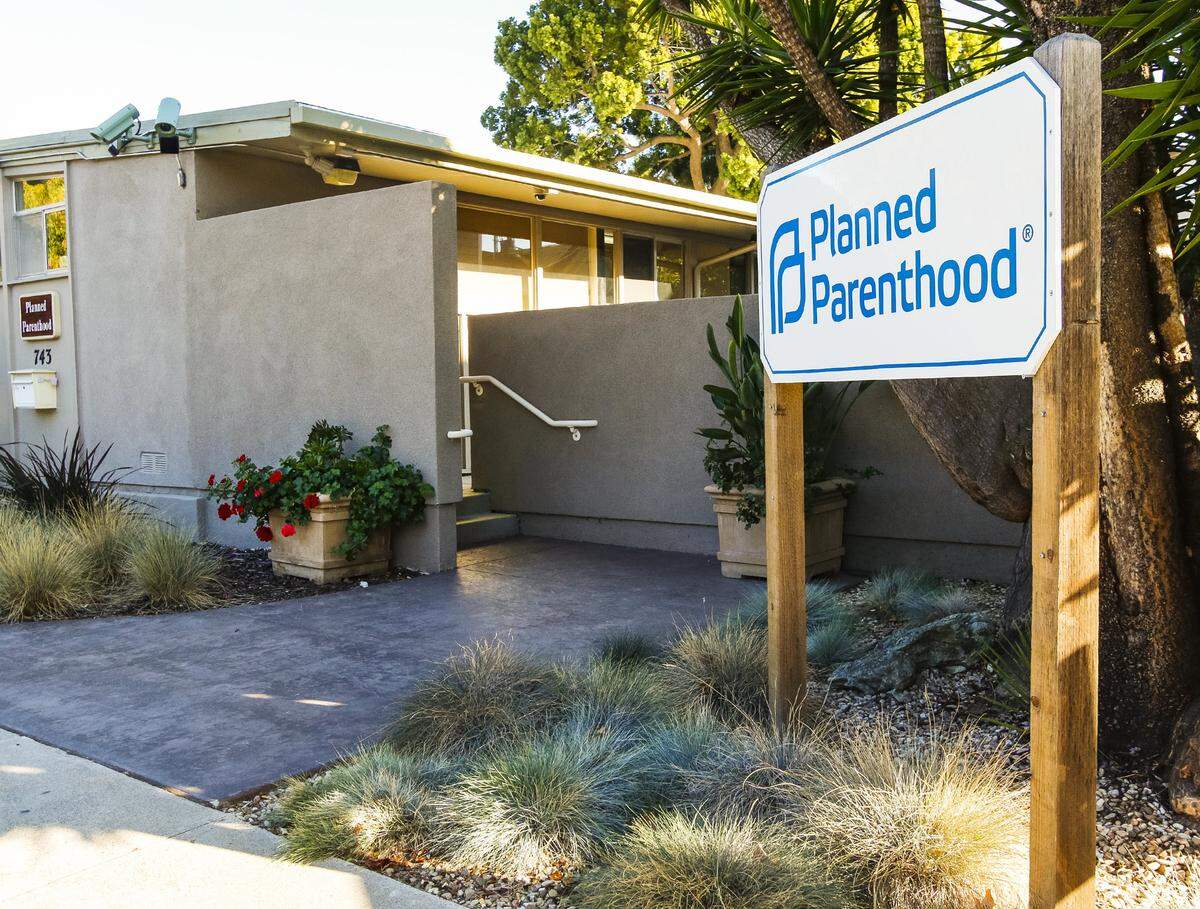
The clinic has two options for patients who wish to end a pregnancy — in-clinic abortion and abortion by pill, she said. Both are safe medical procedures, but the type of abortion that is best for the patient may differ, Reyes-Martín said.
“One of our clinicians will go over those options and figure out with the patient what the best course of care will be,” she said.
In California, teens and adults can access abortion services. Teenagers do not need consent from an adult or sexual partner to obtain abortion services. More information about the reproductive rights of teenagers is available at teensource.org.
As abortion is restricted nationwide, more patients from out of state may be traveling to California to access abortion services.
“We are expecting that we will see an increase, and we’re prepared to to handle that,” Reyes-Martín said.
For people who need an abortion but live far from an abortion provider or are in a state where abortion is banned, abortion pills by mail is another option.
Abortion using a pill, also called self-managed abortion, is available to people with pregnancies up to 10 to 11 weeks, according to Planned Parenthood. Abortion pills are available at various Planned Parenthood locations or can be accessed by mail.
The San Luis Obispo Planned Parenthood clinic is open Monday from 9 a.m. to 6 p.m. and Tuesday to Saturday from 9 a.m. to 5 p.m.
Patients can call 888-898-3806 or go online to schedule an appointment at bit.ly/ppsloappt.
What is the different between a health clinic and pregnancy center?
Crisis pregnancy centers often advertise a variety of reproductive health services but are there to discourage people with unplanned pregnancies from seeking abortion, according to the consumer alert warning from the attorney general.
Crisis pregnancy centers outnumber abortion providers by five to four throughout California, according to a study from The Alliance for Women’s Rights and Gender Equality. The study counted 179 crisis pregnancy centers in the state. None provided abortion services and only one provided access to contraception.
In June 2022, Attorney General Bonta issued a consumer alert warning about the prevalence of crisis pregnancy centers throughout the state.
“Crisis pregnancy centers often work to attract pregnant Californians into their facilities through vague claims about the information and services they offer,” Bonta said in a news release. “While crisis pregnancy centers may claim to offer comprehensive reproductive healthcare services, their mission is to discourage people from accessing abortion care.”
Crisis pregnancy centers in San Luis Obispo County
San Luis Obispo County is home to at least four crisis pregnancy centers. Three of those are run by the Tree of Life Pregnancy Support Center, with locations in Atascadero, Paso Robles and San Luis Obispo.
The center offers free pregnancy tests, ultrasounds and maternity and baby clothing, according to its website.
Post-abortion counseling and information about pregnancy and fetal development are also provided by the center.
“Some women may feel regret immediately after an abortion. For others, regret for a past abortion may not materialize for 10 years or more. No matter how long ago it was, an abortion can leave you with feelings of numbness, guilt, shame, anger and depression,” a June 23 Facebook post by Tree of Life Pregnancy Support Center said.
The idea that the decision to have an abortion leads to feelings of guilt, shame and depression is not grounded in empirical evidence.
Research shows that, despite negative emotions due to stigma surrounding abortion, the most common emotion felt by people five years post-abortion was relief and rightness in their decision.
In the wake of the Supreme Court overturning Roe v. Wade, the Paso Robles location of Tree of Life was vandalized by Jane’s Revenge, a group that targets anti-abortion institutions on June 25, according to a Tribune report.
“Tree of Life exists simply to assist women who ‘choose’ to keep their babies,” Tree of Life executive director Pam Johnson said in a Facebook post, according to a Tribune report. “It’s unfathomable to me why anyone would want to keep us from helping people in our community.”
People or teens seeking contraception, family planning information have local options
Affordable options for contraception and evidence-based family planning information is available at various locations throughout San Luis Obispo County.
The Center for Health and Prevention at the Community Action Partnership of San Luis Obispo County (CAPSLO) offers free or low-cost sexual and reproductive health services at locations in San Luis Obispo and Arroyo Grande.
Some of the services at the center include testing, treatment and vaccines for five STIs, testing and treatment for HIV, birth control counseling and prescriptions, pregnancy services and more.
Teenagers can access health information through peer-to-peer counseling at the CAPSLO clinics. Teen clinic hours are Monday and Wednesday from 3 to 6 p.m. in San Luis Obispo and Tuesday and Friday from 3 to 6 p.m. in Arroyo Grande.
The center’s offices are open Monday to Friday, 8:30 a.m. to 5:30 p.m., at 1152 East Grand Ave. in Arroyo Grande and 705 Grand Ave. in San Luis Obispo.
The center accepts CenCal insurance, has Spanish-speaking staff and offers services on a sliding scale.
The Paso Robles Sexual and Reproductive Health Clinic is run by the San Luis Obispo County Public Health Department and offers a variety of free and low-cost reproductive health care options, except for abortion.
Visitors can expect gender-affirming care in English or Spanish and can access free to low-cost testing for sexually transmitted infections and pregnancy, contraception ranging from condoms and birth control pills to intrauterine devices (IUDs).
“We’re a safe place,” clinic manager Jenny Taranto told the Tribune.
California Senate Constitutional Amendment 10 aims to codify abortion rights
Meanwhile, California is working to expand reproductive health services throughout the state.
The state approved a nearly $200 million investment in reproductive services and healthcare statewide, according to the Sacramento Bee.
This money will go toward an expansive reproductive health package with funding earmarked for reimbursement abortion services for people who are uninsured, a state reproductive justice and freedom fund, a reproductive rights website and research on unmet needs, according to a statement from Gov. Gavin Newsom.
In November, Californians can vote to codify reproductive freedom in an amendment to the state Constitution.
The state Assembly approved Senate Constitutional Amendment 10 in a 58-16 vote Monday, according to the Sacramento Bee.
If passed by voters, the amendment would allow Californians the right to choose or refuse contraception and abortion services.
“What this does is really just leave no doubt in the California Constitution that California is going to maintain safe and legal abortion as a right,” Reyes-Martín said.
State lawmakers think adding reproductive rights to the state Constitution will make it harder for future lawmakers or leadership to curtail or eliminate reproductive freedoms, the Bee reported.
“As reproductive freedom nationwide comes under threat, my message to Californians is simple: Know your rights. Do your research. Connect with programs that will provide you with truthful information and timely reproductive healthcare,” Bonta said. “Because in California, your right to reproductive healthcare includes the right to safe and legal abortion.”