
VP Kamala Harris visits Vandenberg, announces end to U.S. anti-satellite missile tests
During a visit to Vandenberg Space Force Base on Monday, Vice President Kamala Harris announced the United States will no longer test anti-satellite missiles, calling the practice “reckless” and “irresponsible.”
“Simply put, these tests are dangerous and we will not conduct them,” Harris said in front of an assembled crowd of close to 200 Space Force service members, as well as a number of Central Coast government officials.
“We are the first nation to make such a commitment,” she said. “And today on the behalf of the United States of America, I call on all nations to join us. Whether a nation is space-faring or not, we believe this will benefit everyone, just as space benefits everyone.”
Harris was at the Lompoc-area military base on Monday to tour the facility and meet the service men and women who live and work at the site.
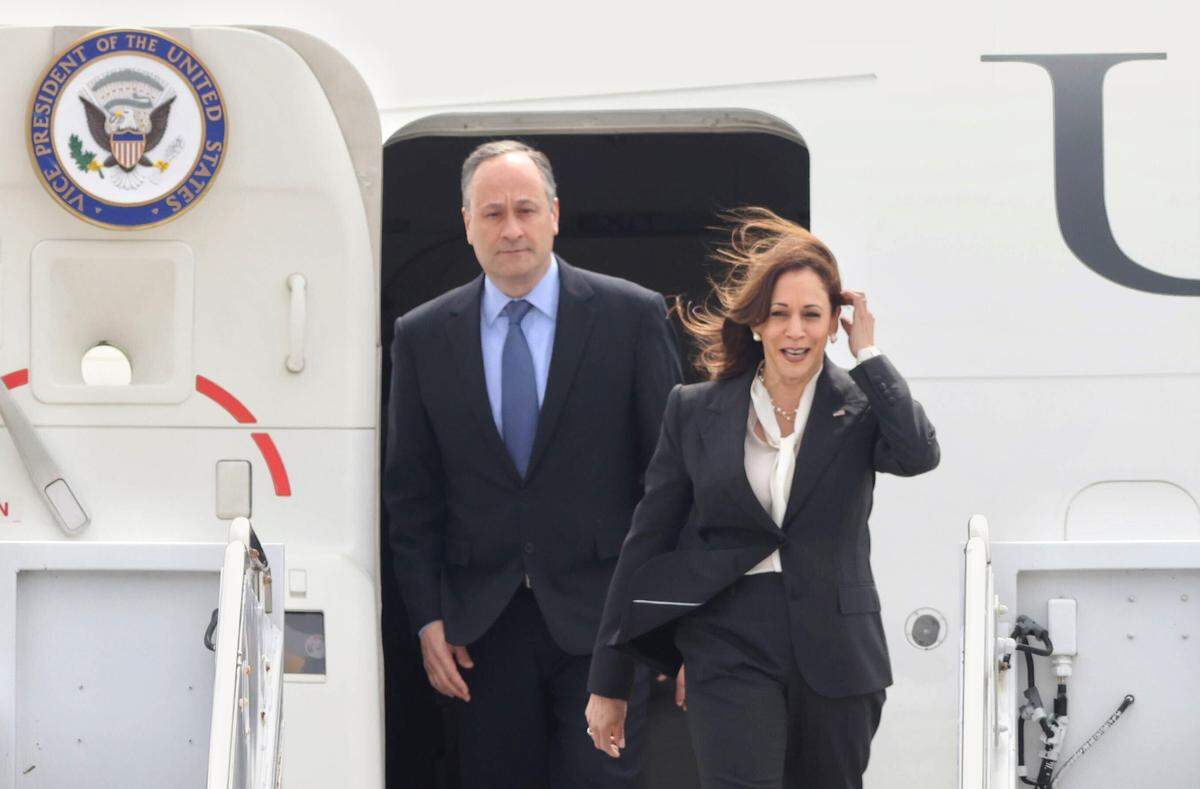
She arrived on Air Force Two shortly before 3 p.m., accompanied by husband Douglas Emhoff and the White House press corps.
“It is wonderful to be back in California,” Harris said at the beginning of her speech a few hours later, which she began to a standing ovation from the crowd.
Prior to becoming vice president, Harris notably served as the state attorney general from 2010 to 2017, and as a U.S. senator representing California from 2017 to 2021.
United States will stop testing anti-satellite weapons, VP says
Harris’ remarks Monday were primarily focused around the administration’s decision to stop testing anti-satellite missile weapons in light of recent global tensions.
The anti-satellite missile test (ASAT) refers to a nation firing a missile into space, usually to destroy its own satellite and demonstrate military power, according to CNBC reports.
In November 2021, Russia conducted an ASAT, showering the nearby international space station with debris. Astronauts inside were nearly evacuated from the space station, and a large amount of the debris is still in orbit, Harris said.
A collision with even a basketball-sized piece of debris could knock out a satellite, Harris said during her speech, and debris the size of a grain of sand could cause significant damage.
“These tests to be sure are reckless, and these tests are irresponsible,” she said.
The United States has conducted some anti-satellite missile testing in the past, most recently destroying a satellite in 2008, according to the CNBC report.
India and China have also destroyed satellites using missiles in the past.
On Monday, Harris called for all nations to join with the United States’ new commitment as the world works to write the “new rules of the road” when it comes to space exploration and technology.
“The United States is committed to lead the way and lead by example,” Harris said.
She concluded her remarks by thanking assembled Space Force members for their service to the United States.
“Thank you all for all you do on behalf of our country,” she said. “God bless you. God bless America.”
Central Coast leaders meet with vice president during visit
A number of military officials and local government representatives also attended the event Monday to speak on the importance of Vandenberg Space Force Base to the country’s presence in space.
Congressman Salud Carbajal, D-Santa Barbara, spoke first, thanking Harris for coming to visit and highlighting Vandenberg’s readiness to ramp up rocket launches in the coming years.
He also spoke briefly on the push for the base to act as the headquarters for Space Force’s education and training outfit, Space Training and Readiness Command. Vandenberg is one of six bases in the running to become STARCOM headquarters.
“The future of America’s space operations is here at Vandenberg Space Force Base,” Carbajal said to applause.
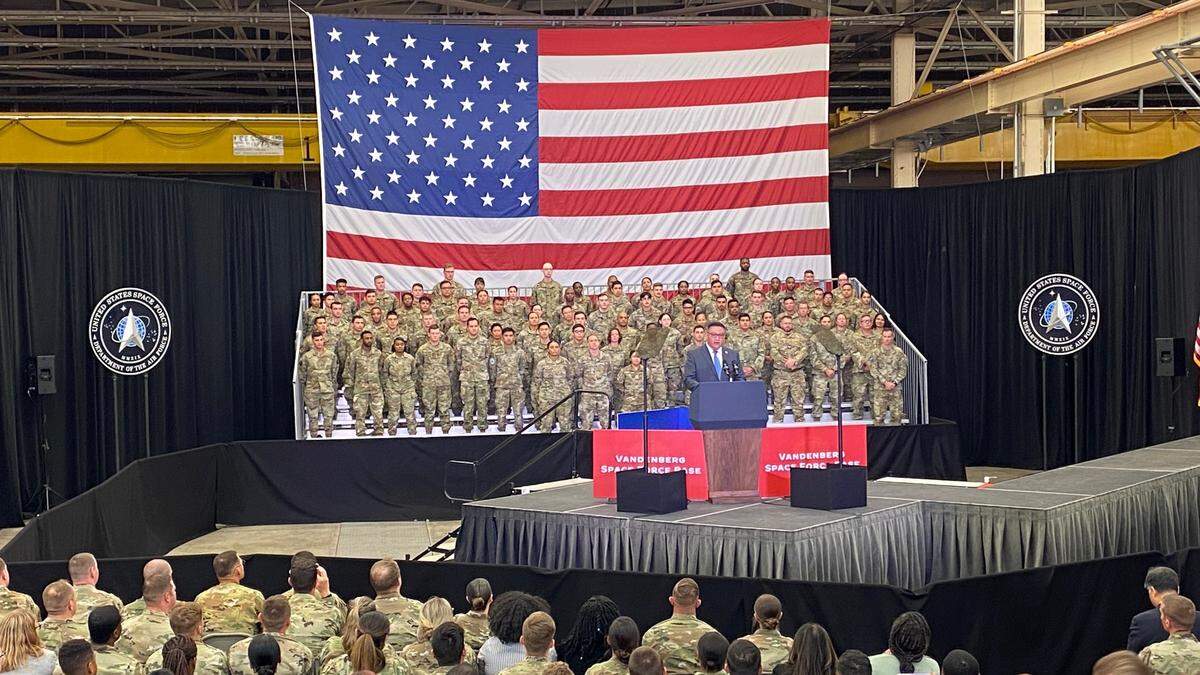
Gen. James Dickinson called Vandenberg a “proud example of our stewardship in space.”
“We will continue to be leaders in this regard operating in space in a responsible manner,” he said. “It is well know that space is no longer a benign operating environment, but it need not be a hostile operating environment.”
Other speakers during the event included Sen. Alex Padilla, D-California, Space Force Chief of Space Operations Gen. John “Jay” Raymond and U.S. Deputy Secretary of Defense Kathleen Hicks.
This story was originally published April 18, 2022 at 2:22 PM.
%20Cropped.jpg)