Great white shark that killed California man was at least 16 feet long, experts say
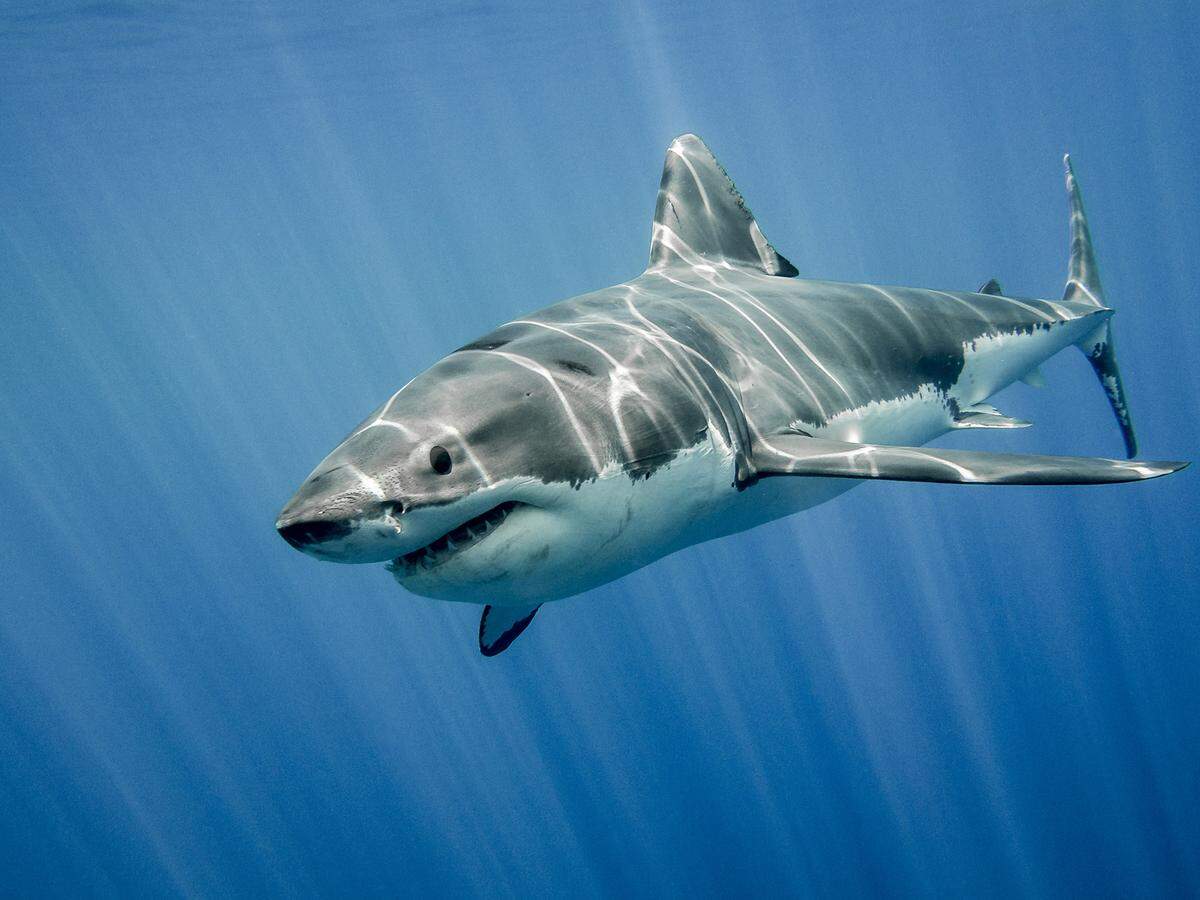
The great white shark that killed a man in Morro Bay on Christmas Eve was at least 16 feet long, a state biologist said.
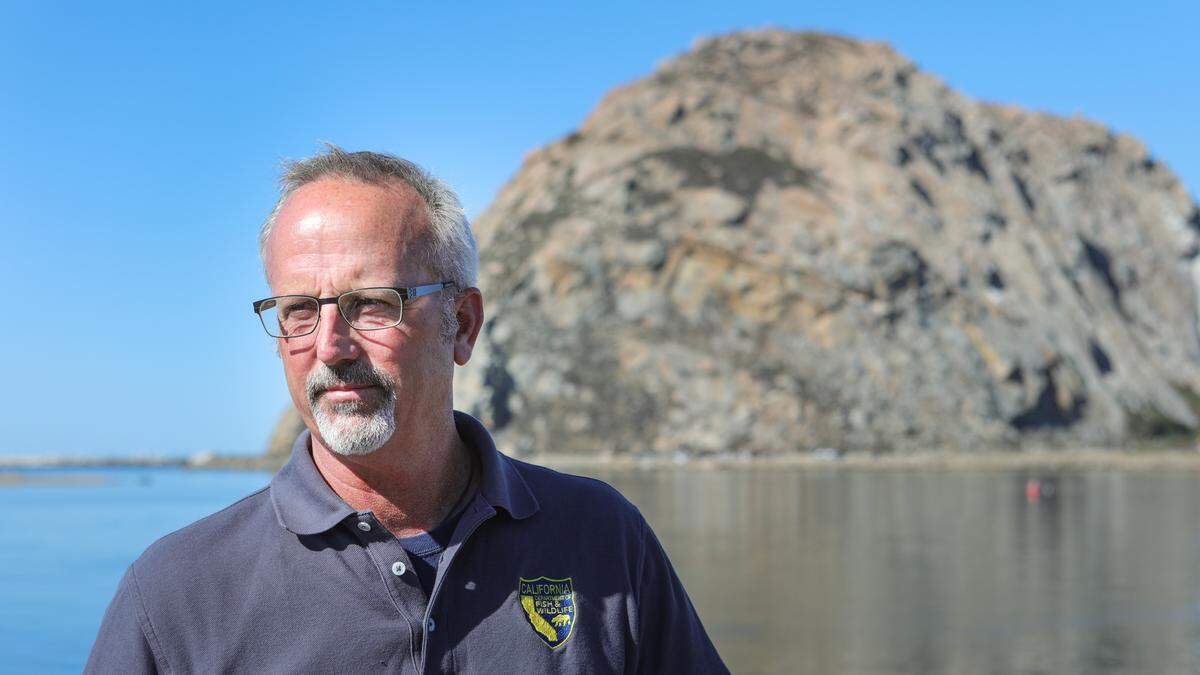
Mike Harris, a biologist from the California Department of Fish and Wildlife, told The Tribune that the size indicates it was likely an adult white shark that killed 42-year-old Tomas Butterfield of Sacramento while he was bodyboarding north of Morro Rock in the area known as “the Pit.”
“Our forensics scientists at the (Wildlife Health Laboratory) worked with Dr. Chris Lowe (director of the Shark Lab at Long Beach State University) to come up with a size estimate based on the wound pattern,” Harris told The Tribune.
Great white sharks can reach up to 20 feet and weigh up to 6,600 pounds.
Harris deferred to Lowe on assessment of the shark’s fatal bite impact and how the fish may have behaved in the incident. The Tribune has reached out to Lowe and is awaiting additional information about his analysis.
Robert Lea, a former marine biologist with the state Department of Fish and Wildlife, said that after reviewing the autopsy report, it appears that the shark “bit at least three to four times.”
Multiple bites suggest that the shark “was serious,” Lea said, and the attack was not “investigatory” or a warning bite.
Butterfield’s autopsy revealed he was bitten on the head, the right shoulder and on the right side of his chest, where a “gaping” wound was found.
Harris said that the bite patterns generally indicate the fish and person moving in opposite directions in the frenzy of motion, leading to “scattered displays of wounds that don’t delineate the arc of a single bite.”
Despite the severity of this case, shark attacks are incredibly rare events, Lea and Harris noted. Nevertheless, both urged caution when entering the waters, especially in areas attractive to white sharks such as the Central Coast.
Was it Poe Girl?
Scientists have tagged white sharks over the years to better track their movements, which have increased along the Central Coast.
One of those tagged sharks is “Poe Girl” — a 17-foot female great white shark who was named by Keith Poe, a researcher with the Marine Conservation Science Institute.
Speculation grew after the attack that Poe Girl might be to blame for the attack that killed Butterfield, Harris said.
That’s because an app that tracks tagged sharks located her off the Pismo Beach coast on Christmas Day.
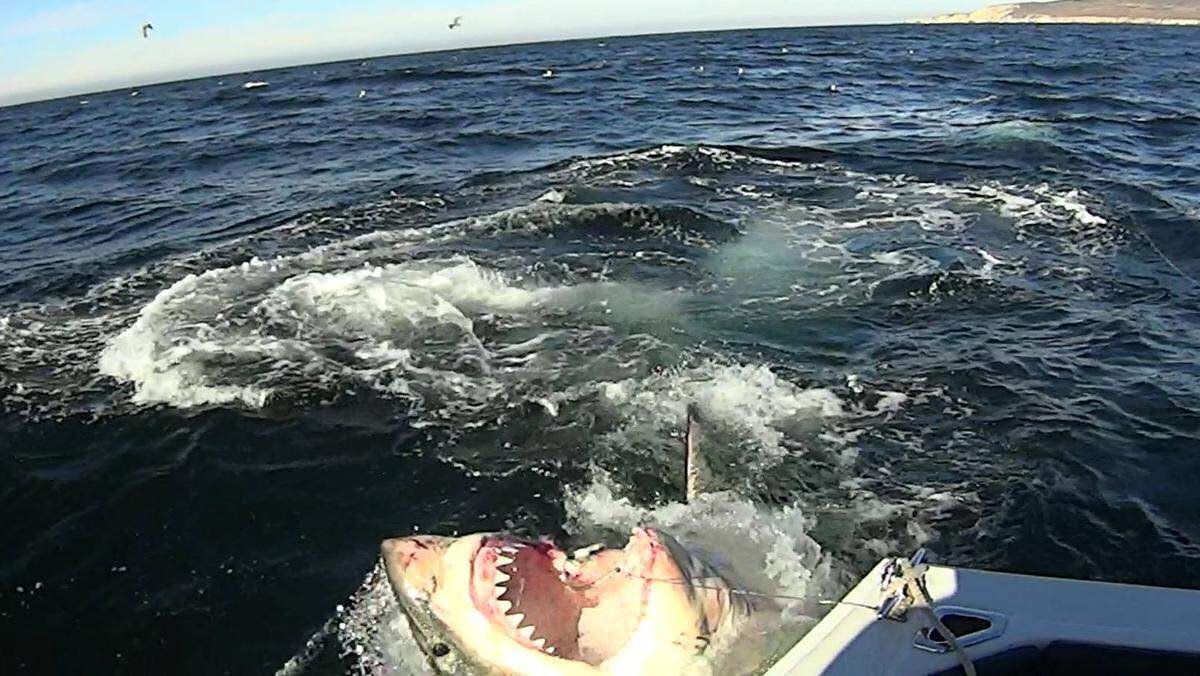
“Pending signal strengths and number of signals received, there can be large error in the geographic points that are picked up by the satellite tagging,” Harris said. “It’s completely impossible to say (if it was Poe Girl or another tagged shark). I can guarantee you there’s definitely more than one large adult shark in the area.”
Harris said that he is aware of many sharks off the Central Coast, including those that have been tagged for several years.
“I’ve seen as many as 11 different sharks in a day,” Harris said. “That’s working a very small area and I have shark-bitten otters along this coastline all the time.”
Increase in great white shark population along Central Coast
Great white sharks are fierce predators at the top of the food chain, and decades of research has revealed that the sharks’ population is steadily rising due to state and federal measures that protect both the shark and the food it eats.
As the number of white sharks increases, warming ocean waters due to global climate change has allowed young sharks to venture farther north into waters they’d previously rarely occupied.
Scientists have tracked greater numbers of juvenile white sharks along the Central Coast, particularly in Monterey Bay, because of notable temperature increases in the ocean. Young white sharks tend to grow up in warmer waters and then expand their range toward colder waters as they age into adulthood.
In his studies of otter populations throughout the state, Harris said he’s seen an interesting correlation between the rising white shark population and the number of dead or injured otters recovered along the Central Coast.
Southern sea otters still have a small range compared to historical population estimates, Harris said. The small marine mammal is considered threatened under the Endangered Species Act by the U.S. Fish and Wildlife Service, and scientists estimate its population has plateaued over the past 10 to 15 years at around 3,000.
Harris contributes a good portion of the otters’ struggle to repopulate in California to the proliferation of white sharks.
“We recover around 300 to 450 sea otters every year — around 50% of those are shark-bitten,” Harris said, adding that historically, the proportion of shark-bitten otters was much smaller.
The shark attacks on sea otters appear to be “investigative interactions,” Harris noted. “There’s no indication that sharks are ever eating sea otters.”
Harris often sees shark attack patterns in otters that don’t leave a clearly delineated arc of the jaw, which suggest the predator and prey were in state of movement that reset the jaw impact, he said.
The proportion of shark-bitten otters recovered in Pismo Beach is particularly high compared to other areas of the state, Harris said. This is likely due to the growing population of white sharks in the area, Harris said.
How to stay safe in the ocean
While the odds of an attack are low, Harris said incidents like this one are a reminder that the ocean can be a risky place.
“You’re entering wild space, and wild animals present some danger,” Harris said. “It doesn’t necessarily need to stop people, but they need to be aware of the safety issues and pay attention to their surroundings.”
Harris said he personally still surfs regularly off the Central Coast even after seeing the results of shark attacks as a biologist, mostly in relation to his study of otters.
He offers the following basic safety tips:
▪ Watch for feeding frenzies and avoid those areas (such as flocks of birds diving and foraging or groups of sea lions, indicating a food source that sharks could be drawn to);
▪ Don’t surf in dirty, dark water with low visibility for sharks;
▪ Surf with other people who can provide assistance should a shark event occur, because usually it won’t be fatal;
▪ Avoid low-light times of the day.
“When I surf, occasionally I get freaked when I see something and start to paddle in,” Harris said. “I might paddle in and watch what’s going on and then maybe paddle back out. But I don’t surf by myself anymore. I try to pay attention to what’s going on around me in terms of the wildlife because they can key in to what’s drawing in some of the larger predators into the area.”
Harris said that it’s a coincidence that Morro Bay, which also had a non-fatal shark attack on surfer Elinor Dempsey in 2015, has seen multiple attacks involving great whites in recent years.
That’s made it of interest to shark researchers, who are studying migration patterns, conducive water temperatures and habitat zones that draw great whites, Harris said, citing Lowe’s work.
“When you’re entering the ocean, you’re entering the wild,” he continued. “Just like backpacking, there are critters out there that may hurt you. In the ocean, white sharks are one of them.”
This story was originally published March 30, 2022 at 5:29 PM.