
SLO family helps 5 Ukrainians escape war after relative puts out a call for aid
With millions of Ukrainians fleeing Russia’s attack, one San Luis Obispo family has jumped in to help two mothers and their kids escape the war.
About two weeks ago, Sophia Kardel, 22, who grew up in San Luis Obispo and now lives in Berlin with her partner, 24-year-old Emilio Ergueta, were connected with a Ukrainian family of five that has SLO ties — meeting them at the Slovakian boarder to help them get to safety in Germany.
The family is among an estimated 10 million people who are expected to leave their Ukrainian homes, including 4 million who may cross the border amid the war, according to a recent United Nations estimate.
The two adult Ukrainian women, the aunts of 26-year-old SLO resident Sasha Shkurkin, and their children — ages 9, 9 and 3 — fled missile attacks in their hometown to unite with Kardel and Ergueta in their two-bedroom apartment in Berlin.
The family and couple were connected through the SLO Nazarene Church, where Shkurkin, whose mother was born in Ukraine, put out a call for help for his two aunts and three cousins.
“I had my pastor announce that we were looking for help, and then (Sophia’s parents) Peter and Amy came out of the congregation and basically said, ‘We already are set up to help somebody, but we just didn’t know how yet to go about it,’” Shkurkin said.
Peter and Amy Kardel informed their daughter, who then drove hundreds of miles to meet the refugees and take them to her home in Berlin.
The Kardels are currently visiting Sophia and offering humanitarian relief to other Ukrainian refugees as well.
Donations from friends, community members and businesses in SLO are providing money, clothes, towels, blankets, art supplies and computers to help those who fled the war and made their way to Berlin.
“(Sophia) has galvanized their community center and shared clothes and money,” Amy Kardel said. “(Her area in Berlin) is a working-class neighborhood, so some of the families she recruited (to host refugees) could not have afforded to host without a bit of money for food. People in SLO have made that possible.”
In addition to the one family, Sophia Kardel has created a network of five other families she is supporting as well, with money and computers for all of them, Amy Kardel said.
“They families meet at the playground, park, cook together and share what is needed,” Amy Kardel said.
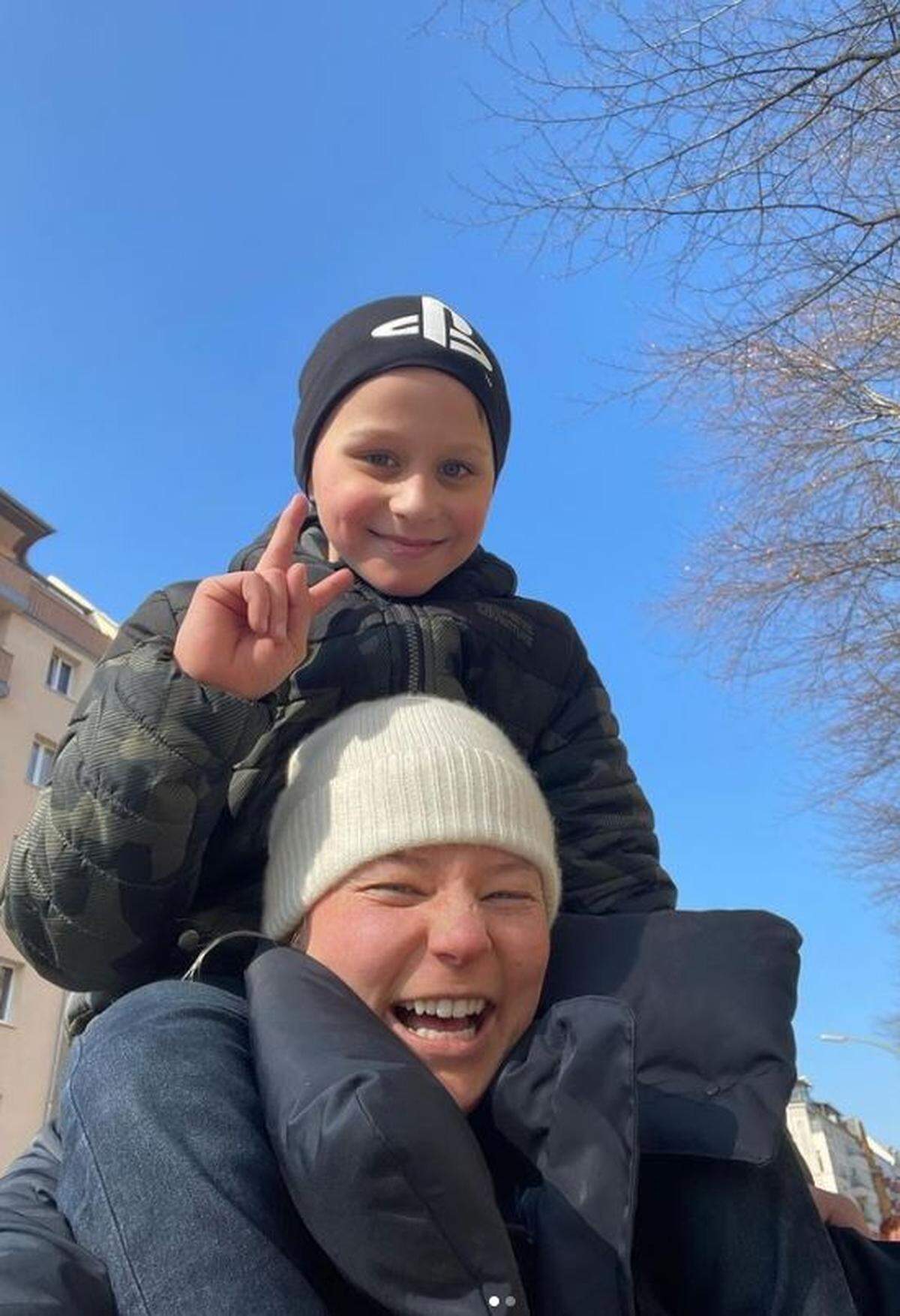
Helping a family in need
Sasha Shkurkin came to SLO six years ago when he was 19 to build a business with a friend and shortly thereafter met his wife, Angela, who was born and raised in SLO County. He calls SLO home now.
Leading up to the war, Shkurkin began texting with one of his aunts overseas on WhatsApp to find out what was happening there.
“Because the news coverage usually focuses on major city coverage, people often don’t realize the scale of the invasion,” Shkurkin said. “It’s not just troops going over the border and trying to break through the border cities. They’re dropping missiles and bombs and artillery on the entire country.”
Shkurkin said that he has been in touch with his extended family over the years. From SLO, he has gleaned insights into the Russian-Ukrainian conflict that has taken place over the past decade.
His family members are from Uman, a centrally located city located about 130 miles south of Kyiv.
Olena Shkurkin, Sasha’s mother, left Ukraine at 18 and lives in Jenner in Sonoma County, along with his grandmother, Valentina Suhkovolska.
Shkurkin’s aunt Svyeta Pysmenna (and her sons Zahkar and Max) and his aunt Tanya Suhkovolska (and her daughter Sasha) — who are sisters — hastily fled their community shortly after the first missiles hit not far from their home. They had to travel about 400 miles to the Slovakian border to safety.
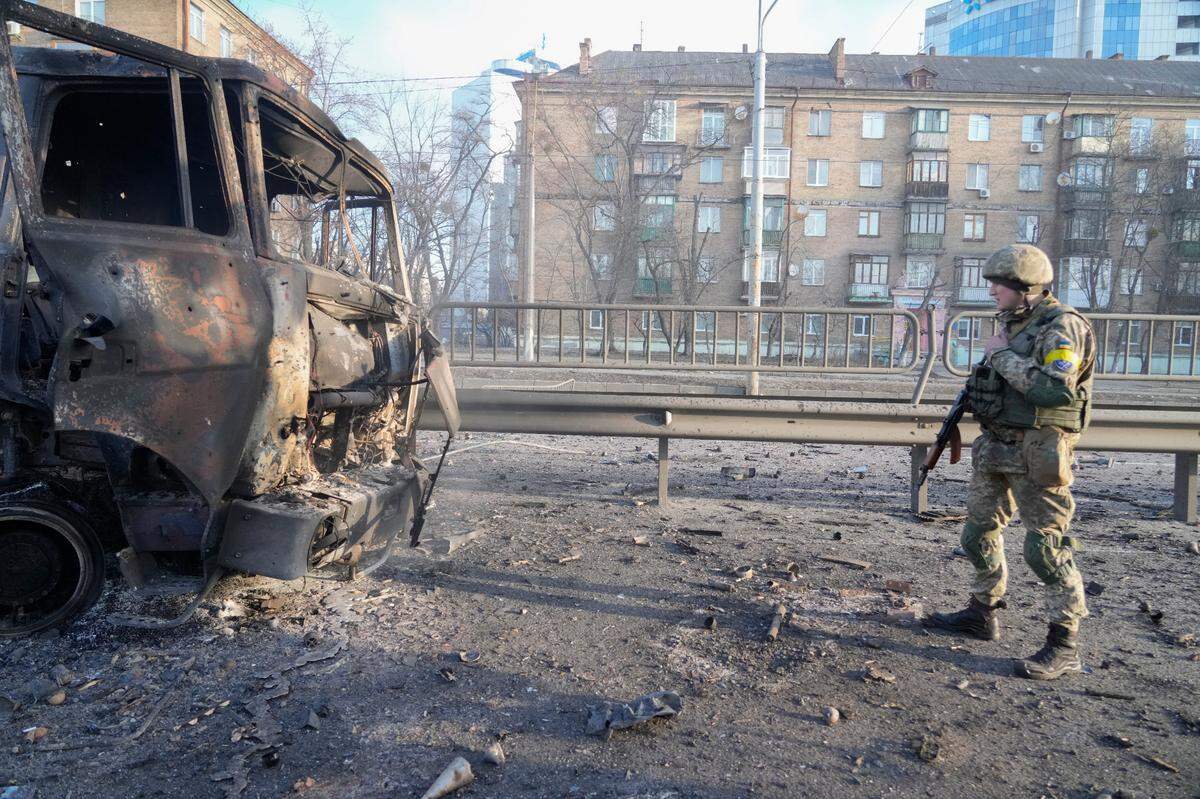
Shkurkin said he’s happy his relatives have made it to safety because civilians are very much at risk.
“The narrative that’s being pushed by the Russian media and by the politicians in general is that they’re only targeting key certain areas and military facilities, and no civilians are dying, which is just a blatant lie,” he said. “They targeted basically all of the military infrastructure at once, but within a week it kind of shifted gears into more of a like shock-and-awe campaign.”
The Russian attacks have included civilian airports, utilities, energy plants, gas depots and government buildings, Shkurkin said. News reports have also documented assaults on hospitals, apartment buildings, theaters and other civilian buildings.
“Now, it’s basically indiscriminate destruction of the cities and they’re fighting Ukrainians who have hunkered down into guerrilla warfare tactics,” Shkurkin said. “And it kind of speaks to maybe the frustration of the Russian military and not getting the results that they need.”
While the women and children left, the men in the family have stayed behind to defend a city that has some comparisons in makeup to SLO County, Shkurkin said.
“They have a military base in Uman and an airport, so it would be analogous to SLO County, where we have both those things here,” Shkurkin said. “Imagine SLO, of all places, getting bombs dropped here.”
Connecting at the border
To meet Shkurkin’s family, Sophia Kardel drove about 11 hours overnight from Germany through Poland to the Ukrainian border with Slovakia, navigating icy roads and snowy mountain passes.
“We had to get there safely to be able to get these people back to safety,” Kardel said. “But it just broke my heart to think that people were actually freezing on the other side of that border trying to get over.”
At the border, they met up with the family, who was guided there by one of the woman’s husbands.
The number of refugees waiting to get across was “less hectic than the Polish border where you see huge lines of people,” Sophia said. “Still, they were told they’d have to wait for 26 hours before being processed. Fortunately, it didn’t take that long.”
Shkurkin’s family members (they communicate through limited English and Google Translate) told them of bombs going off in the Uman streets, a surreal moment as they went from brushing their teeth to packing their bags to get out as fast as they could.
Once across, the family could breathe a sigh of relief, but now are faced with living for the unforeseeable future in a new country.
Sophia Kardel added: “These are incredibly stressful situations, especially those young children who are just depending on them. I am so inspired by these mothers. These Ukrainian women are taking their families on their backs quite literally, and it’s amazing.”

Adjusting to life in Germany
Once back in Berlin, Ergueta said that they have sought to make life as comfortable as possible for the family in their now-crowded apartment.
They did fun things with the kids, taking them on a trip to the aquarium and roughhousing at home.
They have shared foods, tasting Ukrainian cuisine for the first time, and explored some of Berlin together.
“We went from having zero kids in our home to three all of a sudden,” Ergueta said last week. “Definitely, it’s a crowded home, but it’s a super cool experience. We’re learning a little bit of Ukrainian. We’re able to provide joy and some sense of normality to these people’s lives.”
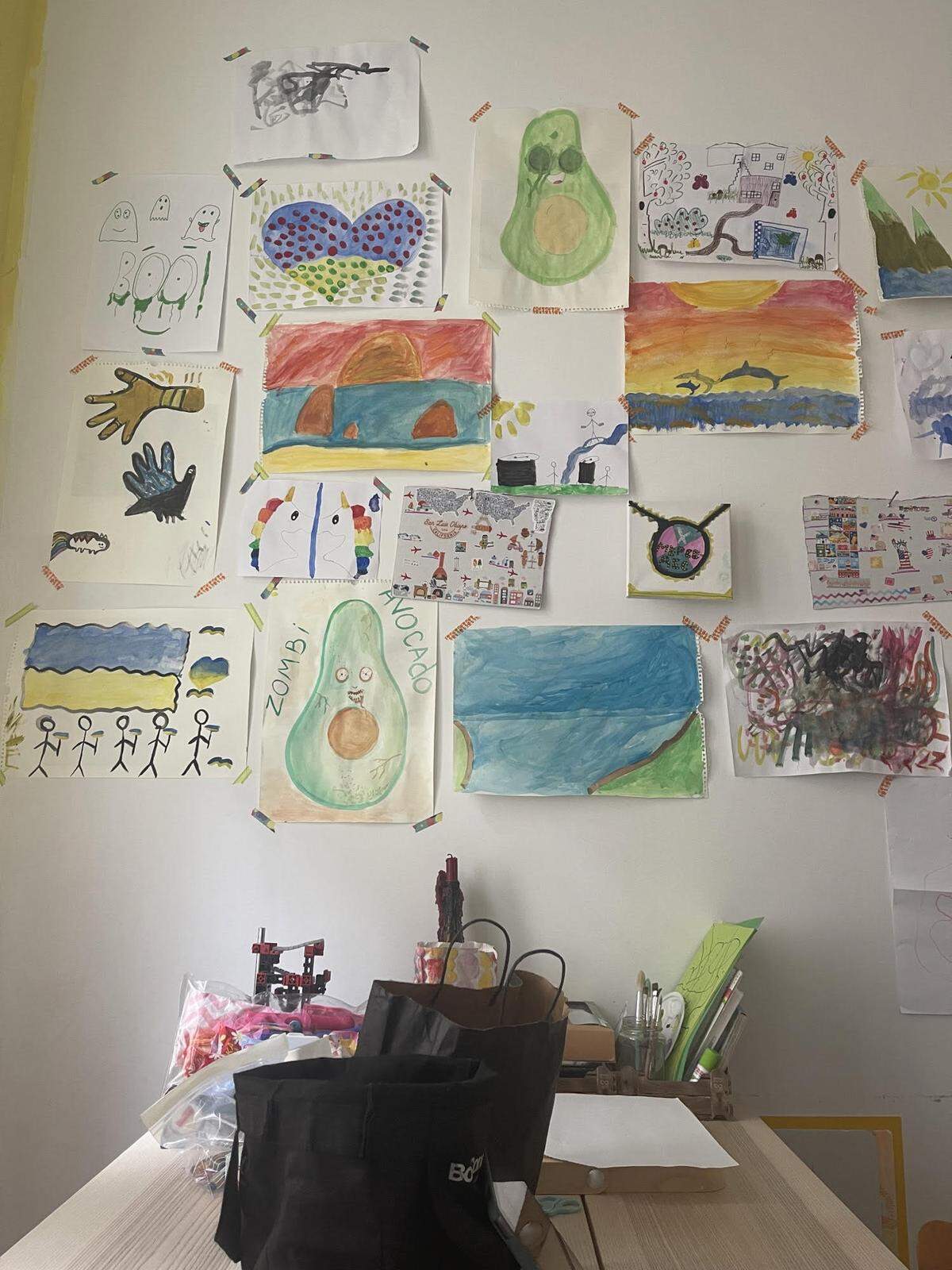
The couple also helped the refugee family look for an apartment. The family recently signed a lease for a space in a Berlin suburb assisted by donations to pay living expenses for the time being, Shkurkin said.
As for what happens next, the future remains unclear. But at least the family is safe.
“It just shows how small the world is,” Sophia Kardel said in an interview via Facebook Messenger. “My dad texts me and said Pastor Doug just said that there’s a family from the church who has cousins in Ukraine who are trying to get out and they really need prayer and they’re really scared. I said, ‘We’ll just go pick them up, right?’ Within an hour this all materialized.”
Sasha Shkurkin created a GoFundMe account to help his family. The link is the following: https://bit.ly/3ujdJ9c.
This story was originally published March 22, 2022 at 1:59 PM.
%20Cropped.jpg)