
SLO’s affordable housing policy isn’t working. Here’s how the city aims to fix it
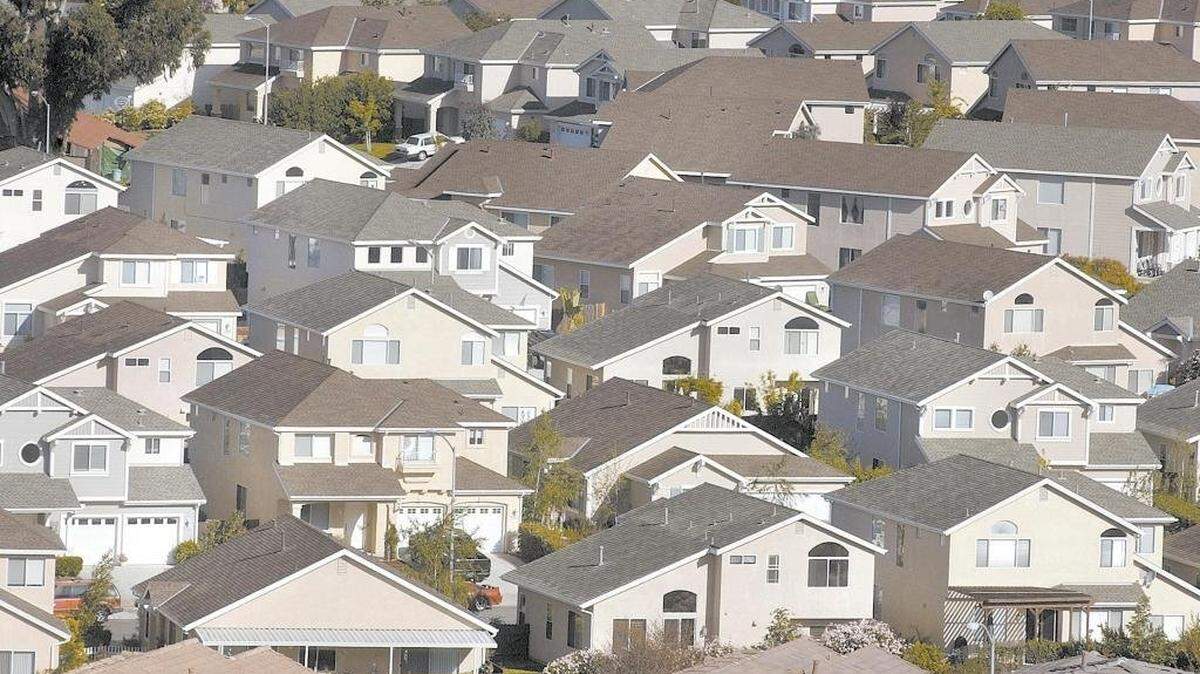
The San Luis Obispo City Council is moving forward with changes to its affordable housing policy in an effort to increase the number of deed-restricted homes that come with caps on prices.
City Council members said at a Tuesday meeting that the current affordable housing guidelines — which restrict home prices based on qualifying people’s income levels — are falling short of community demands.
Under current policy, developers of new projects are required to plan for certain percentages of deed-restricted affordable homes — or pay in-lieu fees toward other projects or donate land for affordable home construction.
But council members say the current policy isn’t meeting the housing demands because development incentives that encourage projects with home sizes that are so-called “affordable by design” don’t actually produce homes that are cheap enough for many lower- and moderate-income buyers. Meanwhile, that same policy effectively reduces the total number of deed-restricted homes — which have price caps that truly cater to lower incomes — that otherwise would be built.
At their market-rate prices, these “affordable by design” homes are still often out of reach for many working people, even when they’re small, according to city staff and a consultant analysis.
In fact, a city staff report showed that in recent months, a two-bedroom, 1,550-square-foot home, for example, would sell on the unrestricted market for around $840,000, far above what’s considered affordable.
Inclusionary units, on the other hand, come with a restricted price range from $163,000 for those considered very low income to $405,000 for moderate income level (calculated based on annual income metrics).
The council gave direction to the city’s staff to move forward with planning an update to SLO’s Inclusionary Housing Ordinance with the goal of ensuring more affordable homes as percentages of projects.
The terms affordable housing, deed-restricted, and inclusionary homes are all used interchangeably to mean those homes designated for people with low to moderate incomes by city standards.
The term “affordable by design” applies to relatively smaller homes and denser projects based on the idea that they provide more affordable housing at market rates by virtue of their size.
“The city’s first Inclusionary Housing Ordinance (IHO) was adopted in 1999,” a city staff report said. “Since then, hundreds of affordable units have been constructed and financed to meet the requirements of the (Inclusionary Housing Ordinance).”
But analysis has showed that “both market-rate residential and commercial development are inducing demand for affordable housing that is not being met by the current housing market.”
The policy change is expected to go to the Planning Commission in May and then back to the City Council in July for updated adoption.
“We can talk all we want to do about trying to build affordable by design, and I have been talking about it for 20 years, but it hasn’t worked,” said Councilwoman Carlyn Christianson. “And so that’s why you have the deed-restricted, and that’s why we’re having this discussion. ... That’s the only thing that really works.”
Recommended changes
The recommended changes include removing a policy chart that can significantly reduce affordable home requirements if the development meets “affordable by design” criteria. The council supported removing the Table 2A chart from its ordinance.
For example, a 280-project development in the city could be required to build only one inclusionary unit if it meets a certain threshold of higher density and smaller home sizes.
Under that 280-home “affordable by design” scenario, city staff recommended policy changes that would require a minimum number of 28 affordable homes, if all of the homes were for sale, or 17 affordable units if the project included all rental homes (projects may designate affordable homes for rent or for sale depending on project plans).
Changes would adjust minimum affordable housing percentages, how land use and zoning apply, and commercial building project fees as they relate to the city’s inclusionary housing ordinance.
Under the existing Table 2A, SLO had tried to balance the profit margin considerations for developers to encourage construction of market-rate workforce homes with requirements for a minimum number of inclusionary units, according to city staff.
“Everybody’s dream would be for an inclusionary housing requirement not to be needed, but that’s not the case right now,” said SLO Community Development Director Michael Codron. “The market, whether it’s the fault of the city’s development program or just a function of being coastal California or you name it, is not producing any affordable housing in any of the categories that we track.”
The new policy wouldn’t apply retroactively to approved projects such as city’s two new large mixed-use developments, Avila Ranch (a planned 720 homes) and San Luis Ranch (under construction for 577 homes). Those have vested ordinances and fees and wouldn’t be subject to any new affordable housing restrictions, Codron said.
Development profit margins still are factored into the analysis of the new recommended changes, which are designed to still encourage new building.
“Based on recent experience with developers and lenders in the region, (city consultant Economic & Planning Systems Inc.) assumed that developers would require at least a 15 percent profit margin in order to accept the risk associated with the project,” the staff report said.
Reaching housing affordability
Councilwoman Jan Marx urged setting the highest feasible standard of affordable home requirements based on consultant studies.
City staff recommended a minimum of 10% inclusionary homes for sale for projects of five units or more.
The details of the new draft policy are still being assessed, but projects under 10 homes could have the option of paying an in-lieu fee versus building inclusionary housing.
As the current ordinance stands, when fractions of inclusionary homes are calculated under the affordable home formula, the number is rounded up. But that means projects of smaller sizes have a higher percentage of required affordable units versus those with more overall homes.
A 2020 Affordable Housing Nexus Study completed by consultants David Paul Rosen & Associates, analyzing the need for affordable housing based on market rates and other factors, recommended a 15% minimum requirement of inclusionary homes for projects that build housing for sale or rent, according to a city staff report.
But a 15% minimum would exceed the threshold for development profit margins, fees and other factors, according to the latest study by the consultant, Economic & Planning Systems, Inc. (EPS).
EPS recommends 10% minimum affordable housing units for for-sale projects and 6% for projects with rental units with an emphasis on “very low-income units” (3%) and “low-income units” (3%).
“The results show that the current in-lieu fee is borderline infeasible, while the maximum nexus-based fee is not at all feasible,” a city staff report noted.
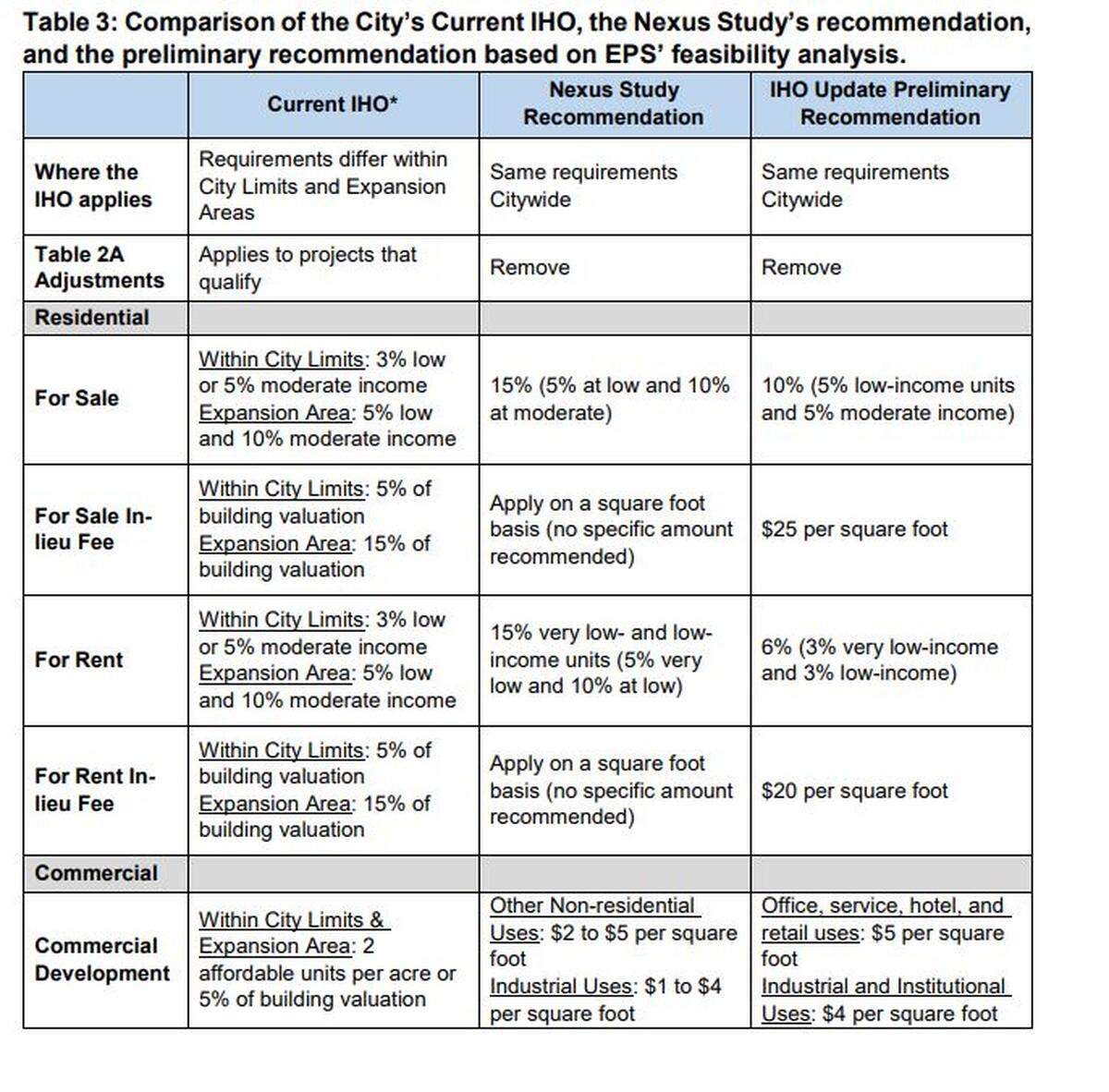
Currently, the city requires 8% inclusionary housing in projects with homes for sale, though “affordable by design” incentives frequently reduce that number. Current inclusionary housing rental standards are 3% low income and 5% moderate income.
For the minimum for-sale affordable unit target, however, Marx recommended the Nexus Study suggestion.
“I think we should go with 15%,” Marx said. “I don’t think we have to worry about dampening the development market. The building market in our city is hot. It is way over the top. It’s really doing very, very well. So I think we should go for 15% at least for the next year and check it out.”
City officials will conduct outreach over the next few months to seek input from developers, nonprofit housing organizations and the community to better fine-tune its proposal before formulating a formal draft update.
The Inclusionary Housing Ordinance is only one tool the city uses to boost housing accessibility.
The city also has a pot of funding it allocates toward nonprofit housing projects, among its other strategies.
Affordable housing administration
In addition to its discussion around increasing affordable housing numbers, SLO council members recommended the city put into its new code the establishment of a “below-market-rate housing administrator.”
The administrator would help streamline the affordable housing transaction process, assisting buyers with deed and financing paperwork and administration.
In 2021, SLO issued construction permits for more than 100 “below-market-rate” units.
The Morgan Hill-based, for-profit company HouseKeys is helping administer the Avila Ranch affordable housing transactions, for example, and plans to help the city with future projects.
“HouseKeys requires the developer pay 3% to HouseKeys to represent the buyer’s side of new build transactions and they propose to act as the listing agent for all resale transactions at a fee of 6%, offering only 2% to the buyer’s side agent,” they wrote in an answer to questions on fees. “The city does not benefit from the fee structure.”
SLO city officials currently handle some of the duties of connecting eligible households with affordable housing units, along with nonprofit housing organizations, developers, real estate agents, lenders and others.
“This process was manageable when the total number of units in the city’s inventory was smaller,” the staff report noted. “However, this decentralized method of administration also has had significant drawbacks.”
HouseKeys has a staff dedicated to answering public questions and helping people through the affordable housing transaction process.
“For the cost of less than one full-time employee, the city is now able to reassign work to its housing coordinator to focus on high-priority initiatives and projects, while gaining the work of a 29-member team to support BMR administration functions,” the city’s staff report stated.
The third-party administrator is expected to “allow the city to effectively scale its program up while providing significantly enhanced benefits to the city and community in the form of program compliance, customer service, and implementation of best practices,” the staff report said.
Correction: This story was updated to accurately reflect the way a new policy would apply to projects under 10 homes and how fractions of affordable home percentages would work.
This story was originally published March 3, 2022 at 9:00 AM.
%20Cropped.jpg)