
Second in a series of SLO Art Museum murals is inspired by Black history, storytelling
A new mural at the San Luis Obispo Art Museum wrapped around the building’s four walls highlights a fictional Black warrior queen and the unrecorded histories of Black Americans in the West.
The mural, called “Calafia Was Here,” by Erin LeAnn Mitchell, is the second in a planned annual series of murals from the museum, which selects emerging artists with diverse backgrounds from across the country.
Mitchell and a group of Cuesta College students finished the mural Feb. 24 after starting the project Feb. 3.
The museum funded it through a $10,000 grant under the National Endowment for the Arts Challenge America program.
SLO’s museum was among 168 projects across America selected to receive a grant from a funding pool totaling $1.68 million.
“Even in my profession, Black women artists are not represented at the level we should be,” Mitchell told The Tribune. “I saw the mural as an opportunity to take up space and reclaim a history that had been dismissed as fiction.”
Cuesta students Melayna Smith, Halden Willard and Jessica Alcazar assisted with the project, helping with the painting.
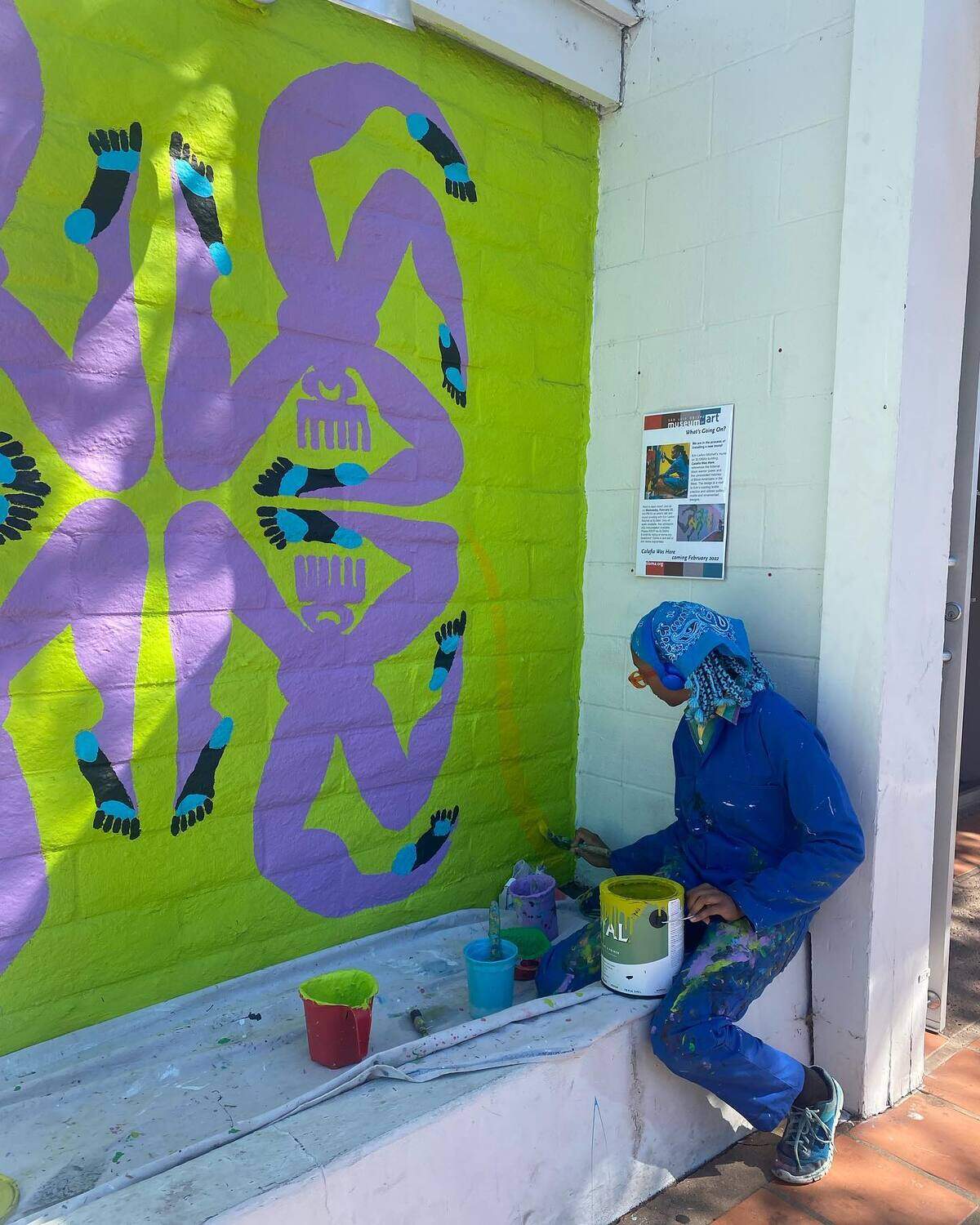
Work includes themes of Black history, warrior queen
Mitchell — a native of Birmingham, Ala., earned a bachelor’s degree at the School of Art Institute of Chicago and a master’s in Art Education from Colombia College.
“Calafia Was Here” references the fictional black warrior queen and the unrecorded histories of Black Americans in the West, the museum said in a news release: “The design is a nod to Erin’s existing textile practice and utilizes quilting motifs and ornamented designs.”
Mitchell said: “The story of Calafia resonates with me because of the lack of visibility and acknowledgment given to Black women for contributions to this country.”
Mitchell said at a recorded museum talk in February she has deep knowledge of Civil Rights in the South but “I had not known of any Black history in the West, aside from the L.A. riots.”
“Outside of that, I had no registry of Black history in this region and I wanted something that would connect to the area, but it was difficult to find here and I ended up having to think more broadly,” Mitchell said. “When my friend Tori brought this story (of Calafia) to my attention, I thought it was amazing. I didn’t know about this and chances are many others didn’t either.”
“Calafia Was Here” is based on a 16th century novel about an Amazon goddess named Calafia who ruled over her tribe of Amazon women, according to SLO Art Museum Director Leann Standish.
“The piece of has a lot of movement and strength to it,” Standish said. “I love that she truly took the whole building. Everything about the building has changed externally too and it just made this neighborhood so dynamic.”
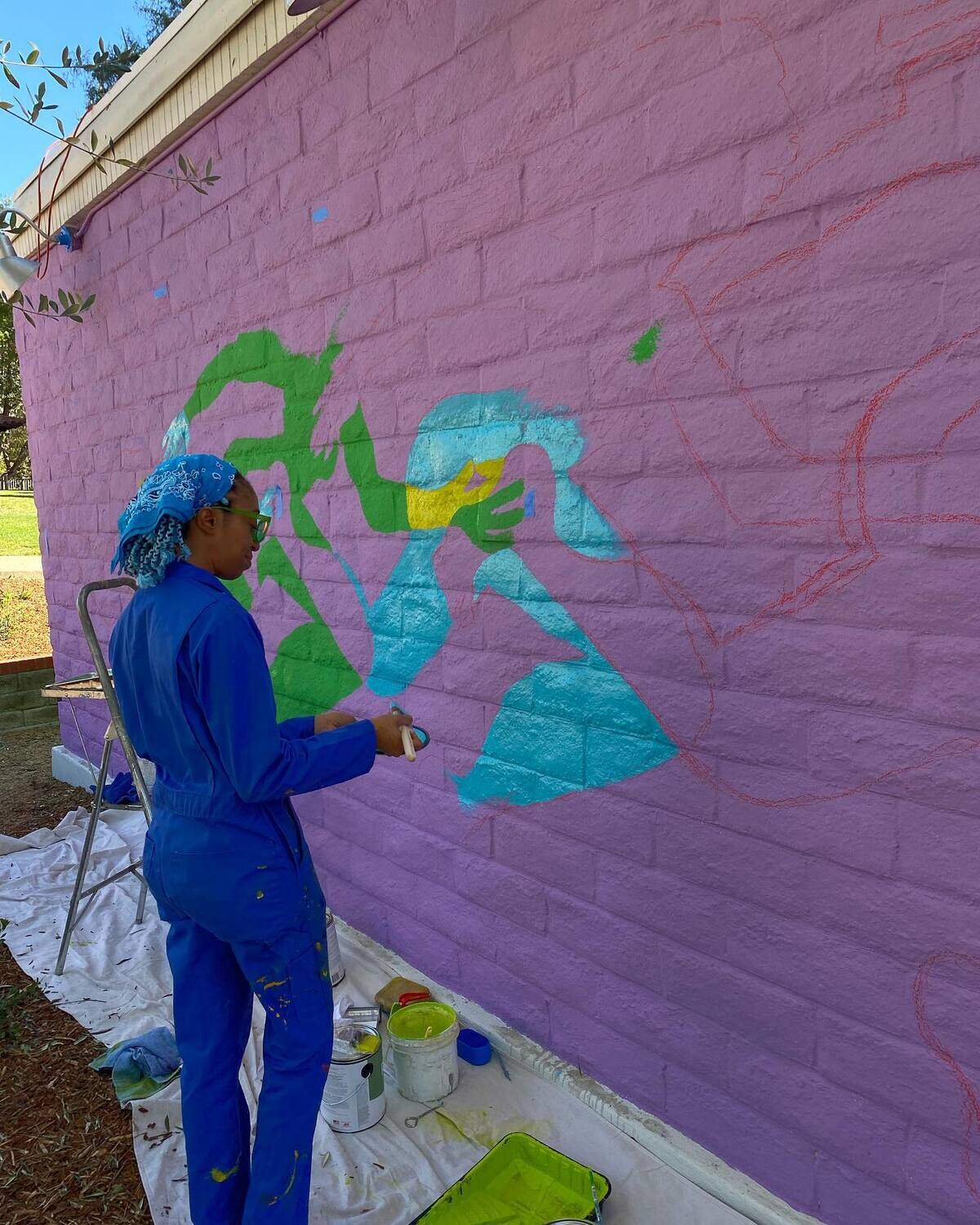
Some believe the name of the state of California was derived from the Calafia story, though the subject remains in debate.
Standish said that the project was a valuable experience not only for the visual result, but the communal experience during the painting process as well.
“It really evolved when she was here and getting to know the community and where the building lives and the community and all of that,” Standish said. “I think it’s a really dynamic piece. It has just blown my mind and we’ve gotten such good feedback about it.”
SLO Museum adds vibrancy to walls
Standish said that the museum building didn’t have any visual component on its exterior prior to implementing its annual mural program.
The first mural, “Pacificaribbean” by Juan Alberto Negroni, blanketed the building last year.
That work was inspired by Negroni’s upbringing in the city of Bayamón near San Juan in Puerto Rico.
“We were really intentional about wanting to represent our include artists who weren’t the artists who have been shown in the museum for decades,” Standish said. “So, we invited (Negroni), who spoke Spanish to our visitors, and that really meant a lot of things and it was sort of the same thing with Erin.”
%20Cropped.jpg)