
The SLO County animal shelter isn’t taking in healthy stray cats anymore. Here’s why
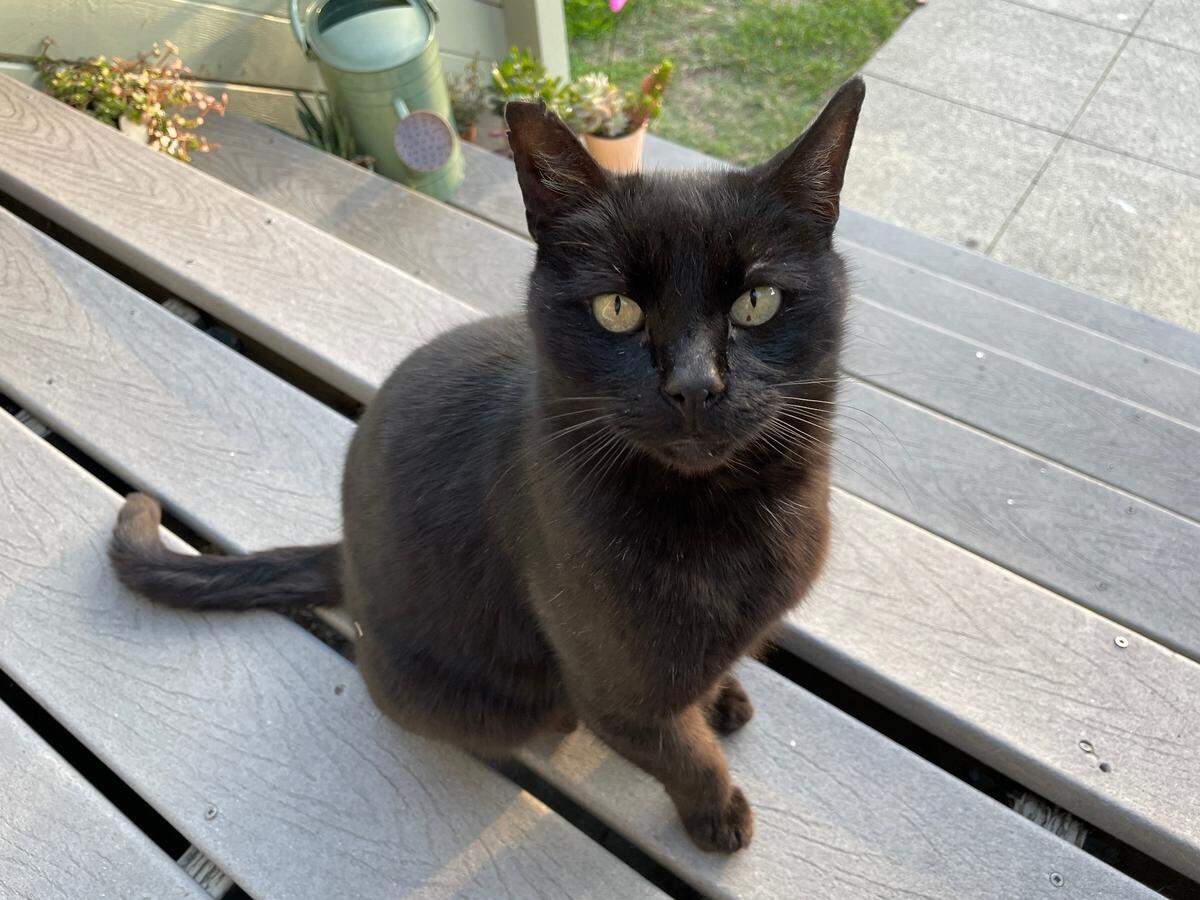
The next time you find an unfamiliar cat hanging out in your yard, don’t immediately take it to Animal Services — the shelter is handling stray felines a little differently these days.
According to San Luis Obispo County Animal Services Director Eric Anderson, the shelter is no longer taking in healthy stray cats, except in very specific circumstances.
“The truth is, cats are not dogs,” Anderson said as an explanation for why the shelter has adapted its feline intake policy. “And quite honestly, the way that we as people relate to them — as pet owners relate to them — is different as well.”
Instead of taking in all stray cats, Animal Services is now advising people to leave outdoor cats where they are, unless you definitely know the animal is sick, injured, abandoned or a lost indoor cat.
This helps the county shelter avoid becoming overrun by cats that are actually doing well in their environment, but who might not be adopted if they are taken to the shelter because of their temperament or other factors, Anderson said.
When that happens, the county often has no choice but to euthanize them.
“We’re not doing anything successfully to manage the cat population (with that),” Anderson said. “All that we’ve managed to do is take some of those animals and kill them without really any, any benefit on the other side of it.”
In 2010, SLO County Animal Services euthanized 735 cats. In 2020 — when the department began moving away from taking healthy strays — that number was 57.
Many of those euthanized during the height of taking strays to the pound may have been cats that if left in their original environment would not have had to have been killed.
In light of that, Anderson said the county decided it needed a new approach, one specifically crafted around cats and their specific needs.
Animal control programs historically modeled around dogs, not cats
But why did it become so commonplace to call Animal Services for stray cats in the first place?
To answer that, we have to first go back to the roots of animal care and control programs.
According to Anderson, most programs first grew out of concern about rabies in the early 1900s.
“That was focused largely on stray dog populations,” he said. “Then as communities became a little bit more urbanized, animals moved into the neighborhoods and in the households.“
In 1952, the San Luis Obispo County Board of Supervisors voted to establish pound districts and dog licensing requirements in the midst of a particularly heightened worry about rabies in the community, according to an Aug. 19, 1952, story in what was then The Telegram-Tribune.
After that, the focus became less on rabies and more on “questions of animal welfare and public safety related to animals within the community,” Anderson said.
By the end of the 20th century, Animal Services was primarily devoted to the intake and sheltering of stray dogs that were roaming around neighborhoods, and then helping reconnect them with their owners.
Somewhere along the way, cats got caught up in the same model, even though as Anderson noted, dog owners and cat owners are markedly different beasts.
Cats more likely to go unclaimed at SLO County animal shelter
While dogs would be taken to the shelter and then reclaimed by their often frantic owners, cats who were brought in were way less likely to have someone come in and claim them, Anderson said: Roughly 30% to 40% of stray dogs brought into the shelter will be reclaimed by their owners, while the reclaim rate for cats is only 4% — a marked difference.
“There’s a real disparity between people coming in to get their dogs and people coming in to get their cats,” Anderson said. “As we realized that this wasn’t working for cats the way it was working for dogs, it raised this question as to, you know, why is that and why are we seeing these differences?”
It was likely due to a number of reasons, he said, but in general comes down to the very different way that people interact with cats.
“Our dogs are very different than our cats as pets, and they behave differently in the household and they behave differently to their owners,” he said.
It starts from the very beginning: Dog owners are more likely to actively decide they will own a dog, while the story Anderson hears more often from cat owners is that they acquired or found the feline on the street and began feeding it.
Essentially, they stumble into cat ownership, he said. Then if the cat goes missing, many just assume the cat has moved on to someone else, much like it came to them.
Compounding the issue are outdoor cats, for whom it can be difficult to determine ownership at all.
“Cats don’t really obey fences — they don’t obey leash laws — and they kind of roam around the neighborhood normally,” Anderson said. “What we might see is a cat that somebody sees in their front yard and goes, ‘Well, this is a stray cat. I don’t know who owns it.’”
Anderson said they might then trap the cat and bring it to the shelter, not realizing that it wasn’t a stray at all.
“Essentially, what we’ve done at that point is kidnapped the cat out of its home, almost the same way as if you went in somebody’s yard and took their dog out of the yard and brought it right into the shelter,” he said. “So we’ve taken that cat from where it belongs.”
From then, it usually takes several days for the cat’s owner to realize Fluffy has gone missing. Some might go searching for them, of course, but many just assume the cat either moved on to a new home or was killed by a dog or car.
“They don’t have the same inclination to come in and look for that cat at the shelter,” Anderson said. “Meanwhile, that cat is sitting here in the shelter waiting for somebody to come and get it. (But) that person doesn’t even recognize it has gone yet, so it’s here for three or four days.”
Once it’s past the mandatory hold period, that cat can either be adopted out to a new home, or it could eventually be euthanized.
“That’s one of the real issues that we see with picking up a healthy stray cat,” Anderson said. “The likelihood is that it may well belong to somebody with it right in that neighborhood. And once we take it out, it’s not going to go home again.”
Community, feral cats pose difficulty for animal control
That is part of the reason why the SLO County animal shelter is no longer taking healthy stray cats, but there is another broader issue at play: feral cats.
San Luis Obispo County has long struggled with what can seem like larger-than-average cat colonies in certain communities, particularly in the North County.
Some of these cats might have originally come from homes and are somewhat domesticated but don’t have one specific owner, while others are purely feral. Some are cared for by multiple residents in a neighborhood, with them all feeding and or attempting to get medical care for the feline, while others are more wild.
When Animal Services would be called to pick up one of these cats from a neighborhood, their chances of a successful outcome were even more bleak. Without a specific owner, there was little likelihood they would be reclaimed, and often their wild temperaments made them difficult to adopt. Many ended up having to be euthanized, Anderson said.
Meanwhile, another cat would likely take the taken one’s place in the neighborhood, since there were resources in that environment to support it — a ecological concept called “carrying capacity.”
“So we take two cats out and we bring them in here and we kill them,” Anderson said. “Now two more come in, and we take those out, we kill them. And you get into this process, this circular process, of trapping and killing eventually large numbers of cats. Hundreds of thousands of cats over a period of years. But you’ve not done anything really to address the fundamental issue within the community. People aren’t seeing the number of cats go down because the resources to support them are still there.”
Here’s where the county’s policy change comes into play: if a healthy cat appears in your neighborhood, the best plan is to leave it there.
That’s not to say there isn’t anything you can do to help prevent the neighborhood from becoming overrun with little kittens.
Trap and release programs encourage spaying and neutering of cats
If you believe a free-roaming cat in your area is un-altered (not spayed or neutered) you can reach out to a number of local groups that specialize in trapping feral cats, neutering them, and then releasing them back into their original location.
Anderson said this is a proven way to help reduce cat populations and keep feline colonies in control.
In 2019, the city of Atascadero urged residents to “help ensure that all community cats are spayed or neutered.”
“Anyone providing food, water and/or shelter, either purposefully or unintended, has an obligation to their neighbors and to the entire community to make certain that all cats gathering within range of their generous care are spayed or neutered,” the city said in a news release.
The city said participation in TNR programs ”will help to ensure that these very active and frequently overpopulated cat colonies do not continue to have a detrimental effect on our community.”
At the time, the city said it was developing a community cat program with local organizations that would help residents learn more about TNR, but those plans were put on hold in 2020 due to the coronavirus pandemic.
The program also would have established feeding and watering locations for established community cat colonies.
City spokeswoman Terrie Banish said Atascadero plans to pick up the program again later this year.
Policy changes allows for more ‘positive outcomes’ for cats at shelter
Anderson said since the policy began changing several years ago, intake of cats to the shelter has dramatically dropped.
Ten years ago, the shelter might take in close to 2,500 cats, he said. Now, that number is “probably around 500,” he said.
Instead of focusing on taking in healthy strays, the county animal shelter has also been able to use some more of its resources to support the cats that do wind up at the shelter, especially those that need medical care.
“So the resources that went to that are now able to apply to domestic friendly cats, well-tempered animals, that very much can be placed into home and become loving pets for somebody,” he said. “We’re able to take some of those resources, that capacity that was being spent on very literally a dead-end project, to animals that we’re now able to find positive outcomes for.”
Though the policy change did upset some — PETA even started an online petition — Anderson said in general people have been supportive of the change, especially lost cat owners who call in about their missing outdoor felines, worried someone may have picked them up.
“They would rather be looking for it at home and have a chance for it to come back I think, than somebody is going to bring it into the shelter where it may eventually either placed off with someone else or you know, possible euthanized.”
This story was originally published February 14, 2022 at 5:00 AM.
%20Cropped.jpg)