
Paid parking is coming to Morro Bay as council moves ahead with plans for Embarcadero
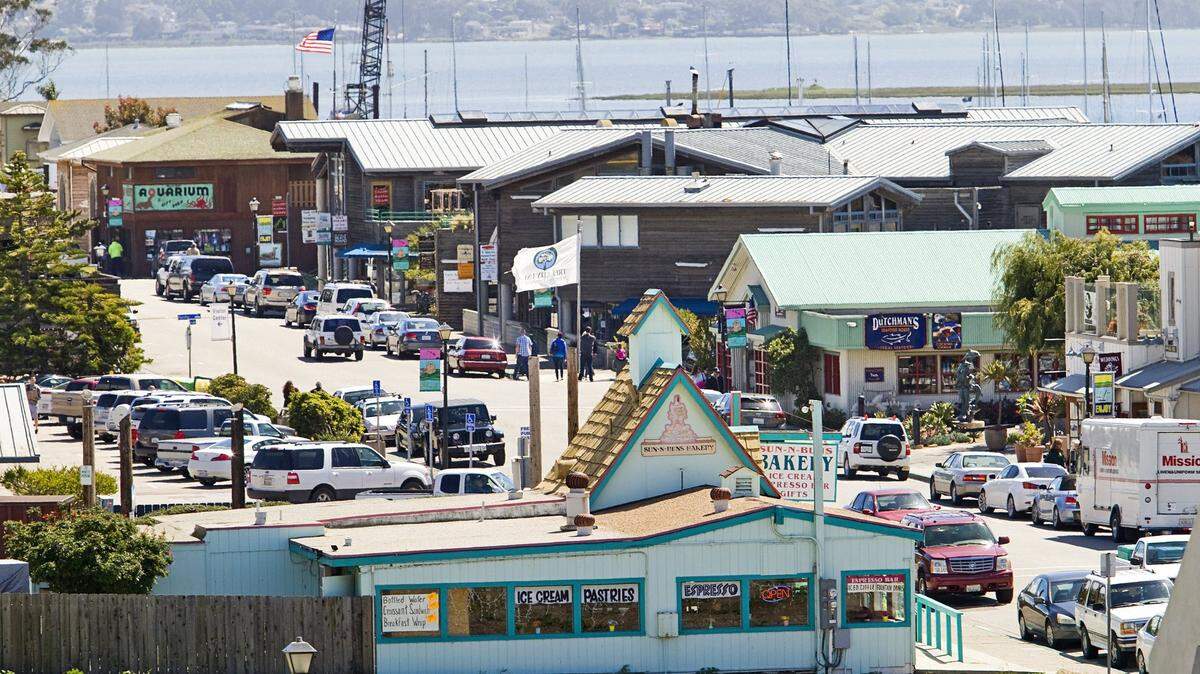
The Morro Bay City Council moved ahead Tuesday with plans to implement paid parking on the Embarcadero after a study found that the area is heavily used by motorists and would benefit from more parking turnover.
The council voted unanimously to pursue the program, which will need formal development before being brought back for formal adoption.
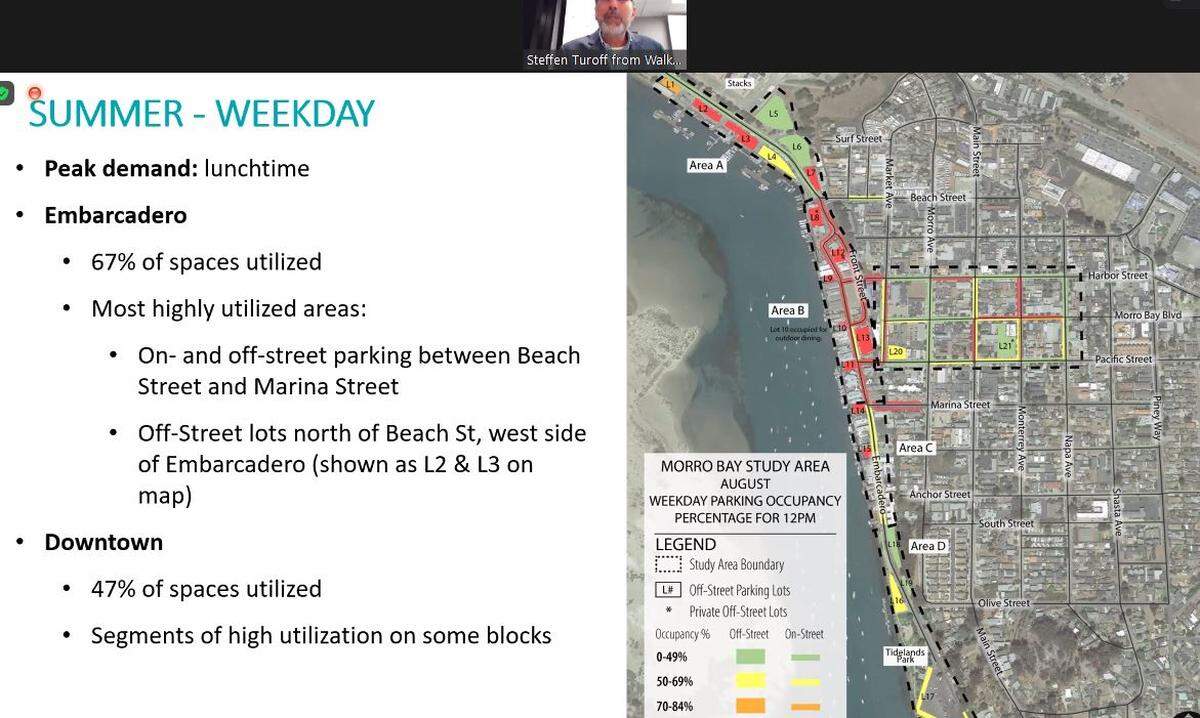
A city study conducted in 2020 by Walker Consultants was presented at Tuesday’s meeting and showed high demand for street parking, which is currently free, in busy areas along the Embarcadero and at Morro Rock’s parking area.
The City Council advanced a pilot program that broadly covers the Embarcadero roughly between Tidelands Park and the stretch of the Embarcadero near the stacks.
Exact paid parking pilot program locations, rates and hours are still under consideration.
The council recommended further analysis on the parking area at Morro Bay Rock, where studies have shown parking exceeded 80% capacity on busy days.
“We’ll need to reach out to user groups and try to get a true test of what the model will be like,” said City Manager Scott Collins.
Collins said the city will reach out to hoteliers, fishermen, workers, businesses, planners and others to formulate a specific paid parking model.
A 2020 study showed during a peak weekend time around lunch hour, 86% of spaces were used, and at weekday lunchtime, 67% of spaces were used, both numbers that represent high demands, Walker’s report noted.
There are 1,136 parking spaces on the Embarcadero.
“Parking availability along the busiest portions of the Embarcadero has been perceived to suffer from a lack of availability and congestion, perceptions that were confirmed by Walker’s (the consultant’s) analysis of parking occupancy and turnover rate,” a city staff report noted. “A lack of parking availability can significantly constrain customers and other visitors from enjoying convenient access to the area in general and businesses specifically, in some cases dissuading or preventing the public from patronizing businesses.”
The city also plants to consult with the Coastal Commission in advance of implementation, as it would need permitting to implement the pilot.
That’s considering the commission’s mission is to provide low and no cost access to the coast and the Morro Bay roadways under consideration are in the coastal permitting zone.
Most of the parking visitors stayed between one and two hours, the Walker study found, but a “sizable number park longer and most likely are employees, business owners and recreational fishermen.”
“Lunchtime, at noon, was found to be the peak period of parking demand during every condition analyzed for both the Embarcadero and downtown,” the study noted. “This strongly suggests that the overlap of restaurant and coastal access are key drivers of parking demand.”
The city’s boat launch area at the end of Tidelands Park has a kiosk that charges boaters who park their cars and trailers there for day use, but that wasn’t part of the discussion or program considered Tuesday, said City Manager Scott Collins.
Paid parking would generate revenues
Walker estimated the city could generate $200,000 or more annually in new paid parking revenue, which it considered a conservative estimate, basing that figure on 300 paid parking spaces and a $1-per-hour charge. More spaces than 300 could be designated for fees.
The city’s consultant, Walker, recommends kiosks where people can pay for their parking at stationed locations.
Parking apps also may be considered as part of the pilot, but meters won’t be used, according to Collins.
Downtown parking areas east of the Embarcadero aren’t being considered for the program.
The pilot program would last at least six months to a year while gauging the peak seasonal demands and offseason parking as well before a consideration of permanent measures, according to Collins.
City Council members supported the idea of increasing parking availability on the Embarcadero and providing funding for upgrades to the area.
Among their goals were to:
▪ improve public infrastructure such as bathroom and sidewalks, surface parking lots and the roadway network.
▪ promote biking and non-driving transportation.
▪ hire an ambassador to direct people and manage enforcement.
“This ... could potentially help fund a number of significant improvements that were noted in the presentation, and I think that’s a very positive aspect of this,” said Mayor John Headding. “I do believe it improves coastal access.”
As the planning moves forward, the council directed city staff to consider potential alternatives for employee parking on the Embarcadero and evaluate industrial delivery zone parking.
No timeline was set for when a formal program could be adopted, but Headding urged that it be “as soon as possible.”
Councilmember Dawn Addis expressed concerns for employees who may need to walk longer distances to parking in the dark, and an escort program could be part of the revenues generated, according to the consultant, Steffen Turoff, of Walker.
Addis said that the potential benefits to city infrastructure are an important consideration.
“I think the (Morro Bay Chamber of Commerce) really said it best when they said that free isn’t actually always free, and that it’s important for us to take into consideration what we feel like we can, want to, and should subsidize and where we need to recover costs so that we can improve the product of Morro Bay (infrastructure), which has been an ongoing conversation for our city,” said Council member Dawn Addis.
This story was originally published November 10, 2021 at 1:33 PM.
%20Cropped.jpg)