Atascadero officials envision a safer, greener, more active El Camino Real corridor
After years of research, the city of Atascadero revealed its vision for a safer and more inviting El Camino Real corridor on Tuesday.
The ambitious blueprint calls for creating a downtown zone with more dining and shopping opportunities, more walkable streets and more trees.
“It is exciting to look back at these designs and ideas from when we originally looked at this. It has a lot of great potential, as it still does,” said Heather Newsom, mayor pro tem of Atascadero, during Tuesday’s City Council meeting. “It’s nice to see ideas and recommendations come together as our community grows and evolves.”
The El Camino Real Plan was funded by grants from Caltrans and the City Council to explore development opportunities and transportation improvements to make the spaces along the El Camino Real corridor more inviting for visitors, according to the draft plan.
The 7-mile stretch of El Camino Real runs through the heart of Atascadero parallel to Highway 101. Residents describe the road as unsafe and not walkable because of the speed of traffic, lack of pedestrian walkways and retail establishments being spread throughout the corridor, according to the draft plan.
Efforts to calm traffic along the El Camino Real corridor have been ongoing since 2017. In 2019, three possibilities for slowing traffic were presented to the public, city officials said.
The El Camino Real Plan presented Tuesday focuses on two areas in particular: The north segment, which extends from San Anselmo Road to just north of San Benito Road (south of the Del Rio Specific Plan area); and the south segment, which extends from Highway 41 to the intersection of El Camino Real and San Gabriel Road, just south of Santa Rosa Road.
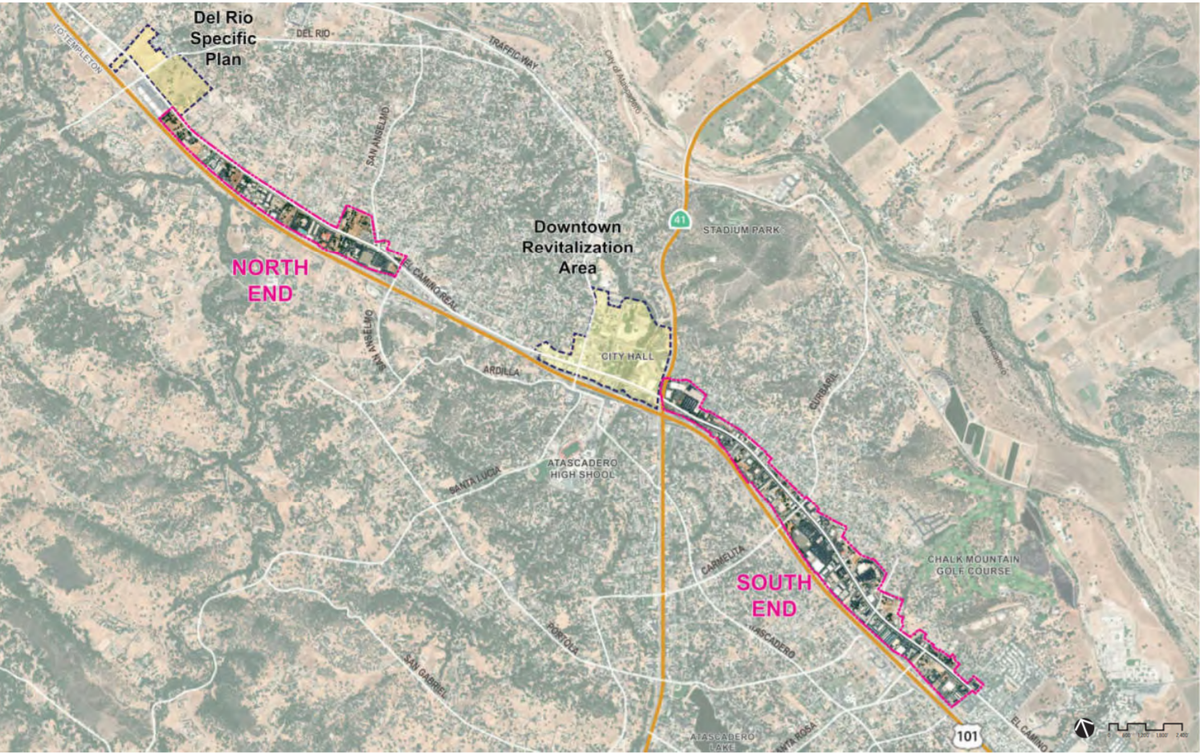
These areas were identified as key opportunity zones because they have the most potential based on their current configuration and because they are not part of the Del Rio and downtown areas, which already have detailed land use and transportation plans in play, said Phil Dunsmore, community development director for the city of Atascadero.
Though the plan presents numerous development strategies to improve the look and feel of the corridor, nothing is set in stone. The plan is more of a “recipe book” for city officials to pull from as they develop strategies to attract more businesses to Atascadero, as opposed to a final policy document, Dunsmore said.
“We can pull from these ideas in (the El Camino Real Plan) to help bring us up to speed as we do our General Plan,” he said.
The findings of the El Camino Real Plan will likely be applied to the city’s General Plan, which the city will update later this year, Dunsmore said.
What Atascadero residents want: Experiential retail, mixed-use buildings and trees
The city solicited public feedback about everything from land use, traffic circulation and community aesthetics by surveying residents and business owners, as well as visitors to the 2018 and 2019 Colony Days event in downtown Atascadero.
The feedback revealed a few of the top changes residents want to see in the El Camino corridor, including: more shopping, dining and services in the city to give people places to go and things to do; more pedestrian crosswalks, bike lanes and safer crossings along El Camino Real; and more trees. Respondents also want to see cohesive city aesthetics and more mixed-use properties, like the La Plaza development downtown, throughout the corridor, according to the draft plan.
The authors of the plan built on these suggestions to propose a pedestrian-friendly road that is the “spine of the community” in the next decade. By making the road and surrounding commercial areas more accessible, people will gather to shop, dine and enjoy outdoor spaces, the draft plan envisions.
“The first time you visit, you know you have arrived someplace special,” according to the plan. “What used to be a highway dominated by cars and asphalt now has wider and safer bike lanes and crosswalks. Street trees now line the boulevard, providing a sense of rhythm, continuity and shade. Gateways into the city are welcoming, with colorful trees and wayfinding signage. Numerous plazas, paseos, pocket parks, and outdoor eating areas have sprung up as an integral part of each new development project.”
Key to realizing this vision will be changes to the road itself. The transportation study funded by a 2017 grant from Caltrans suggests condensing El Camino Real from five lanes to three in some spots, adding bike lanes, street parking, pedestrian walkways like the expensive but effective High-Intensity Activated Crosswalk (HAWK) beacon and more, according to the draft plan.
Why experiential retail is key to bustling streets
Many retail buildings in Atascadero today are standalone storefronts with their own parking lot and curb cuts or are dispersed in a shopping center alongside light industrial facilities and self-storage centers, according to the draft plan.
Today, more than 70% of Atascadero residents travel outside the city to shop and 62% travel outside the city to eat, according to the plan. Building “experience-oriented retail” areas throughout the corridor has the potential fix to this economic gap, Dunsmore said.
“It means going out somewhere to go shopping, eat, dine and entertain all in one particular location or region. That’s the key thing,” Dunsmore said. “Otherwise, you’ll just order it online.”
The plan showed the El Camino Real corridor could support 38,000 to 67,000 square feet of new restaurants and bars, which are critical to building revitalized city centers on the north and south ends, Dunsmore said.
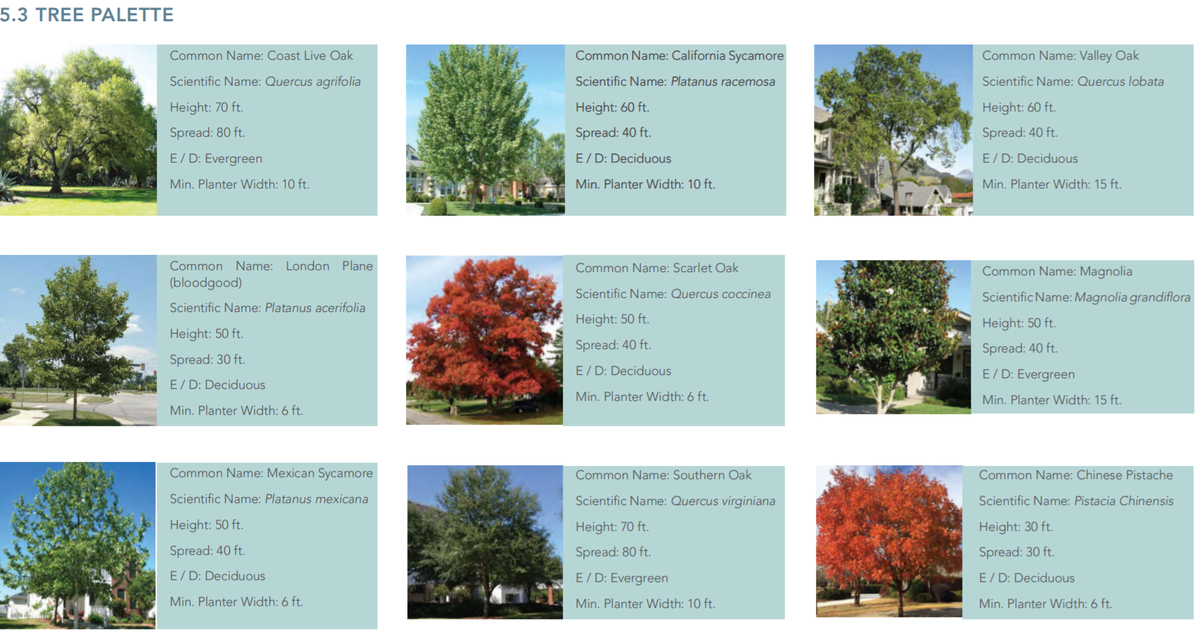
The 154-page plan presents big ideas on everything from how strategic land use and zoning can be used to build experiential retail areas to a palette of trees and examples of different storefronts that exemplify commercial building design.
What’s next?
Council members shared their excitement at Tuesday’s meeting about the ideas Dunsmore presented in the report but acknowledged there is no timeline or strategy for implementing these ideas quite yet.
One barrier is getting business owners to the table to have a discussion about how an existing establishment fits into shared city planning priorities, Dunsmore said. Corporate-owned businesses are particularly tricky to negotiate city planning priorities with because of issues like non-compete clauses, he said.
Building a fund to help convince businesses to relocate to further the place-making goals of the city is one idea, Mayor Heather Moreno said at the council meeting.
In the end, it comes down to finding the funding, Dunsmore said. Establishing city priorities is also important as well. While improvements like the HAWK beacon crosswalks are valuable to the city, they’re also expensive, council members noted.
The next step will be deciding how the vision for a greener, safer and more inviting El Camino Real Corridor fits into the city’s General Plan, officials said.