SLO County foster kids sometimes sleep in offices as family shortage reaches crisis
Editor’s note: This is the first part of a two-part series on the foster care crisis in San Luis Obispo County.
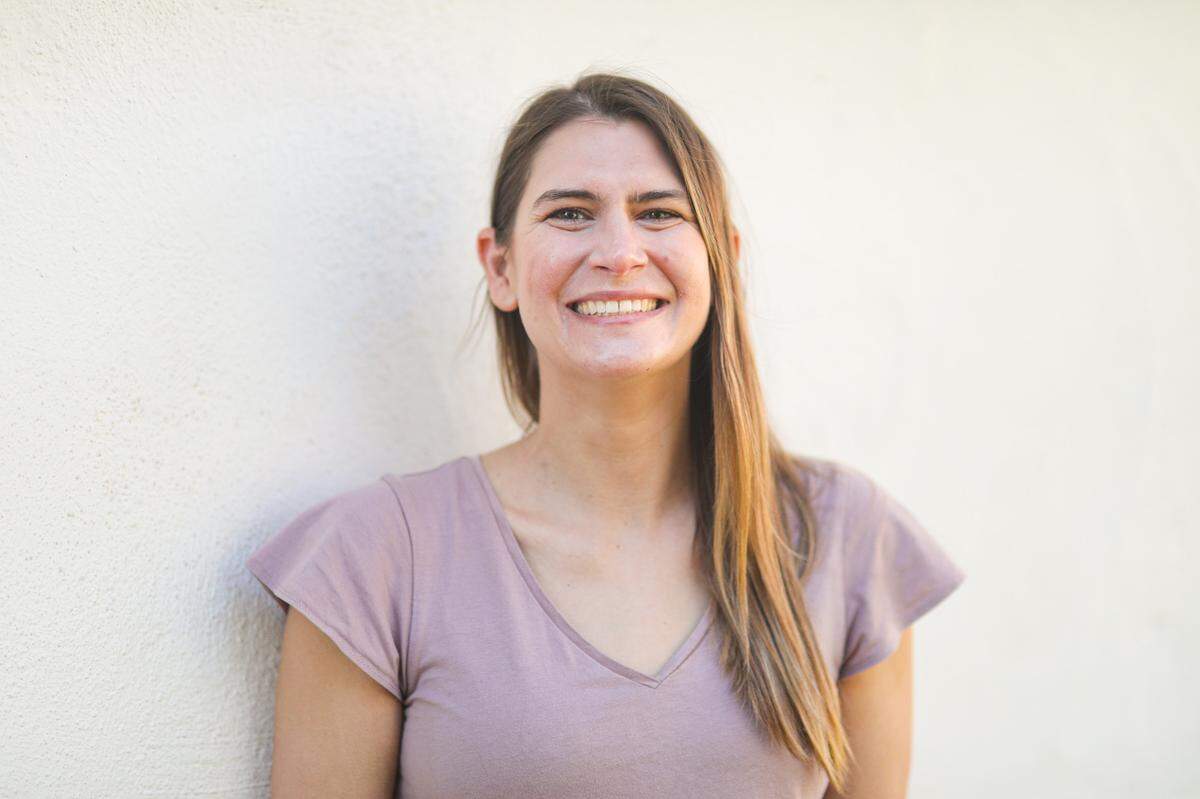
As an unhoused teenager in San Luis Obispo County, Journey Bliven had just two options for shelter: hang out in a social worker’s office, or find someone else to take her in.
Bliven was nearly 18 when a teacher rushed her to the emergency room after she fell ill at school. Around 2 a.m. the following morning, an ER nurse contacted the county Department of Social Services after realizing Bliven was at the hospital without an adult guardian or a place to go.
Fortunately, a family friend agreed to sign paperwork to become Bliven’s emergency resource parent — the preferred term for foster parent — so she could continue staying with him temporarily.
“I would have had to sleep in the office of that social worker that night if he would have said that he couldn’t have done it,” Bliven, now 22, recalled, “And that’s the only reason that he did that for me, which was really nice.”
Typically, a social worker will bring the child into the Department of Social Services offices while they search for a place for the child to stay.
“We want to make sure the child is safe and warm,” said Jennifer Finocchio, a placement and foster support supervisor in the Department of Social Services. “We don’t want them to wait in an ER waiting room or the side of the road.”
If the Department of Social Services is unable to find a relative or family friend with which to place the child, as was the case for Bliven, the agency turns to its pool of local foster families.
Before the coronavirus pandemic, there were roughly 130 households willing to take in foster kids in an emergency, officials said.
Today, that number has shrunk to about 95, which leaves more children in jeopardy than ever before.
That’s due in part to changes in state policy and the COVID-19 pandemic that have pushed the already strained foster care system in San Luis Obispo County to crisis levels, officials said.
“What we need is more foster parents, No. 1, and No. 2 is folks that are willing to say yes to a child on an emergency basis,” said Mark Haas, Social Services Department division manager.
Foster kids find shelter in SLO County offices
After a child is removed from their parents or guardians by Social Services, there is sometimes a lag before the county can find a resource family willing to take them in for a temporary stay, which is called an emergency placement, Social Services officials explained.
The local shortage of foster families willing to take emergency placement means children are left temporarily homeless while Social Services searches for a spot. At that point, their options are bedding down at Social Services or staying in a hotel room with a social worker.
“We’ll take them back to the office so they have a safe, warm place to wait and so staff can use the phones and computer system,” Finocchio explained. “It’s easier on staff and youth.”
That temporary gap can last anywhere from a few hours to a few nights or longer.
“I hear about it all the time: Social workers saying, ‘Oh it was my turn to stay with this kid, on this night,’ ” said Bliven, who is now an intern with the department. “Kids stay multiple nights (in offices or hotels), like weeks even.”
“Imagine being in that situation where you’re stuck in a hotel room or an office for weeks at a time because you feel like nobody wants you,” she said.
When the Department of Social Services started hearing about shortages of emergency placements in other counties, the agency realized it needed to have a plan in place, Finocchio said. Officials set up a room for foster children in March 2020.
“We carved out an office where we have a cot, food, ability for a kid to take a shower if they need to and it is supervised 24/7,” Haas said.
Since July 1, seven children have stayed in the county offices overnight, sleeping there for one to four nights at a time, Finocchio said. One kid stayed in the offices on two occasions, she said.
“We always try to make every effort to make (the stay) be less than 24 hours, but I can tell you in all honesty it has lasted more than 24 hours,” Haas said.
While some foster youth end up sleeping in county offices, Haas emphasized that social workers do not consider this an official placement for children and will spend their stay working to secure the kids emergency placements with resource families.
“Sometimes it involves us calling everywhere,” Finocchio said.
“We will reach out to other counties and other county departments trying to find housing, even if it’s in another county,” she said, although San Luis Obispo County prefers to keep kids here.
“We only use that (office) space to give a kid some food, some warmth and some safety away from their traumatic situation that they left,” Haas said. “We hate that we have to do that, and it’s our last resort.”
Changes to laws lead to more children in California’s foster system
The sight of children sleeping on cots in office buildings under the watchful eye of social workers is not unique to San Luis Obispo County.
In October, a lack of emergency shelters in Fresno County forced children to live in county office buildings, sometimes for weeks, as social workers scrambled to find placements for them, according to reporting from The Fresno Bee.
“It’s just kind of all culminated to where now we have this severe, severe shortage of foster homes,” Finocchio said. “It’s a crisis where kids are just sitting there waiting ... because there’s nowhere for these kids to go.”
There are a few factors that led to the extreme shortage of foster care options for children and teens throughout California.
In July, Gov. Gavin Newsom signed into law Assembly Bill 808, which ended all out-of-state placements at group care facilities for California foster youth.
The decision to suspend out-of-state placements at group homes came after reporting by The San Francisco Chronicle and The Imprint showed systemic abuse, and in some cases deaths, at those facilities.
Suspending out-of-state placements meant that hundreds of children throughout California, many of whom are high-risk and have acute therapeutic needs, were returned to their home counties and social services workers had to find placements at short-term residential programs, Haas said.
These short-term residential therapeutic programs (STRTPs) are more institutionalized settings than family homes. The facilities are staffed all day, every day, according to the California Department of Social Services.
AB 808 put limitations on how long children can be placed in STRTPs; now, they can only stay for six months or less, Haas said.
Suspending out-of-state placements meant about 10 children were moved from out-of-state group homes back to San Luis Obispo County, where workers were able to find spaces for the children that fit their therapeutic needs, Haas said.
In the past, he said, some foster youth who were enrolled in STRTPs would languish there without moving forward to more permanent placements.
“Kids could have been warehoused in a group home because nothing bad was happening,” Haas said.
In 2010, Assembly Bill 12 extended foster care for eligible youth to the age of 21.
Although this change has benefited many young adults by establishing a launching pad for their future, it has also increased the number of children in homes and receiving services from the state, Finocchio said.
How COVID-19 upended foster care system
Another key factor in the recent foster care crisis is the COVID-19 pandemic, which decreased the number of families signing up as resource parents in San Luis Obispo County.
“The stress on struggling families just increased with COVID,” Haas said. “If there’s more stress in the home, then it’s going to manifest in job loss and substance abuse, domestic violence, all the things that were going on before COVID, just got exacerbated by COVID. And kids are, of course, being impacted.”
Typically, there are more than 350 children in the foster care system in San Luis Obispo County at any one time, Finocchio said. Today, there are about 260 children in the system, she added.
That dip in placement numbers is scary because abuse didn’t stop, Finocchio said.
The number of children entering the system declined particularly in the early days of the pandemic after schools shut down, according to local social workers and resource parents.
School staff are mandatory reporters, meaning they are obligated to report abuse or neglect to the county, so school closures reduced visibility into the home lives of local kids, Haas explained.
Charlie Zinn, a resource parent living in Atascadero, described the lull in emergency placements at the beginning of the pandemic.
“COVID shuts everything down, and parents aren’t out in the open for people to see the mistreatment of kids,” said Zinn, whose family has fostered young children. “Then there was a drop in the amount of kids that got into the system, because the abuse doesn’t ever stop, but nobody was able to see it.”
Even after demand for foster families rebounded, several county residents stopped serving as resource parents because of the pandemic, Finocchio said.
Many of the resource families working with the county are older, Finocchio said.
The pandemic disproportionately impacted retirement-age residents, she added, making those families less inclined to take in children and teenagers, especially unvaccinated ones.
“The crisis that we have with COVID, it’s caused a lot of families to close ranks,” Finocchio explained. “Less people are able and willing with the emotional capacity and the financial capacity to take on anything else.”
SLO County teens need foster parents, too
According to Finocchio, there are numerous homes in San Luis Obispo County willing to house foster babies and toddlers and many willing to take school-age children. But very few homes are willing to take in teens, she said.
That makes placing children ages 16 and up the biggest challenge for the county department, she said.
Currently, there are several teens in San Luis Obispo County in emergency shelters, waiting for spots in permanent homes to open, Finocchio said.
“We have kids that have been in an emergency shelter that’s supposed to be 30 days or less and they’ve been there for six months, wondering ‘What’s going to happen tomorrow? Is there a family that’s going to want me? What’s going to happen when I’m 18? Where am I going to live?’ ” she said.
Bliven was 17 when she entered the foster care system in San Luis Obispo County.
After spending about a month in an emergency placement, she was able to move into a permanent placement with a resource parent. She lived there for about two years.
For the first time since becoming homeless, Bliven had a private room and bathroom instead of a couch in a shared space.
“That gave me the opportunity to focus on myself instead of focusing on, ‘Where am I going to sleep? What food am I going to eat? How am I going to get to school?’ ” Bliven said. “The benefit’s that those kids get to slow down and focus on school and ... have the resources and opportunity and the support system to actually achieve their goals. It’s often something they don’t have in the situations that they’re in.”
“I feel like people are worried about being resource parents because they feel like they can’t provide financially or the best toys or the best house,” Bliven said, “but I think it’s really more about providing emotional support and stability and belonging and (the feeling of) ‘I got your back.’ ”
Foster kids’ resource parents can also provide the kind of “unconditional love that they probably don’t even get from their (biological) parents,” Bliven said.
Those interested in becoming resource parents can call 805-781-1705 or visit slofostercare.com.
Coming tomorrow: In the second article in this series, The Tribune looks at how to become a resource parent in SLO County.
This story was originally published November 18, 2021 at 5:00 AM.