‘An organization in turmoil.’ IWMA director quits as SLO County agency ponders future
San Luis Obispo County’s waste management agency is grappling with an uncertain future after its interim director resigned abruptly following a Board of Supervisors decision to withdraw from the organization.
The Integrated Waste Management Authority (IWMA) recently learned Paavo Ogren — who’d served as interim director for less than a month — had resigned his position, leaving the organization without a leader for the second time this summer.
Attorney Linda Somers Smith — who’s filling in for Jeff Minnery, the IWMA’s legal counsel — announced Ogren’s departure at the beginning of the agency’s Aug. 11 meeting.
Ogren, a former county Public Works director and Oceano Community Services District manager, left his position at the IWMA the day after the county Board of Supervisors voted 3-2 to withdraw the county from the organization.
The IWMA is a countywide organization that oversees compliance with state waste management regulations. It’s governed through a joint powers agreement involving the county, its seven cities and unincorporated communities.
The agency has been mired in controversy during the past few years. The county District Attorney’s Office in 2018 began investigating potential fraud at the IWMA, and the agency later put its manager on administrative leave prior to his retirement.
The IWMA’s previous director, Brooks Stayer, resigned in June after a drawn-out battle over banning polystyrene, best known by the brand name Styrofoam.
IWMA facing ‘organizational turmoil’
“I think it’s unfortunate Paavo decided to part,” said Charles Bourbeau, IWMA board president and an Atascadero City Council member. “I didn’t know him prior to coming here, and I thought his background made him particularly qualified to work with us under our circumstances, and I certainly gained respect for him working with him during that time period.”
The board discussed hiring another interim director, but they ultimately decided deputy Director Patti Toews will serve as acting director of the IWMA for the time being while the agency initiates a search for a permanent director.
“The most shocking part of what’s going on here is what did (Paavo) see that he decided he didn’t want to have anything to do with this?” said Robert Enns, board member and president of the Cayucos Sanitary District. “And until somebody can answer that question — if Paavo’s got a better offer somewhere, well that’s one thing. But if he saw something here that he says, ‘I don’t want to have anything to do with this,’ that’s another thing. So an answer to that question might be entertaining.”
With Ogren’s departure, the IWMA board also needed to select a party to discuss the county’s exit process.
“We are organizationally in turmoil, to say the least,” Bourbeau said. “And the question is, if the county picks up the phone, and they say, ‘We want to meet’ ... who do we want to be on the other end of that phone call?”
The board ultimately opted to have the IWMA legal counsel negotiate with the county’s legal counsel on the matter.
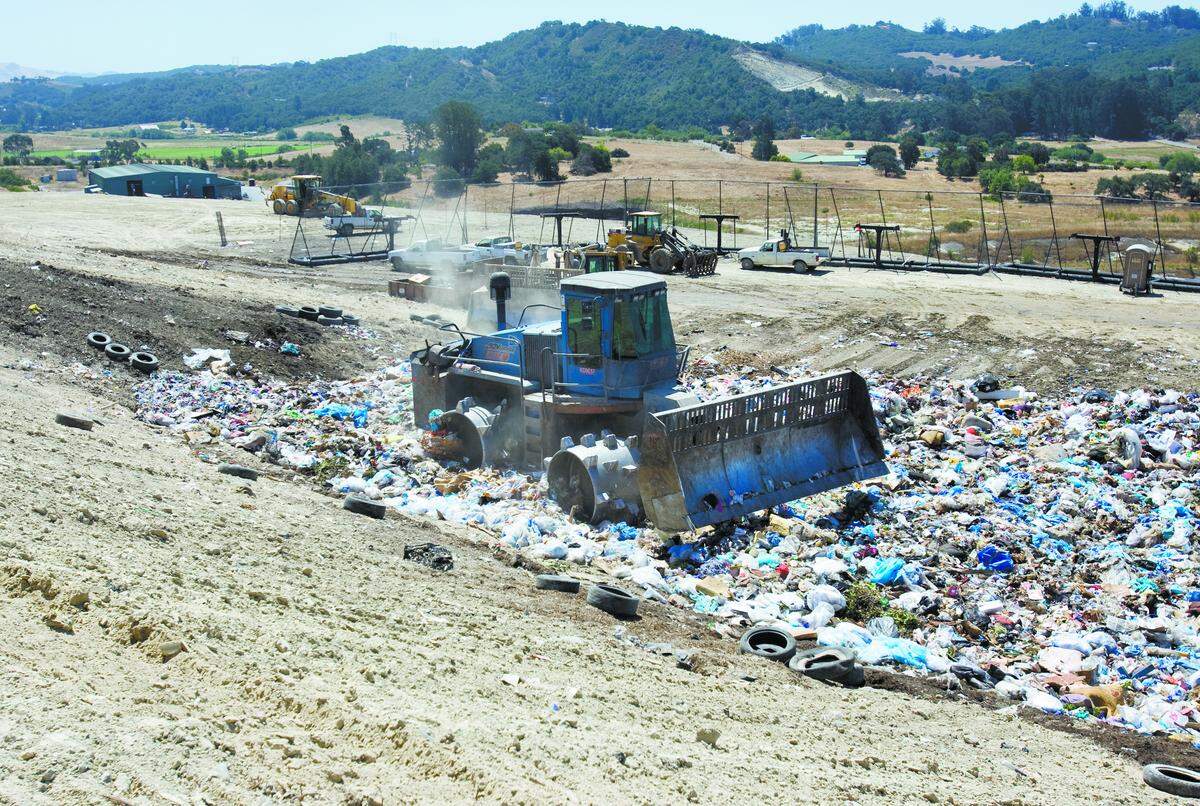
What’s the future of the IWMA?
The IWMA board also began figuring out how to move forward after the county decided to pull out of the organization.
During their Aug. 10 meeting, supervisors Lynn Compton, Debbie Arnold and John Peschong all said they were concerned about corruption in the IWMA and feel the organization has expanded its regulatory ability beyond what they think is appropriate. Although the IWMA was willing to renegotiate its joint powers agreement with the county, the supervisors claimed the agency is no longer fixable.
Supervisors Bruce Gibson and Dawn Ortiz-Legg, who voted against leaving the IWMA, disagreed with these opinions.
“In the discussion yesterday, the board majority trashed the reputation of this organization, and, by extension, other directors of this board,” Gibson said during the Aug. 11 IWMA meeting. “That is, as I said yesterday, some of the most egregious error of governance that I’ve ever seen.”
Gibson and the other four county supervisors attended the IWMA meeting, but they barely contributed to the discussion to avoid public meetings law violations, as the board will likely decide issues related to leaving the agency in its own future meetings.
In an awkward turn, they mostly listened to other board members express frustration about their decision to leave the organization.
Members said they’re concerned about supervisors remaining on the IWMA board and continuing to weigh in on issues, even though they’re leaving the agency.
They also worried about how the county’s departure will impact ratepayers in their cities and communities, as the garbage fees that keep the IWMA running are calculated using economies of scale dependent on member participation in the organization.
John Hamon, board member and Paso Robles mayor pro tem, said his city may even leave the organization, along with the county.
“Several small cities are banding together now to see what we have in common with our common carrier, our common hauler, for no other reason than just to see how we can continue on with economy of scale,” said Karen Bright, board member and Grover Beach mayor pro tem. “I do believe there is at least five of us who do intend to continue on, mainly because I don’t think many of us have been much involved in solid waste matters. We’re all small cities, and we’ve relied on the IWMA haulers to do that job for us. We don’t have the staff — never have.”
In addition, a study the county commissioned on the impacts of leaving the IWMA showed that the county needs to negotiate with the agency and recoup millions of dollars in order to avoid steep garbage bill increases for unincorporated ratepayers.
But many IWMA board members said they don’t want to pay the county to leave, especially if it would negatively affect the agency’s bottom line.
“The degree of disrespect and anger that was expressed during the Board of Supervisors meeting feels to me like there’s not going to be a mutually collaborative — it’s not going to be a friendly divorce,” said Jan Marx, board member and San Luis Obispo City Council member. “I don’t think so. I’m very concerned about our board in any way starting to negotiate anything with the Board of Supervisors when they have just decided not to negotiate.”
Later, Marx also said she feels the supervisors owe the IWMA and county residents an orderly withdrawal from the organization, as members still rely on it to remain functional.
“As a county Board of Supervisors, they have a responsibility to this organization and to all of their constituents who live in cities and CSDs and authorized districts to help make this doable so that the remaining members can carry on and the Board of Supervisors can make a new bureaucracy, hire a lot of people and spend a lot of taxpayers’ money duplicating what the IWMA does,” Marx said.
This story was originally published August 19, 2021 at 5:00 AM.