
Vandenberg contamination from ‘forever chemicals’ is among the worst in the U.S. military
Vandenberg Space Force Base is one of five military facilities in California regarded as among the nation’s most contaminated by a class of “forever chemicals” used for decades in firefighting and training.
That could mean all sorts of potential health problems for people living or working at or near the base. The Environmental Protection Agency has tied the chemicals to conditions such as cancer, low infant birth rates, a more vulnerable immune system and thyroid hormone disruption.
Those warnings are being cited by Sen. Alex Padilla as he helps spearhead a congressional effort to spend $10 billion for PFAS investigations and cleanup.
PFAS, which stands for per- and polyfluoroalkyl substances, is a group of man-made chemicals that can be found in a range of household and industrial materials from cosmetics to chrome plating.
At Vandenberg, it was used in firefighting foam that can contaminate groundwater.
“They never break down. Once they’re in our bodies, they can stick around for years,” Padilla said of PFAS.
The federal government, he added, “has made very little progress on cleanup.”
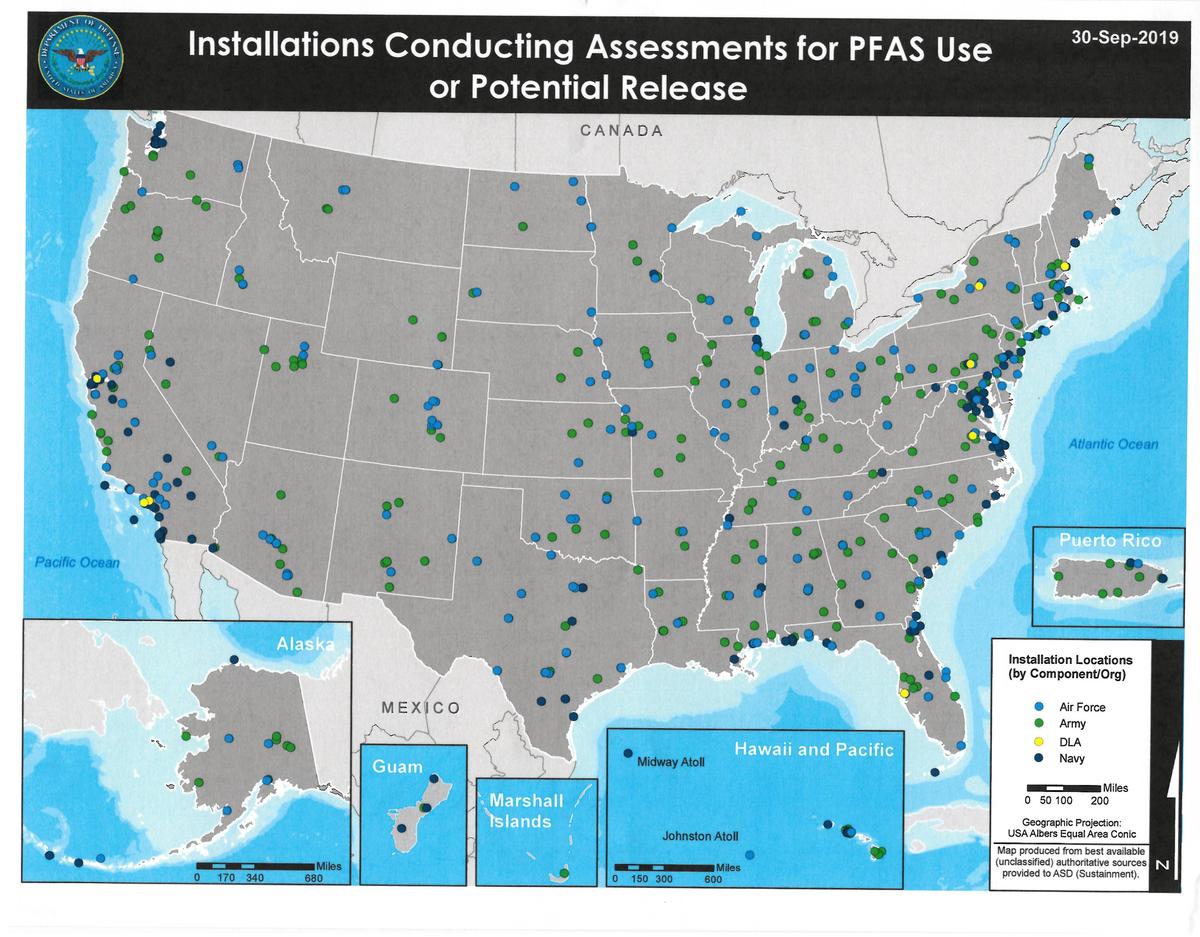
California had 62 military facilities with known or suspected PFAS chemicals.
Among those most contaminated are Vandenberg, Naval Weapons Air Station China Lake, Travis Air Force Base, Naval Air Station Alameda, and Edwards Air Force Base.
The ratings come from the Environmental Working Group, a nonprofit research group. It compiled the material from Department of Defense reports, Freedom of Information Act requests and information collected by the Social Science Environmental Health Research Institute at Northeastern University.
What is Vandenberg doing about PFAS?
Vandenberg SFB has completed the first steps of the cleanup process for PFAS chemicals on base.
These include a preliminary assessment, a site inspection, and a Relative Risk Site Evaluation. The evaluation ranks contamination sites by their hazard/risk levels to determine priorities for cleanup.
Next step is a remedial investigation to determine how a cleanup at the sites will proceed.
From 2018 to 2019, the Air Force performed a site assessment to sample and test for PFOS and PFOA — other forms of PFAS — at the five Vandenberg Air Force Base release locations identified in a preliminary assessment report for further investigation, according to a 2019 report by the state Regional Water Quality Control Board. Vandenberg was renamed as a space base last month.
The assessment found PFOS and/or PFOA compounds “at all five locations at levels exceeding screening criteria,” according to the state board. The compounds are hard to break down in the environment and the human body.
The highest detection in ground water at the five sites was found at the former fire training area next to the airfield. Results showed PFOS at 150,000 parts per trillion (ppt), PFOA at 8,200 ppt, and PFBS at 1,100 ppt.
Current testing of the base’s drinking water wells have not tested positive for PFAS. However, the detection limit for PFAS at the lab contracted to look at the drinking water testing was high, at 5 ppt. Safe levels of PFAS in drinking water, according to many experts, is 1 ppt.
Why is PFAS such a threat?
PFAS is a class of so-called “forever chemicals” that can remain in the human body and the environment for long periods of time.
The Pentagon has been using firefighting foam containing PFAS since the 1960s. It’s primarily used for emergencies and equipment testing, but that has meant the chemical winds up in groundwater and elsewhere.
While laws have been passed requiring the Pentagon to phase out the use of the foams, “it does not address legacy pollution,” Padilla said.
The effort to clean up PFAS-polluted sites has Republican support.
“PFAS are all over this country, with background levels of contamination from a multitude of sources,” said Sen. Shelley Moore Capito, R-West Virginia. “But the actual threats to human health and the immediate environment tend to be highly localized, which is exactly why a deliberative, science-based approach to testing and remediation is necessary.”
On another level, the Environmental Protection Agency is taking steps.
In April, Administrator Michael Regan asked agency leaders to convene a council of senior EPA career officials from across the agency to figure out how to best use EPA’s expertise to “mitigate and reduce PFAS pollution and protect public health and the environment.”
This story was originally published June 17, 2021 at 9:00 AM.
.jpg)