
SLO County’s population dropped again last year — only one local city actually grew
For the first time in state history, California’s population declined in 2020, a trend that was reflected in San Luis Obispo County as well.
The milestone followed a deadly pandemic, a long-term decline in births and former President Donald Trump’s immigration policies that drove away potential newcomers, according to the California Department of Finance.
That combination contributed to a population decline of 182,083 residents, according to new data released by the state on Friday. That marks a 0.46% decline in the state’s population, keeping it under 40 million residents.
Meanwhile, San Luis Obispo County’s population declined once again from 2020 to 2021, dropping about 2% from 276,818 to 271,172. That’s a loss of 5,646 residents.
The county also lost population in 2019, retreating 0.4%.
The majority of local cities saw some slight population declines last year, though one did actually grow its population during that time.
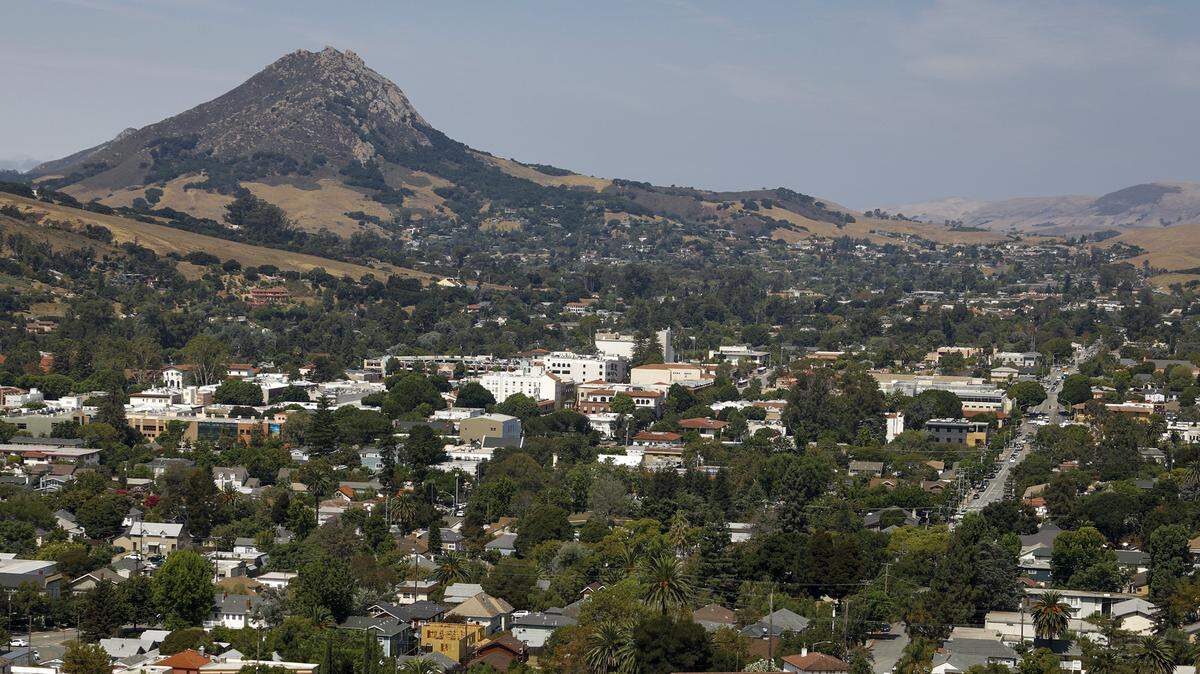
San Luis Obispo city grew its population 0.3 percent, up to 46,058 residents, from 2020 to 2021, a gain of 142 residents.
That population growth ranked 103rd in the state and makes San Luis Obispo the 192nd largest city in California.
SLO city was the only local city to see population growth in the past year. Here’s how other local cities fared:
- Morro Bay: down 0.3%
- Arroyo Grande: down 0.4%
- Paso Robles: down 0.6%
- Grover Beach: down 0.6%
- Pismo Beach: down 1%
- Atascadero: down 1.4%
The biggest decline in population actually occurred in unincorporated areas of the county, where the population dropped by 4.1% from 2020 to 2021.
What contributed to California decline in population?
The new data comes after the U.S. Census Bureau announced last month that California would lose a congressional seat for the first time in the state’s 170-year history due to its slower population growth. As a result, the state is expected to send 52 members of Congress to the House of Representatives in 2022 instead of 53.
The COVID-19 pandemic contributed to 51,000 deaths in California last year, a 19% surge in average death rates over the past three years, according to the data. Fifty-one of the state’s 58 counties saw rates of “excess deaths.”
Strict immigration policies under the Trump administration like the suspension of immigration and foreign worker visas last year also contributed to the reduction. Furthermore, international COVID-19 restrictions led to the decline of 53,000 international students in the state.
Additionally, another long-term trend of Californians moving out of the state continued. Usually, foreign immigration offsets that kind of population decline, according to the Department of Finance, but not last year.
Natalie Holmes, a research fellow at the California Policy Lab, said the number of people leaving the state has increased steadily in recent years, but she wouldn’t categorize it as a “mass exodus.”
“Statewide we didn’t see this big uptick in people leaving the state because of the pandemic,” she said.
A survey released by the Public Policy Institute of California in March found that 43% of Californians say the state’s housing costs are making them “seriously consider moving,” of which 33% said they would consider moving to another state.
California’s median home price in March stood at $758,990, a new record.
“What we’ve seen in the past decade, is that the California Dream isn’t really a reality for a lot of people. I think there’s been this idea, especially in the 20th century and during the Gold Rush that if you could get to California and worked hard enough, you’d get rich,” said Camille Suarez, an assistant professor of California history at California State University, Los Angeles.
Today, because of the cost of real estate, “it’s just not a viable option for a lot of people,” Suarez said.
The new data shows some parts of the state contradicted the overall trends and gained residents. San Benito, Placer, San Joaquin and Yuba counties each saw a population growth of over 1%.
State officials don’t expect the downward trend to continue, Department of Finance spokesman H.D. Palmer said.
As COVID-19 related deaths wane and the Biden administration reverses Trump-era immigration policies, state officials estimate that the state will see a “slight annual positive growth” this year. Those figures won’t be released until May 2022.
This story was originally published May 7, 2021 at 11:25 AM.
%20Cropped.jpg)