About 30 health and wellness businesses in California have banded together in hopes of changing statewide policy that prevents fitness centers from operating indoors.
The newly formed Wellness Coalition, which includes includes gyms, martial arts centers and yoga studios in San Luis Obispo County, argues that fitness centers should be considered essential businesses during the coronavirus pandemic due to the health benefits of working out — and that indoor exercise can be done safely.
San Luis Obispo County Public Health Department officials say indoor exercise could increase transmissions, and wants businesses to comply.
Wellness Coalition members include companies that are allowing indoor workouts in defiance of state regulations — among them, SLO Yoga Center in San Luis Obispo, Sleeping Tiger Fitness & Martial Arts in San Luis Obispo and Kennedy Club Fitness, which has four locations in San Luis Obispo County.
Other businesses haven’t yet opened indoors but want to be classified as essential businesses in order to do so.
Coalition members say it doesn’t make sense that, under the purple tier, personal care businesses such as spas, massage parlors and tattoo businesses can operate indoors — but gyms aren’t permitted to do so.
“The data shows these preventative healthcare can be done safely and help people avoid obesity and hypertension, as well as build up the immune system while providing helpful education about what to put into your through nutrition and vitamins,” said Blake Beltram, one of the coalition’s leaders.
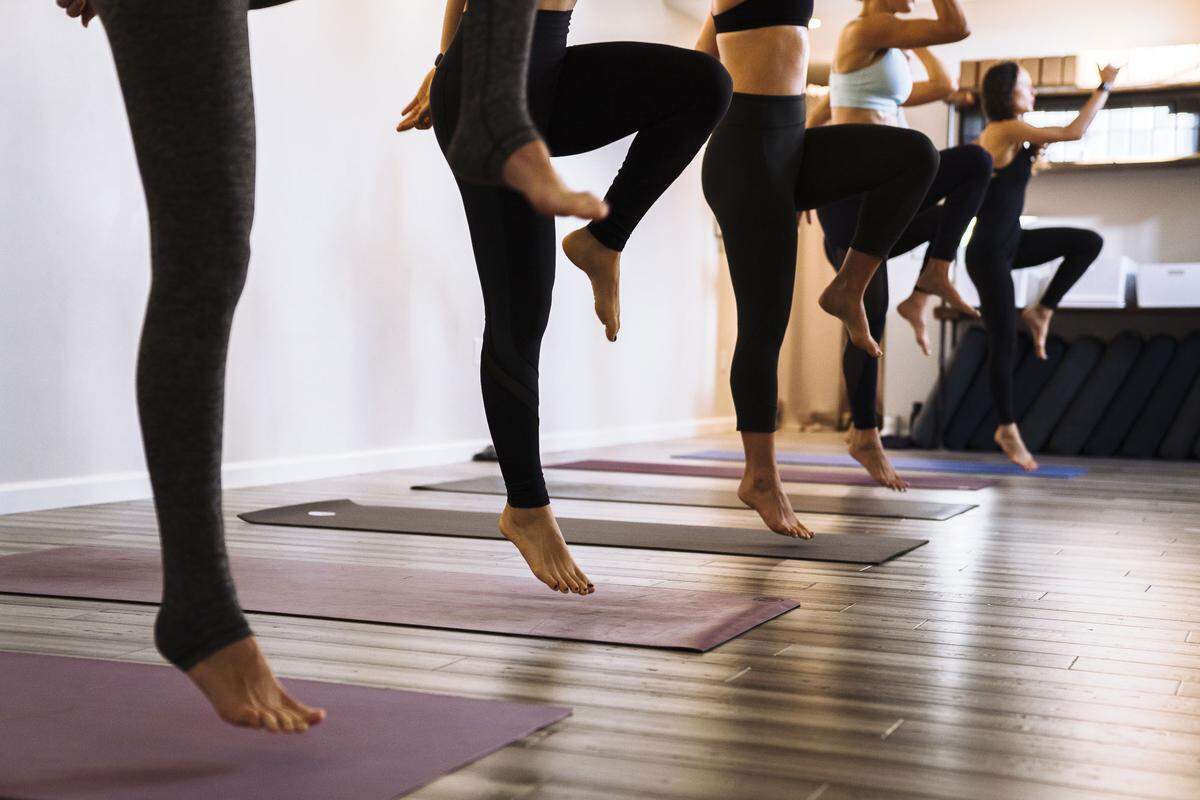
The Yoga Standard is one of the Wellness Coalition members lobbying for fitness centers to be essential businesses and operate indoors, which is currently not allowed in SLO County. Courtesy photo
Former MindBody founder leads the charge
Beltram, a founding member of MindBody whose no longer is associated with the San Luis Obispo-based software company, has taken an active leadership role in the Wellness Coalition.
Beltram said the group, which includes some Los Angeles area businesses, isn’t trying to defy California’s COVID-19 regulations. Instead, he said, it wants to work in concert with the state to show the positive health benefits of exercise and health routines.
That includes good mental health, he said, noting that depression rates have risen during the pandemic.
According to Beltram, a small fitness business typically spends between $15,000 and $17,000 per month to operate.
“The vast majority of these owners don’t get rich of these businesses,” Beltram said. “This is a calling and a passion. If they were struggling to begin with, it’s going to be very hard to survive with indoor closures. It breaks my heart to know that some of these businesses may not make it.”
No new stimulus package has been passed to assist small businesses., with U.S. Senate talks stalled.
“I hope people can look at this from a 360-degree perspective, and consider all of the factors,” Beltram said.
Juan Pantaleon has been a member of Kennedy Club for 4 years. He missed working out at the fitness center when it closed due to coronavirus restrictions. David Middlecamp dmiddlecamp@thetribunenews.com
How does exercising indoors impact public health?
According to San Luis Obispo County Public Health officials, research indicates that exercising indoors could lead to increased transmissions.
The agency is working with the businesses to mandate compliance of the indoor operation ban. Fitness centers that open indoors despite COVID-19 orders risk citations and fines.
“We’re investigating and will be following up with individual facilities to work to bring them into compliance with the Governor’s orders,” county Public Health Officer Dr. Penny Borenstein said. “Research indicates that these are settings in which transmission of COVID-19 is more likely to occur.”
“At the same time, we care about the businesses and recognize fitness is an important part of health and wellbeing,” she said. “We’ll continue our dialogue with state officials to find pathways for fitness facilities to reopen indoors.”
SLO County Public Health officials told The Tribune contact tracers they “don’t routinely ask people with COVID-19 if they have been to a fitness facility (or many other types of facilities) because we need to prioritize identifying their close contacts who are most at risk” in an email response to The Tribune.
“Some may volunteer this information as part of the overall conversation,” they added. “Even in those cases, it’s generally not possible to say definitively that the fitness facility was the source of their infection. That would only be possible if they had strictly self-quarantined alone at home except to go to the gym. In that context, we haven’t traced any cases specifically to fitness facilities. Any cases that originated at fitness facilities would be classified as ‘community transmission.’”
Guidelines issued by the federal Centers for Disease Control and Prevention emphasize that virus transmission can occur from “close contact (within less than 6 feet) with patrons, coworkers, or service personnel who are infected; touching or handling frequently touched surfaces and equipment and then touching your mouth, nose or eyes.”
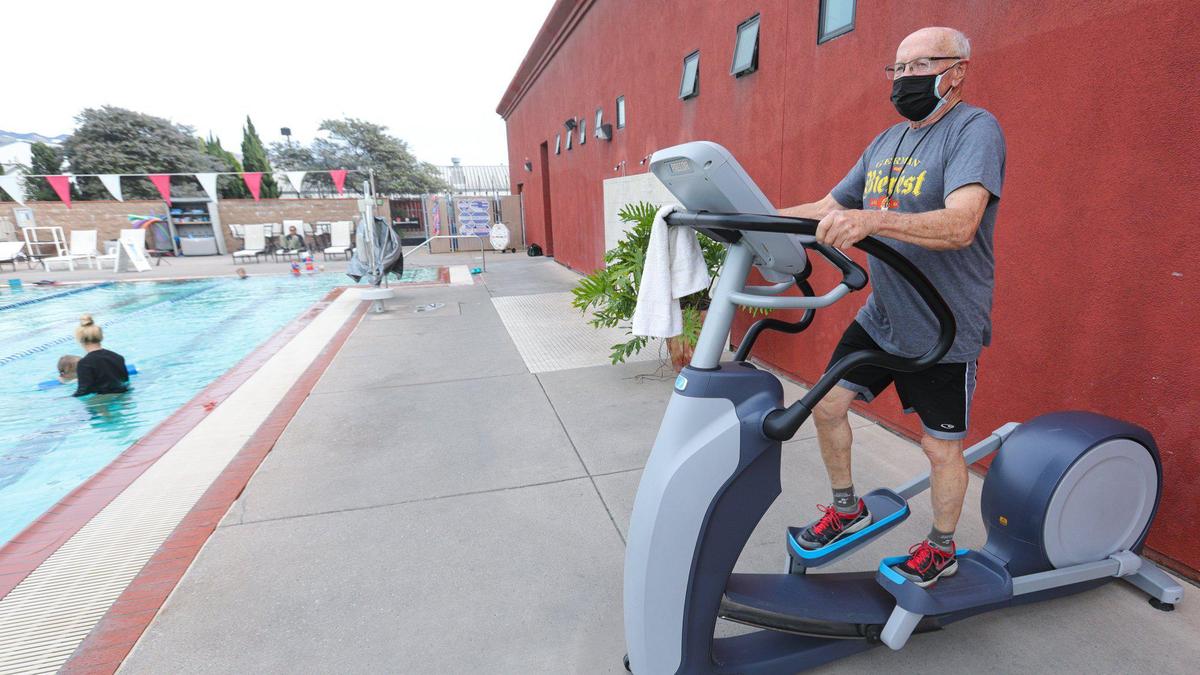
Richard Dodder works on an elliptical machine. Kennedy Club managing partner, Brett Weaver, operating outdoors has required costly repairs to machines. David Middlecamp dmiddlecamp@thetribunenews.com
SLO fitness centers, gyms want to operate
Stephanie Stackhouse, co-owner of SLO Yoga Center, said she believes indoor workouts can be done safely.
The SLO Yoga Center has been operating indoors at its downtown San Luis Obispo location “for the past week or so,” with positive feedback, Stackhouse said. She requires her clients to wear masks and socially distance at all times during sessions.
Classes are staggered to be able to carefully clean and wipe down equipment between group gatherings.
“People say they have been feeling isolated and they’re so grateful to be able to join in-person classes,” Stackhouse said.
Stackhouse said she also offers online workouts for those who wish to exercise at home. But she noted that some people have lost their motivation to work out, and classes hold them accountable to stay in shape and keep off extra pounds.
Stackhouse said that no coronavirus cases involving San Luis Obispo County residents have been traced to fitness businesses, adding she has spoken directly with the county Public Health Department about the matter.
Stackhouse, who closed a yoga studio in San Luis Obispo’s Marigold Center at the start of the pandemic, said she limits class sizes to 10% capacity.
“We care deeply about health and wellness and our clients,” Stackhouse said.
Nathan Zimmerman, owner of Sleeping Tiger Fitness, said that his facility can open two large garage-style doors to allow air to through the building.
Zimmerman said other business owners have invested in filtration systems and open windows to encourage air flow and safety.
Like SLO Yoga Center, Sleeping Tiger’s class sizes are capped to create social distance and the business disinfects frequently.
“I offer outdoor training but indoor classes to those who request it, so people have a choice if they don’t want to work out indoors,” Zimmerman said.
Zimmerman said the Wellness Coalition emphasizes safety practices such as limiting class sizes, disinfecting, and social distancing.
“We know a lot more about this virus than we did in the early stages of it,” Zimmerman said.
SLO County psychologist weighs in
San Luis Obispo County psychologist Nicole Vito, who has done personal research on the mental health impacts of COVID-19, said she also opposes indoor exercise.
“Right now, kids are expected to not be in school in January and doctors often aren’t meeting with their patients in person,” Vito said. “You can do yoga outdoors. You can work out outside without being part of a group indoors. I have empathy for (the fitness centers), but these aren’t essential businesses.”
Vito, a Los Osos resident and mother, said that while younger people may not worry about indoor workouts as much as older people, those who become infected with COVID-19 could spread the virus to others at grocery stores or other places where close contact is likely.
Vito said that purple tier orders exist so that “hopefully we can all get back to school for our kids, some social interactions, and some more gym time.”
“Increasing the risks of those that are most vulnerable by gathering groups indoors seems to be the antithesis of community health and wellness,” Vito said.
This story was originally published November 27, 2020 at 5:00 AM.

%20Cropped.jpg)