COVID-19 has created a crisis for SLO County’s foster care system. Who can help?
The COVID-19 pandemic has create a cascade of challenges for residents and businesses across San Luis Obispo County, but one particularly precarious area has been especially hard-hit: the foster care system.
The pandemic has taken a toll on all aspects of the safety net, including social services visitations, the ways families are recruited, the times abuse is reported, and the number of families willing to take in children.
When the San Luis Obispo County Department of Social Services is called to remove a child from a harmful situation, that child is often placed in a household for a short time until a more long-term home is found.
In some instances, a resource family, formerly known as a foster family, could receive a child within 15 minutes to three hours of being notified, resource parent Kathy Curtis said.
Over the eight months of the coronavirus crisis, however, the number of families willing to take in children on an extremely short notice has dropped precipitously, said Roxi Selck, the Department of Social Services’ Child Welfare Services program manager.
“What the need is right now is short-term emergency care — someone that’s willing to take a kid in at 2 o’clock in the morning, care for them for 24 hours while we find relatives or family or other placements,” Selck said.
Foster parenting during coronavirus pandemic
Arroyo Grande resident Kathy Curtis got involved in foster care four years ago after seeing a commercial that called for people to sign up to be a foster parent. Within 60 days, she was certified.
Since then, Curtis, her husband and her biological son have welcomed six children into their home for varying periods of time. She is currently fostering one child.
Curtis said her family tries to be involved with the biological family of each foster child when the situation allows.
“We really wanted to also be a part of the biological families lives’ if we could, and of course it’s a case-by-case scenario,” Curtis said. “We want, with the biological family, to help mentor them, help them get their child back. ... We try to do whatever we can do to be a team.”
In the past, this meant Curtis’ family would invite social services workers and the child’s biological family to her home. However, this year, that has changed.
“Typically, we allowed everyone into our house all the time, but now have to have guidelines,” Curtis said. “We have to do socially distanced visits. People mask up and we stay ... six feet apart. We follow (federal Centers of Disease Control and Prevention) guidelines.”
According to Selck, the DSS provides families with personal protective equipment when possible. She also said the department has increased support during the pandemic to help resource families.
“We have a lot of support in place,” Selck said, including a “foster support unit that’s always available to answer questions.”
Even with support in place, however, Curtis said the COVID-19 pandemic has made her cautious about potentially accepting new children into her home.
“When you’re taking children into your home, new placements, you don’t know where they’ve been, if they’ve been exposed to COVID or not,” Curtis said. “For us anyway, we have four high-risk people. It’s a big deal.”
Curtis said the best way to handle the situation is to communicate clearly with the DSS.
“It’s (about) respecting what your boundaries are,” Curtis said.
COVID-19 creates a lack of foster families
According to Selck, COVID-19 has affected the number of families willing to take in children “tremendously.”
“We have homes that are certified, but they’re not willing to take placements,” Selck said.
Personal circumstances caused by coronavirus have posed a challenge for many people who have been resource families in the past.
“We’ve had people who lost employment. They’ve lost housing. Their kids are home from college so they lack the space. They may be high risk or care for someone who’s high risk,” Selck said. “All of those factors have really, really impacted our resource family members.”
Another reason for the shortage of families is a lack of outreach.
The DSS typically recruits resource families through in-person events, which have effectively ceased due to COVID-19 guidelines.
“Resource families are (recruited) by going out into the community, doing presentations and going to faith-based organizations and different events,” Selck said. “All of our outreach has pretty much had to stop.”
Funding for recruitment has also been impacted by coronavirus, Selck said.
She said the DSS has run social media campaigns aimed at potential resource families and reached out during drive-through events, including a Day of Thanks donation drive that was run by Grace Bible Church in Arroyo Grande to help benefit resource families during Thanksgiving.
All of these challenges leave at-risk children in even more precarious positions.
“One of the most difficult things we face when we have a severe shortage of homes, is the length of time youth have to spend in ‘temporary’ shelter homes,” Selck wrote in an email to The Tribune. “When our number of homes is decreased, it makes it more difficult to ‘match’ youth with homes that will be a good fit for their needs.”
Reports of abuse have decreased, but abuse likely hasn’t
The number of children in foster care services in San Luis Obispo County at any particular time is typically around 375, according to Selck.
The 2019 Foster Care Snapshot Report showed there were 366 children in foster care in San Luis Obispo County that year.
That number has remained around the same in 2020. However, Selck said, reports of abuse have decreased by 20%, while the number of calls that have “a higher level of concern” have increased.
“Kids aren’t having as much face time with our mandated reporters, like teachers and coaches,” Selck said.
Selck said the most severe cases are typically still reported because they often involve a situation of domestic violence that has escalated to the point where law enforcement is called.
Situations of abuse that may not rise to that level are likely going underreported, Selck said.
“The reports of abuse have gone down. Do we think the instances of abuse have gone down? No,” she said.
Local teachers are doing their best to identify signs of abuse through virtual communication, Selck said. In addition, the DSS must heavily rely on community members to report instances of abuse, she said.
How to get involved
Foster care has many levels for community involvement, according to Selck.
“The cool thing about foster care is you don’t have to commit to having a child in your home for two years. There’s so many levels of involvement that the community can help with,” Selck said.
People can opt to house foster children in short-term emergency placements or over the long term.
Resource families can also serve as mentors or respite caregivers who provide short-term care services that offer relief to a child’s primary provider.
There are also avenues for people who would like to help children who need more support.
“There’s ways to potentially get involved without committing,” Selck said. “There’s also intensive services foster care and options for recovery. There’s tons of programs.”
Currently, there is a large need for short-term emergency care households and people who are willing to take in groups of siblings or teens, she said.
Prior to becoming a resource family, people must go through training and be licensed by the state, Selck said.
The trainings have moved to a virtual format due to coronavirus. Getting certified typically takes around 90 days, according to Selck.
Curtis advises anyone who’s on the fence about becoming a resource family to take the training anyway.
“There’s just so many amazing options that are out there — so instead of saying ‘No,’ jump in,” Curtis said.
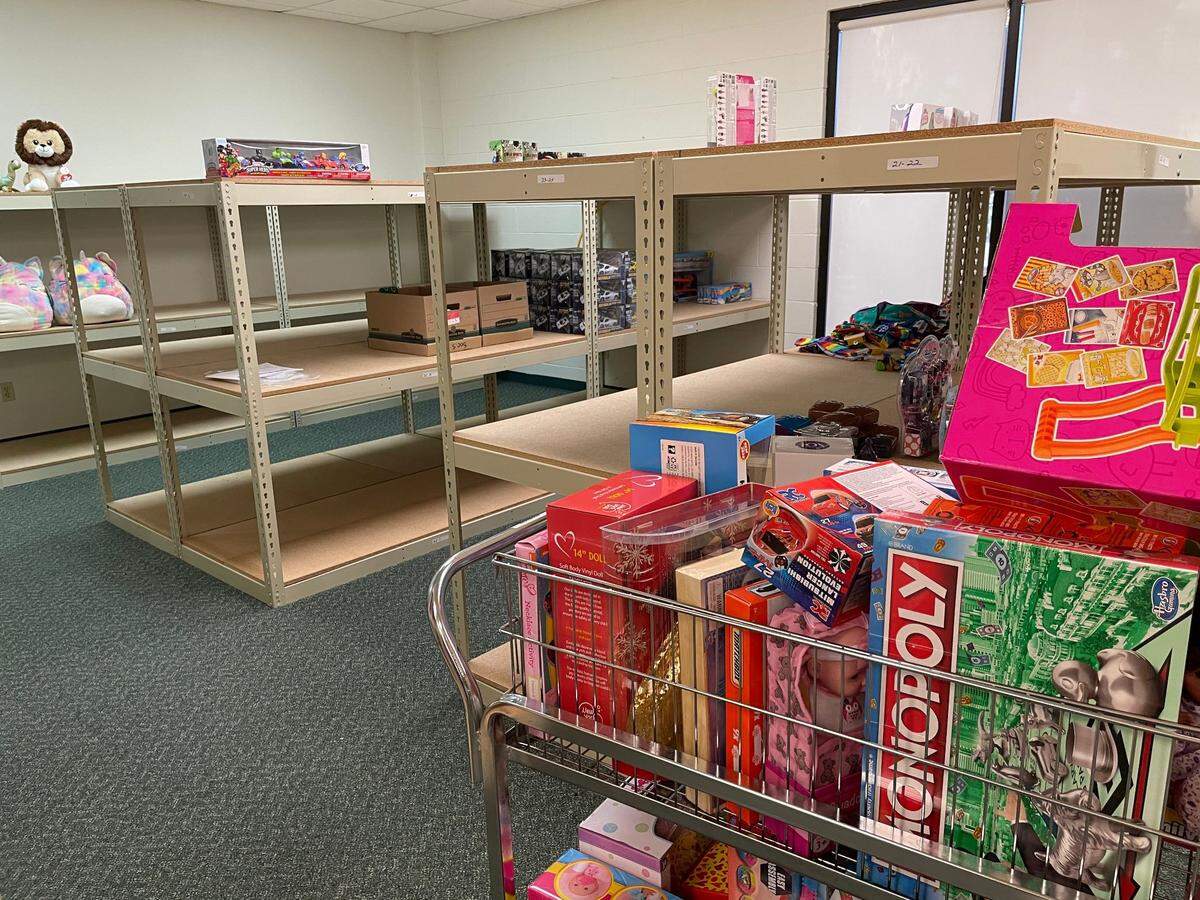
For those who want to help in other ways, the Cal Fire/San Luis Obispo County Firefighters Benevolent Association, in cooperation with KSBY’s Season of Hope, is holding its Operation Santa Claus toy drive for children in Child Welfare Services.
Gifts for Operation Santa Claus can range from toys for younger kids to gift cards for teens. New, unwrapped items can be dropped off at Cal Fire’s San Luis Obispo fire station and Morro Bay Fire Department through Dec. 18, according to an Operation Santa news release.
Local restaurant chain Sylvester’s Burgers is giving away free burgers to anyone who donates a $20 gift card or more to Operation Santa Claus, according to Sylvester’s Burgers general manager Theresa Cappelletty. Gift cards can be dropped off at any of the Sylvester’s locations.
A gift registry can be located at www.gifthero.com. For more information, go to www.ksby.com/community/season-of-hope.
For those interested in becoming a resource family or getting involved in the foster care system, visit www.slofostercare.com/get-involved.