Tianna Arata case is ‘egregious’ and ‘defies reason,’ attorneys say in request for dismissal
Attorneys for San Luis Obispo Black Lives Matter organizer Tianna Arata laid out their partial defense strategy for the activist Thursday in a 17-page motion asking the judge to dismiss the case, arguing that her arrest and prosecution is unconstitutional and “not even remotely ethical.”
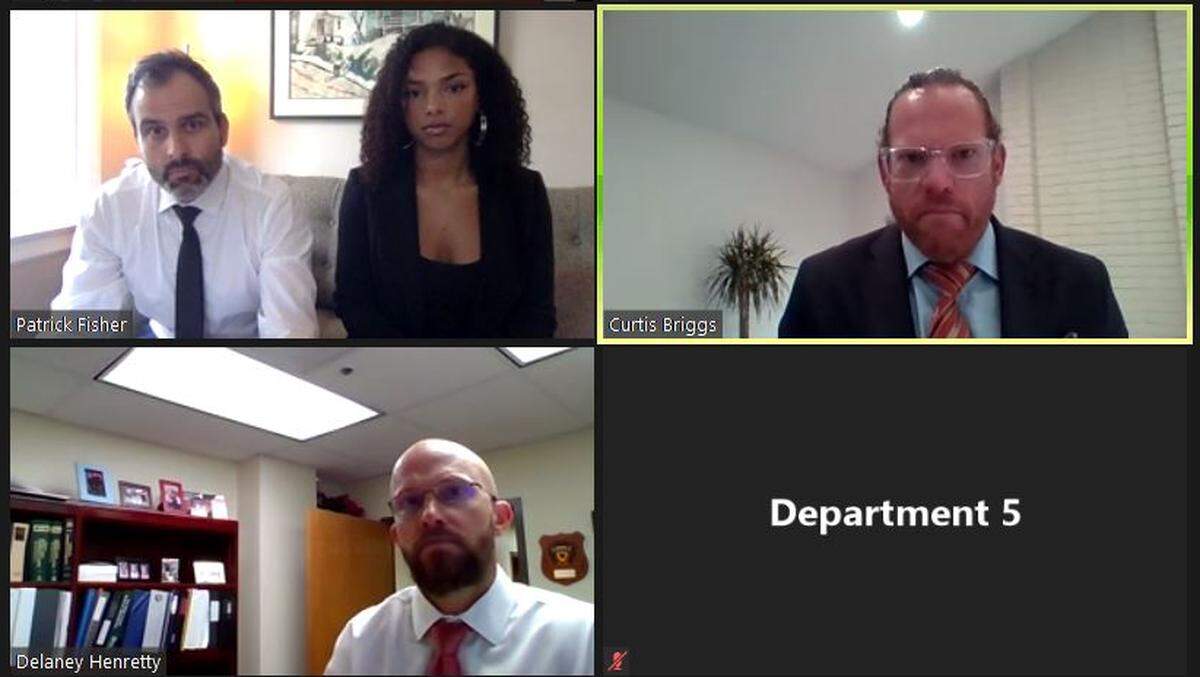
Arata’s defense team, which includes San Luis Obispo attorney Patrick Fisher and San Francisco-based Curtis Briggs, filed a demurrer motion in San Luis Obispo Superior Court shortly after her second arraignment, in which the 20-year-old college student again entered no plea pending the court’s ruling on her challenge to the charges.
“The district attorney’s prosecution tramples First Amendment rights and is flatly barred by the United States Constitution,” the filing says.
Arata is facing 13 misdemeanors including five counts of false imprisonment, six counts of obstruction of a thoroughfare, one count of unlawful assembly, and one count of disturbing the peace by loud noise.
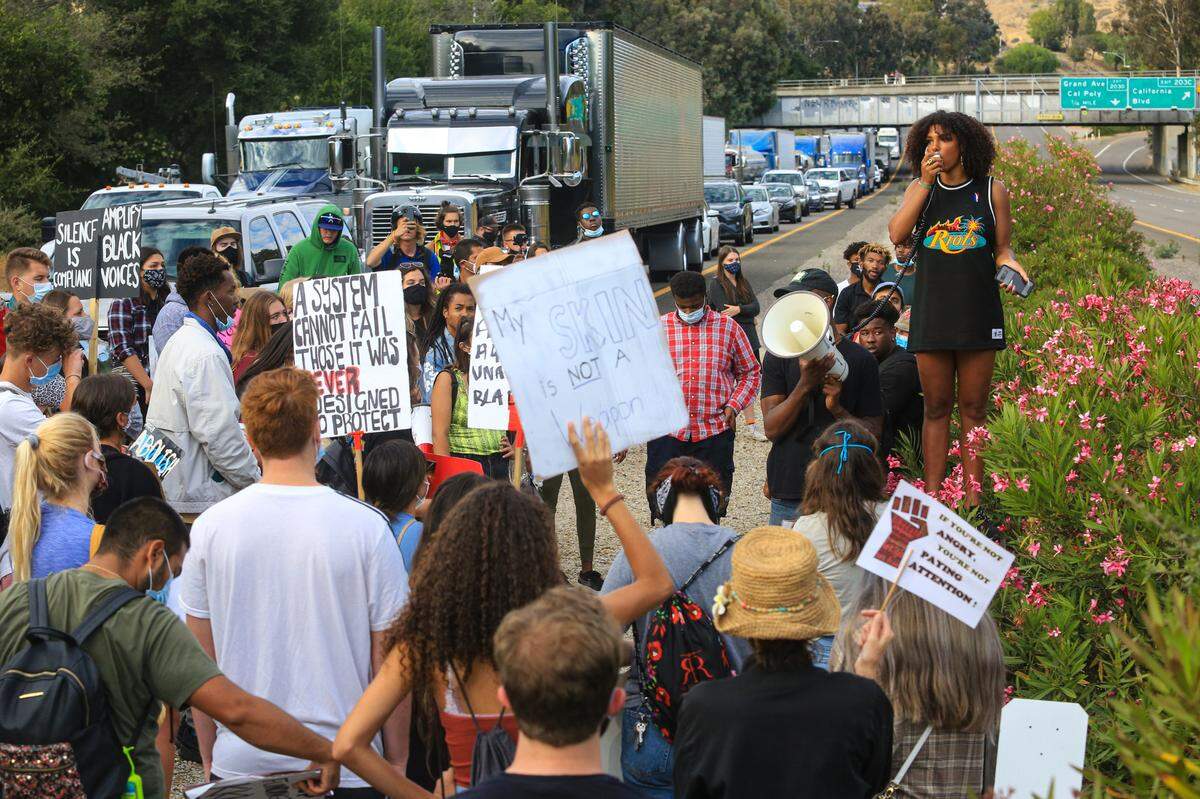
The San Luis Obispo Police Department had recommended the county District Attorney’s Office file five felonies and three misdemeanors about two weeks after her controversial arrest immediately following a July 21 protest in which Arata and other local organizers led a march down a section of Highway 101 that blocked traffic for about an hour.
She is one of roughly a dozen local leaders of numerous protests over the past four months demanding racial and social justice, and has been out of custody since shortly after her arrest.
In a news release announcing charges against Arata in early August, county District Attorney Dan Dow wrote that the conduct of Arata and another protester arrested July 21 “was not peaceful, but instead it violated the law by depriving other individuals in our community of their right to enjoy liberty.”
Arata and Elias Bautista are the only two individuals of about 300 demonstrators in the highway march to face criminal charges.
Deputy District Attorney Delaney Henretty indicated Thursday that the agency will file a response to the defense’s demurrer prior to the case’s next court hearing Oct. 22.
A ‘brazen effort to intimidate or shut down’ the BLM movement in SLO
In their court filing Thursday, Fisher and Briggs wrote that the 13 misdemeanors sought by the District Attorney’s Office “are legally barred” under the First Amendment to the U.S. Constitution, and that the agency’s criminal complaint fails to state facts justifying the charges.
Moreover, they argue that the prosecution seeks to “single out” a single member of a group of hundreds of protesters “absent any allegation or reasonable inference which can be drawn that would remotely suggest that Ms. Arata was aware that she was doing anything wrong, or illegal.
If successful, the motion argues, the district attorney’s prosecution “would severely chill lawful assembly and freedom of speech.”
The demurrer explains how Arata initially developed a positive relationship with city police Chief Deanna Cantrell, with whom she maintained contact with regarding planned events, which the attorneys describe as “nonviolent and joyful protests.”
“The organizers showed level of care that is thoughtful and impressive, including using medics and designating ‘peace keepers’ who wear vests to provide a sense of safety, make sure the group is safe in relationship to traffic, and who use de-escalation tactics with any aggressive counter-protesters,” the filing says.
Ultimately Arata was just one of numerous organizers, though the local Black Lives Matter movement has no formal leadership and “there is no pre-planned route or any person giving directions about where the marchers will go,” the motion says. “The primary function of the organizers is to promote nonviolent peaceful and joyful protests.”
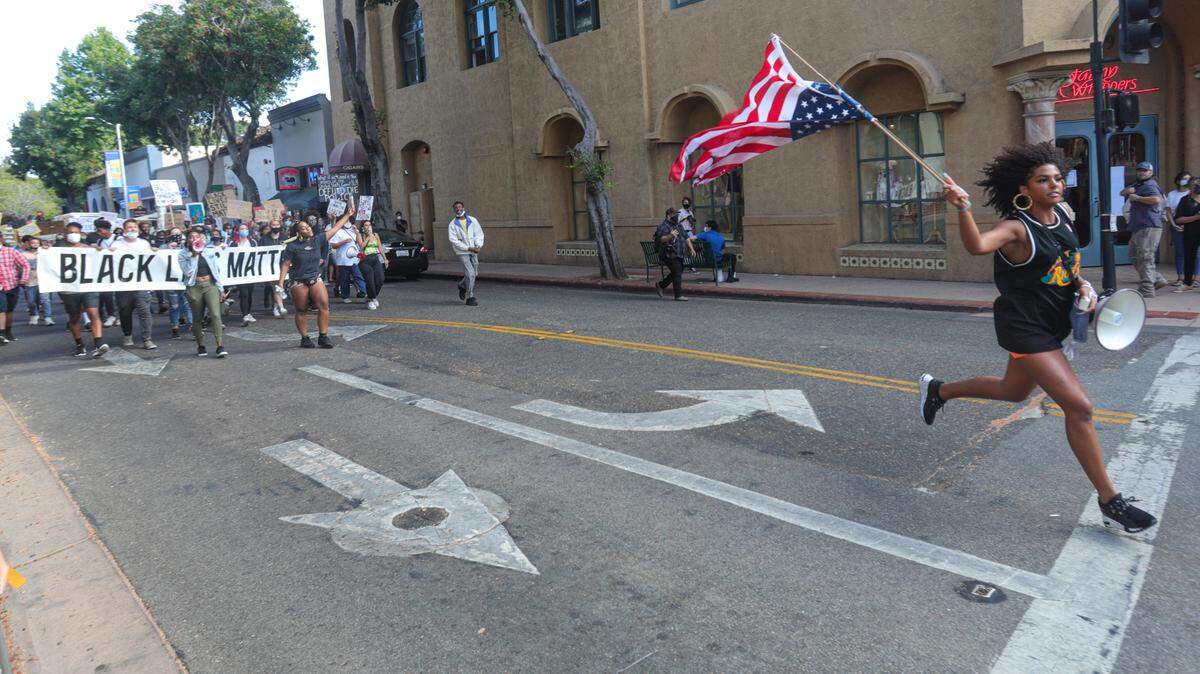
During the July 21 march, neither Arata nor anyone else was in charge as protesters marched on to the freeway, but rather, it was a “spontaneous and impulsive decision of the group,” and police officers present made no attempt to dissuade them from entering the highway, the attorneys argue, even as marchers walked past officers as they sat near the Olive Street on- and off-ramps.
The filing goes on to challenge the Police Department and CHP’s narrative that two separate confrontations between motorists and demonstrators that day victimized the occupants of the vehicles.
Arata was 60 feet away and not involved when one combative motorist struck a marcher, prompting another to smash out his back window with a skateboard, the motion says, and she was justified in swinging a flagpole at another vehicle that also drove through a group of marchers downtown, hitting at least one person.
“The charges asserted amount to brazen effort to intimidate or shut down the Black Lives Matter movement in San Luis Obispo by using all the criminal sanctions at the district attorney’s disposal, despite that he has no constitutional authority whatsoever to do so,” the motion says.
The filing also contains a memorandum of points and authorities that argues against the legality of each of the separate criminal charges Arata faces.
False imprisonment
In regard to the five felony false imprisonment counts, the attorneys argue the DA’s Office failed to identify how Arata can be held liable for the actions of hundreds of marchers.
The DA’s Office complaint says that Arata “did unlawfully violate the personal liberty of,” and then for each count, lists a driver under the pseudonym John Doe, describes the vehicle, and describes the intersection of the alleged incident.
“The complaint does not provide any explanation of how the prosecution intends to prove, which they cannot, that Ms. Arata is responsible for the actions of the hundreds of marchers in the protest,” the attorneys argue. “This is not the typical case in which a bare bones complaint provides sufficient notice. Without further clarification, Ms. Arata (is) precluded from understanding the charges so that she may have reasonable opportunity to defend against the charges.”
Obstruction of a thoroughfare
Fisher and Briggs argue that the six counts of obstruction of a thoroughfare require reasonable proof of malice, meaning a wish to vex, annoy, or injure another person, or an intent to do a wrongful act.
Though the DA’s complaint alleges Arata was malicious in her alleged actions, it doesn’t allege how Arata “intended to do any wrongful act when she joined a Black Lives Matter rally that ultimately obstructed the free movement of traffic,” the demurrer states.
“A theory that Ms. Arata, as one woman, could obstruct a thoroughfare defies reason,” it argues. “Is Ms. Arata expected to defend against the actions of the entire group of marchers? Ultimately, this novel case requires more than a bare minimum complaint from the district attorney, and merely incorporating police reports by reference does not cure this deficient complaint.”
Unlawful assembly
The demurrer says the DA’s Office has failed to establish how Arata knew the assembly was unlawful when she participated, citing state law that defines the charge as when two or more people assemble to do a lawful act with a potential for violence, “the assembly is not unlawful unless violence actually occurs or there is a clear and present danger that violence will occur immediately.”
That language is tempered by previous California Supreme Court case law that states: “Although the public may fear large, noisy assembly, particularly an assembly that espouses an unpopular idea, such an apprehension does not warrant restraints on the right to assemble unless the apprehension is justifiable and reasonable and the assembly poses a threat of violence.”
The attorneys again argue that Arata was not in control of the group, and even if she was, prosecutors are aware of her efforts to work with the Police Department and maintain communication with Cantrell.
“What more can a college student do other than ask permission from the chief of police to engage in protest, promote peaceful non-violent protests, and help organize a rally where peacekeepers are assigned to ensure that the marchers are safe in regard to vehicle traffic?” the demurrer says.
Disturbing the peace
Finally, Arata’s defense team argues that prosecutors again failed to establish how she willfully caused loud or unreasonable noise that created any clear and present danger of immediate violence, or that noise was used for the purpose of disrupting lawful activities, rather than “to communicate the Black Lives Matter message.”
The motion concludes that for those reasons, the defense is asking Superior Court Judge Matthew Guerrero to grant the demurrer and “swiftly” terminate the proceedings.
This story was originally published September 17, 2020 at 6:14 PM.