Homebuyers are streaming to SLO County in a pandemic — pushing prices to record highs
By Nick Wilson and
Kathe Tanner
For the past few years, 27-year-old Kristine Disselhorst and her 32-year-old husband Paul lived in a rental home with their two young boys in Marina, just north of Monterey. Paul commuted up to two hours total daily to his software engineering job at Amazon’s office in Santa Cruz.
With the median home price in Santa Cruz County at $1.05 million, the couple couldn’t afford to buy a suitable home in the region.
But Amazon recently approved Paul’s request for a transfer to its San Luis Obispo branch. And looking for a fresh start in a new community, the Disselhorsts jumped at the opportunity to buy a 2,160-square-foot, three-bedroom home on SLO’s west end for $792,500 in August.
They’re part of a trend of new homeowners streaming here from out of the area to buy during the COVID-19 pandemic, SLO County real estate agents say. Many buyers are working remotely from their new homes in SLO County and keeping their jobs based in other regions.
“We have been looking for housing for a long time, about four to five years,” Kristine Disselhorst said. “SLO is such a better environment for Paul’s job commute — and all we could get (in the Santa Cruz region) for the same price is a small condo. We like the warmer weather here, and it’s closer to where both our families live in Southern California.”
The coronavirus pandemic has created shifts in homebuying behaviors, Realtors say, allowing workers from expensive and crowded communities in the Bay Area and Los Angeles County, among other regions — and those looking for a better quality of life — to settle into a new home in SLO County.
“We’re seeing that happen where people from metro areas are moving to places like SLO County,” said Jordan Levine, a deputy chief economist with the California Association of Realtors. “That’s also happening outside of Sacramento and even Lake Tahoe, which is a more expensive housing area. People are moving not only for cost of living, but for quality of life.”
Kristine Disselhorst and her husband Paul moved from Monterey County to San Luis Obispo after Paul was able to transfer to the local Amazon office. They’re pictured in front of their home with children George and Rowan, 18 months. Laura Dickinson ldickinson@thetribunenews.com
Data shows high prices and low inventory
CAR statistics released Sept. 18 show that median single family home prices in August in SLO County reached an all-time high of $666,840, which topped July’s median of $659,000, which was the previous all-time high. That distinction lasted for one month.
As a point of comparison, prices in SLO County peaked at roughly $620,000 in October 2005, Levine said. But median home prices at the height of the recession in 2010 through 2013 were in the low to mid-$300,000s, past Tribune stories show.
Meanwhile, the inventory index shows that SLO County’s home availability decreased from 3 to 2.7, meaning that if no additional homes went on the market, the current homes for sale would all be purchased in 2.7 months.
“Typically, a healthy market is five or six months of inventory,” said Chris Richardson, a SLO-based Realtor. “It’s definitely on the low end for what would be a normal type of environment.”
Median home prices in August in SLO County communities, according to CAR, varied substantially, ranging from $540,000 in Paso Robles to more than $1 million in Pismo Beach. The median in San Luis Obispo was $830,000.
“This could be a long-term trend of working remotely, and living far away from their jobs, for some people,” Levine said. “Of course, not 100% of employers will allow that to go on forever.”
For the Disselhorsts, SLO offers an area with more young families and highly rated public schools, and they like the culture and pace.
Other Bay Area tech workers less tied to offices could also choose to take advantage of SLO County’s favorable prices.
As a comparison, in Santa Clara County, where Amazon has its Palo Alto office and many other technology companies are located, the median home price is $1.4 million, according to CAR.
SLO County Realtor perspectives
Paso Robles-based Realtor Mindy Chubon of Keller Williams Realty-North said that she has shown properties to many people from out of the area.
“I’m staying very busy,” Chubon said. “I think people are realizing they can work remotely and may want to move out of the cities, and the interest rates are low. That’s feeding a market where we’re getting multiple offers and even home purchases sight unseen. Anything in the $500,000 range and lower is going pretty quickly.”
San Luis Obispo-based Realtor Joshua Farris sold a home in Arroyo Grande on a one-acre property in July for $850,000 after several offers. The home was listed for $799,000 six months ago and most recently went on the market for $825,000.
Across San Luis Obispo County, housing data and the experiences of local real estate agents reveal a strong seller’s market.
“I think early in the pandemic, in March and April, there was some trepidation as people pulled back and buyers backed out,” Farris said. “Sellers were nervous thinking there would be a slew of foreclosures. But that didn’t happen, and since then, the demand has gone up.”
Farris, like other agents, said qualified buyers from Silicon Valley and Los Angeles “are positioned well to buy the mid-sized homes of three bedrooms and two bathrooms,” typically in the $550,000 to $850,000 range.
“They tend to be qualified buyers who can make a large down payment,” said Farris.
Kim Maston, broker at Re/MAX Pines by the Sea in Cambria, said that early in the coronavirus-related shutdown, “We were very slow … but (we got) very busy once we reopened.”
“People want to move to Cambria for many reasons: weather, open space, access to nature … beaches, ranches and mountains,” Maston said. “But now, they seem to have an added reason to want to be here: the low number of COVID-19 cases.”
“There are just not enough houses for sale,” Maston said. “The demand is far exceeding the supply.”
Bob Kasper, owner and broker of The Real Estate Company of Cambria, echoed that sentiment, saying that as soon as the COVID-19 restrictions were put in place, a client told him “OK, that’s it. I’m leaving here. I’ve been kicked out of my office (to work remotely). ... I realize I can work anywhere.”
Kasper said on Sept. 29 that the average number of homes that are active for sale this time of year is 80, but currently 28 are listed in Cambria, while the average for sales pending normally is 18 and currently 42 are pending.
“One client who was working remotely decided a ‘second home’ in Cambria would be a nice place to work,” said Cambria Realtor Jana Edwards.
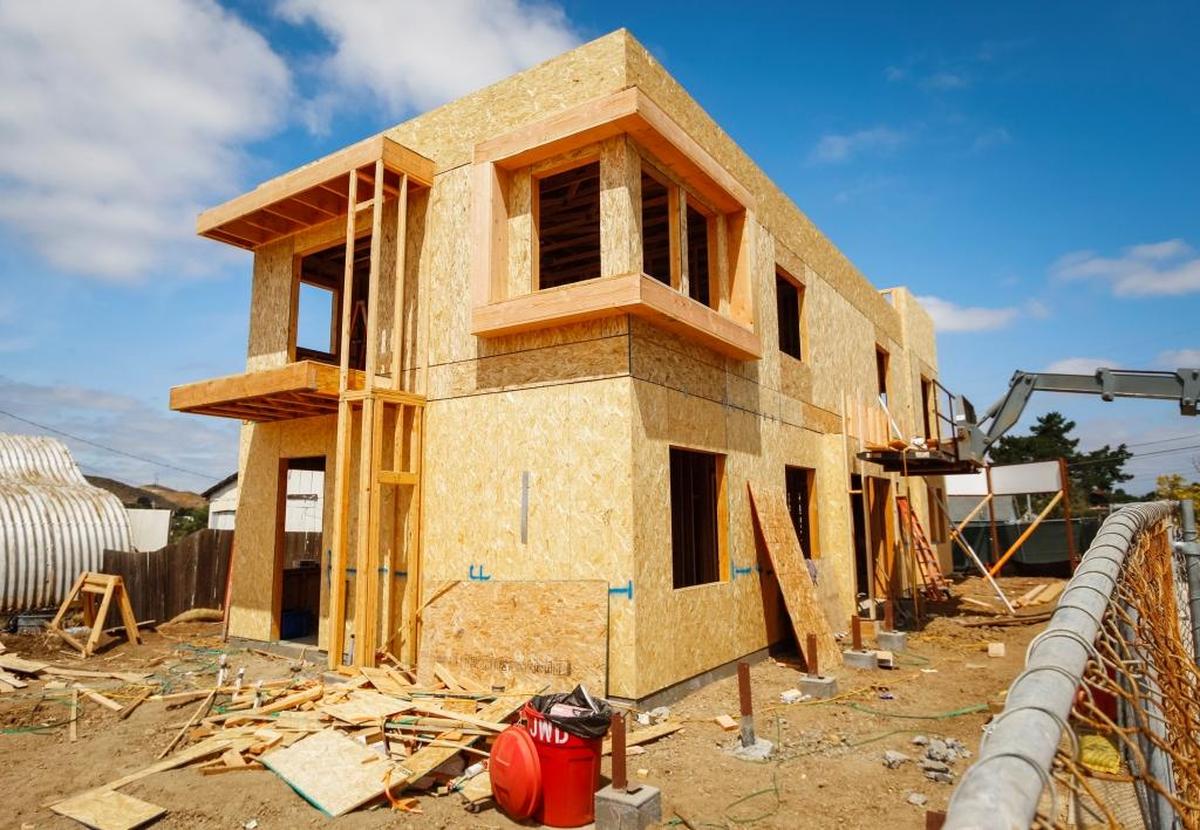
Low inventory is contributing to higher housing prices in San Luis Obispo County. This file photo shows the Housing Authority’s 20-unit housing development on Humbert Avenue in San Luis Obispo in 2018. Ten of those units were dedicated for homeless vets with the rest for affordable housing. Joe Johnston jjohnston@thetribunenews.com
The music therapist, hired in February at Atascadero State Hospital, previously lived in the Valley and wanted a better commute, having to drive an hour to her job at the state prison in Coalinga. But she said that looking for a home in the current climate is challenging.
“I had a budget, and I looked at many places,” said Bowsher. “I started in May and it took until mid-August to find a place and close. It would not have been my first choice to move and buy a home during the pandemic.”
Kathleen Bowsher recently sold her home in Fresno and bought a new townhouse in Templeton because her former job had a commute of more than an hour to Coalinga. Laura Dickinson ldickinson@thetribunenews.com
Bowsher, who sold her home in Fresno after three prospective buyers dropped out, said that open houses aren’t allowed during the pandemic and people aren’t supposed to touch surfaces during individual showings.
Paso Robles-based real estate agent Linda Midkiff worked with Bowsher and said prices are up in SLO County.
“What we’ve been hearing is that some people in other counties are choosing to retire early and come here, since their businesses have been affected anyway,” Midkiff said. “Some are choosing to leave the populous areas to reduce their exposure to the virus.”
Midkiff added: “It’s not uncommon for people to offer more than asking price in order to secure the property. I’ve been surprised at the effect the virus has had on our market.”
Kathleen Bowsher recently sold her home in Fresno and bought a new townhouse in Templeton because her former job had a commute of more than an hour to Coalinga. Laura Dickinson ldickinson@thetribunenews.com
Housing trends
Despite the economic impacts of people losing work and work hours statewide, Richardson said he doesn’t see a distressed market where sellers are trying to get out from under a mortgage because of job cuts or lost revenue.
“On a macro level, there’s good, strong demand and properties are priced to market, with sales within 30 to 60 days,” Richardson said. “It’s a pretty healthy market, other than the inventory.”
Richardson said people’s lives are as homebound as ever with virus precautions, and they’re rethinking the types of homes they want to live in, whether they’re moving or not.
“Given the situation we’re in, people are taking a really hard look at their house and home,” Richardson said. “These days, our house is our office and gym and people are re-thinking what our current house needs for additions, changes or maybe a better fit. That’s what I’m seeing happening.”
Kristine Disselhorst and her husband, Paul, bought a house in SLO recently, among many others from out of the area. They’re pictured in front of their home with children George and Rowan. Laura Dickinson ldickinson@thetribunenews.com
Farris said that not as many multifamily units have opened up because of restrictions on evicting renters during the pandemic and more people staying in the housing they have.
Kasper said that low interest rates and stock market highs also contribute to the push to buy now.
Edwards said some people who are considering selling “might be hesitant to list right now,” especially because potential buyers want to see the homes in person.
“Travel could be a problem if the owners are planning to move out of town or state” after they sell, Edwards said.
Advice to home buyers
For people looking to buy a new home during the pandemic, Maston, the Cambria Re/MAX Pines by the Sea agent, has some tips.
“If buyers can understand they need to be more flexible,” Maston said, “they might be able to find something they like sooner. …”
“A lot of people have an ideal home in their minds … and they may very well find it,” she said. “But in my experience, they may have to make adjustments to that picture to buy something similar enough so they can modify that ideal” and still be happy with what they buy.
“A lot of buyers seem to think that the market is crashing, perhaps because of virus, fires, riots and more,” Maston said. “The reality is, that’s not today’s market. It’s hot, a total seller’s market. Buyers need to be accepting of that. Making lowball offers won’t get them the homes they want. Realty economic experts say the low inventory and low interest rates will keep prices and demand high.”
Her advice to home sellers?
“It is a good time to sell because supply outweighs demand,” she said. “However, sellers would be well advised to price their house according to what the market will bear and not attempt to overprice it due to that demand.”
“Because of the current situation in our world, online advertising is more important than ever,” Maston added. “Therefore, it is important to find a real estate agent who will take good photographs and offer virtual tours” so the home will present well and attract prospective buyers.
This story was originally published October 8, 2020 at 5:00 AM.

%20Cropped.jpg)