SLO County police agencies make big gains in diversity. And one is leading the way
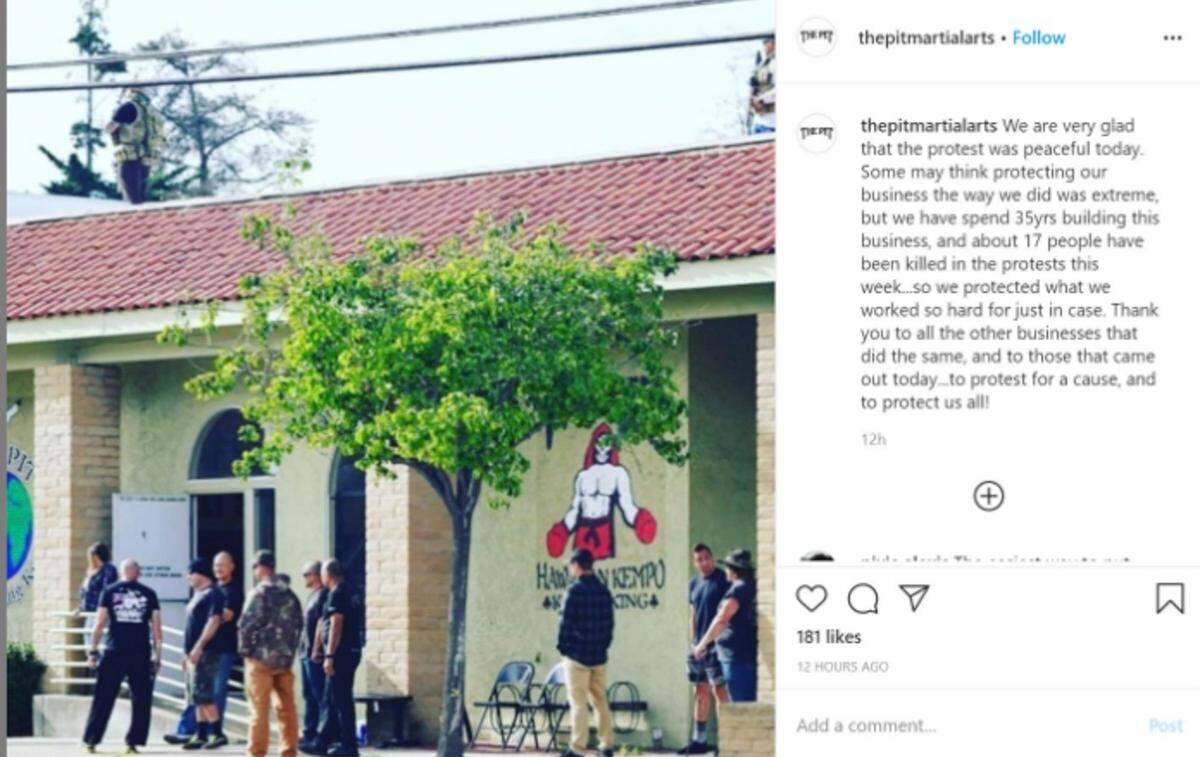
When armed citizens took to rooftops of Arroyo Grande businesses to defend property from a couple hundred men, women, and children marching peacefully in protest of systemic racism, city leaders sensed an ugliness had bubbled to the surface in their community.
“It was not a good time for Arroyo Grande,” said Councilwoman Lan George. “It really divided our community.”
The incident at the June 6 Black Lives Matter protest sparked more than three hours of public comment at the next City Council meeting, with the majority of speakers describing what they saw as an overt act of racism and intimidation that appeared to some to have the support of local law enforcement.
But the backlash was also coincidentally timed with the planned retirement of the city’s police chief, and in their search for his replacement, the City Council identified an opportunity.
In lieu of the wide-ranging national hiring process that cities traditionally favor to conduct behind closed doors, the city made the inclusive move to solicit input on two in-house candidates from community groups such as RACE Matters SLO and the local NAACP chapter, and pursued a vigorous vetting process that included one-on-one discussions with Police Department and other city staff.
The message from them was clear: In order to achieve transformational change, there needed to be an intentional drive to diversify local police ranks — not just officers’ skin color, but also their personal stories and life experiences.
“Sometimes it takes an event to recognize that we can always do more, always be better,” George said. “We couldn’t just do status quo.”
The result was the promotion of then-Commander Mike Martinez, the city’s first chief of Latino heritage, in a city where 17% of its residents identify as Hispanic. And the hiring built on the city’s recent impressive record of diversifying its ranks of sworn officers.
Martinez, a Santa Maria native, worked his way up the department ranks over more than 15 years.
In a community where 6% of residents live at or below the poverty line, his roots in the community were an important factor that helped get him the top job.
“I feel really good to have had the opportunity to be part of that process and that someone from the outside put me through a test of where I stand in connecting with our community,” Martinez said. “That made me feel really good.”
The effort to diversify local law enforcement hasn’t only occurred in Arroyo Grande.
While agencies in San Luis Obispo County remain predominantly white — the county itself is more than 68% Caucasian — a recent review by The Tribune shows that over the last five years, several departments including Arroyo Grande have made significant gains in broadening their sworn staffs to more closely reflect the demographics of their communities.
A couple departments now even have slightly more ethnic minorities on the force per capita than is represented in the populations of their cities.
The Tribune analysis also found that the number of officers and staff fluent in Spanish and other languages, as well as the number of female officers, also increased during that time.
“It’s a movement in the right direction,” said Jacqueline Frederick, president of the Latino Outreach Council of San Luis Obispo County. “With everything that’s happening now, there’s an even greater awareness of how valuable diversity really is.”
Ethnic diversity in SLO County law enforcement
In the five years since The Tribune last examined diversity in law enforcement, pressure has only increased to make police departments more reflective of their communities.
In 2015, following civil unrest in Ferguson, Missouri, over the fatal police shooting of Michael Brown, there was a push by groups such as UCLA’s Center for Policing Equity calling for police departments to make those kinds of changes.
At the time, federal officials including the head of the Justice Department and the FBI publicly acknowledged cases of police bias in communities with an ethnic and racial disparity between the police and residents.
In response, The Tribune analyzed the ethnic diversity of each local police department and the Sheriff’s Office compared to the demographics of their respective communities and found only two came close to mirroring those demographics.
The Tribune found then that in San Luis Obispo County, which at the time had a roughly 70% Caucasian population, police agencies on the whole did not reflect the diversity of their communities.
On average, local agencies were almost 82% white.
Now, amid a summer punctuated by local Black Lives Matter protests against over-policing and systemic racism against minorities, The Tribune again asked local agencies to provide an ethnic breakdown of their sworn officers and compared that information to U.S. Census Bureau data to see what has changed.
Overall and in many specific cases, the results were impressive. In fact, the aggregated numbers for the county’s seven city police departments and the Sheriff’s Office now show a law enforcement community that almost perfectly matches the county’s ethnic demographics.
The most recent census data estimates from 2019 show that SLO County is now 68.5% white, 23% Hispanic, 4% Asian, 2% Black, and just over 1% Native American.
Local police agencies, meanwhile, average a sworn staff that is 70.3% white, 24% Hispanic, 3% Asian, less than 1% Black and less than 1% Native American.
In all, six of the eight individual departments have become more ethnically diverse over the past five years, with Hispanic officers accounting for the majority of the growth.
Which local police departments improved diversity
Over the last five years, Arroyo Grande made the most gains toward diversity, with 59% of the department’s 22 officers identifying as Caucasian, and 32% percent identifying as Hispanic, up from 7% in 2015. The city is roughly 17% Hispanic. Asians accounted for 4.5% of the force (the same as the city) and Native Americans account for 4.5% of the department in a community where 1.5% of the population identifies as such.
The department has one female officer and two Spanish speakers, up from one in 2015.
But as it was in 2015, the Grover Beach Police Department remains the most ethnically diverse in SLO County, with white officers accounting for just over half of its 17 officers. The percentage of Hispanic officers nearly doubled to almost 43%, and the number of Asian American officers stayed about the same at nearly 5%.
That department also has four female officers — the most per capita of any local agency — and six members of staff fluent in Spanish.
In Morro Bay, the county’s smallest department with 17 sworn officers, the percentage of Hispanic officers more than doubled to 30% (the city is 13% Hispanic) and Asian officers increased to 6%. White officers decreased from 87% to 65% in a community that is currently 80% Caucasian.
Though the number of female officers shrank from five to two, the number of department staff fluent in Spanish went from one to three, with an additional officer fluent in Mandarin.
The Pismo Beach Police Department, which serves the smallest city population in the county, continued to be more ethnically diverse than it’s own community in a town that also serves a significant tourist population from outside the county.
That department is staffed by 19 sworn officers, 63% of which identify as white, 21% Hispanic, 5% Asian, and 11% identifying as “other.” The percentage of Hispanics and Asians on the force exceed that of the city, which stands at 8.5% and 2.1% respectively.
The number of female officers has remained the same since 2015, but the department doubled its number of Spanish speakers on staff to six.
The city of San Luis Obispo’s police force also grew more diverse. Its share of white officers is now on par with the city’s demographics, with 70% of its 60 officers identifying as Caucasian, and its percentage of Black officers exceeds the city’s population at almost 5%. Hispanic officers grew from 12% in 2015 to 21.3%, and Asian officers comprised 3.3% of its 2020 roster.
The department added two female officers for a total of 10, and the number of Spanish speakers on staff jumped from two to six.
The San Luis Obispo County Sheriff’s Office similarly grew more diverse, with an increased number of Black, Hispanic and Asian deputies.
Though the roster of 320 deputies remains predominantly white at 77.1%, Black deputies account for 2.8% of the force (up from 1.9%), Hispanic deputies went from 7.1% to 17%, and the percentage of Asian deputies increased slightly from 0.6% to 0.9%. Roughly 0.6% of deputies identify as Native American.
The number of female deputies jumped from just six in 2015 to 40 (or 12.5% of the agency) in 2020. In addition, 38 deputies, or 11.8%, are fluent in languages other than English.
Not all departments have made gains
While many local departments have diversified over the last five years, a couple have changed little over that time, and one actually grew less ethnically diverse.
The percentage of white officers at the Paso Robles Police Department, which has 35 sworn officers, actually grew from 81% to 85.8% of the department in a community that’s only 57.3% Caucasian. The city has the largest Hispanic population proportionally in SLO County (roughly 38.5%), yet the percentage of Hispanic officers decreased over the past five years from 18.9% to 14.2%.
The city employs no Black, Asian or Native American officers, and has just one female officer, though the department now has two Spanish speakers, up from just one in 2015.
Chief Ty Lewis said that his current department is a very young one following several recent retirements and accurately noted that the data is simply a point-in-time count.
He said diversity and strong community ties are a priority — a significant percentage of his officers are from Paso Robles, he pointed out — and that, like many local departments, Paso Robles has had a tough time hiring qualified officers.
“This is a huge focus for us,” Lewis said. “It’s part of our vision statement: to build trust in our community.”
The Atascadero Police Department is similarly among the least diverse of SLO County agencies, with 89.6% of its 29 officers identifying as white and three of its officers, or 10.4% of the department, identifying as Hispanic. That represents essentially no change from 2015 in a city that is 76% white and 17% Latino.
The number of female officers and Spanish speakers also remains the same, with two.
African Americans remain the most underrepresented group in San Luis Obispo County law enforcement; six of the eight agencies have no Black officers on their rosters.
Diversity in law enforcement ‘takes a real concerted effort’
The gains made among several local law enforcement agencies are notable, because this kind of change is not easy.
Tracie Keesee, senior vice president and co-founder of the nonprofit Center for Policing Equity, told The Tribune in a phone interview that having a police agency that mirrors not only the ethnic demographics of its community, but also one that is gender-diverse with officers of varying life experiences, helps solidify that department’s legitimacy in policing the community.
“Of course it matters,” she said. “But it takes a real concerted effort.”
Keesee, whose organization conducts research and publishes data aimed at improving equality in the criminal justice system, said significant change in policing ebbs and flows and is usually driven by significant events, such as the Black Lives Matter movement.
She said several factors can hinder a department’s ability to hire under-represented individuals into the field of law enforcement, as well as other positions in the public sector.
The need for adequate childcare, for example, can be a limiting factor for many women looking to get into policing.
Other factors, including distrust in law enforcement amid highly publicized police killings of minorities, also have an effect in a field that is already struggling to find qualified candidates to fill its ranks.
“I think where we are now, I can see why some folks are hesitant (to get into law enforcement),” Keesee said. “You have to make sure you’re reaching out to those specific communities and explain why there is a benefit to them to having that career.”
‘Absolutely essential’ for transformational change
Frederick, the president of the Latino Outreach Council, agrees.
“I think its very important for the ethnic and racial makeup of a police force or a judicial system to be diverse … because that allows people to have more confidence they are receiving the same justice as others,” she said.
The need for more Spanish speakers, for example, is a logistical challenge that can undermine an officer’s efforts toward a positive outcome in some situations, she said.
Frederick, who is a local attorney, said she personally knows of at least one incident in which a language barrier influenced law enforcement’s decision to place a child in the custody of Child Protective Services over what she described as a “pure accident.”
“Someone who does not speak English and is being given commands in English is not going to be able to cooperate with the police officers to their satisfaction,” she said. “There are misunderstandings even with English-on-English interactions.”
Frederick said that if a more diverse field of officers is one result of recent calls for police reform, that will be a positive thing.
But diversity comes in many forms, and after reviewing The Tribune’s data, RACE Matters SLO said hiring was only the beginning.
The organization, one of those to recommend the promotion of Arroyo Grande police Chief Martinez, called diversity in policing “absolutely essential if SLO County is to grow as a community that truly values diversity, equity and inclusivity.”
“However, merely recruiting and hiring officers who reflect the racial and ethnic diversity of their communities is only a starting point,” the statement reads. “It’s more than checking the ‘correct’ diversity boxes; it must be followed by real action and intention as diversity alone won’t fix a problematic system.”
The organization says that for transformational change to occur, local police departments must be proactive in recruiting and hiring officers who understand the nature of systemic racism, and the ways in which it has harmed, and continues to harm, communities of color and other marginalized groups.
“Hiring the best personnel with the right mix of qualifications and life experience offers a city the best opportunity to positively impact diversity within an agency and the community,” they said.
Chief looks to establish ‘lines of communication’
In Arroyo Grande, Martinez believes his background will help him building a more diverse department, which in turn will allow him to better serve the community.
He is an outlier among the heads of San Luis Obispo County’s law enforcement in that he hasn’t been a police officer his whole adult life.
He grew up in Santa Maria without any family in law enforcement or the military, he said. Law enforcement wasn’t on his mind as a career until, while he was cleaning classrooms as a custodian at a local school, a mentor’s police officer husband turned him on to policing.
“I really came from a blue-collar background,” he said.
Hired by the Grover Beach Police Department in 2003, he transferred in 2005 to Arroyo Grande, where he most recently served as one of two commanders under former Chief Beau Pryor, whom Martinez called a mentor.
He said the unique promotion process undertaken by the City Council allowed him the opportunity to meet various community groups and hear directly from residents.
“Really, what they wanted to get my perspectives on was how can I as a police leader make underrepresented members of our community comfortable and feel they are part of this community? I am passionate about that,” Martinez said. “I want to be a chief of police that people feel comfortable engaging with. … Law enforcement in general can always do a better job of connecting with our community members.”
Martinez said he’s a big supporter of establishing diverse police departments with female officers and people of varied upbringings.
“When we have a diverse department, it allows me to receive education from even people in my own department, things I didn’t know of myself,” he said, noting some of his officers come from very diverse backgrounds. “It gives us a better perspective and allows us really to provide a better service.”
Martinez said the city will continue to use the community outreach approach with future big hires, with the aim of maximizing inclusion and being responsive to residents.
“The goals is to have that line of communication open,” he said. “I want all organizations and groups in the community to understand that their chief has an open-door policy.”
This story was originally published August 27, 2020 at 5:00 AM.