
SLO mayor deletes post on energy plan after criticism from Black Chamber of Commerce head
Update: Representative of three local organizations, including two organizers of recent racial justice rallies, have publicly stated perspectives related to the City Council’s vote in favor of a energy policy decision Tuesday.
The SLO Climate Coalition clarified that SLO Mayor Heidi Harmon copied and pasted a part of their social media post, which she used and has since deleted on Facebook, stating “Tuesday is the single biggest day of our organization’s history.”
The “organization” referred to the SLO Climate Coalition, which initially posted that line on social media; the earlier part of the post was Harmon’s wording mentioning racial justice and the climate crisis as interconnected, according to an organization spokesman.
Stephen Vines, president of the SLO County NAACP, issued a letter saying the organization has been fighting for clean energy for 60 years. Vines wanted to dispel any misconception or rumors about the organization’s position.
“The local San Luis Obispo chapter of the NAACP is fully in support of the city’s efforts to reduce pollution and create greater access to clean, affordable energy for residents, and any report that we are opposed to tonight’s Clean Energy Choice for new buildings measure is false,” Vines said in the letter in advance of Tuesday’s vote in favor of the new clean energy policy. “...We appreciate the steps the city is taking on racial and environmental justice, from working to create healthier homes and buildings to declaring racism a public health crisis.”
Courtney Haile, a SLO resident and R.A.C.E. Matters member, wrote to the council, saying “I am discouraged that people have used the racial justice movement to discredit the value of this program. America’s systemic racism goes far beyond this issue of climate change, but we know that the systems of power that destroy the environment are also those that exploit vulnerable communities’ livelihoods, health, education and opportunities. A program that creates more affordability and a healthier planet is a service to all of us.”
Original story: San Luis Obispo Mayor Heidi Harmon removed a Facebook post connecting racial injustice and the impacts of climate change on Monday after the head of the California Black Chamber of Commerce called her out in a strongly worded letter that was apparently rewritten by a third party to be more strident than he intended.
Ahead of the San Luis Obispo City Council’s Tuesday meeting on its proposed clean energy plan, Harmon posted on her Facebook page: “As we confront racism and a pandemic we also confront the climate crisis. They are interconnected and we do not reach justice until we reach justice on all levels.”
“Tuesday is the single biggest day of our organization’s history,” she added.
In response, a letter signed by Jay King, president/CEO of the Black Chamber of Commerce, was sent to Harmon saying, “We are stunned and angry about your online post this morning where you in effect make climate change a condition for racial justice in America!”
“You put a building code ordinance on the council agenda tomorrow (sic) one that you have an obvious political interest in passing. Perhaps your reelection in November has shorted-out your judgment. Therefore you have combined the moral cry of outrage Black Lives Matters with a ban on natural gas as ‘interconnected’ with racial justice! How dare you?”
But when asked about his letter by The Tribune, King said he didn’t approve of the final draft, which was sent to the mayor with his signature by a lobbyist, saying the tone was “incendiary and divisive” and not his approved wording.
King told The Tribune he was offended by the mayor’s post, which he said conflates environmental advocacy with racial justice and is not appropriate.
“When I hear somebody talk about climate (action) and racial justice as one in the same, that’s absolutely wrong,” King said in a phone interview. “Whenever I hear anyone, especially someone in office, conflate issues like this, even with the LGBTQ movement, I’m offended.”
But King also said he was disappointed the letter was changed from his original wording and sent out by an activist he worked with from the organization United Latino Voters, which is involved with the opposition effort to SLO’s energy policy.
“I would never use this kind of language and never take a tone that angry,” King said in a phone interview. “I’m brave enough to say I was wrong to not to have made sure to review the final draft.”
Still, King called for a statement from the mayor.
“She has to correct it,” King said. “She has to say, ‘This is not what I meant.’”
The mayor’s perspective
In her post, Harmon — whose social media message went out Monday morning and was deleted later in the day — expressed support for a proposed SLO clean choice energy plan, to be discussed at Tuesday night’s council meeting.
The controversial SLO energy plan, designed to help the city reach its 2035 carbon neutrality goal, would set policy on all-electric new buildings (new single-family residential homes using natural gas would have to be built to accommodate future all-electric use), as part of a comprehensive energy policy.
Harmon didn’t respond to requests for comment Monday and sent a text to The Tribune Tuesday morning saying she was unable to speak at the moment.
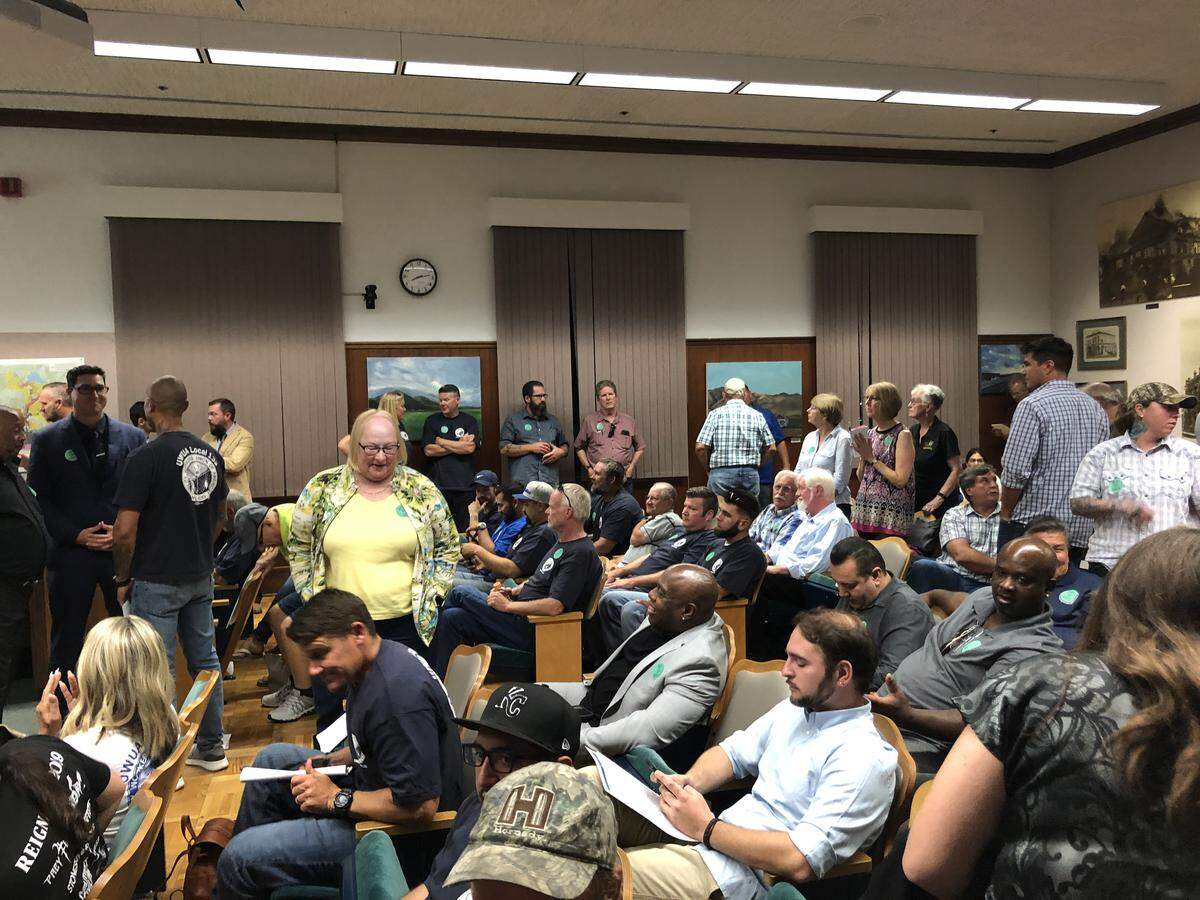
The proposed energy plan generated a threat of a protest from a gas industry union leader in March in the early stages of the pandemic, despite social distancing guidelines. The city postponed a planned discussion on the issue at that time.
Harmon wrote in an article for CalMatters, a nonpartisan, nonprofit journalism publication, that “I am as concerned about the future of SoCalGas workers as I am about the climate crisis.”
“And I look forward to working with them to create a world where their jobs are as safe as our future,” Harmon noted. “These two issues are intimately linked. That’s why California is already engaged in a long-term transition off of gas — which will help us plan for a just transition for gas utility workers over this decades-long process.”
She added: “Yet SoCalGas has chosen to fight rather than participate, and instead has become one of California’s primary obstacles to local and statewide efforts to plan for the future of their workers as we move to a clean-energy economy powered by zero-emission technologies.”
Harmon previously said the fossil fuel industry has threatened people’s lives for decades through pollution, and uses bullying tactics.
“Bullies can’t dictate policy, and we can’t let bullies win,” Harmon said in May.
Recently, she also has marched with Black Lives Matter protesters and has widely supported racial justice and encouraged diversity, including voting in favor of a $160,000 diversity and inclusion council spending initiative the council approved earlier this month.
Black Chamber president’s view
King said that he supports allowing energy choice for builders and opposes SLO’s proposed mandate on all-electric building policy or retrofit requirements, in alignment with United Latino Voters and utility union workers.
Lobbyists opposing the bill say construction costs will go up and those costs will be passed on to buyers, further pricing out commuting workers who might want to live in SLO.
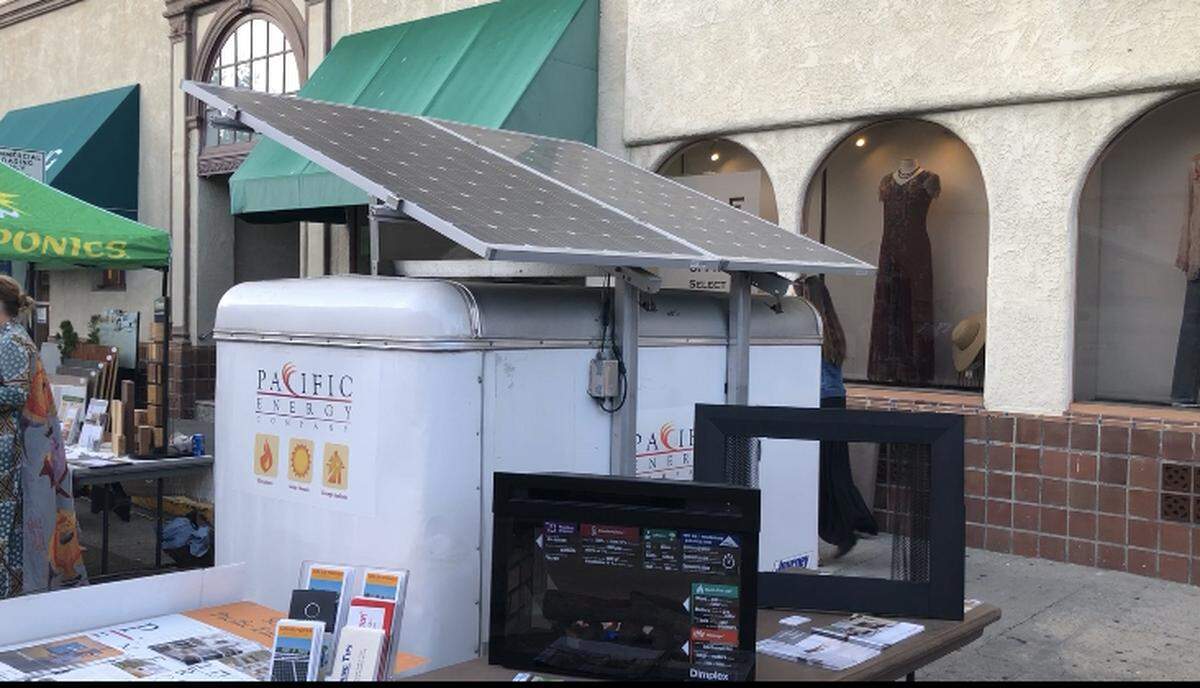
But city staff members have contended the cost to build all-electric homes will be comparable to or less expensive than homes using gas energy, while helping to reduce emissions as hundreds of planned new homes are added to the city over the next few years.
King said he reviewed an initial letter with “general language,” drafted by Robert Apodaca of the United Latino Voters organization, arguing against SLO’s policy from an economic perspective, saying that an electric preference policy will raise costs for residents of the city.
The original letter, which King shared with The Tribune, had a measured tone, beginning, “We urge you to delay taking action on a policy that will place greater economic burdens on working families and businesses, when many are just trying to make ends meet” and “Our top priority is ensuring African-American businesses and communities are supported and empowered.”
King said he didn’t ever see the final draft and was dismayed by the changes.
Apology for changes to letter
Apodaca, the activist with United Latino Voters, said he apologized to King for changing the initial language.
Apodaca said the mayor’s post struck a nerve on the heels of a tweet by the chairwoman of the California Air Resources Board, Mary Nichols, who said, “’I can’t breathe’ speaks to police violence, but it also applies to the struggle for clean air. Environmental racism is just one form of racism.”
California Assemblyman Jim Cooper, D-Elk Grove, responded in multiple tweets, including one stating: “How dare you use a dying man’s plea for help as a way to discuss your agenda. Have you no shame?”
Opponents of the SLO energy policy say the council is rushing it through amid a pandemic where virtual meetings prevent their physical attendance and participation.
“Passing a far-reaching, controversial ordinance like this, while normal civic discourse and participation due to the coronavirus pandemic are shut down, is wrong,” one commenter, SLO resident Richard Schmidt, said in a letter to the council.
But climate action activists have lobbied vehemently for the energy choice policy.
“This program has been developed to encourage builders, developers, and homeowners of newly constructed buildings to make the choice to be cleaner, safer, healthier and more efficient by going all electric,” SLO resident Travis Higgins said in a letter to the council.
Further opposition
Policy opponents from the Utility Workers Union of America also filed a complaint alleging a conflict of interest by Councilwoman Andy Pease for her role in a Sept. 3, 2019, 4-1 vote — with Erica Stewart dissenting — to adopt the proposed law that pushes for all-electric buildings.
The Fair Political Practices Commission (FPPC) has yet to rule on that decision, and Pease, an architect, has denied that she’s in conflict.
Pease is expected to recuse herself Tuesday, saying she’d avoid even the perception of a conflict of interest.
“As such, I have offered that, if the ordinances move forward, my firm will not participate in any work in the city of San Luis Obispo that is triggered by the reach code,” Pease said in a September 2019 statement. “Based on that approach and other relevant details, I’m working with the city attorney to prepare a request for opinion from the FPPC.”
Eric Hofmann, the Utility Workers Union of America 132 president, called upon workers to contest the council’s expected vote Tuesday night.
“The City Council of San Luis Obispo is expected to vote in favor of a gas ban today,” Hofmann said in a Facebook video. “They aren’t allowing comment in person, so we need to make the strongest virtual presence possible, even if you don’t live in San Luis Obispo. This could be the domino that sets other cities. possibly your city, into a similar, disastrous energy policy.”
This story was originally published June 16, 2020 at 12:59 PM.
%20Cropped.jpg)