
San Luis Obispo is the best city in the nation for bicycling, survey says
A national survey ranked San Luis Obispo as the best city for bicycling in the United States.
To come up with its rankings, the nonprofit organization People for Bikes looked at factors including levels of ridership, safety and the ease of getting to a place by bike.
San Luis Obispo topped the list, followed by Madison, Wisconsin; Santa Barbara; Washington, D.C., and Rogers, Arkansas.
On its website, People for Bikes said it used a “data-driven analysis” to evaluate and identify the best U.S. cities for cycling. The data looked at 550 cities and towns.
“Top scorers are cities of all types and geographies who have succeeded in different ways, including cities with strong historical investments in active transportation as well as cities pursuing ambitious plans to rapidly implement high-quality bicycle networks,” the organization said.
SLO cycling safety, ridership ranked
People for Bikes gave San Luis Obispo an overall score of 3.5 out of 5 stars.
The city ranked lowest in the category of ridership, which examines how many and how often people are riding bikes, earning 2 stars. It also ranked low in safety, which looks at injuries and fatalities, as well as vehicle crashes to people biking, walking and driving, earning 2.1 stars.
San Luis Obispo’s highest ranking was in acceleration, earning 4.4 stars. That category studies how quickly communities were improving bike infrastructure and getting people riding.
People for Bikes says San Luis Obispo has worked hard to preserve its compact urban core with a greenbelt surrounding the city.
“We’ve striven to avoid sprawl, foster a vibrant downtown and make sure that housing, jobs, schools, recreation and shopping are not too far apart from each other,” said Adam Fukushima, the city’s active transportation manager.
Fukushima works solely on bicycle and pedestrian improvements in the city.
City strives to promote biking
People for Bikes also noted that San Luis Obispo has had a policy in place to transition to at least 20% of transit to bike mobility.
The city is currently undertaking a $6 million Railroad Safety Trail project, connecting Cal Poly with downtown and residential neighborhoods, using a combination of funds, including a $3.25 million state grant and almost $2.4 million from city traffic impact fees.
One phase is nearly complete from Tank Farm Road to Bullock Lane. It’s being built as part of the Righetti Ranch development, Fukushima said.
”Another (section) will connect from Pepper Lane, provide a bike-and-pedestrian-only bridge across the railroad tracks and extend across Highway 101 to connect to the already-existing segment near Taft and California streets,” Fukushima said.
Fukushima said that San Luis Obispo’s proximity to parks and open space helps the city get more people on bikes.
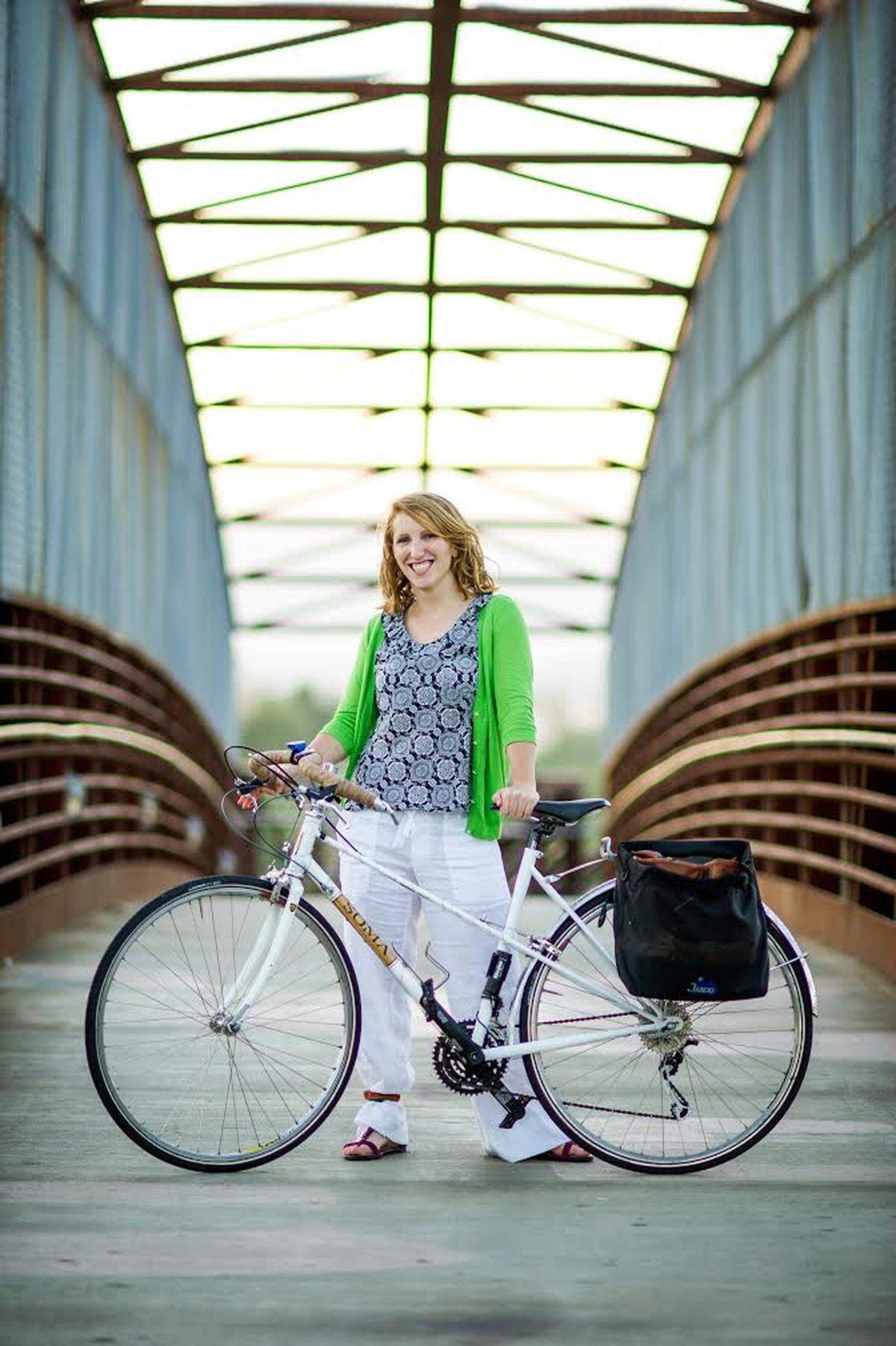
“In contrast to many communities, where you have to put your bike in the car to drive to a trail, we have many fabulous mountain biking trails and paths close to housing,” Fukushima said. “This has been the jumping-off point for many people to not only use a bike for recreation, but try it out for commuting as well.”
Cal Poly doesn’t allow first-year students to have cars on campus, further encouraging bike use in the city.
New bikeways in San Luis Obispo have met with some community opposition — including the Anholm Bikeway Project, which features protected pathways separating car traffic from riders.
Neighborhood residents argued it would take way on-street parking and create safety hazards entering and existing their driveways.
Some bike advocates also would like the city to improve its east-to-west connection, where thoroughfares such as Tank Farm Road and South Street are heavily trafficked with faster moving cars.
This story was originally published June 10, 2020 at 10:00 AM.
%20Cropped.jpg)