
This historic home in downtown SLO could be yours for free. Here’s the catch
You can have a historic house in downtown San Luis Obispo for free.
You just have to move it — and that comes with a cost.
The Heyd Adobe, located at 614 Monterey St. across the street from the San Luis Obispo Children’s Museum, is available to anyone who can relocate it.
It will likely cost $200,000 to $250,000 to relocate the home, built in 1939, and pricing could increase the farther away it’s taken from its location in the city, said Rachel Cohen, a city associate planner.
Moving the house would likely require taking the structure apart because it’s too wide to be transported whole, Cohen said.
As an incentive, the San Luis Obispo City Council set aside up to $100,000 to supplement the expense of hauling it off.
San Luis Obispo officials are hoping that somebody will be interested in the 1,372-square-foot house, which features three bedrooms and one bathroom.
If there are no takers, the home could be torn down to make way for a long-awaited parking structure
“We’ve received a lot of interest in this since we put out advertising,” Cohen said. “People get excited about it since it is offered for free and the City Council set aside money to help pay for those costs. Because several people have expressed interest, we’re putting together information about what’s included.”
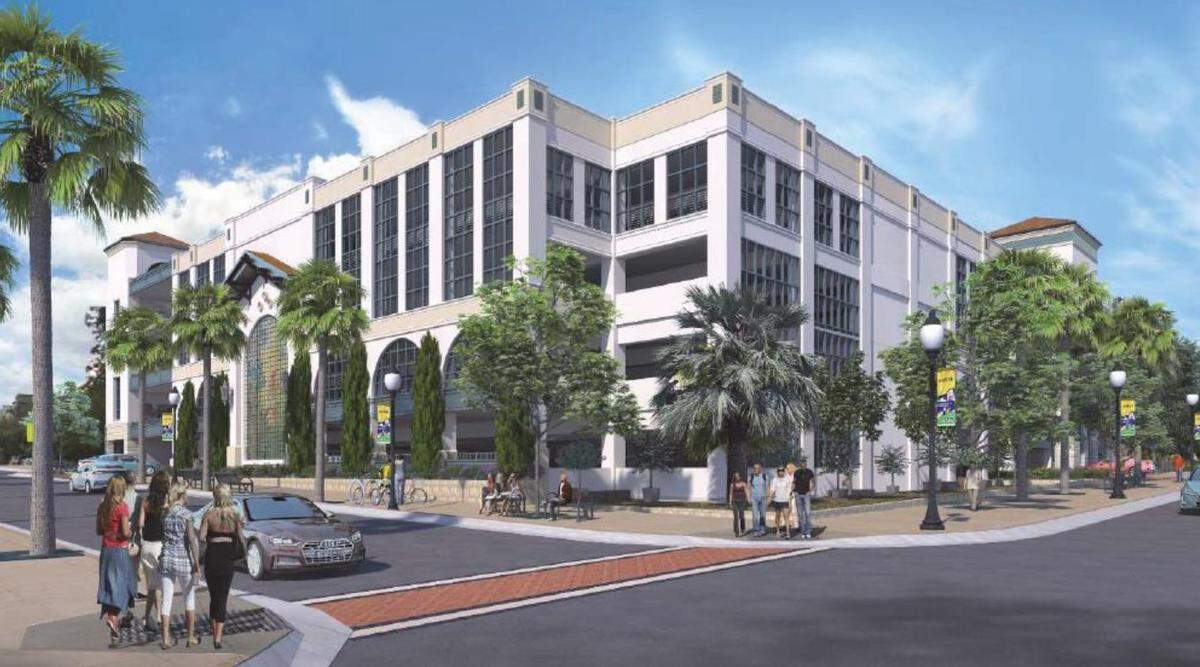
Downtown SLO parking garage on the way
The Heyd Adobe is located on the 1.3-acre site of the approved Palm Nipomo Parking Structure, an estimated $35 million project that has long been in the city’s planning pipeline.
San Luis Obispo officials initially planned to break ground in August on the 50-foot-tall, 162,000-square-foot parking structure project near the Creamery Marketplace and Mission College Prep school.
The plan also calls for a new 42-foot-tall, 23,000-square-foot San Luis Obispo Repertory Theatre building.
But the city is now looking at a spring 2021 timeline to start construction on the 404-space parking structure, Richard Burde, a San Luis Obispo city engineer, wrote in an email.
“The final decision on this will be made once we have a better understanding of the long term impacts of the (coronavirus-related) shutdown,” Burde said.
The city is not funding any portion of the privately-funded theater project, though it’s coordinating closely with theater representatives on reducing costs and streamlining the construction process, Burde said.
The City Council approved the allocation of $100,000 with the development plan approval in November 2019, months before the coronavirus outbreak reached San Luis Obispo County.
Despite COVID-19 impacts, the money is still available, community development director Michael Codron said.
“The city’s financial contribution is intended to offset some of the moving and rehabilitation costs to make relocation more financially feasible,” Codron said.
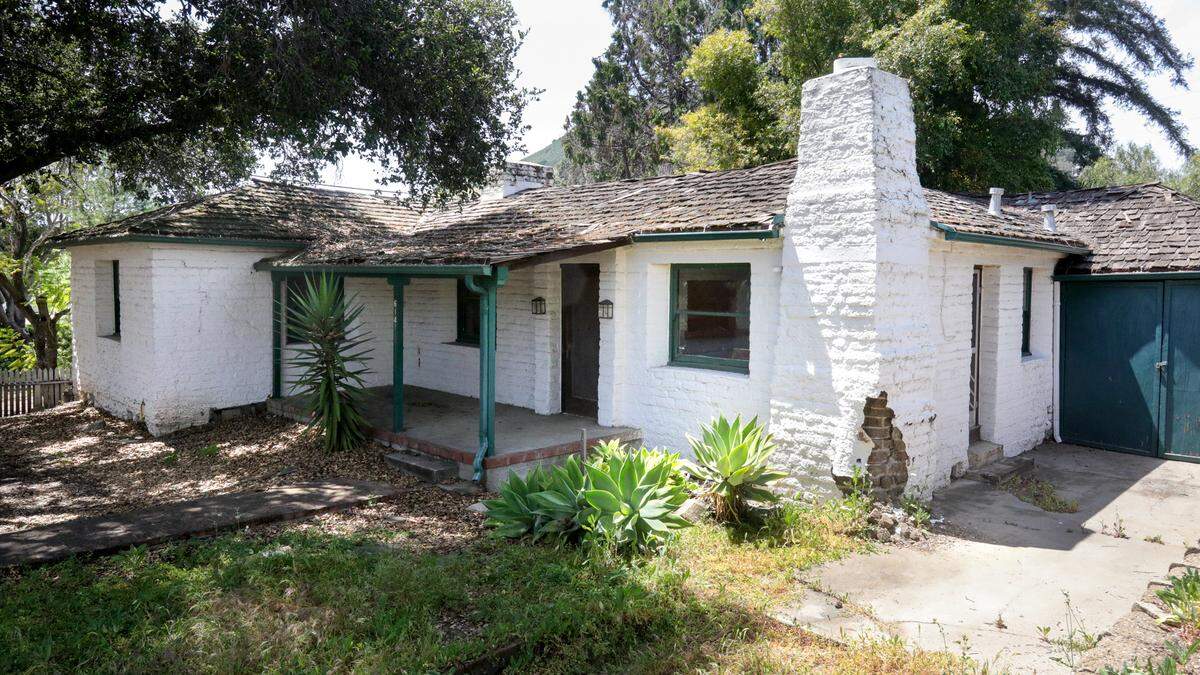
Heyd Adobe is architectural rarity
In the meantime, San Luis Obispo officials are fielding questions about the Heyd Adobe, which either must be moved or demolished in advance of the new construction.
The listing for the pre-World War II home says it was designed in the Adobe Revival style by architect William Scott. It features vaulted ceilings with exposed beams, beveled window insets and a rustic wood plank front door.
The home is a rarity because of its architectural style and status as part of the Downtown Historic District — factors in the City Council’s decision to offer funding as an incentive to move it.
“It’s a really important building because of the type of material and its relevance to architecture at the time,” said James Papp, an architectural historian and the chair of San Luis Obispo’s Cultural Heritage Committee. “I hoped they’d leave it where it is. There’s really no reason not to build around this. This is a very exciting and important part of SLO’s history.”
But the new SLO Rep theater couldn’t be built at the site if the Heyd Adobe remains there, prompting the need to remove the home or demolish it, city officials previously said.
The structure was made from bricks manufactured from soil on the property and classified as “bitudobe bricks,” the real estate listing notes.
“Bitudobe, also marketed as Caladobe, is adobe mixed with emulsified asphalt (also known as ‘bitumen’), which strengthens the bond of the adobe and makes it water-resistant,” the listing states, adding that the structure could potentially be used as a “guest house, wine tasting room, or workshop.”
Invented in 1936, Bitudobe became a popular housing material in the 1940s and 1950s in America, but it was relatively new at the time that Louis Heyd built his home, Papp wrote in a historical account of the property.
In fact, the Heyd home became the first demonstration house in America to showcase the material, Papp said.
“The Heyd Adobe — retaining its integrity of location, design, setting, materials, workmanship, feeling, and association — is one of the most significant and best preserved sites of America’s Adobe Revival,” Papp wrote in a 17-page report.
%20Cropped.jpg)