
SLO County governments are losing millions. Here’s what they’re doing about it
Government jurisdictions across San Luis Obispo County are facing drastic budget cuts due over the next year and beyond due to the economic impact of coronavirus.
Forecasts show that the seven city governments in San Luis Obispo County are facing steep revenue shortfalls, as all are forecasting losses in the millions of dollars over the next couple of years.
And the county of San Luis Obispo is projecting losses in the tens of millions in 2020 alone.
“We don’t have a number at this point, but $20 million (annual estimated budget decrease) is likely on the low end,” said Emily Jackson, the county’s principal administrative analyst. “There are several issues at play, which could significantly impact the county’s budget.”
Jackson said that the length of the existing shelter-at home-order and economic conditions at the state level are critical to the long-term outlook.
San Luis Obispo County cities that rely heavily on tourism dollars from sales and hotel-related “bed taxes” are facing major financial challenges.
“Bed and sales taxes are realizing the largest decline in revenues due to this pandemic,” said Ryan Cornell, Paso Robles director of administrative services.
Paso Robles is projecting an estimated $4 million to $6 million shortfall for the remainder of this fiscal year, as well as a $4 to $6 million decline in 2020-2021, Cornell said.
The city of San Luis Obispo estimates a $6.5 million revenue loss this year. And Morro Bay and Pismo Pismo Beach are both facing steep multi-million dollar budget reductions — largely due to tourism-related tax losses, as the visitor season has been stalled due to shelter-at-home orders.
Some of the measures being taken from local governments include limiting department spending, implementing hiring chills, laying off or furloughing part-time or temporary staff and deferring projects and equipment costs.
Here’s a look at the economic picture of cities throughout the region:

SLO County
San Luis Obispo County’s governmental funds budget for 2020-2021 is more than $670 million including its general fund, capital project and debt expenses.
Sales and bed taxes account for nearly $25 million of the county’s budget.
“This won’t go away entirely because there is still some spending happening, but we do expect to see significant decreases,” Jackson said. “From a pure dollars standpoint, the larger concerns are related to the funding that we receive from the state.”
Asked about the losses last week, county administrative office Wade Horton said the agency is projecting significant impacts.
“Right now, we anticipated to be in the magnitude of tens of millions of dollars from our funding sources,” Horton said. “We’re coming up with contingency plans on how to address that ... It’s going to be north of $20 million.”
Proposition 172, a half-cent sales tax collected by the state and allocated to counties, helps to fund public safety agencies such as the San Luis Obispo County Sheriff’s Office and San Luis Obispo County District Attorney’s Office.
Vehicle license fees and the state gas tax are expected to be impacted, as well as a 1% tax collected from those who earn more than $1 million per year through the Mental Health Services Act.
“The (gas tax) is collected at the pump,” Jackson said. “If less gas is being purchased due to decreased travel because of shelter at home orders, this revenue source will decline, resulting in less funding to counties for road repair/improvement projects.”
The county is discussing its options for budget cuts. Jackson noted officials have “historically viewed layoffs as a last resort.”
“We have other expenditure reduction strategies to consider before we get to layoffs,” Jackson said. “These include but are not limited to non-salary reductions, a hiring freeze or chill, voluntary time off, and the deferral of capital and maintenance expenditures.”
San Luis Obispo
San Luis Obispo’s largest revenue impacts are felt in sales tax ($3 million), bed tax ($2.1 million) and fee revenue ($1.2 million).
“Many of our facilities and programs remain closed,” Brigitte Elke, the city’s financial director, wrote in an email. “This is especially impacting our parks and recreation programs, but the parking and transit enterprise funds are also heavily impacted.”
The city’s 2019-2021, two-year expenditure budget is around $200 million.
Elke said thein 2020 to limit hiring and spending to essential services. Careful spending will save the city an estimated $4.2 million next year, Elke said.
“While these reductions will have an impact on city services, the community’s health and safety is the city’s No. 1 priority,” Elke said.
The city has temporarily shuttered programs and furloughed about 200 part-time temporary employees “who were either working or available to work,” said Greg Hermann, San Luis Obispo’s deputy city manager.

Morro Bay
Morro Bay has laid off more than 70 of its part-time and temporary staff as it braces for an estimated $2 million to $3 million loss this fiscal year, ending June 30, said city manager Scott Collins in an email.
The city typically has an annual general fund budget of about $15 million.
The city is projecting that number to increase to $4 million to $5 million in 2020-2021, equating to nearly a 27% to 34% loss of overall general fund revenues.
“Losses could increase beyond that depending on the re-opening of our society, the tourism patterns that emerge from that, and the extent to which there is a second surge of COVID-19 in the fall and winter of 2020/21 which could result in shelter-at-home orders being reissued,” the city stated in a staff report.
Some of the city’s leaders — including the city manager and department heads — have already taken paycuts of up to 8%.
Other employees such as management staff took a 5% pay cut, and police officers are taking 5% cuts, among other groups, Collins said. And the Morro Bay City Council and Planning Commission waived their stipends for the fiscal year.

Paso Robles and Atascadero
In Paso Robles, the city’s annual budget is about $40 to $45 million each year, as it projects up to $6 million in shortfalls in each of the next two years.
The city has implemented a hiring chill, stopped all non-essential, discretionary spending and will defer a discretionary prepaid pension trust payment, Cornell said.
Paso Robles has also postponed several capital improvement projects, he said.
“The city isn’t anticipating any decline in property tax revenue in the current fiscal year because the property tax roll was already established prior to the pandemic,” Cornell said. “Property tax revenues could decline depending on the severity of foreclosures in our community over the next year or two.”
Atascadero is still assessing the coronavirus impact forecast on its $22.6 million annual general rund budget and roughly $2.4 million Measure F-14 sales tax fund, used for repairing and maintaining roads.
The city is expecting drops in several of its revenue sources.
“Primarily, we expect to see decreases in sales tax, (bed) tax, zoo admissions and related revenue, recreation fees, Pavilion on the Lake rentals, park reservations, and other recreation based rentals and fees,” said Terrie Banish, the city’s deputy city manager. “We continue to analyze the effects on these revenues and any impacts to expenses from COVID-19.”
Arroyo Grande, Grover Beach and Pismo Beach
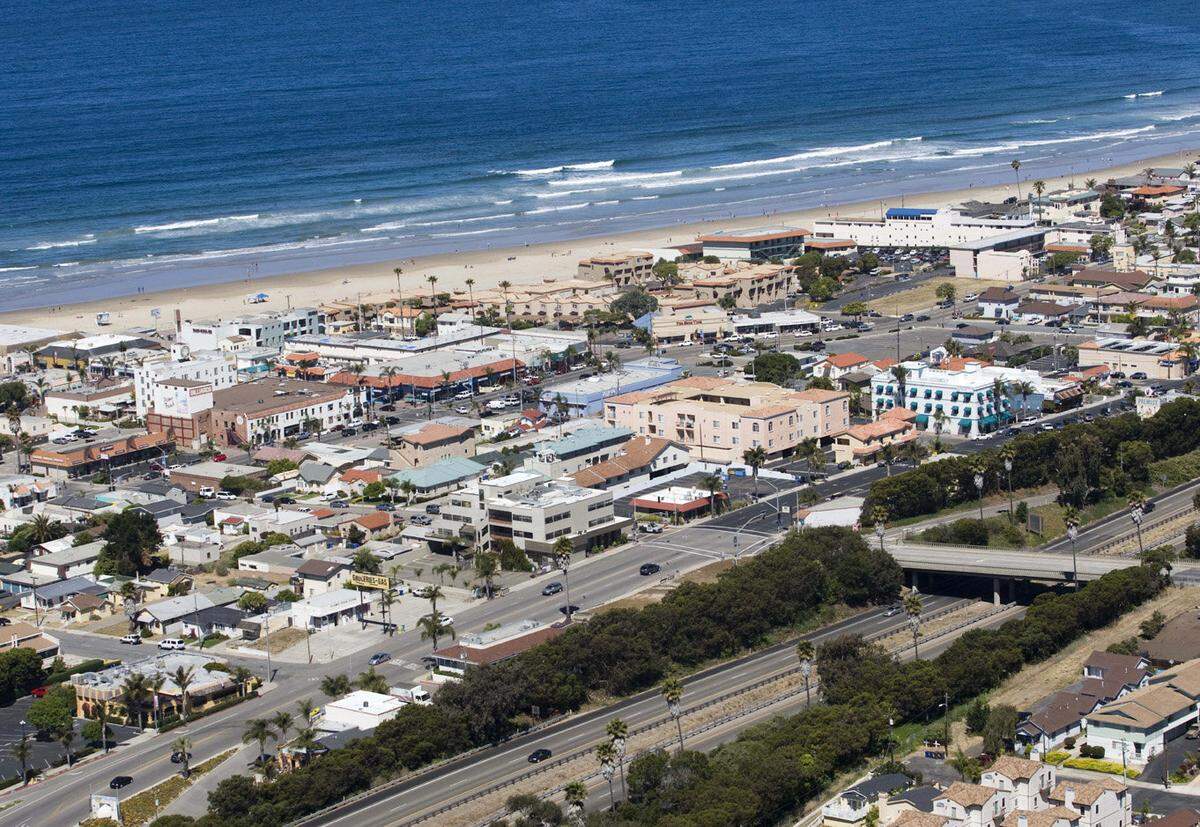
In Pismo Beach, the city’s estimated revenue loss for this fiscal year is $5.2 million across all funds, said Nadia Feeser, the city’s administrative services director.
Pismo Beach’s revenue outlook includes significant dips, including a $3.2 million estimated loss in bed taxes and a $468,000 drop in sales taxes this year.
Pismo Beach’s annual expenditure budget for this year is $71.2 million across all funds.
The city has implemented $2.2 million in cost-cutting measures this year, including deferring purchases on equipment, slashing travel and meeting costs, and cutting $200,000 in advertising on tourism and event promotions.
“The city is working on projections and monitoring the current situation and how it impacts summer travel and revenues and is planning to go back to council in late summer with projections for fiscal year 2021 and a resulting plan to manage the city’s financial outlook,” Feeser said.
Arroyo Grande is estimating a $1.2 million annual shortfall, said Michael Stevens, the city’s administrative services director.
Arroyo Grande’s adjusted budget for the current fiscal year is $20.7 million.
At its meeting on Tuesday, the Arroyo Grande City Council implemented a hiring chill, allocated reserve funds and moved to deferring projects as part of its efforts to balance its budget.
In Grover Beach, the city’s estimated revenue loss is about $700,000 for the current fiscal year and approximately $800,000 for 2020-21 for a total estimated loss of $1.5 million, city manager Matthew Bronson said.
“Sales tax revenues and (bed) tax revenues are projected to have the biggest declines given the impacts of the shelter-at-home order,” Bronson said. “We are also projecting a decrease in estimated cannabis tax revenues from our three cannabis retailers and eight other cannabis businesses currently operating.”
Grover Beach has taken actions including delaying capital improvement spending and deferring purchase of vehicles and other equipment, and reviewing whether to fill vacant positions.
But no reductions in service or staffing levels are expected, Bronson said.
This story was originally published May 1, 2020 at 1:35 PM.
%20Cropped.jpg)