
Thinking about a ‘granny unit’? Here’s why SLO County homeowners are building ADUs
As the state of California moves forward with new laws designed to encourage new secondary homes, also commonly called “granny units,” some San Luis Obispo County residents have already built them.
Their experiences reveal insights into what the construction might look like for those considering the option.
In San Luis Obispo County, secondary homes include investment dwellings for student renters and units set up for assisted care as the property owners grow old.
The addition of more homes also can affect neighborhood quality of life. San Luis Obispo County cities must wrestle with the balance of keeping up infrastructure as neighborhoods become more crowded, concerned residents say.
The work of building an accessory dwelling unit (ADU) can be time-consuming and costly, builders warn, but with new laws the process may become more streamlined, enabling property owners to build more quickly and cheaply.
“To have a successful project, you need to be clear and focused on what you want, as well as realizing that you can’t have everything,” said Nina Seelos, owner of Arroyo Grande business Seelos Design and Construction. “There are certain guidelines, certain rules, not only from the building codes but also in talking to your family and making sure what the direction of your lifestyle is going to be in the future and if it makes economic sense.”
Rough estimates from locals who have gone through the experience indicate that ADUs can be built for $80,000 to upwards of $350,000 — and take nine months to three years to complete.
The Tribune talked to three sets of San Luis Obispo County homeowners with distinct perspectives about adding ADUs to local properties.
Pismo Beach seniors build home in order to ‘age in place’
Kate Riggins in a senior citizen who lives with her husband, Richard, in Pismo Beach.
Now in their 80s, the couple considered moving into a retirement community five years ago. But after extensive research and visits, they couldn’t find the right fit.
So, they decided to build a home that their daughter, Carrie Mack, and her husband — who had been residing on the East Coast — could move into.
“We really wanted to stay in our home,” Kate Riggins said. “Age-in-place is the term used these days. Our architect and contractors had worked with the city of Pismo Beach, and that made it much more comfortable for both sides.”
It took three years of careful architectural planning working with Seelos’ firm, a permitting process that included an archaeological study to determine the presence of Chumash artifacts. The Riggins family then reconstructed a wing of their home.
The complex project involved about two-and-a-half years of planning, including reviews by the city of Pismo Beach and California Coastal Commission, and six months of construction.
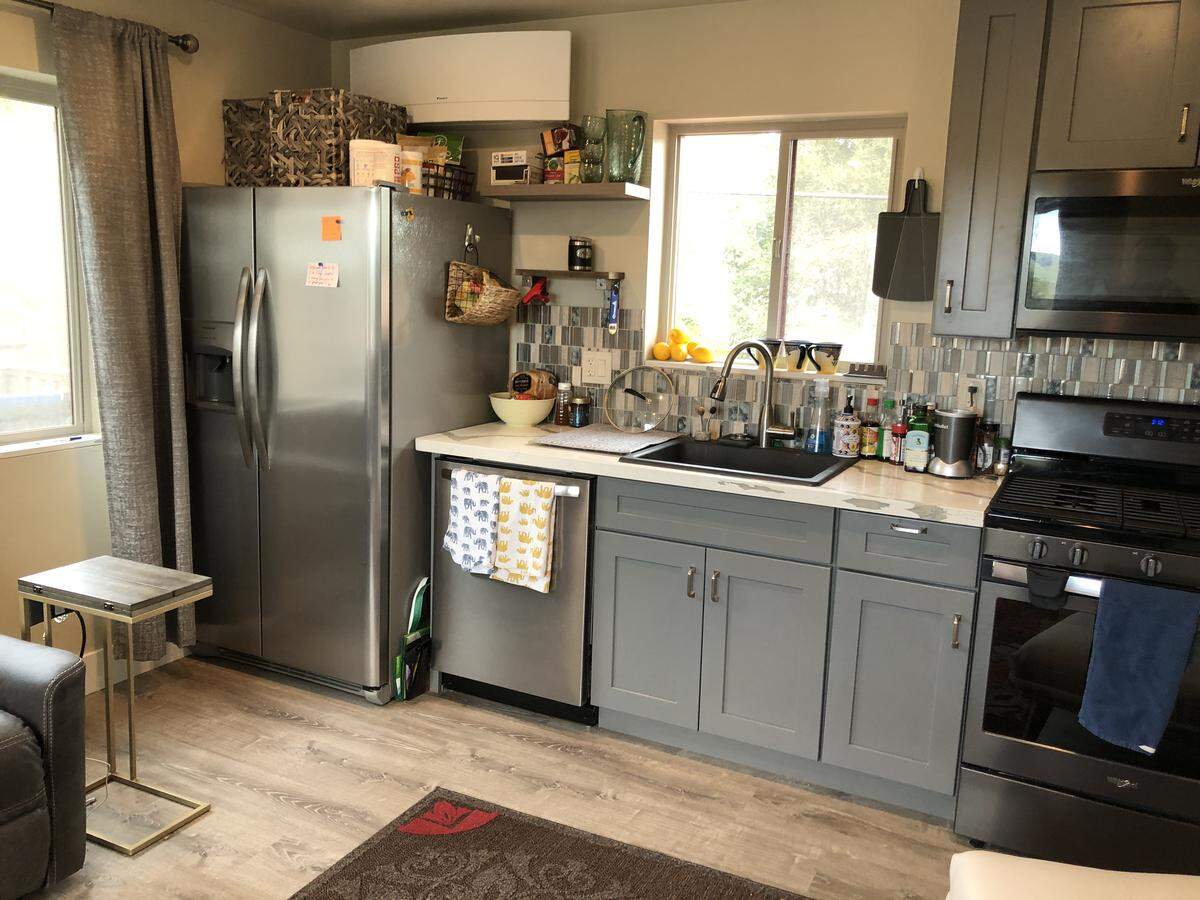
The result is a 720-square-foot, attached home with kitchen windows that look out to beautiful ocean views.
“We wanted to build a home with a smaller area that eventually we could move into one day,” Riggins said. “It’s (Americans with Disabilities Act) accessible with wider doors than usual and a ramp chair lift for the stairs (in an adjacent upper floor). There aren’t any steps or other problems.”
There’s also a wide shower that allows for a wheelchair access.
The home connects the larger main house via a smaller wing, which allows access back and forth entry.
“The home is set up so that if there were ever renters, they could wall off access between the two homes,” Seelos said.
Architect converts house into rental for Cal Poly students
Atascadero architect Don Love has been particularly busy over the past few years designing ADU homes in the city of San Luis Obispo near the Cal Poly campus.
“I’ve had enough work to keep me up late at night many nights,” Love said.
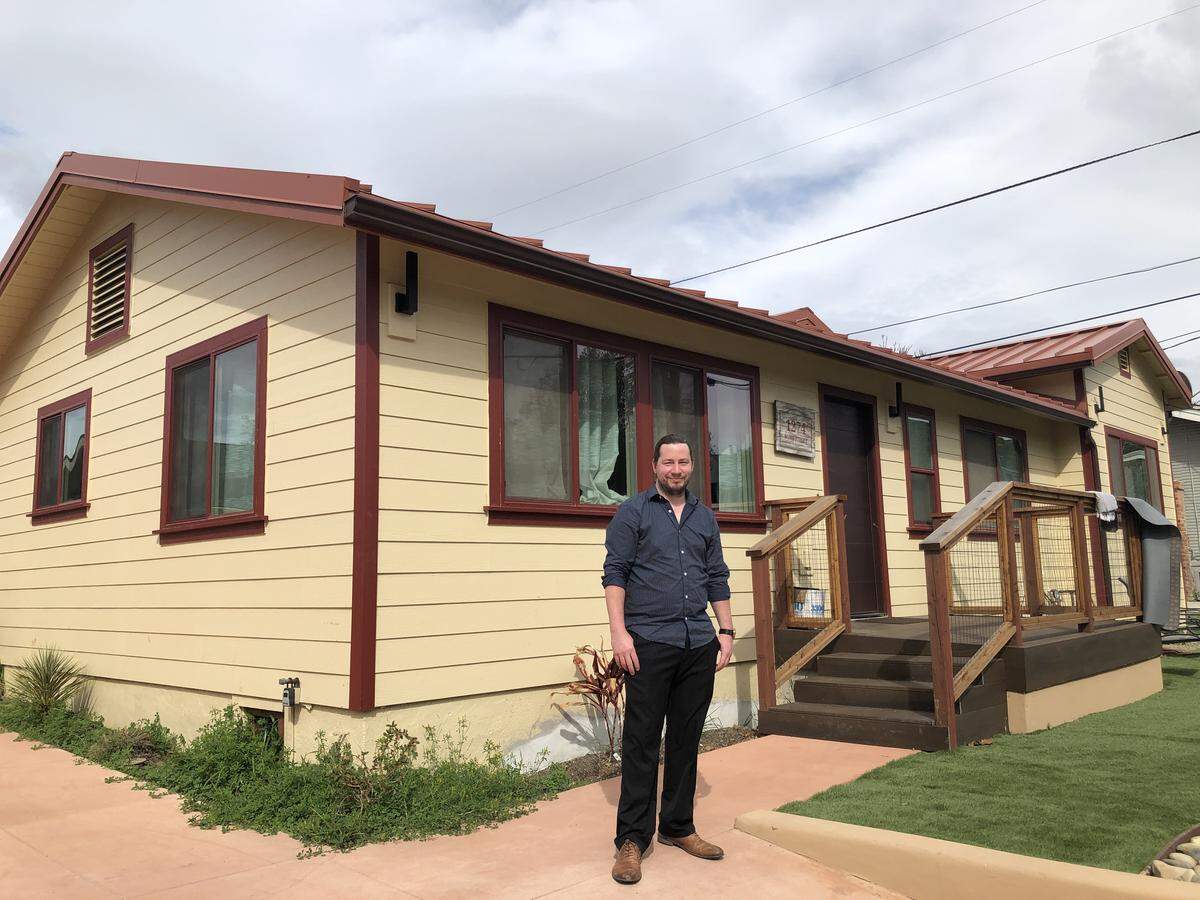
Love showcased a project he worked on for the father of a Cal Poly student, converting an existing two-bedroom, one-bath home into a property with two wings, seven bedrooms and eight bathrooms.
All of the rooms are rented out to Cal Poly students, including the home owner’s son.
The project involved a complete redesign of the main home, adding three new rooms to complete a five-bedroom main home, and two upstairs units in the back, along with several new bathrooms.
“The project took less than a year to complete, as the planning moved fairly quickly, including about four months of construction,” Love said.
Finished in September 2019, the home features an artificial turf lawn.
“A lot of my projects have been around Cal Poly where the return on the costs seem to make sense financially,” Love said.
Love said that he has seen garage conversion costs come in at around $100,000, but costs depend on the age of the property and needed work.
Lindsey Harn, a San Luis Obispo Realtor, said she was able to spend roughly $80,000 in construction and permitting to convert a garage into an ADU near Cal Poly.
Love said detached ADUs tend to cost between $150,000 and $250,000 on the cheaper said, and he’s seen bids come in at more than $300,000.
“Something I’ve noticed is that ADUs can help convert properties that have illegal garage units into safe living spaces,” Love said. “That’s good for the tenants, and for everyone in the community.”
SLO resident expresses concerns about ADUs
Along with the economic benefit to property owners, some community members are concerned with the amount of city growth given the existing infrastructure.
San Luis Obispo resident Sarah Flickinger, a former City Council candidate, believes the addition of ADUs in the city needs to also be balanced with infrastructure, such as biking and walking accommodations. She calls that balance “smart growth.”
“If we’re crowding neighborhoods and making it less safe to walk and bike, we need to be mindful of where the concentrations are happening, and not to max out capacity as we grow,” Flickinger said.
Flickinger said that fee structures should reflect the impact as much as possible, though she realizations limitations with state laws that have restricted some of the discretion for cities.
And she believes state laws have placed a lot of the strain and burden on local municipalities.
The average city building permit fee cost for five recently issued ADU building permits was $6,586, according to San Luis Obispo officials.
“We just need to have a long-term vision for the community,” Flickinger said. “We can’t just look at this project by project ... especially for emergency response and what happens if fire comes over the Grade. How are people going to get out?”
Flickinger also worries about the future of the city’s water supply.
She said she recognizes the need for housing and would like to see policies that offer incentives so the average person can best afford to build tiny homes and ADUs.
“One of my big concerns is that the effect is, it doesn’t ease housing affordability,” Flickinger said. “Now property values go higher. I, as the homeowner, can’t compete against developers. Competing in a market that’s cash only, for example, can make it really really difficult for the average person.”
Impact of coronavirus on SLO County home building
Despite the impact of the coronavirus pandemic, Seelos said she has continued work with most of her clients because construction is considered an essential business under the San Luis Obispo County and state order on social distancing.
“We weren’t sure how it would affect us, but when we talked to our various clients, all but two decided to continue on,” Seelos said. “Many of our clients are older and want to age-in-place and they can’t wait. Of course, we’ve had to change our work practices, and we use masks, gloves, and do a lot of sanitizing to ensure safety for workers.”
The state of California, hoping to encourage more housing in 2020, passed new laws at the beginning of the year.
Those have included more lenient parking requirements, larger secondary dwellings and a faster mandated planning review process, as well as removing any requirements for owner occupancy on the property.
“It’s really difficult to give a timeline on how long a project will take because it depends on many things — whether it’s a garage conversion, a new detached unit, and the planning and building complexities,” Seelos said. “The cost and timing can be highly variable.”
This story was originally published April 1, 2020 at 5:00 AM.
%20Cropped.jpg)