
SLO County Methodists ‘cautiously hopeful’ ahead of proposed split over LGBTQ issues
When the United Methodist Church voted last spring to uphold its most socially conservative guidelines for clergy and leadership — including restrictions for LGBTQ members — inclusive congregations in San Luis Obispo County said they were prepared to break away from the church over the issue.
But following a bargaining session by a group of bishops and church leaders the first week of January, local churches say they are “cautiously hopeful” a proposed agreement would instead allow Methodists against LGBTQ (lesbian, gay, bisexual, transsexual, queer) inclusion to opt out into a “traditionalist” Methodist denomination.
“Just speaking personally, this is the first really hopeful thing I’ve seen coming from (UMC) leadership,” Rev. Rick Uhls, a pastor at the San Luis Obispo United Methodist Church since 2012, said Thursday. “If it is able to be legislated and approved, it may actually be the road to finally putting behind us this issue of human sexuality, which is tearing (the church) apart.”
The UMC announced Jan. 3 that the mediation of stakeholders in Washington, D.C., resulted in a nine-page nonbinding “Protocol of Reconciliation & Grace Through Separation,” which, in short, proposes to “preserve The United Methodist Church while allowing traditionalist-minded congregations to form a new denomination.”
The separating group would get $25 million in UMC funds and would keep its local church properties, according to the church.
That 16-member group has no authority to execute the agreement, however, and the proposal must be voted upon during the UMC’s General Conference, which this year will be held in Minneapolis in May.
But San Luis Obispo County pastors say the open-ended proposal and some misinformation that initially emerged from it have caused confusion among their congregations as to whether they were still part of the UMC.
Questions from church members prompted Pastor Gilbert Stones of Los Osos’ Trinity United Methodist Church to post on the church’s website that people both in and outside of the church took its Jan. 3 announcement “as if the split has already occurred or at least is inevitable in this form, but that is not the case.”
“It is not true that the ‘United Methodist Church Announces Proposal to Split Over Gay Marriage,’ as the headline of the article from NPR proclaimed,” Stones wrote. “Only the General Conference of the United Methodist Church can announce anything on behalf of the denomination.”
“At this point everybody is just confused,” Stones said Thursday. “We’re trying to get word out that nothing has been done yet.”
‘Differing views’ on LGBTQ inclusion
The UMC said its conservative rules adopted last year in the 53% to 47% vote, set to go into effect this year, “increases accountability” by making it easier for bishops to enforce penalties.
It could lead to pastors and LGBTQ church members in leadership positions being stripped of their duties, as well as repercussions for heterosexual clergy who refuse to enforce the rules or who carry out or recognize same-sex marriages.
“Human sexuality is a topic on which people of faith have differing views,” Bishop Ken Carter, president of the Council of Bishops, said in a news release at the time.
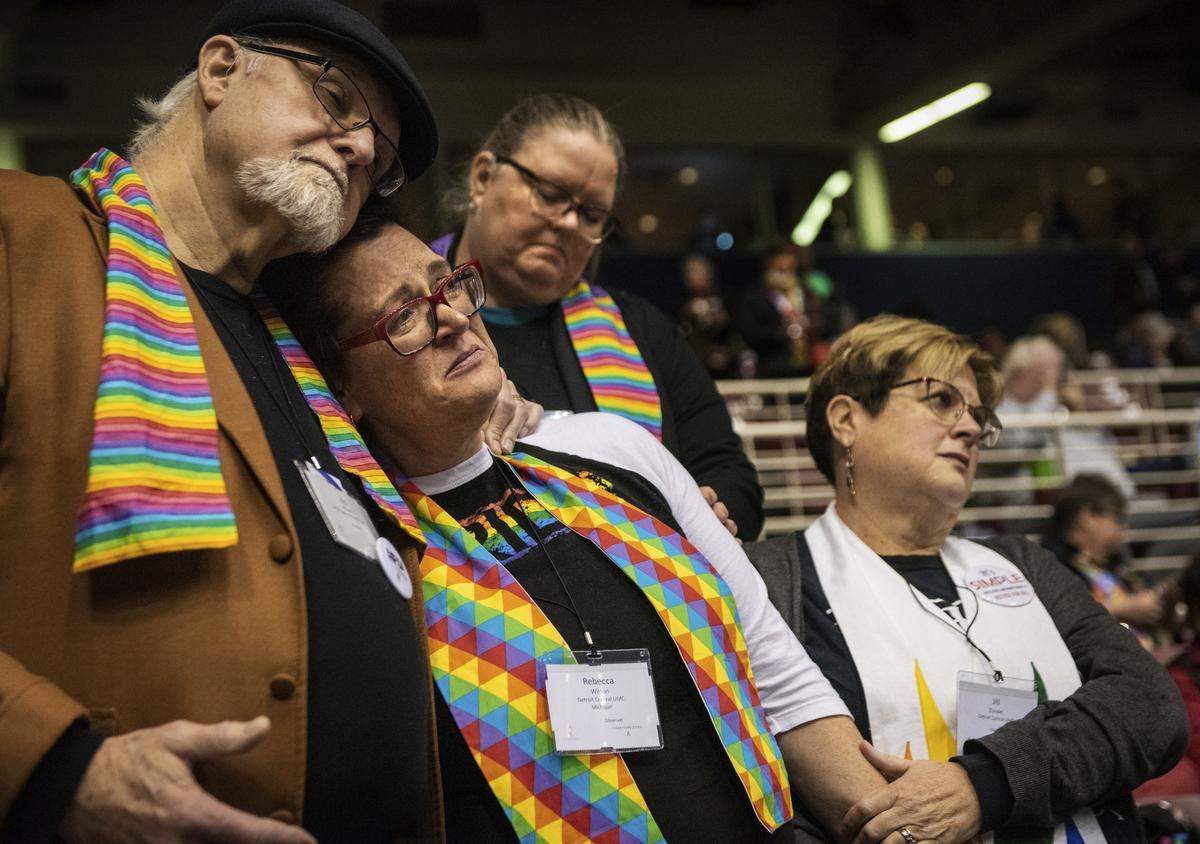
That possibility has put congregations in the Western United States at ideological odds with much of the global Methodist faith, which has at least 12 million members worldwide, and prior to the Jan. 3 proposal, led to talks among Western U.S. congregations about breaking away and forming their own, more socially progressive church.
California Methodist churches belong to the California-Pacific Conference, one of eight Western regional conferences of the United States that make up the overall UMC’s Western Jurisdiction, which reaches from California to Alaska and Wyoming to Guam.
A spokesperson for the California-Pacific Conference did not respond to a request for comment for this article but told The Tribune in March that while it was focused on keeping the church together, it was united with the entire Western Jurisdiction in opposing the church’s conservative 2019 plan.
Information provided by local churches show that the UMC’s Book of Discipline did not contain any language about homosexuality prior to 1972, when the general conference, the denomination’s primary legislative body, adopted the language that “homosexuality is incompatible with Christian teaching” and that “self-avowed practicing homosexuals are not to be certified as candidates, ordained as ministers, or appointed to serve in (the church).”
Since then, its geographically and culturally diverse congregations around the globe have grappled with the issue of how to deal with its members and clergy who are LGBTQ.
‘Not willing to go backwards’
The proposal outlined Jan. 3 has attracted mixed responses among the global church, with many calling it an appropriate compromise. Some, including traditionally conservative conferences in Africa and the Philippines, were unhappy with the proposal, arguing the liberal wing of the church should form its own denomination, not vice versa.
Some in the progressive wing aren’t happy, either. One caucus called it a “back-room political negotiation” that failed to be inclusive in its negotiating team and took issue with the idea of giving $25 million in United Methodist funds to departing traditionalists.
SLO Methodist Church’s Pastor Uhls, who’s been preaching since 1987, said his congregation includes many LGBTQ members, some in leadership roles.
Since he’s spoken out about where he stands on the church’s divide, Uhls said he’s received overwhelming support from his congregation, but also a fair share of “hate emails.”
“People that think I’m kind of evil,” Uhls said. “They think I’m leading people astray by not teaching against homosexuality.”
With socially conservative views of gender and sexual identity partially inspiring a decrease in religious activity by younger generations, Uhls said the church should be focusing its message elsewhere.
“For me, going back to the mission of the United Medthodist Church … in some ways we do well with that, but we have been so wrapped up in arguing whether gays and lesbians should be in ministry and church, we’ve really lost sight of what our mission is,” he said. “If we can move past this conversation, we can actually get back to talking about the things that Jesus Christ actually talked about.”
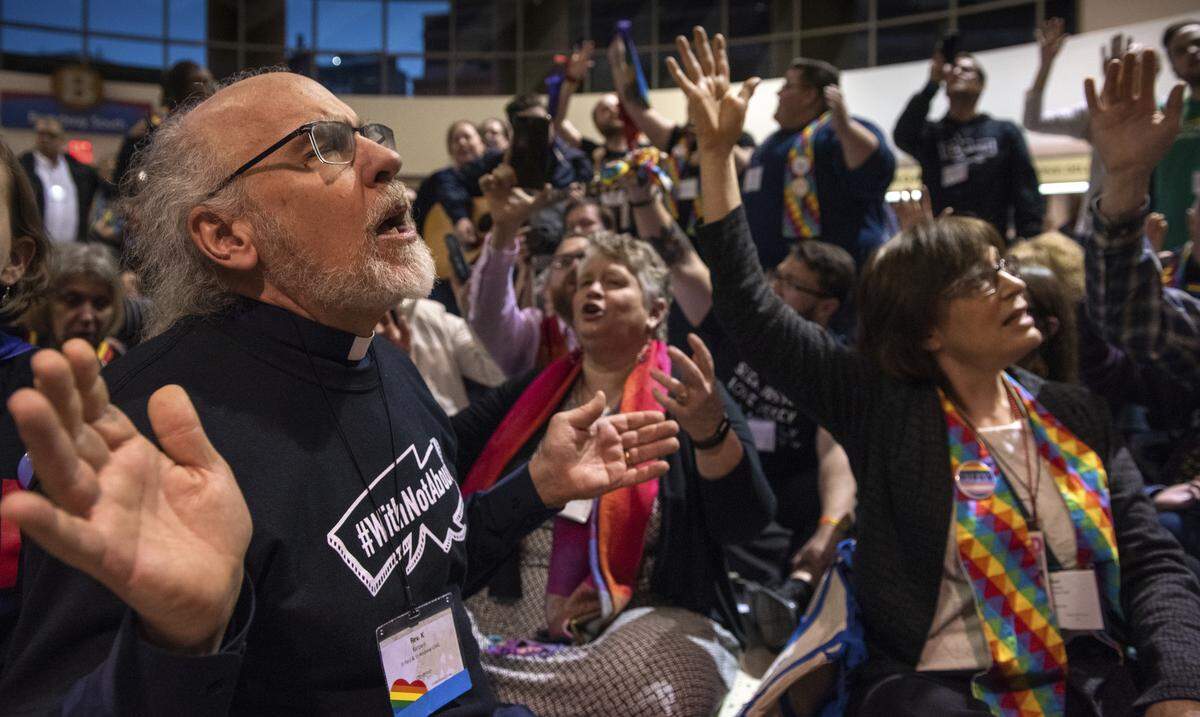
In March, Rev. Diane Rehfield of the Atascadero United Methodist Church told The Tribune that the church would not enforce prohibitions on LGBTQ members regardless of what the UMC decides.
Pastor Steve Poteete-Marshall, who took over at the church following Rehfield’s retirement in June, reaffirmed Friday that the church’s stance is to “be inclusive for all.”
“Basically, people have said we’re not going to go backwards,” Poteete-Marshall said.
While he said it would be “heartbreaking” for the UMC to split, the Jan. 3 proposal as he understands it keeps intact many of the church’s strengths and also allows for traditionalist groups who split to retain their properties, which Poteete-Marshall said is a just compromise.
He said that while his congregation has shared concerns over the process, he’s only had to do some minor clarification about it due to Rehfield’s good communication last spring.
“I’ve only had to really say that this is just a proposal, and it’s not a done deal,” he said.
An administrator at the First Methodist Church of Arroyo Grande — according to sources contacted for this story, the most socially conservative of SLO County’s Methodist congregations — said that Pastor Mary Birgelaitis was away from the church and unable to comment for this article.
That church’s website, however, describes itself as an “involved, diverse, open” congregation that does “try to be accepting, caring, hospitable, and inclusive.”
Asked about what he thinks will come of the current proposal for traditionalists to form their own denomination, Trinity Pastor Stones said it’s too soon to tell.
“It’s like any kind of politics. What we’re seeing is just the tip of the iceberg,” he said. “I have an opinion what I would like to see: That the church be open and affirming. My church is behind that.”
The UMC General Conference is scheduled to kick off May 5 in Minneapolis.