
Junípero Serra’s name comes off a Stanford Street as priest’s legacy is revisited
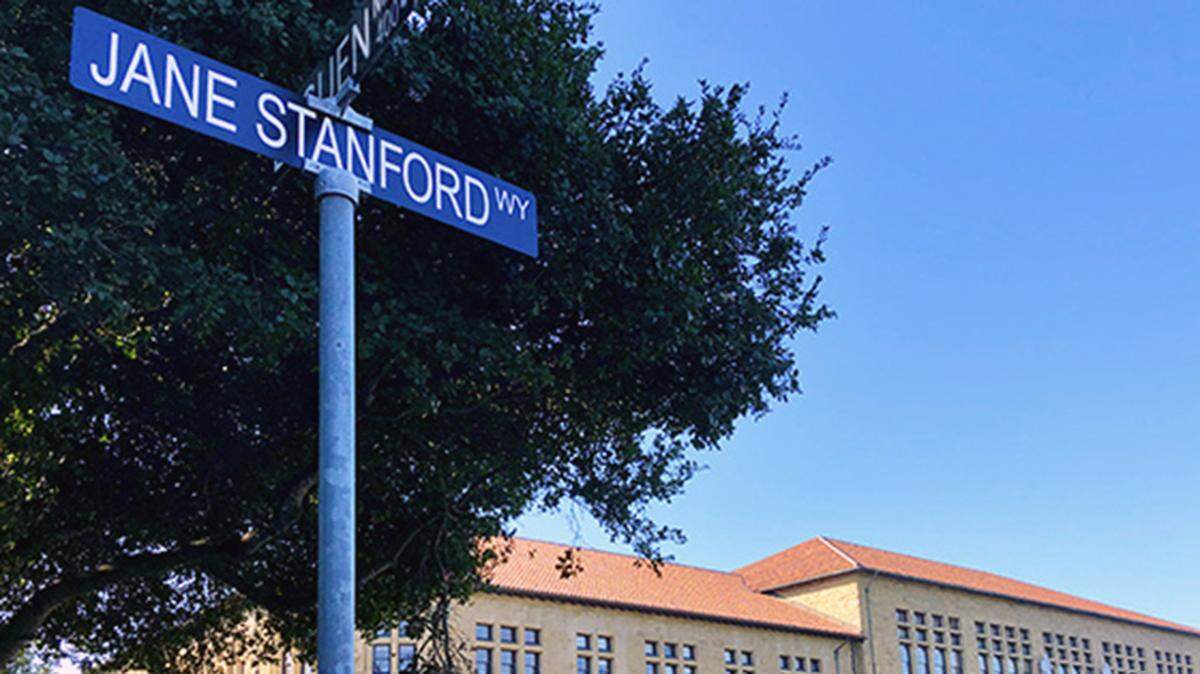
“The renaming came after more than four years of efforts by the Stanford Native community . . . to replace campus landmarks that commemorate the legacy of Father Junípero Serra, an 18th-century Catholic missionary known for his mistreatment of Native Americans.”
Serra Mall, a main campus road and bikeway, will be renamed Jane Stanford Way.
I wasn’t surprised by what I read in the Nov. 15, 2019, Stanford Daily. A number of Native Americans believe Serra was no saint. For them, Serra’s canonization opened old wounds.
In 1987, Pope John Paul II planned a visit to Monterey County’s Laguna Seca Racetrack Recreation Area and said a Mass to 70,000 faithful. Many assumed that because of the proximity to Carmel Mission where Serra died and is buried, the Holy Father would announce Serra’s sainthood. He didn’t.
I explained to Monterey Bishop Thaddeus Shubsda that I could fully understand the feeling of many Native Americans who opposed canonizing the missionary.
Junípero Serra had become a symbol of the Hispanic conquest and occupation of California. Moreover, like the trans-Atlantic movement, the arrival of the Spanish ultimately brought diseases that decimated the Native population of the so called “New World.”
Historically, California loves to celebrate its Hispanic links in naming streets, schools, parks, highways and even shopping malls. The Spanish names for geographic features, town sites and cities have been retained. Cape Mendocino is one of the earliest features named by Spanish navigators in honor of Antonio de Mendoza, viceroy of New Spain.
The Hispanic names and thick Romanesque architecture of public buildings, resembling that of Spain, largely obscured the presence of California’s original peoples.
My mother’s family were ranchers, very close to the Natives of the Southwest. I got to know members of the Quechan at the Ft. Yuma Reservation and the Pala Band on the slopes of Mt. Palomar.
I was shocked when a fourth-grade teacher said that most of the California Indians had no names. My mouth was washed out by the school nurse (once again!) for saying that wasn’t true. Everyone knew who the Sioux, Iroquois and Cherokee were, but few knew the tribal names of the multitude of California bands.
I loved visiting museums with large Native Californian collections like the Southwest Museum along the Arroyo Seco Parkway. When I asked why so many of the baskets had their bottoms punched out, I was told that was because the user of that basket had died. I had just seen Boris Karloff in the very scary 1945 film, “The Body Snatcher,” with Bela Lugosi. I realized that many baskets that I saw on display were taken from graves.
It wasn’t until the Native American Graves Protection and Repatriation Act was passed by Congress in 1990 that Indian burial sites received protection.
My mentor, Wilbur Jacobs of UCSB’s history department, came to speak to the County Historical Society in 1980. He brought with him a lifetime’s experience of learning about Native Americans.
He referred to the then popular comedian Rodney Dangerfield, whose signature line was “I don’t get no respect.” Will said that the lack of respect in the total meaning of that word had created more violence than any other act.
Colonizing powers have lacked respect for indigenous peoples throughout history. The Greeks, Romans, Chinese, Japanese, Incas and Aztecs all felt superior to those whose lands they occupied. Each renamed sites with their own nomenclature.
I’ve been studying California’s Missions for 70 years. I’ve read almost every surviving document by Junípero Serra. He did indeed feel that his culture was superior to others. But most of all he focused on evangelizing and bringing the “gift of salvation.”
Next week, I’ll address the evidence supporting the assertion that he was a “missionary known for his mistreatment of Native Americans.”
Was he guilty of the charge and are there other actors in the destruction of California’s Native American communities?