
Black bear caught on camera prowling Paso Robles porches and driveways
Paso Robles residents were recently visited by a different kind of nighttime prowler — a young black bear that’s been caught on camera roaming a neighborhood on the east side of town.
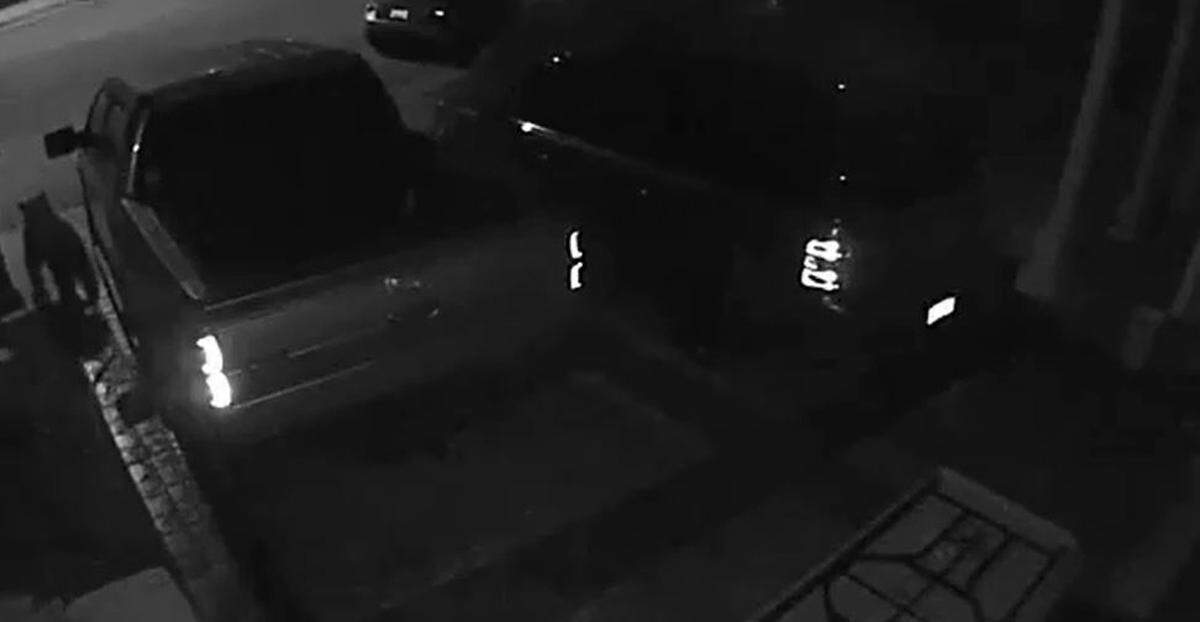
The bear has been activating motion-sensing cameras in a residential area near the intersection of Niblick and South River roads, where it can be seen nosing around driveways and sniffing garbage cans early in the morning.
A camera owned by Billy Gallant, who lives on Kenton Court, caught the bear near his home at 2:19 a.m. Sunday morning. One camera caught the bear pawing around Gallant’s driveway and another captured it sneaking onto his front porch — its eyes glowing in the dark.
Gallant said seeing a bear so close to his house was “crazy but cool.” He said he saw a story about the bear on TV and wondered if it would wander over to his home.
“I saw the report on KSBY of a bear on Oxen Court, which is one street over, and thought to myself, ‘How funny would it be if we caught something like that on our cameras?’” Gallant said in a Facebook message.
He said his family has also kept a special eye on their 4-month-old puppy to make sure they know when it ventures outside.
Staff at the California Department of Fish and Wildlife in San Luis Obispo County are aware of the bear and suspect it’s younger — likely about 2 years old, said Ken Spencer, a unit biologist.
Most area black bears live in the Los Padres National Forest, and it’s unusual to see them on the east side of the Salinas River, Spencer said.
Many young black bears wander off on their own, and this one likely just ended up in the wrong area, he said. Spencer said he hasn’t heard of any new sightings, so he’s hoping the bear found its way to better habitat.
Residents should keep their neighborhoods free of garbage and food and lock their pets up during the night, Spencer said. Those who encounter a bear should back away slowly and give it a way to leave the area, he said.
During the summer, bears sometimes travel toward drainage zones and ravines to stay cool, Spencer said.
“They’re trying to get out of the heat like we do,” he said.
This story was originally published July 17, 2018 at 7:10 PM.