
SLO will soon begin $140 million wastewater plant upgrade — and it plans to hire locals first
The costliest infrastructure project in San Luis Obispo’s history could also feature another first for the city.
Under a pending labor agreement, the San Luis Obispo City Council wants to give SLO County workers first dibs on construction jobs for a $140 million upgrade of its sewage treatment facility at 35 Prado Road, anticipated to begin construction by May 2019.
Last week, the City Council supported moving forward with a labor agreement with skilled unions (that include carpenters, pipefitters, electric and concrete workers and others) to prioritize the hiring of qualified union or non-union employees who live in San Luis Obispo County, and possibly extended to northern Santa Barbara County.
Advocates say the City Council’s support of a project labor agreement will boost San Luis Obispo’s economy and reduce commuter trips by preventing more workers from traveling from outside of the county, while opponents say it would unjustly benefit trade-union employees.
‘A force for good’
“I am very much in support of the project labor agreement,” said Mayor Heidi Harmon. “We have a lot of opportunity to stand up for and stand with working people in our communities and this really speaks to that... Unions are generally a force for good, a force for a more equal and fair society in general.”
Under project labor agreements, workers — either union members or non-union — could register to be hired on a list administered at local union halls. They would be selected on a first-come, first-serve system that’s based on their proximity to San Luis Obispo, not their union status.
Several local union workers spoke at Tuesday’s council meeting, saying the agreement would help them afford to better live and economically support their community and minimize impacts on an already tight housing market by limiting out-of-town renters.
“In previous times, I became desperate and engaged in criminal activity because I had no marketable skills,” said longtime San Luis Obispo resident Berkeley Blake, a local electrical worker, who worked on the Topaz solar farm through a local hire arrangement. “That led to prison sentences, costing taxpayers hundreds of thousands of dollars. This is the longest time I’ve remained out of custody, and I attribute that to having a marketable skill because of the local hiring program.”
But critics say this type of agreement is discriminatory and will add costs and layers of management.
“Project labor agreements are the primary strategy that unions use to cut competition and raise costs for their own benefit,” said Kevin Dayton, of the Coalition for Fair Employment in Construction.
Dayton said there’s no reason to think that a significant number of local workers wouldn’t be hired by contractors, without such an agreement in place.
Dayton added that “contractors will have to look through 50 or 60 pages” to make sure they are in compliance with the specifics of the labor agreement conditions.
About the project

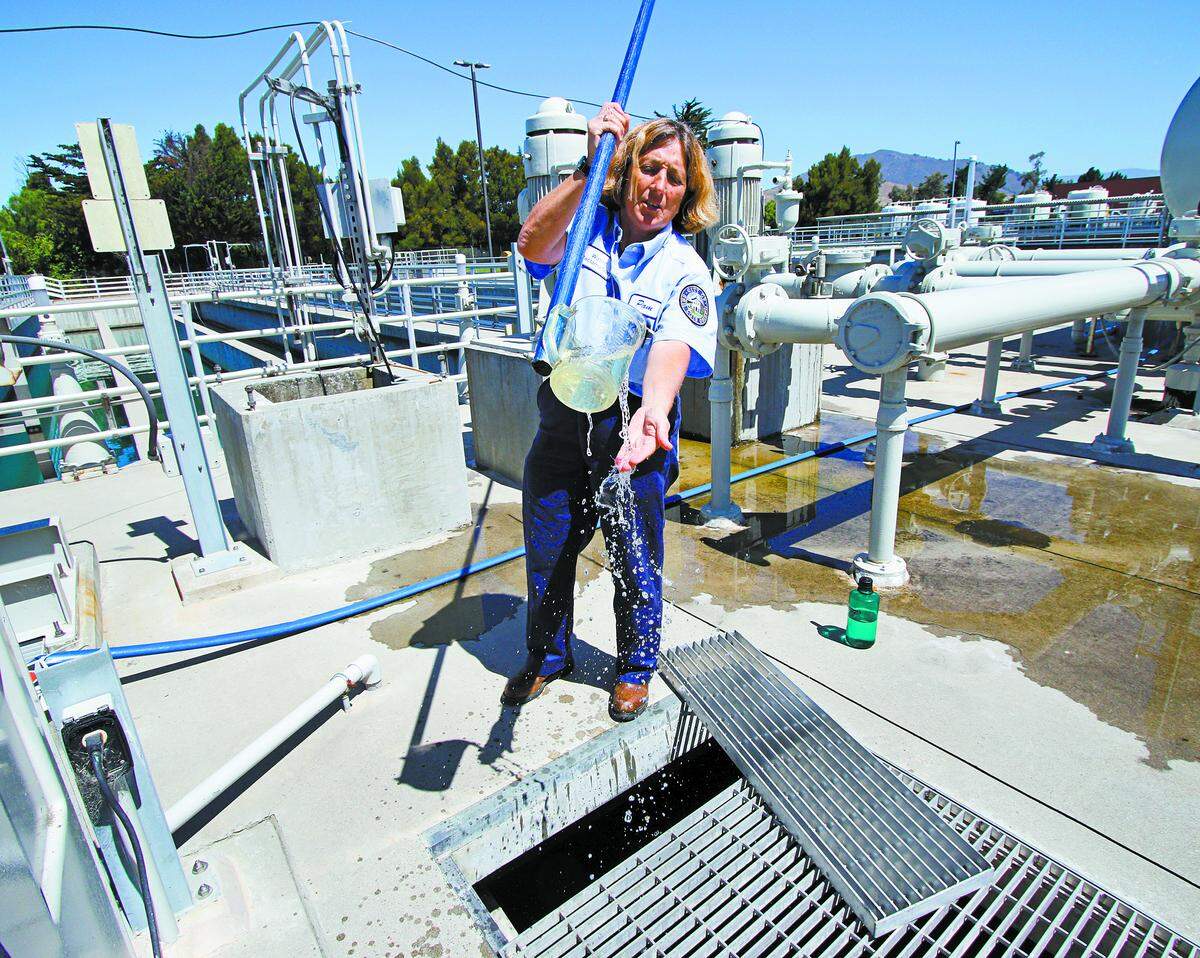
The labor agreement is just one part of the extensive wastewater facility upgrade; the city is in the process of hiring a construction manager and finalizing the planned project’s design, which is 95 percent complete.
Reasons for the upgrade include: meeting water quality requirements on discharges into San Luis Obispo Creek, replacing aging infrastructure and maximizing the efficiency of recycled water, among other improvements.
The project is eligible for a low interest State Revolving Fund loan and state funding.
“We are embarking on the most complicated public works project in the city of San Luis Obispo,” said City Manager Derek Johnson. “This is the most expensive project the city has ever undertaken.”
The planned labor agreement is expected to cost an extra $294,000 and $450,000 to administer and implement. But prevailing wages that standardize compensation will be in effect, regardless of the labor contract.
Local hire in SLO County
Historically, it’s rare for any local public project to include a labor agreement.
Major infrastructure work, including the building of the Los Osos Wastewater Project and the new 1,475-bed Cal Poly dormitory, called yakʔitʸutʸu, were built without such contractual obligations, according to county and Cal Poly officials.
However, Supervisor Adam Hill said during public comment at the council meeting that the Topaz Solar farm, built in the county during the recession, operated under project labor agreements that helped provide jobs and stabilize the local economy.
“During the period, which lasted about four years, the solar farm projects were quite frankly a saving grace for our community,” Hill said.
Cities including Hercules and Pinole have used labor agreements for wastewater projects, and San Mateo is under negotiation for one, according to Cherie Cabral, who spoke on behalf of the unions.
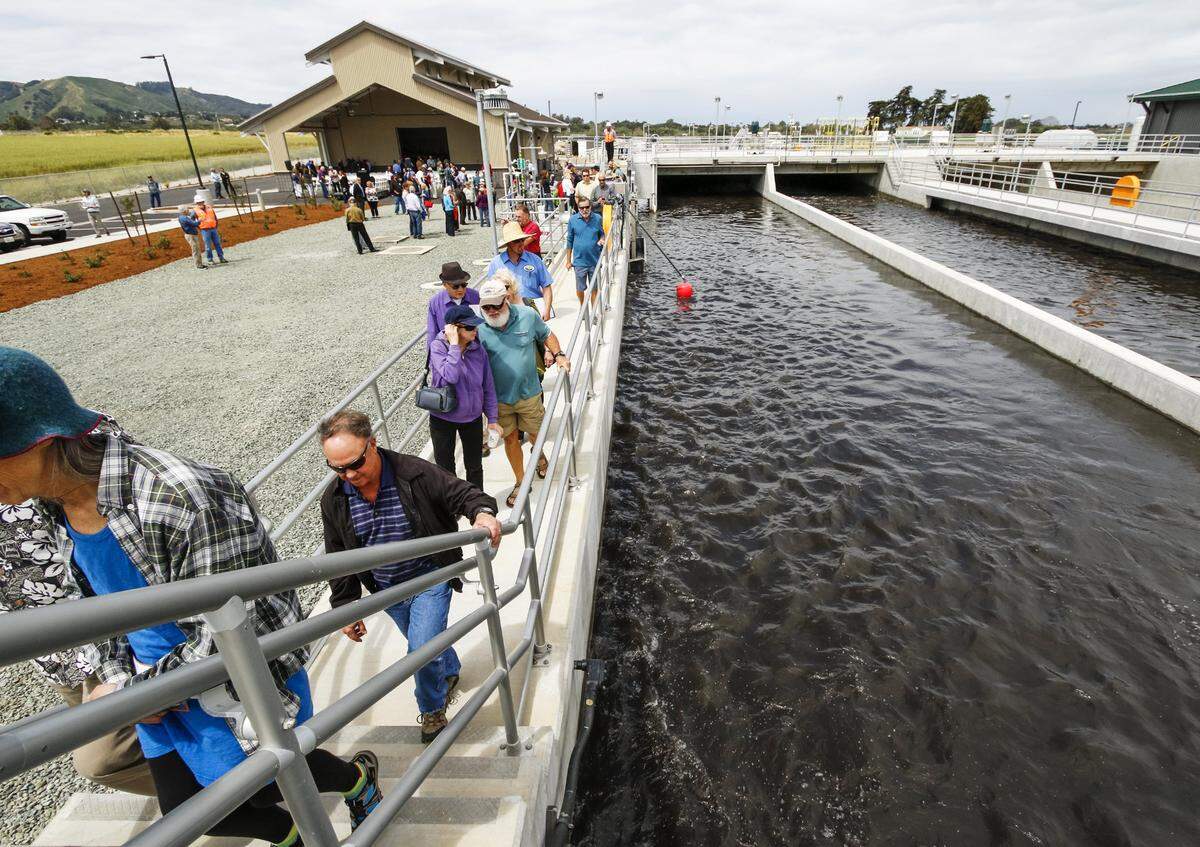
John Waddell, project manager for the Los Osos Wastewater Project, said a mixture of local and outside workers were hired without a local hire preference contract.
“The contractors were all outside companies, and they all brought in a fair amount of their own workers, but they also.used a lot of local workers and subcontractors,” he said. “I don’t recall whether it was 20 or 30 or 50 percent local workers, but it was a significant percentage.”
At Cal Poly, major capital projects are typically awarded to major construction firms, “as our area does not have firms with the capacity for a project the size and scope of yakʔitʸutʸu or the Baker Center for Science and Mathematics,” said university spokesman Matt Lazier.
“However, the general contractors on projects such as those will turn around and subcontract much of the work to local vendors,” Lazier said.
He said the majority of other smaller contracts are awarded to local firms.
Next Steps
The next steps in the plant upgrade include hiring a construction manager by September, finalizing its design by December, awarding a construction contract in April 2019 and then starting the building a month later.
The council supported having a labor agreement in place by October to stay on schedule and avoid regulatory penalties on water discharge oversight or abandoning the local preference option.
If the council can’t work out an agreement with the labor council, the local hire arrangement could be scrapped. But trade council representatives said they’re confident an agreement can be hammered out within 30 days.