SLO County paramedics describe long shifts, poor COVID protections ahead of union vote
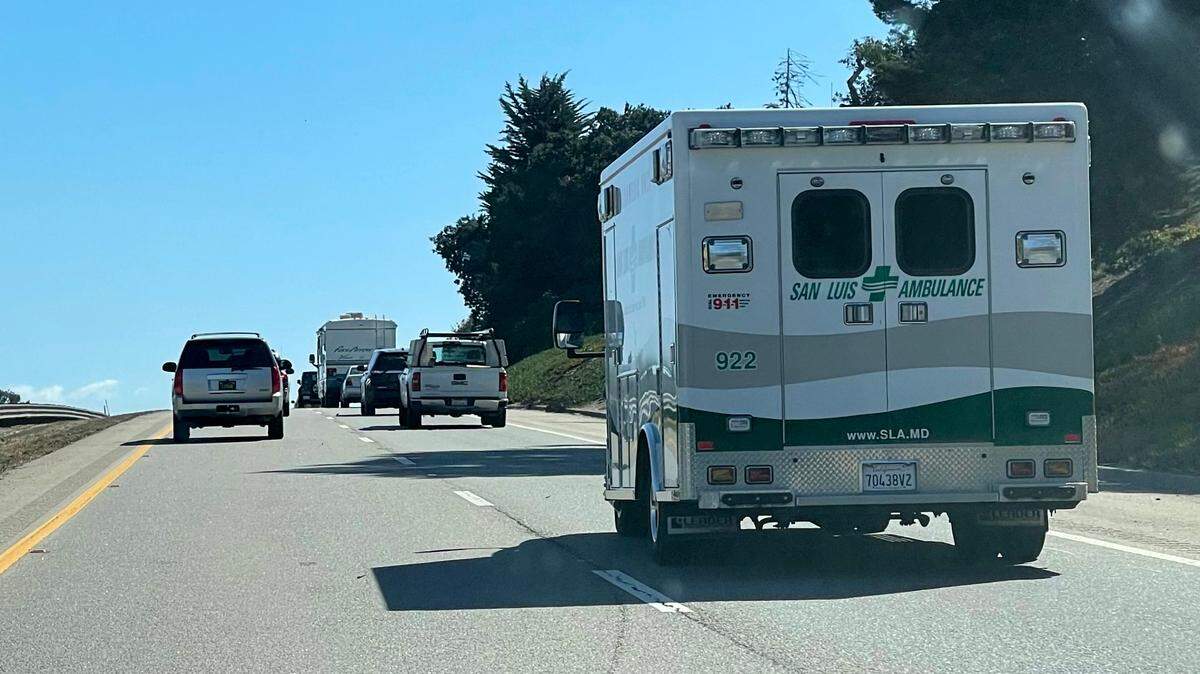
Paramedics and emergency medical technicians at San Luis Ambulance Services deal with work weeks over 100 hours, substandard COVID-19 safety measures and attempts at union-busting ahead of an upcoming labor-organizing vote, according to current and former SLA employees who have filed complaints with multiple regulatory agencies.
But when they voice concerns about workplace safety at the private company, which has eight locations across San Luis Obispo County, those employees often face threats of retaliation or retribution from SLA management, the workers told The Tribune.
Both the National Labor Relations Board and Cal-OSHA have received complaints from workers.
Some of the field staffers interviewed by the Tribune, who have collectively worked for SLA for more than 70 years, say they noticed a cultural shift in the company a decade ago, while others say the change occurred about three years ago.
The majority said they fear SLA management will target their careers or their families for speaking out. The Tribune assigned sources pseudonyms to protect their identities.
“Please read into that as much as you’d like to,” said Sam, a former SLA employee who asked to be anonymous because he still works in emergency medical services in San Luis Obispo County and fears retaliation. “We’re afraid of an organization even though we don’t work for it anymore.”
Concerns about what they say are are unsafe working conditions compelled some of the field staff at San Luis Ambulance Services to organize.
About 63% of field staff said they would like the opportunity to vote on whether to unionize the first responders at SLA, according to employees involved in the unionization effort.
They’re working with the United Steelworkers Union (USW), whose Healthcare Workers Council represents about 55,000 healthcare workers nationwide. Of those, roughly 10,000 healthcare workers and emergency services workers are based in California.
Ballots were mailed to all employees at San Luis Ambulance Services on Oct. 1.
Ballots are due back on Oct. 22. The vote will determine whether or not SLA workers support forming a union through USW. Ballots will be tallied on Oct. 27 with representatives from the National Labor Relations Board, SLA and the unionization effort in attendance via Zoom. Union organizers said they anticipate that some ballots will be challenged, which may cause the vote to go to a hearing which could delay the final results.
About 95 people will vote on whether or not SLA should unionize, said Kendall, a current employee who is one of seven people on the union organizing committee. She asked to remain anonymous for fear of retaliation.
“It just continued for so many years that there was enough interest, finally, to get some cards and get this official (union) election going,” Kendall said. “There’s just so much fear of management.”
Since the unionization effort began, San Luis Ambulance mandated that employees attend “union-busting meetings” organized by an outside firm hired by the company, current employees told The Tribune.
The National Labor Relations Board has scheduled a hearing related to other allegations of intimidation toward the unionization effort.
Chris Javine, general manager with San Luis Ambulance Services, declined to comment on employees’ efforts to join a union.
Employees say San Luis Ambulance has engaged in union-busting activities
The National Labor Relations Board, a federal agency that enforces the rights of employees in the private sector to join together, is investigating allegations that SLA violated the National Labor Relations Act, which protects workers’ rights to unionize.
In the case of the current NLRB complaint, the USW union has been acting as an intermediary.
SLA employees reported potential violations of the National Labor Relations Act to the union, who evaluated whether the complaints identified violations. USW attorneys determined there were legitimate violations and filed them with the National Labor Relations Board, Kendall said.
The allegations filed against SLA with the board include interrogation, coercive actions, and changes to the conditions of employment, according to the case filing.
In one example contained in the filing, an SLA supervisor attending a pro-union meeting disparaged unions and asked attendees how they planned to vote, both of which violate the labor act, Kendall said.
In another example, SLA denied a work opportunity to pro-union, field training officers who would have otherwise been involved in training new hires. A group of 21 employees were denied access to paid meetings, and SLA is also trying to exclude these new employees from voting, Kendall said.
SLA has also held mandatory meetings that some employees described as “union-busting.”
During one such meeting, Gustavo Flores of GNE Consulting Services, who workers say was hired by SLA to discourage the unionizing effort, presented slides that painted unions, specifically the USW, in a negative light.
“We (SLA) are dedicated to maintaining a union-free culture in order to continue our ability to interface directly with out staff members and maintain independence from the intervention of any influences from an outside organization,” one of the slides read.
Multiple current and former San Luis Ambulance employees told The Tribune that management at SLA has threatened to shut down the company before allowing its workers to unionize.
Although threats like that are illegal, they’re a somewhat common tactic for employers, said Maria Somma, director of organizing with the United Steelworkers Union in Pittsburgh, Pennsylvania.
“Oftentimes, it works,” Somma said. “In this particular case, this employer has a contract with the county, and I can’t imagine the employer being willing to throw away the contract with the county because the workers have chosen to invoke their federally protected rights.”
Vince Pierucci, San Luis Obispo County Emergency Medical Services director, said that the county takes allegations of union-busting activities seriously and that it could be cause for termination of the contract between SLA and the county, which is up for review in June 2022.
“If allegations were founded, we would take those very seriously of course, and we would work with the company to cure those breaches or potentially the contract could be terminated,” Pierucci said. “But again, those are a lot of what-ifs, and it would be us having to look at it and do a significant investigation.”
Pierucci said he has heard lots of rumors about problems at SLA, but added that no company employee has come to the county with allegations of union-busting activities or other instances of misconduct.
“It’s a small county. People have talked to them in person, but to my knowledge nobody has sent a formal complaint (to the county),” Kendall said. “We also are trying to wait and see how the labor board charges turn out.”
Current and former SLA workers say the company has a history of retaliating against employees who speak up about workplace safety concerns, contributing to a culture of intimidation.
“I’m really scared for my coworkers that are still there, and the fact they’re still working through those conditions mean that those people are absolute heroes,” said Sam, a former SLA employee who asked to remain anonymous. “They are the emotionally and mentally the toughest people that I’ve ever known in my entire life.”
Many current and past employees said they are specifically afraid that employees on the union organizing committee may be targeted for their efforts to unionize the company.
“I know (Kendall) has been doing a great job and she’s in such a tough spot because if the union doesn’t go through, I fear that she’s gonna have a big target on her back,” said Jamie, a former SLA employee who asked to remain anonymous because of his role in the community. “I’m afraid that they’re gonna go after her for retribution if she’s not protected.”
Paramedics describe unsafe working conditions during COVID-19 pandemic
One of the main concerns of employees at SLA is the number of hours that emergency medical technicians and paramedics are required to work each week.
Many current and former employees describe working more than 100 hours in a week with no opportunity to turn down shifts.
During these shifts, called “force hire shifts,” frontline workers are required to stay on duty until another shift starts or until a different paramedic or EMT can relieve them, regardless of how tired they are or how long they’ve been working, according to current and former SLA employees.
“For this whole summer, I’ve been averaging like 120-hour weeks,” said Alex, a current SLA employee who is on the union-organizing committee. Alex asked to be anonymous for fear of retaliation from SLA.
“My children now cry when my phone lights up with headquarters number calling to force me into another shift. They tell me not to answer the phone,” Alex said. “My children who used to be really proud of the work I do now tell me to get a new job.”
In an incident May 2021, Kendall said she and her SLA partner were required to perform a long-distance transfer — meaning they had to move a patient outside San Luis Obispo County — despite severe fatigue from already traveling to Santa Barbara earlier in their shift.
Kendall filed an incident report with the company in which she said she “feared punitive action” for seeking alternatives to her team performing the transfer. She shared that report with the Tribune.
Pierucci, director of EMS services in SLO County, said that paramedic staffing shortages are not unique to SLA but are happening across emergency medical services providers nationwide.
That assertion was supported by Somma, with the United Steelworkers Union. Somma said the union has seen this pattern at health care and emergency services organizations across the United States, particularly as the COVID-19 pandemic has strained resources.
“Instead of valuing the contributions that these workers are giving every day, employers instead aren’t showing that value, employers instead are berating workers, short staffing, short supplying, shorting everything healthcare workers need,” Somma said.
Current and former employees expressed frustration that the full-time field supervisors at SLA are paramedics but do not typically fill shifts despite the staffing shortage at the company.
In addition, current and former SLA employees say they’ve been forced to work during the coronavirus pandemic without adequate COVID-19 protection.
For instance, the workers said, they were forced to use improperly fitting N-95 face masks.
Employers are required to perform a comprehensive test to ensure N-95 masks fit properly, according to the California Division of Occupational Safety and Health (Cal-OSHA) rules.
After the N-95 masks SLA provided failed a fit test, Kendall said she requested to instead wear an N-95 mask that fit her face — and offered to purchase the masks out of her own pocket.
Kendall said her supervisor refused to let her wear the properly fitting mask, according to a complaint sent to Cal-OSHA that was shared with The Tribune.
Kendall said that, while SLA has followed the recommendations outlined by the California Emergency Medical Services Authority (EMSA), which sets standards for emergency medical service providers statewide, more could be done to protect workers and patients from COVID-19.
“Yes, SLA followed county guidelines, but there are many areas where the county doesn’t have ambulance-specific understanding and relies on the ambulance provider to do the responsible thing,” Kendall wrote via text message.
Current and past SLA employees also expressed concerns about substandard medical equipment in the ambulances — specifically inexpensive oral thermometers used to check a patient’s body temperature.
Checking for a fever is one of the procedures used to screen for COVID-19 patients, the employees explained, but it’s challenging to record the patient’s temperature using an oral thermometer enclosed in a plastic sleeve if the patient is coughing.
Using an oral thermometer also increases the risk of infection and cross-contamination, employees said.
“There are so many other options out there (for thermometers). There’s temporal, there’s infrared,” Alex said.
But the company has “never gotten (those) for us when we asked for (them),” Alex said.
Pressure on workers mounts as union vote draws closer
Kendall said she other long-term paramedics believe their supervisors have been trying to push them out since they began efforts to unionize the SLA team.
“If you look at the state of California, there are hundreds of thousands of unionized healthcare workers,” Somma said. “The difference between those who have a union in a workplace and those who don’t is being able to advocate for themselves. “
In one recent incident, Kendall was disciplined by her supervisors and written up for a narcotics discrepancy after documenting the numbers from a tag for the fentanyl bottle that was used on a patient in a matter the supervisor did not prefer, but was still objectively correct.
“I do not want to be interpreted as insubordinate or to have provided ineffective communication,” she wrote in an email to the narcotics supervisor. “I feel intimidated and subject to potential workplace targeting for disagreeing with you.”
Kendall said she was pressured by her supervisors to sign a narcotics discrepancy form despite there being no true discrepancy.
Though she was told that this was not a punitive action, narcotics discrepancies are tracked internally, Kendall explained. Paramedics or EMTs with too many narcotics discrepancies may be reported to the Emergency Medical Services Authority and have their licenses revoked.
“When you don’t have help, you don’t have that two-way accountability that a union establishes,” Kendall said. “All we can do is be harassed, be intimidated, be fired. Those are our options until we have the union in place.”
This story was originally published October 19, 2021 at 9:00 AM.