60 COVID outbreaks sicken hundreds at SLO County care facilities
The omicron surge has touched down at group living facilities in San Luis Obispo County, causing outbreaks at more than 60 sites that have sickened hundreds patients, inmates and workers.
“A year ago when we were seeing lots and lots of outbreaks, it was nothing at this level,” SLO County Public Health Officer Dr. Penny Borenstein said. “I’m guessing we’ve had half as many or two-thirds as many in past surges.”
On Jan. 21, the Public Health Department announced that 63 congregate care facilities were experiencing COVID outbreaks. That number dropped to 60 on Tuesday, with roughly 300 to 600 people living in long-term care facilities infected with the virus.
At the long-term care facilities, the outbreaks range in size from roughly five to 10 cases , Borenstein said.
Borenstein did not have estimates for outbreaks in state-run facilities such as the California Men’s Colony prison (CMC) and Atascadero State Hospital (ASH). Data from each facility shows those outbreaks are larger, with more than 100 staff and patients or inmates infected in the past two weeks.
Combined, estimates of the number of coronavirus cases at congregate care facilities in the county total more than 1,000.
They span a number of different types of locations, from skilled nursing facilities, college dormitories and residential care homes for the elderly, to CMC and ASH, among other locations, Borenstein said.
“This is the highest number by far that we’ve ever seen,” Borenstein said.
Congregate care facilities are vulnerable to COVID
Borenstein estimated that there are more than 150, possibly close to 200, group living facilities throughout the county.
Many of these facilities are designed to care for the elderly, people with disabilities, or people with illness — all groups that are particularly vulnerable to the coronavirus.
Borenstein said that at skilled nursing facilities in particular, the staff and residents have higher vaccination rates, which helps reduce the risk of COVID-19 hospitalization and deaths for those vulnerable populations.
“So when we are seeing cases, we’re not seeing much, if any, in the way of deaths at those facilities,” Borenstein said. “We have had probably three deaths coming out of our congregate care facilities since omicron has taken off.”
The county’s key strategy for harnessing coronavirus outbreaks at group living facilities is consistent testing.
“When we get noticed of one or more cases at these facilities, we will work with a facility to set up response testing, which means that everybody — staff and residents or inmates — will be tested,” Borenstein said.
“In most of the congregate care and elderly facilities, we will aim to test every resident and every staff member weekly for two weeks until the facility comes up with no COVID cases,” she said.
The agency is using Polymerase chain reaction (PCR) tests run through Public Health’s laboratory, where they are processed quicker than at community testing sites, she said.
Public Health is also available to help with testing and consultation around isolation, visitation and masking, but Borenstein said at this point in the pandemic, most of the facilities know what they’re doing.
At some of the larger facilities with a lot of beds, patients are separated into red, yellow and green groups, she said, with positive cases in the red group, those who have been exposed but whose status is uncertain in the yellow group and those who are clear from infection in green.
The state and federal guidelines on visitation at congregate care facilities is already fairly strict, she said, so the county didn’t have to issue new directives due to the current outbreaks.
For indoor visitation, the visitor needs to have proof of vaccination and a negative COVID-19 test, or they can visit outside while masked.
State-run facilities handle outbreaks differently
Two of the largest congregate living facilities in San Luis Obispo County are run by the state: the California Men’s Colony and Atascadero State Hospital.
Borenstein said congregate living facilities with such large populations of staff and residents don’t necessarily have the capacity to follow the county’s response testing strategy.
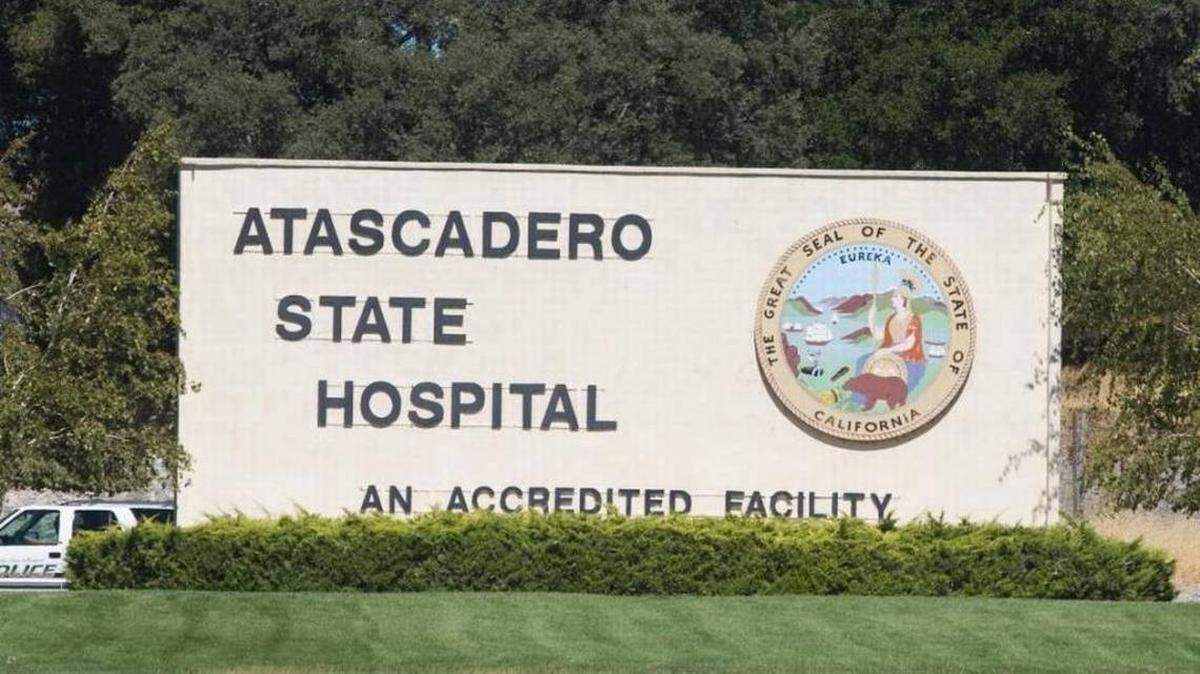
Instead, CMC and ASH test based on the particular ward, unit or room where there was a positive case or exposure.
For example, only 44% of the prison population at CMC has been tested in the past two weeks, according to the California Department of Corrections and Rehabilitation COVID-19 data portal.
In the past two weeks at CMC there were roughly 200 new coronavirus cases among inmates and about 175 new cases among staff as of Jan. 25, according to the COVID-19 data portal.
The California Department of State Hospitals reports about 26 new coronavirus cases among patients at ASH and 196 new cases among ASH staff in the past two weeks as of Jan. 25, according to state data.
Meanwhile, Borenstein said she anticipates the county will continue to have outbreaks at congregate care facilities until omicron is under control.
“When we saw omicron coming our way, we knew that we would encounter something like what we’re experiencing right now,” she said. “I know that we will get past this, whether it’s two weeks or four weeks or six weeks. I know that we will see another period of lull with this virus.”
Omicron surge drives big case numbers in SLO County
The surge continues to produce unprecedented local coronavirus numbers.
So far this month, the county has recorded more than 11,000 new coronavirus cases — and January isn’t even over yet. Public Health warned in a news release that the official tally is even likely an undercount of the true number of cases.
For comparison, there were 7,437 COVID-19 cases reported in all of January 2021, according to Public Health data.
The record-breaking number of COVID-19 cases across age groups nationwide has prompted health officials to reevaluate their coronavirus safety protocols.
Last week, the Centers for Disease Control and Prevention (CDC) updated its mask recommendations, urging people to don N95, KN95 or surgical masks, which are more protective than single-layer cloth masks.
Earlier in the month, the SLO County Public Health Department issued a new health order with revised isolation and testing guidelines for individuals who are exposed to or test positive for COVID-19.