What is the Delta variant and should people wear masks? Q&A with a Cal Poly immunologist
Over the last few weeks, San Luis Obispo County has experienced an uptick in COVID-19 cases reported to the county Public Health Department as a more transmissible strain of the virus spreads across the state.
The 14-day average of newly reported cases has nearly tripled from five at the beginning of this month to 14 as of July 20, according to the county data. That’s the highest it’s been since early May.
Beyond that bump, most concerning to public health officials is the spread of the COVID-19 Delta variant in San Luis Obispo County.
As of July 20, only 14 cases have been reported in the county so far, but the Public Health Department recently said in a news release that cases of the variant could be “considerably higher” because the state’s labs only sequence some of the cases for the variant.
How great is the risk here, how is the Delta variant different and what can we do to protect ourselves?
The Tribune interviewed Candace Winstead, a professor of medical microbiology, immunology and hematology at Cal Poly in San Luis Obispo, to understand more about how the Delta variant spreads, whether COVID-19 vaccines work against it and if we should go back to wearing masks in indoor public places.
Winstead holds a Ph.D. in immunology and microbiology from Loyola University Chicago. She studies the human body’s immune response, part of that being its reaction to vaccinations and pathogens.
This interview has been edited for clarity and length.
Q: What is the COVID-19 Delta variant, and how is it different from the other variants we’re seeing right now?
A: So each of the COVID-19 variants has a collection of mutations from the original virus that was isolated in the original outbreak. Some of those mutations may not affect the virus’ interactions with humans, and some of them might.
When you see a particular collection of mutations in the virus that is appearing more frequently in the population, that might mean it’s spreading more rapidly or it’s more transmissible or it evades the host immune response.
The Delta variant is a variant of concern (classified by the World Health Organization) because of its transmissibility. That is the main capability that it’s acquired through its mutations. And we’re still learning about why — what is it that allows it to be more transmissible.
But we do know from a really excellent study in China that there’s more virus in the upper respiratory tract when people have the Delta variant than when people have the original one.
It looks like, based on the study, that there’s 1,000-fold more virus when someone is infected with the Delta variant. So that’s a big number, 1,000-fold more. That does not mean it’s 1,000-fold more transmissible. It’s just one of the reasons that it might be more transmissible.
And the other thing that’s happening, that’s been pretty well documented by now, is that it looks like the incubation period — between exposure to symptoms — has been shortened for the Delta variant. And so people are having higher viral loads. They’re having more virus that they can transmit sooner.
Q: Are COVID-19 vaccines effective against the Delta variant? Are some more effective than others?
A: The short answer is we don’t know yet. I can speculate on what we might see going on, which is that with mRNA vaccines (Pfizer and Moderna), they seem to be holding against the Delta variant especially after the second dose.
So what your immune system does when it sees something for the first time is you have this big activation event. You make all these cells that make antibodies and cells that will kill the virally infected cells. All of that happens in a big rush.
When that’s over, say, after you get your first shot, everything kind of dies except a few. Those are the memory cells, and they kind of rest in your body.
Then you get a booster that activates the memory cells and you get a big expansion again. And after the booster, you’re going to have more memory cells than before. Each time you get exposed to something, you make a little bit more memory cells and you get a better response.
Not only are there more cells responding after the second dose, but they’re more efficient and they make better cytokines (small proteins that help control the body’s immune response) and they make the best response to take out that pathogen.
So with the mRNA vaccines, you have two doses, so you have a second chance to expand your memory pool.
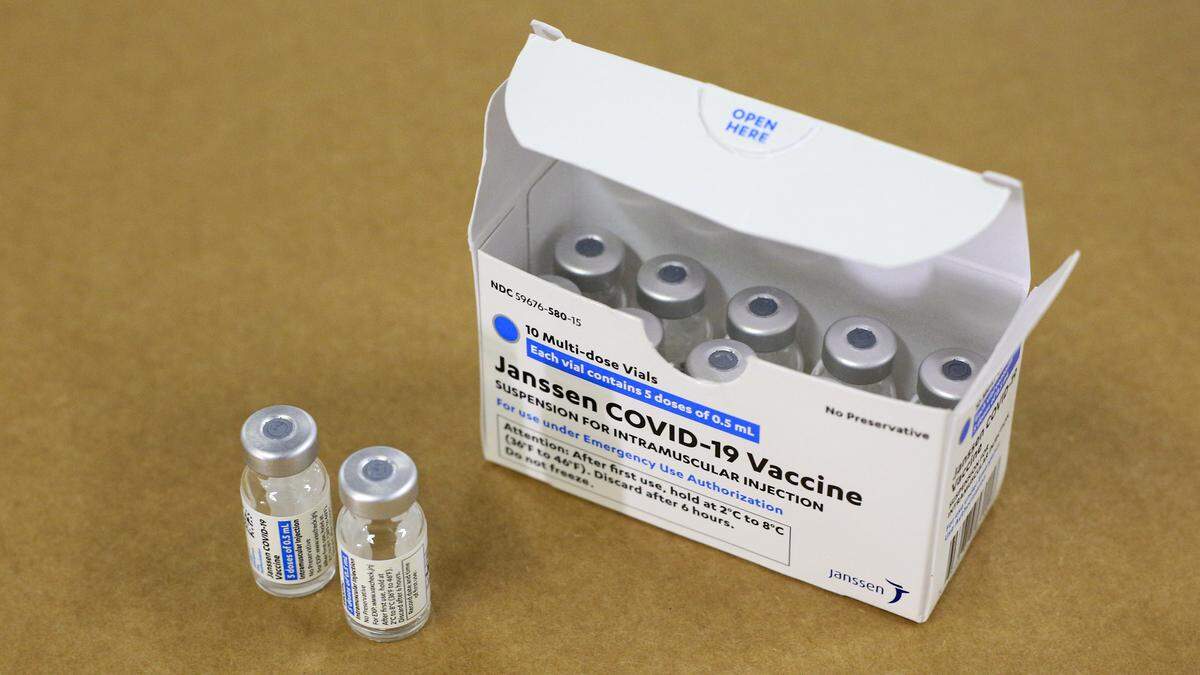
With the Johnson & Johnson vaccine, the adenovirus vaccine, it’s a single-dose vaccine. Although it has been shown to protect pretty well, it looks like it’s less protective against the Delta variant than the mRNA vaccines.
It doesn’t mean that people who got the J&J shot are in trouble or need a booster yet.
But I think it’s important for people to realize that this is something that might be happening down the road. The next booster recommendation that I’ve been reading about that has been discussed is for immune-compromised folks.
And needing boosters is normal. Even measles is one of our very best vaccines, and we still get a measles booster shot for that. Usually, you get a tetanus booster every 10 years.
It doesn’t mean the original vaccines aren’t working at all, it’s just a balance.
Q: What if someone got COVID-19? Do they need a vaccine?
A: So people who got COVID-19 have some immunity against the virus, absolutely. And it’s shown that they will make a more robust response if they get vaccinated.
The current recommendation is to vaccinate, regardless of whether you got COVID-19, and that will make you more protected.
There’s kind of an idea out there that natural infection is better than some artificial vaccine. And that’s not necessarily always true.
Not only is COVID-19 potentially dangerous, in a way that’s not always predictable, it’s also pretty good at evading our immune response.
So when COVID-19 first gets in, one of the systems that it tries to take out in the host, us, is our early-alert system.
We have this system called interferons that tells other cells, like if there’s a virus, “Do something.”
SARS-CoV-2, the virus, is really good at dampening that response. So though people think that you’re getting a better immune response with natural infection, I don’t think that they’re taking into account how sneaky these viruses are at manipulating their hosts.
If people haven’t gotten vaccinated yet, I think the choice now is you’re going to either get COVID-19 and probably the Delta variant because it’s so transmissible. You’re either going to get COVID-19 or you should get vaccinated now.
Q: There have been cases where vaccinated people still get COVID-19. So if that’s the case, then why get the vaccine?
A: These vaccines are excellent. They’re amazing, beyond my wildest imagination. But they’re not perfect. And particularly not perfect in the face of new variants.
But getting vaccinated will protect you. When you look at the hospitalizations and deaths, they’re almost 100% unvaccinated people. So getting vaccinated will protect you from serious disease.
If you get vaccinated, you’re much, much, much more likely to have mild or no symptoms. And it looks like you’re much less likely to have long COVID.
Q: Some people are concerned because the COVID-19 vaccine is considered experimental. Should they be worried?
A: I understand why people are nervous or curious about that emergency use authorization. I think that’s why people would hold off on getting vaccinated: because it doesn’t have full approval yet.
That’s more of a bureaucratic designation.
Accompanying that, I’ve also heard concerns along the same lines: that it was developed too quickly and that it hasn’t been tested thoroughly enough.
No, people don’t need to be worried about any of that. And I can give you many reasons.
First of all, the COVID vaccines went through really large phase three trials that had really great safety profiles. And as they came out of those trials and we’re rolling them out into the population, we’ve now had hundreds of millions of doses of vaccines.
It’s probably the most heavily monitored health product ever.
We’re taking in a lot of data, and that monitoring has worked. It’s picked up extremely rare, serious adverse events with the vaccine.
So this monitoring has been able to delineate those very rare events, which means the monitoring is working great. And across the board, those side effects are extremely rare and it’s much more common to even see clotting problems in COVID compared to the clotting that’s been described with the vaccine.
Likewise with Guillain-Barre Syndrome. It’s more likely you’ll get GBS with COVID than from a vaccine.
So the vaccines are extremely safe based on all of the monitoring and the number of doses and etc.
And, actually, they weren’t developed that quickly if you consider all the back research that went into mRNA technology starting in the ’90s.
Q: Should both unvaccinated and vaccinated people be wearing masks indoors in San Luis Obispo County?
A: Yes.
Q: Why?
A: I don’t think we know how much Delta variant we have here. But based on the state data, it’s almost all Delta now, so it’s more transmissible.
I think that when you’re indoors in a situation where vaccination status is unknown, you should be wearing a mask.
But if you’re indoors with your family who is all vaccinated and none of those people are in a super vulnerable category, then I think you can take the masks off.