
A ‘large, damaging fire’ is possible at any time in SLO County. Here’s why
With a series of wildfires scorching thousands of acres across the Central Coast in recent months, it’s clear that San Luis Obispo County is well into its fire season.
The Avila Fire near Pismo Beach burned more than 400 acres and threatened many buildings in early June. And the Pond Fire east of Santa Margarita had grown to 1,962 acres and destroyed one house, 13 outbuildings, and threatened 200 other structures as of Wednesday.
So is San Luis Obispo County due for a major blaze, one that’s measured in the tens of thousands of acres?
“A large, damaging fire is possible at any time,” said Alan Peters, a unit forester at Cal Fire. ”When the conditions are right, the fuels are right, the weather is bad, and it’s windy and hot, the potential is always there.”
The three main components of a wildfire are weather, topography and fuel such as grasses, forested land and shrub lands, Peters said.
The eight-year drought that ended in 2019 caused brush and trees to die, increasing the amount of available fuel. And recent winter rains led to new growth of grasses along the roads, he said.
“It’s hard to say what’s worse, a wet or dry year,” Peters said. “Every year, regardless of those conditions, in addition to windy conditions, it could be really bad.”
In assessing the season, he said, grass fires during May to June tend to burn more quickly and are easier to manage. As the summer progresses, brush will get drier, and burn between June to September.
Brush fires are the most difficult to manage, he said, and can burn for days or even weeks.
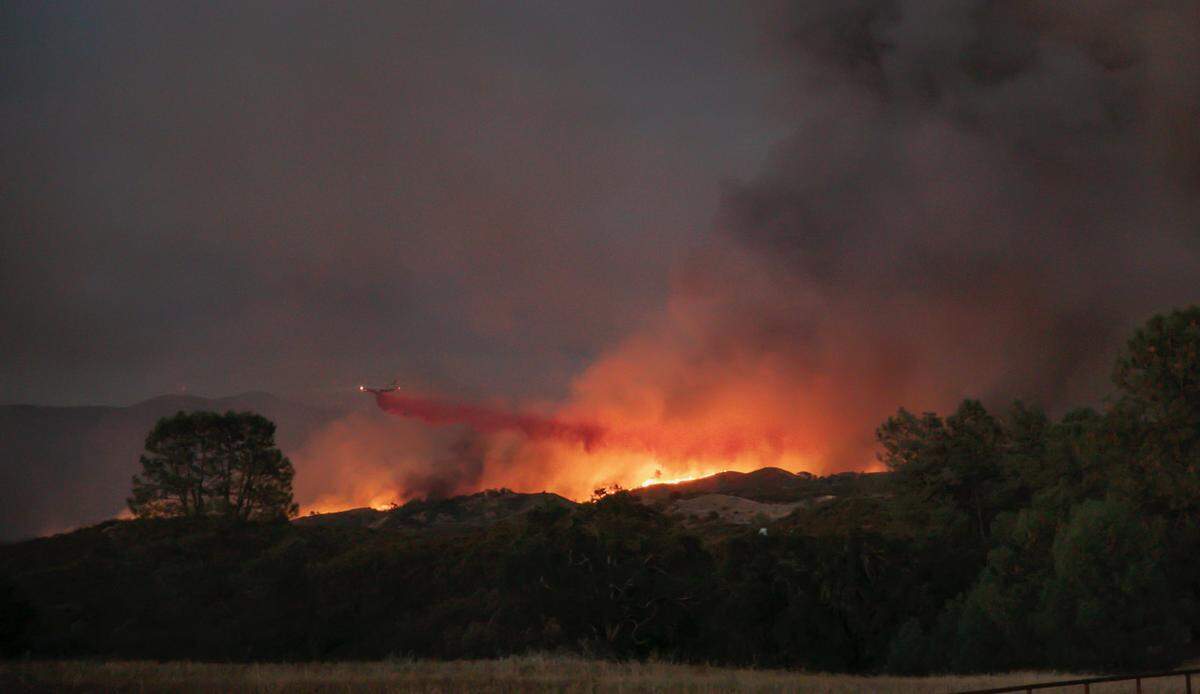
“We are quickly headed into the time frame where California can see large-scale devastating fires,” meaning late summer and early fall, said Clint Bullard, Cal Fire public information officer.
Chris Dicus, a Cal Poly professor of wildland fire and fuels management, agreed.
“We have a lot of dead material, and it can get really scary, really quick,” Dicus said. He’s on the board of directors of the San Luis Obispo County FireSafe Council, a community-led organization that mobilizes residents to protect their homes, communities and environments from catastrophic wildfire.
“Frankly, we are overdue for something unfortunate here in this county,” he said.
Climate change increases wildfire danger
People have been suppressing wildfires for the latter part of the 20th century. Yet wildfires are a natural part of the ecosystem, experts say.
Historically, frequent fires clear out fuels naturally, making forests more resilient to the effects of fire, said Maureen Kennedy, an assistant professor of quantitative fire ecology and forest management at University of Washington, Tacoma. Her research focuses on wildfire ecology and strategies to reduce wildfire fuels.
When fires are suppressed for a long time, Kennedy said, fuels tend to build up. Then, when exceptionally dry conditions develop, she said, forests, shrub lands and grasslands will burn larger and more extremely.
Climate change is already contributing to the increasing destructive power of wildfires, and it is projected to have a growing impact, according to SciLine, an independent, nonpartisan, philanthropically supported communication service.
San Luis Obispo County’s 2019 Multi-Jurisdictional Hazard Mitigation Plan reports an expected increase in wildfires and predicts that climate change will cause an increase in temperatures as well as a decrease in rain, leading to droughts.
This can cause an increase in area burns, Kennedy said.
Prolonged drought is not actually the greatest risk, Kennedy said., because grasses don’t grow as much in those conditions.
Instead, the worst conditions are caused by periods of increased rain, followed by a decrease in rain, she said. This will cause grasses to grow a lot, before the decreased rain causes grasses to dry, and create more fuel potential.
Climate change projections predict a greater likelihood for this variability in rain, where periods of increased rain precede a decrease in rain. That’s changing fire seasons, Kennedy said.
“We are at the point where we have no fire season. It just seems to burn all year long,” Dicus said.
To combat that, Dicus said, fire managers employ mitigation efforts to control blazes — including performing prescribed burns and removing vegetation by hand.
Inmate crews from the California Department of Corrections and Rehabilitation are sent out with hand tools to break up vegetation. Grazing goats and cows are sometimes used to eat the grass and brush.
“We are really good in this county at keeping large fires small. But when extreme weather events come through, it can impair our ability to put out fires immediately,” Dicus said. “That’s when these fires start rampaging across the landscape.”
Fire prevention plans need to be designed to be climate-smart. These plans modify the vegetation not just for fire; they also affect water, wildlife and habitats for wildlife. “We need to be creative in looking at traditional practices but also how to modify them,” Kennedy said.
“Fires are great for the environment and people, but fire in the wrong place at the wrong time can be devastating for our ecosystem and people,” Dicus said.
History of wildfires in SLO County
Over its history, San Luis Obispo County has seen its share of devastating wildfires.
According to the Multi-Jurisdictional Hazard Mitigation Plan, since 1900 SLO County has experienced 15 larger wildfires that each burned more than 20,000 acres. The plan also noted a trend toward more wildfires and more acres burned over time.
Large fires could be classified as any fire where the initial resources being dispatched must be augmented. This is often called “extended attack.”
Statewide, Cal Fire strives to contain 95% of wildfires at 10 acres or less, according to Bullard.
Large local fires in recent years include the Highway 58 Fire, which burned 106,000 acres and destroyed 13 homes and numerous other structures and vehicles in September 1996.
The Las Pilitas Fire burned 75,000 acres and destroyed 10 homes in July 1985. It started on Las Pilitas Road near Santa Margarita and burned into coastal mountains behind the cities of Arroyo Grande and San Luis Obispo.
The Highway 41 Fire burned 49,000 acres and destroyed 42 homes, 61 other structures and 91 vehicles in August 1994, with the worst of the damage occurring in Tassajara Canyon. It started in the coastal mountains, threatening Morro Bay until the winds shifted it in the direction of Atascadero.
The Chimney Fire burned 46,235 acres and destroyed 49 homes and 21 other structures in August 2016. It broke out near Lake Nacimiento, burned along the Santa Lucia ridge line and came within two miles of Hearst Castle.
The Alamo Fire burned 28,687 acres and destroyed one home and 13 other structures in July 2017. The fire started near the Twitchell Reservoir in San Luis Obispo County east of Santa Maria and spread to Santa Barbara County.
Peters said Cal Fire uses fire maps to look at where fires have historically started and where heavy fuel loads are located. The agency then develops fuel treatment strategies that will help reduce the fire hazard in strategically located areas.
“Where big fires have occurred in the past, they are likely to occur again,” Peters said. “The brush and grasses will grow back quickly.”
According to the county’s plan, most communities are designated with a wildfire hazard severity rating of moderate, high or very high.
The communities most susceptible to wildfires exist at the wildland-urban interface, where homes are surrounded by tall grass or brush.
In 2018, The Tribune reported that one-third of county homes are at extreme to high risk of wildfire damage.
“Many geographic areas of SLO County present a concern for wildfires,” Bullard wrote in an email to the Tribune. “No matter where we live within SLO County, the threat of large-scale wildland fire is ever present if the correct conditions exist.”
Peters said wildfires in the county “are almost always human caused.”
“People really need to stay vigilant to prevent starting fires,” he said.
In the county plan’s analysis of 457 fires from 2013 to 2017, 70% were found to be caused by power lines, vehicles or equipment.
For instance, Cal Fire investigators found that the Chimney Fire was started by a vehicle that ignited dry grasses adjacent to a dirt road.
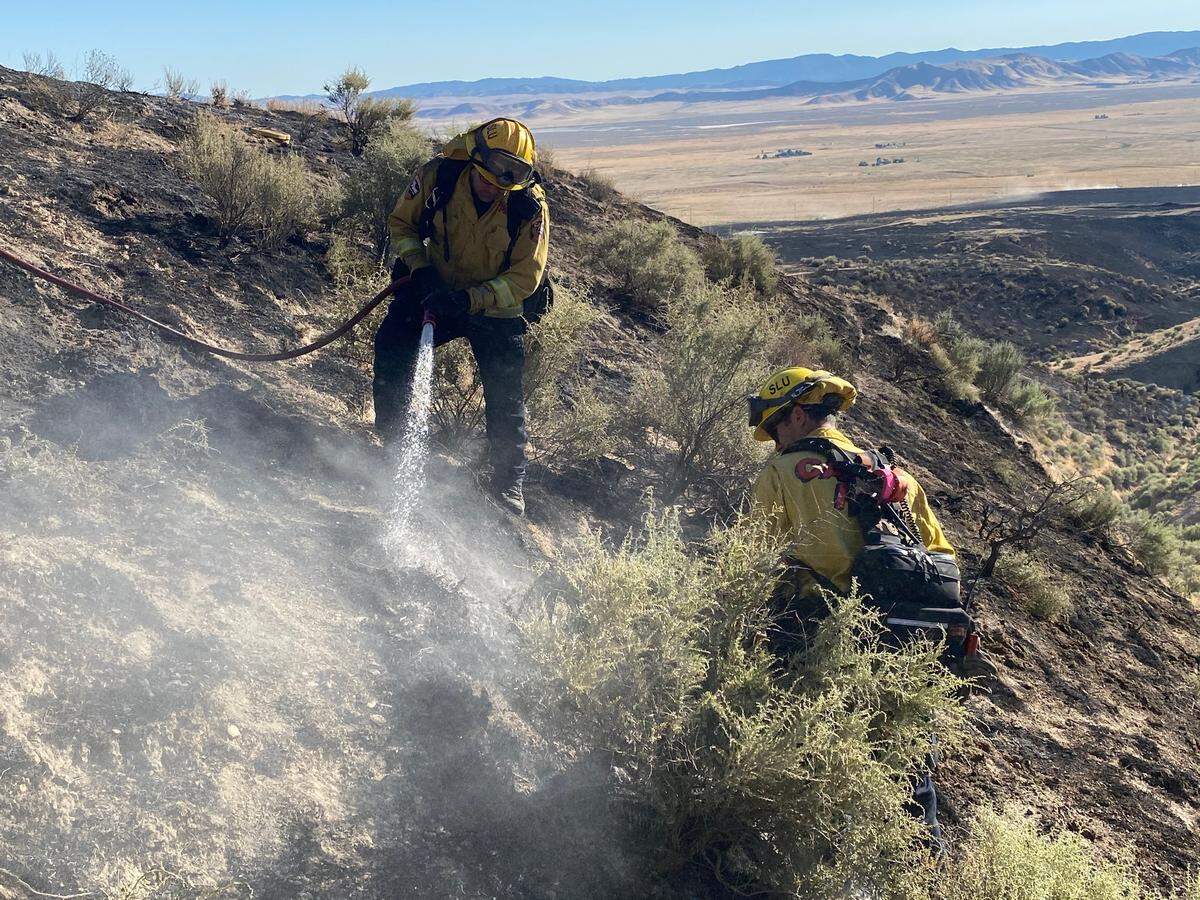
What you can do to prevent wildfires
So what can San Luis Obispo County residents do to reduce the risk of wildfires?
“We would ask that people take the time during the entire year, not just fire season. Take a look around your property and create a defensible space around your home,” Bullard said. “Harden your home against wildfire to where if (firefighters) aren’t there, or you’re not there, your home can serve to protect itself.”
Bullard recommends ensuring your gutters are clean and removing dead and dying vegetation, as well as tall grasses, around your home.
You should clear brush a minimum of 100 feet away from your home, he said, giving Cal Fire time to reach and defend it against wildfires.
Bullard also advises making your home address numbers easy to find.
Online resources for local homeowners and residents can be found at Fire.ca.gov or CalFireSLO.org.
“Take the time now to look at your property and create that defensible space,” Bullard said. “It can make all the difference during the fire.”