
SJV Water: The uneven toll of California’s 2014 groundwater law

SJV Water is a nonprofit, independent online news publication covering water in the San Joaquin Valley. Lois Henry is the CEO/Editor of SJV Water. She can be reached at lois.henry@sjvwater.org. The website is www.sjvwater.org.
For Amrik “Mickey” Singh Basra, owning 300 acres of almonds in Madera County was more success than he ever expected to achieve in the United States.
Approaching retirement age, he could let his trucking business go and envision the last decades of his life sustained by his orchard.
Then two years ago, as his land value plummeted and he couldn’t repay a crop loan, he had to take out a high-interest loan.
There is a saying in Punjabi, he said, that roughly translates to, “You have to kill your soul before you ask favors.”
He takes odd jobs to chip away at his debt, helping on friends’ farms, spraying outside a warehouse. Basra finds himself occasionally in a courtroom with other farmers to hear the latest on a lawsuit tied to the fate of their businesses.
Now, at 68, with a long, gray beard, Basra’s retirement is anything but secure.

Birth of SGMA
The primary wrench in Basra’s sunset plans, he said, is the 2014 Sustainable Groundwater Management Act, or SGMA.
SGMA is California’s first ever attempt to regulate groundwater use to protect the state’s aquifers. The San Joaquin Valley — where almost the entire region is considered “critically” overpumped — is ground zero for how SGMA is playing out.
Nearly a million acres, or one fifth of the San Joaquin Valley’s irrigated land may have to be idled to achieve SGMA’s goals, according to research by the Public Policy Institute of California.
But that economic hit will not be delivered equally.
SGMA’s goal is to stop damage caused by excessive pumping — vast areas of subsidence, dried up domestic wells and worsening water quality — by 2040. But the law does not distinguish between smaller, groundwater-dependent farmers such as Basra and gigantic corporate-owned farms with seemingly unlimited resources.
“SGMA is agnostic to your yield, the efficiency of your operation, your financial condition, the size of your farm, how many employees you have, whether you’re a good person… or anything else,” said Alexandra Biering, director of policy advocacy on water issues at the California Farm Bureau.
Mickey Basra’s empire
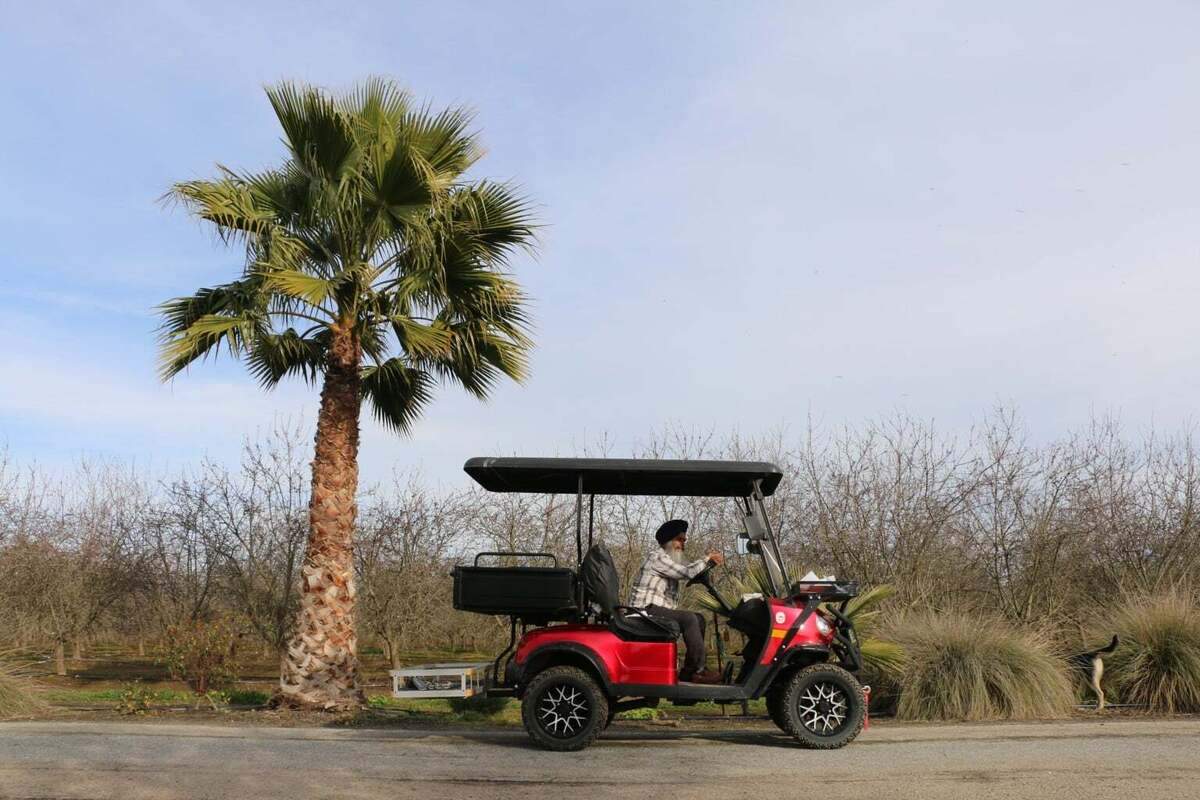
Basra’s farm is crowded with equipment but often quiet, like an entire town away at work. On a visit in February 2025, the almond blossoms were beginning to thin on their branches and stick to tractor tires like muddy teeth.
His orchard sprawls from either side of his long driveway. Behind the barn are many semitrucks Basra would like to sell, left over from his business, Sunrise Truck Service.
Sunrise paid for his first 20 acres and subsequent acreage over the years. Basra stopped driving trucks when the pandemic hit. At the time, 300 acres of almonds was more than enough, he thought, to support his retirement.
His first inkling that was about to change came in June 2022, eight years after Gov. Jerry Brown signed SGMA.
He and several other farmers attended a meeting of the Madera County Groundwater Sustainability Agency (GSA). GSAs are an entirely new layer of local government required under SGMA to monitor and mete out groundwater. In order to do that, GSAs have authority to set land assessment and pumping fees as well as pumping limitations.
On that June day in 2022, the Madera County GSA approved a land assessment fee of $246 per acre.
It was a gut punch for farmers like Basra, who had never paid land assessment fees. For Basra, the GSA’s fee would cost him $73,800 — nearly three-quarters of his profit in a good year, he said.
“Since that day, it’s bad and bad, every day bad,” Basra said.
‘A gun to our heads’
Money from that assessment fee would have paid for four different GSA projects to benefit the region: Buying surface water; building recharge basins; fixing and protecting domestic wells; and helping farmers repurpose land to reduce irrigation, according to Stephanie Anagnoson, manager of the Madera County GSA.
The GSA is looking long term at how to achieve SGMA’s goals.
In the short term, though, Basra and the other farmers at that 2022 meeting saw financial devastation.
“You people are putting like a gun to our heads,” one farmer told the GSA during the meeting. “We’ll all be broke. You can’t pay the chemical bills no more. You can’t pay the water bills no more. You can’t pay the hired help no more. I got to put tax money in every month… we’ve reached the limit already. This will kill us.”
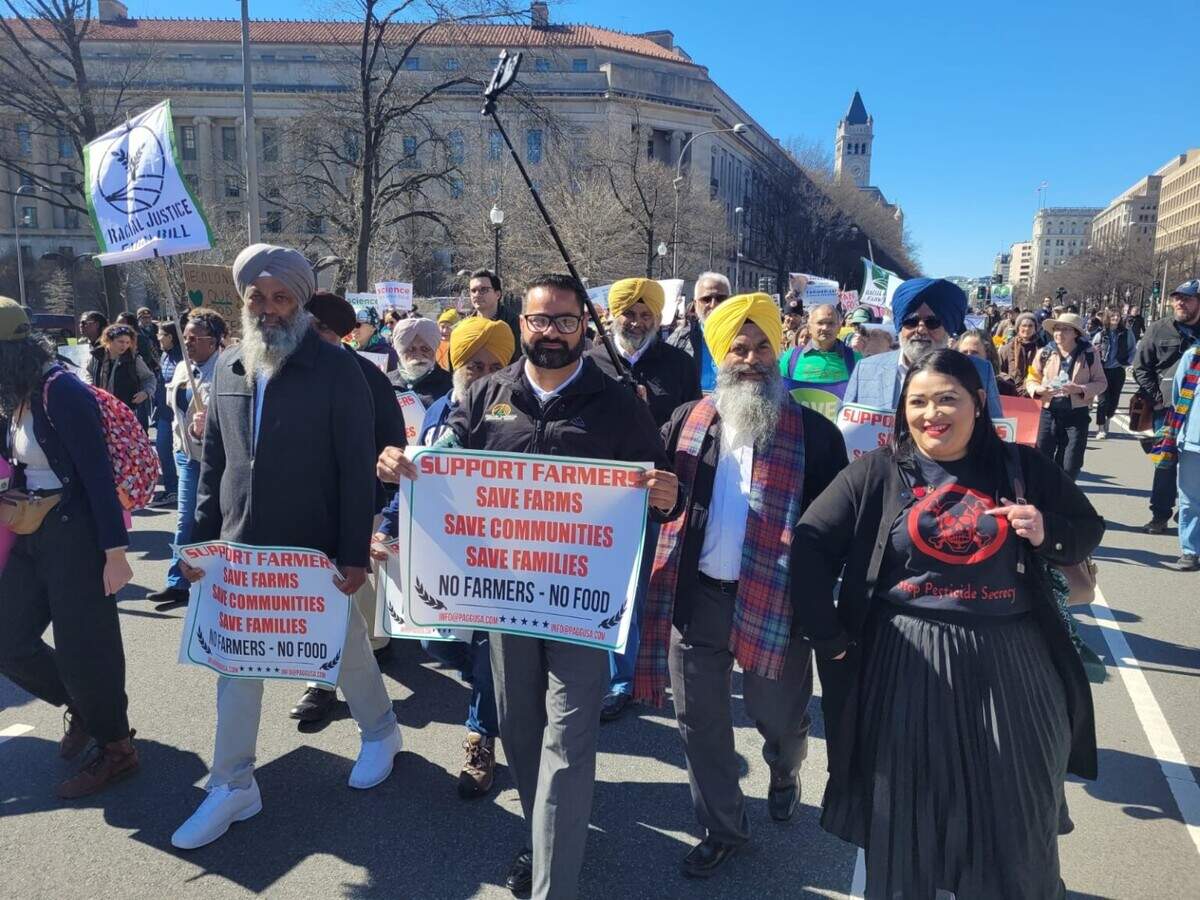
A few months later, Basra and a handful of other farmers filed a lawsuit alleging the $246 fee had been illegally set. They obtained an injunction that held off the fee until earlier this month, when a court ruled that the fee had been lawfully imposed.
Tough calls
Because the GSA fees were held in limbo for four years, Madera County GSA’s manager Anagnoson said the planned projects were stalled.
Ultimately, the Madera County GSA reduced the land assessment fee from $246 per acre to $59 per acre.
But Anagnoson said that meant the GSA could only afford one project: protecting domestic wells.
It’s just one more of the tough calls being made under SGMA.
“The higher assessment fee would have actually equalized things,” by paying for projects to bring in more water that would aid the entire subbasin, she explained.
Now, the larger, better resourced farmers are doing projects on their own to bring in water for themselves, leaving out small farmers.
“Maybe the smaller farmers couldn’t have paid the fee initially,” Anagnoson said. “But one way or another, they’re going to need to find ways to bring in water.”
‘Worst farm crisis’ in 20 years
At the same time the GSA set its land assessment fees, the price of almonds bottomed out to less than $2 per pound, a fraction of the 2014 peak.
“We needed $2 to break even,” Basra explained. “We couldn’t even afford it.”
The GSA had also imposed pumping limits of 28 inches of water per acre of land, which will decrease in coming years. Almonds need between 36 and 42 inches of water per acre.
Adhering to those restrictions isn’t as simple as ripping out some trees in order to have enough water for others. Farmers have loans, bank advances and other financing to consider.
Several years prior, Basra had taken out a crop loan. He needed a full harvest to repay that money. But the long-term outlook for water on his land caused the value to tank.
On Dec. 31, 2023, he failed to repay his crop loan. It looked like Basra’s farm might tip toward bankruptcy. On Sep. 25, 2024, he entered a forbearance agreement with his bank.
When the Madera County GSA cut its assessment fee to $59 per acre, that gave Basra’s profit margin a little breathing room.
Still, the bank is at his heels. There isn’t enough water for all his trees, and his land value remains low.
Janie Gatzman of Gatzman Appraisal, an agricultural property assessment company, said she’s met dozens of farmers in Basra’s position. Some have already sold out or filed for bankruptcy because of SGMA.
“I’ve been appraising for 20 years, and it’s the worst farm crisis in California since I’ve been appraising,” she said.
Access to water is the defining factor.
SGMA’s uneven impacts
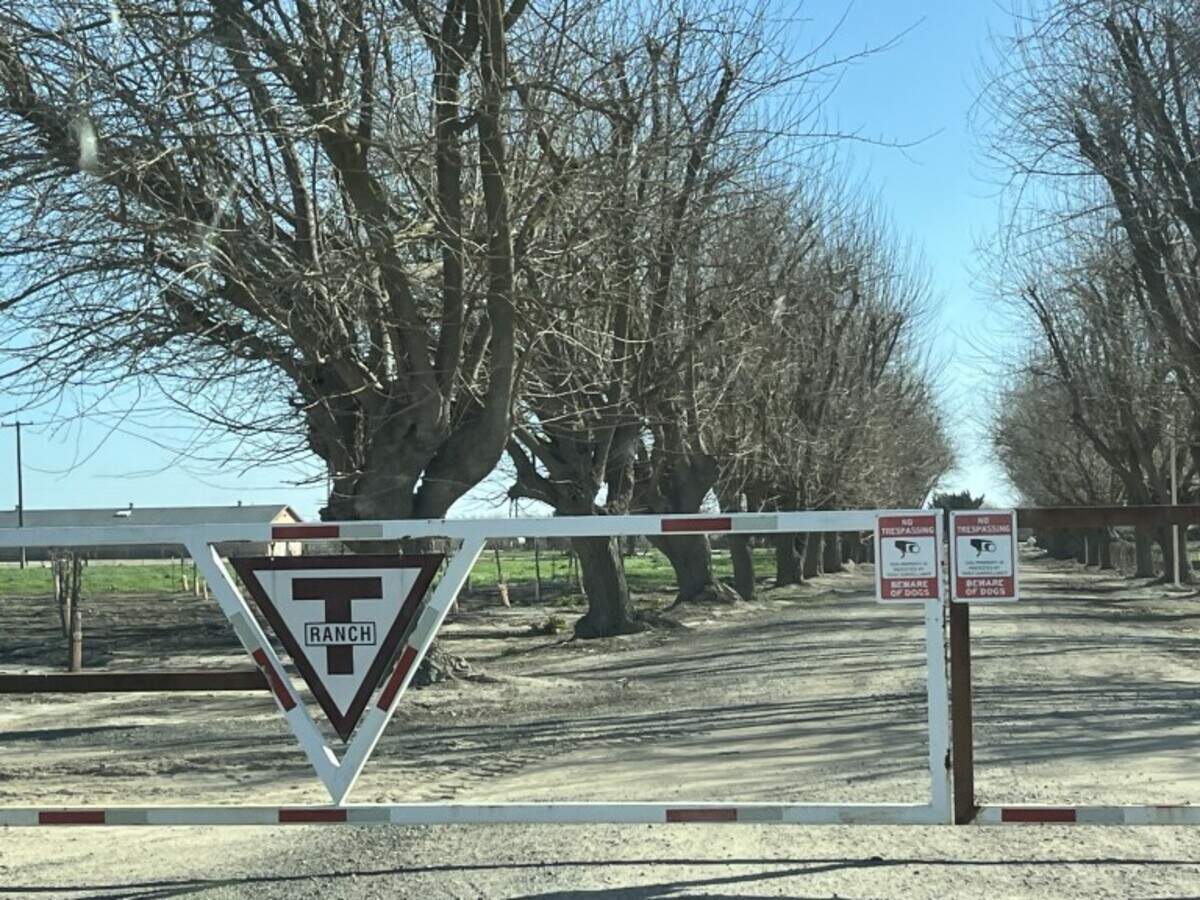
At the massive Triangle T Ranch, less than 20 miles from Basra’s land, the difference in SGMA’s impacts is stark.
Behind Triangle T’s branded metal gates and stately driveway lies a blanket of almond and pistachio orchards that seem to stop only at the distant foothills. The ranch covers 12,400 acres, or nearly 20 square miles.
Triangle T Ranch is owned by John Hancock Life Insurance Company (U.S.A.), a unit of Manulife Financial Corporation. Manulife is an investment giant headquartered in Toronto, Canada. Triangle T Ranch is managed by Manulife Investment Management.
In the 1980s, John Hancock grew its farmland portfolio amid a massive wave of foreclosures among Midwestern farmers, according to the policy think tank the Oakland Institute.
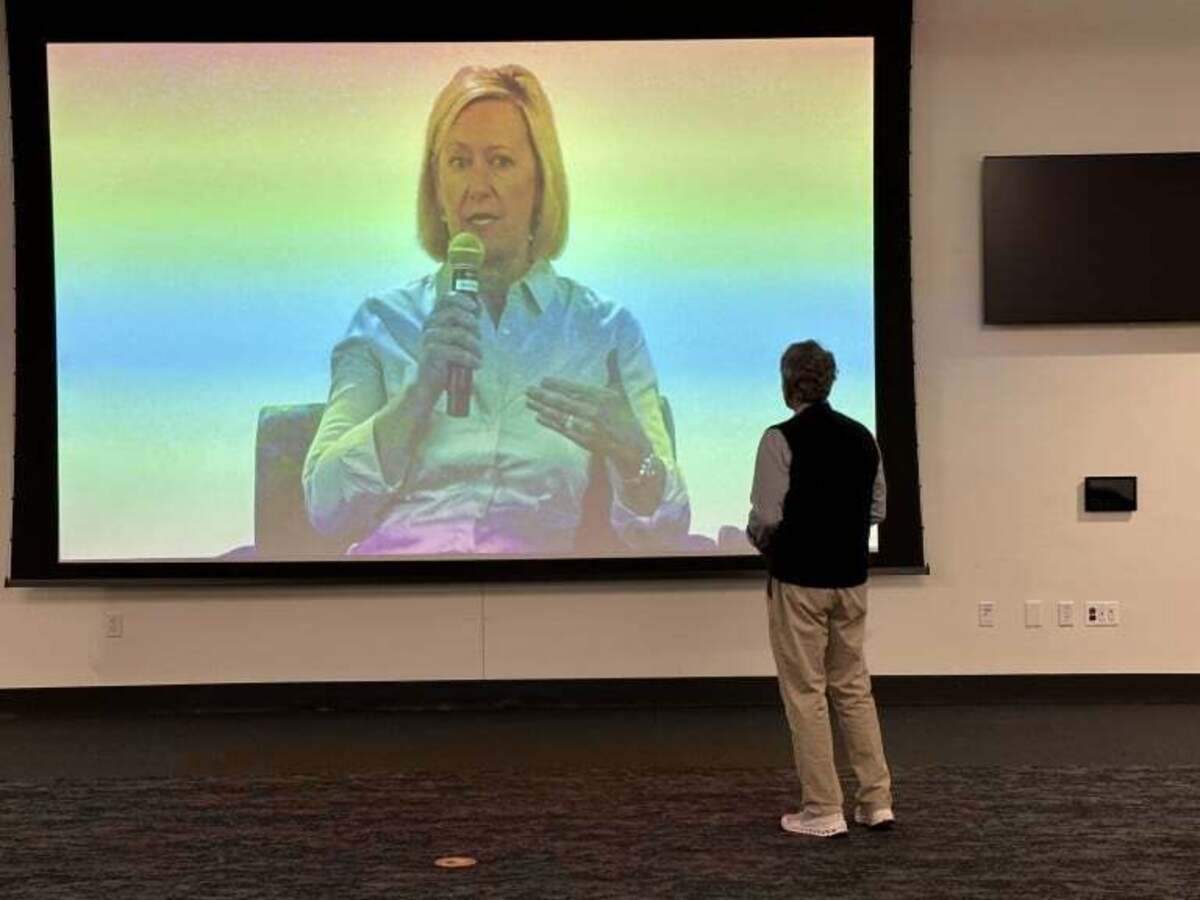
Sarah Woolf, co-general manager of the Triangle T Water District and Triangle T Water District GSA, explained how Triangle T has adapted to SGMA.
After John Hancock bought Triangle T in 2010, it replaced vast, non-irrigated pastures with almond and pistachio orchards. Like Basra’s farm, the Triangle T land depended on groundwater.
Pumping to irrigate its trees eventually caused the land to sink, taking two canals and a nearby dam with it.
Those canals and dam are used by a group of water districts known as San Joaquin River Exchange Contractors. In 2017, two of the exchange contractors struck a deal with three land owners, including John Hancock, to wheel them water through a pipeline so they cut back groundwater pumping.
That agreement gave the land owners a head start on groundwater restrictions to come, Woolf said.
As SGMA’s scope became apparent, the land owners formed the Triangle T Water District and GSA. The entities cover 14,000 acres, which includes a total of nine landowners.
The ranch itself took 530 acres out of production. The landowners have also installed monitoring devices on each of their wells and built water recharge basins, Woolf said. By 2020, they had a second pipeline to import more surface water.
The Triangle T Water District GSA also went after floodwater, which required permits and more infrastructure. It received a $7.6 million grant from the state to coordinate flood capture for farmers across multiple GSAs.
The pumps, the pipeline, the floodwater and all the myriad solutions in between seem to have worked. Subsidence in the area declined, according to maps provided by the Triangle T Water District GSA. By adapting to the new groundwater restrictions, Triangle T Water District GSA farmers have decreased their water uncertainty, and preserved much of their land values, Woolf said.
Woolf acknowledged that for many farms, “there is simply not enough capital” to do what Triangle T has done. She is proud of her work and thinks some wealthier farmers could afford big changes like this. But she sees the big picture.
“We’ve promoted this concept of small family farmers, but we’ve made it impossible to do that,” Woolf said, referring to costly regulations such as SGMA.
Meanwhile, Basra laid off one of his employees. Instead of buying new, he rummages through his shop first. He took on outside work. At one point, he bulldozed two acres of trees to build an event space, an idea to diversify income, then abandoned the plan when he couldn’t afford the permits.
In the midst of the financial chaos, Basra’s wife’s cancer returned and his son-in-law had a stroke, which forced him to give up the trucking business he’d taken over from Basra.
Basra grew depressed, and couldn’t sleep at night.
“I was pissed off, badly,” he said. “My wife was sick, she was ready to die, and this was on my neck.”
Falling in love with the land
It took Basra 17 years of driving a truck to buy land in the United States, but his eventual success propelled the entire family westward. His parents came to live in California, where they both later died.
In the decades since, Basra built a mini empire, fueled by trucking and then almonds. He sent money home to expand the family’s seven-acre farm at the foot of the Himalayas and remodeled the home where he grew up.
These days Basra counts on uncertainty.
“When you get up for midnight, that’s the best time to pray,” he said. “Everybody, everything quiet around you.”
His wife, Pardeep, passed away in fall of 2025. They came from India together in 1980, seen off by a dozen family members and friends on a chilly December day, Basra recalled.
“I go to India every night. We have one holy church, the big one, just close your eyes and be there.”
The church where he pictured himself is in Amritsar, Punjab, a golden temple surrounded by a moat. Life on the edge of bankruptcy made him more religious.
On a visit to Basra’s ranch at twilight, he talked about the land.
“You fall in love with the land and the property,” he said. “You don’t want to let it go. You want to die with it.”
Hannah Frances Johansson is a reporter for the Pittsburgh Media Partnership Newsroom, a regional wire service for southwestern Pennsylvania. Before moving to Pittsburgh, she was a life-long Californian: born in Modesto and raised in the San Francisco Bay Area. Hannah’s family inspired her interest in agriculture reporting; both her parents grew up on farms. One side of her family farms 50 acres of almonds in the Central Valley. The other side farmed in Sweden. She originally wrote a version of this story for her thesis as a graduate student at UC Berkeley.
This story was originally published June 26, 2026 at 2:44 PM with the headline "SJV Water: The uneven toll of California’s 2014 groundwater law."