How did a bat colony get into an Old Sacramento parking garage? Where did it go?
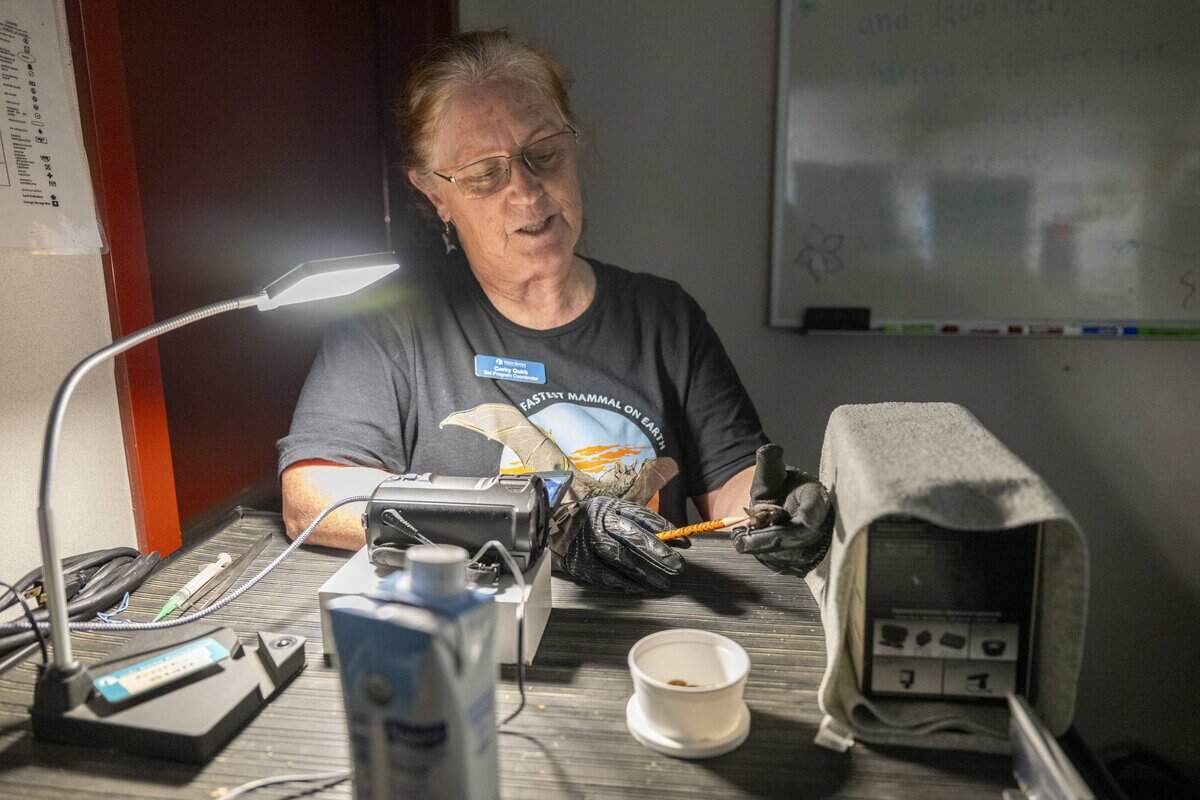
.jpg "A captive Mexican free-tailed bat under the care of NorCal Bats at the Yolo Bypass Wildlife Area Headquarters in Yolo County, California on September 18, 2025. Mexican free-tailed bats had roosted in the walls of a parking garage in Old Sacramento.")
As humans bustled from their parking spots at the Tower Bridge Garage to clock in for their shifts, they heard the echoing high-pitched chatter of an exhausted group who’d toiled in pest control work all night: Hundreds — likely thousands — of Mexican free-tailed bat mothers and their babies who lived in the walls of the Old Sacramento structure during the summer.
These interspecies urban mammal interactions are ending. After years spent in the shadow of the far-more-famous famous bat colony under the Yolo Causeway, home to 250,000 of these bug-munching beasts, the also-rans received an eviction notice last year.
The city of Sacramento, which did not immediately return a request for a comment, undertook an “exclusion” project in the fall. With guidance from the Department of Fish and Wildlife, the city commenced the work after nesting season had concluded and most of the winged families and any males in their midst had flown the Capitol Mall coop. The bats’ beloved expansion joints were plugged up, and the winged mammals moved on.
Corky Quirk, the founder of the bat rescue organization NorCal Bats, said the colony was already well established when she started working with capital region bats more than two decades ago. Typically, these animals return to the same established seasonal roosting sites for years.
It’s unclear where this particular colony went, said Katrina Smith, statewide coordinator for small mammal conservation at the California Department of Fish and Wildlife. Although Quirk and Smith said planners have proposed adding bat habitat under the new I Street Bridge, no immediate new accommodations were provided to these particular snubnosed denizens of Old Sacramento. Quirk worried that they might move into local businesses.
“Animals, wildlife have lost so much habitat, and some of them have tried to find places by moving into structures,” Quirk said. “Where does a colony of that size go?”
Chilly bats returned to garage after lockout
There’s already evidence that the moms might still be nearby.
Although the species is migratory, not all populations make those long journeys. And during the foggy cold-snap after Thanksgiving, Smith got word that a smaller number of bats had returned. Unable to enter their old haunts, they had clustered on walls rather than inside them, perhaps to take advantage of the residual warmth during that time of tule fog. It was a clue, Smith said, that the bats might be Valley girls.
Quirk said the contractor who sealed up the garage opened some of those doors to the bats so that they could overwinter, then closed them back up when the weather turned warmer in the spring and the bats could leave. She was keeping an eye on the garage in case any pregnant bats returned to give birth there later this month; late June is usually the time their babies are born, she said.
Smith — a bat biologist — focuses on conservation of all small mammals in the state, which includes not just flying mammals but also rodents, rabbits and shrews. It tallies up to around 400 species, with 70 that are of particular concern due to various threats. Mexican free-tailed bats are not among those 70 — their population numbers are strong and, as evidenced by their love of urban living, they’re quite adaptable. But because the Department of Fish and Wildlife is a scrappy agency without much funding, and Smith is “just one person” working on all small mammals in California, she often taps in to help with human-wildlife interactions, even when they’re not one of her target species.
Furthermore, the Mexican free-tailed bat gets a lot of attention in general. Because they roost in urban areas, and because the big Yolo Bypass colony on the other side of the Sacramento River has done so much to raise the species’ profile locally, she said, “Everyone is talking about them.”
They hung around the area, Smith said, because Old Sacramento held a lot of appeal for the winged mammals.
“Part of the reason those bats are in that parking structure is because of habitat loss broadly, across our state,” Smith said. Although Mexican free-tailed bats are not under notable threat, they have still had to adapt to human encroachment on their typical stomping grounds.
Beyond that, they probably just enjoyed the atmosphere in the garage. “It’s a thermally stable roosting habitat for them,” Smith said. “They love crevices. The species traditionally nest in caves (and rock crevices) that have really stable temperatures, and the females need that for raising pups.”
And, she said, the river corridor provided fresh water and a bevy of bugs to eat. Quirk called them “the farmer’s best friend” because of their voracious appetite for crop pests. With healthy bat populations, she said, farmers have less crop loss and rely less on pesticides.
Did people complain about bats?
The Department of Fish and Wildlife hasn’t received many formal reports of these bats from the public: The agency’s online “Report a Bat Colony” tool only registered one report from last August: a swarm on the fifth floor of the garage (“We had difficulty getting to the car,” the complainant wrote). Quirk said NorCal Bats would receive approximately 10 calls a year, if that; more often, she said she talked to people “excited” about the colony.
However, Quirk said they certainly cause a mess for the city to clean up. “That’s what animals do,” she said. “They poop and pee.”
The complaints from the public may have been rare, but the critters can carry diseases including rabies, which is spread through saliva. The bats wouldn’t have been able to give anyone rabies just by existing in the garage; it would have only been likely to happen if a person saw a bat on the ground and picked it up.
If a bat appears to be in distress, licensed rescuers can be reached by calling or texting NorCal Bats at 530-902-1918. Quirk and Smith advised people to avoid handling bats they encounter in the wild, including the wild parking facilities of Old Sacramento.
“Don’t touch them,” Smith said. “Please put that in.”
This story was originally published June 15, 2026 at 5:00 AM with the headline "How did a bat colony get into an Old Sacramento parking garage? Where did it go?."