Avalanche center’s final report on deadly Tahoe slide flags group size, terrain choice
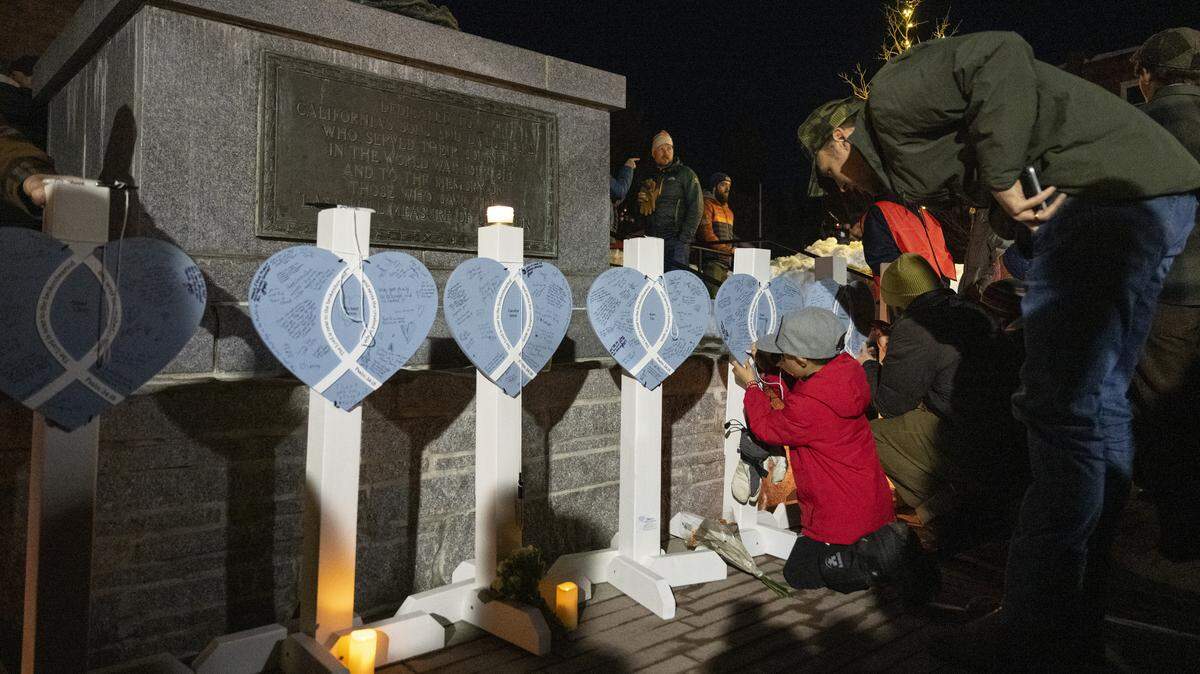
The Sierra Avalanche Center published its final report on the Feb. 17 avalanche near Donner Pass that killed nine people, noting the investigation was stymied by a lack of an opportunity to interview the surviving six people, including the lone mountain guide who was not caught in the slide.
The Avalanche Center authors relied heavily on the accounts two surviving clients of the trip gave to The New York Times, they wrote in the report, which published March 31. The center is staffed by snow safety and avalanche experts who provide detailed daily forecasts about avalanche risks for skiers, snowboarders and snowmobilers throughout the winter months and who also report on avalanche incidents in the region.
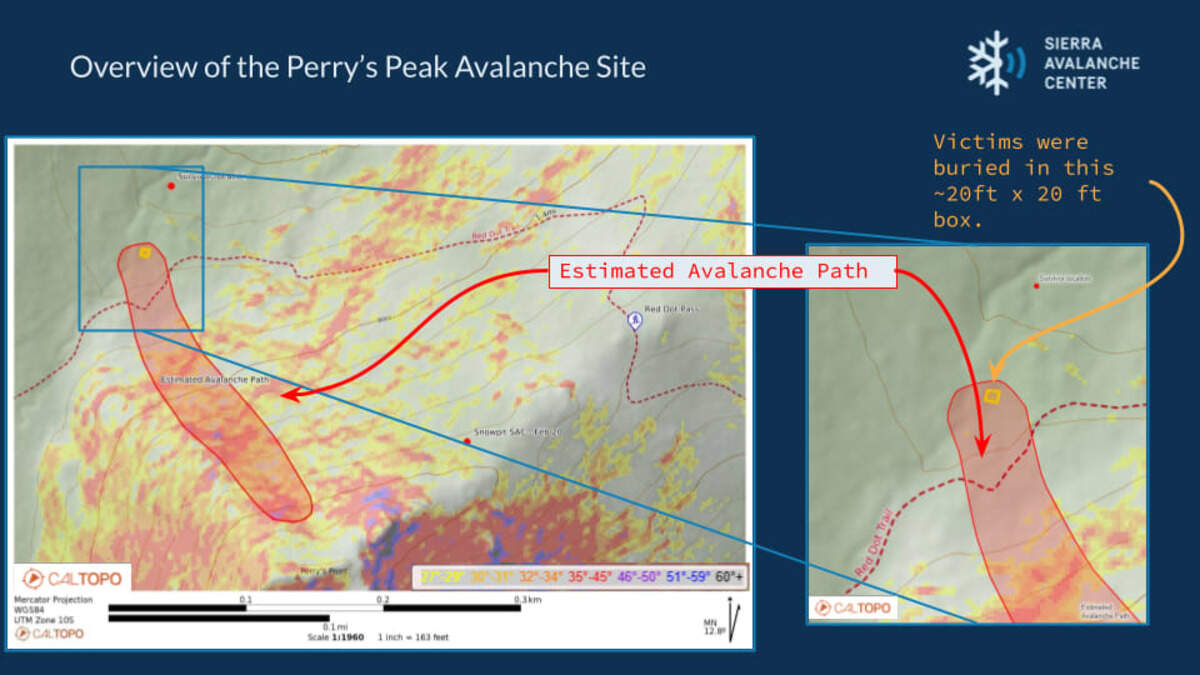
The three experts — Brandon Schwartz, Steve Reynaud, Andy Anderson — who authored the report on the deadly avalanche that occurred at Perry Peak, two miles north of Interstate 80, said they were unable to offer any new details on the choices the group made that led them under steep slopes at a time when the Avalanche Center’s forecast included a dire warning against doing so. The surviving employee of Blackbird Mountain Guides (three others were killed) and two surviving women who were closer to the front of the group when the avalanche released above them have not spoken publicly.
“These two survivors were near the back of the group and did not have a role in route planning or decision-making,” the reports authors wrote. “If other survivors who were closer to the front of the group and part of the group of women eventually choose to share their story, it may include different information and details.”
The party caught in the avalanche was composed of two Blackbird tour groups the guides combined for the journey through a major blizzard out of Frog Lake Huts, a set of high-end backcountry lodgings where the skiers had spent two nights. Among the clients was a group of eight women, who were longtime friends and skiers, a number of whom split their lives between Tahoe and the Bay Area. Six of those women were killed, along with three Blackbird guides.
The report authors noted that the quick actions of two people — the surviving guide and Jim Hamilton, a client who spoke to The Times — once the avalanche struck saved the lives of two of the women.
Backcountry skiers, both expert and not, have questioned the group’s choice to conduct the trip at all ahead of a well-forecasted blizzard that was predicted to elevate avalanche risk, as well as the decision to exit the huts once that storm had taken firm hold of the mountains and also the route choices the guides made during that perilous and ultimately fateful exit.
In a section of the report for commentary, which the authors described as remarks made “based on what is known at the time of this report in hopes that they will help in avoiding future avalanche accidents,” the experts noted, albeit in restrained and technical language, three violations of avalanche safety protocol that the guided group made.
“This group traveled below avalanche terrain and through the runout zone of an avalanche path during a period when a natural or human triggered avalanche was likely to very likely,” the authors wrote.
Too large a group, too close together
The day of the avalanche, the center forecast clearly stated the risk. “Avalanches could be triggered from very low on the slope in some areas,” the center wrote in a statement published early that morning. “Avalanches from above could travel down through treed terrain, often thought of as ‘safe’ during storms. Travel in, near, or below avalanche terrain is not recommended.”
There’s still been no official word whether the Blackbird guides saw that warning, though there are indications they had internet access at the huts and that it’s company policy for them to communicate with managers in the office about routes and conditions.
The report also noted that while it’s not clear why the guides decided that everyone would ski out together, a party of 15 people is well above what is normally recommended for safe travel in avalanche terrain. “Analysis of past avalanche accidents has indicated that larger group sizes (four or more people) have higher chances of being caught in avalanches,” the authors wrote. Larger group sizes can lead to riskier decision-making, as well as placing more people in harm’s way, past snow safety research has found.
Finally, the report noted that regardless of group size, proper avalanche safety protocol is to send only one person at a time across avalanche terrain. That way, if an avalanche does hit, fellow skiers would be able to dig the caught person out. The two surviving clients have indicated that at other points during the ski, the guides did spread the group out. But when the 100-foot wide avalanche struck, it took out everyone in the group excepting Harrison and the guide, who had stopped to address an issue with Harrison’s ski.
“This separation may have kept them from being caught in the avalanche along with the rest of their party,” the report reads.
Previous Sacramento Bee reporting has indicated the guides leading the group either did not realize precisely where they were in relation to the dangerous slope or underestimated the length an avalanche could run in that spot.
The Avalanche Center’s report also added new details about the staggering intensity of the blizzard the group was trying to push through to get back to their cars. Over the storm’s totality, from Feb. 15 to Feb. 19, a measuring site four miles southwest of where the avalanche occurred measured more than nine feet of new snow. At least three feet had fallen by the time of the avalanche. The report authors included wind speed measurements from equipment at the top of the Siberia Chairlift, a Palisades Tahoe resort lift that sits at 8,700 feet. Perry Peak sits around 8,200 feet and is 20 miles north of Palisades.
Wind gusts at Siberia Chairlift reached as high as 135 miles per hour during the storm. Those brutal winds would have swept snow up the side of Perry Peak and deposited it on the north facing slope that ultimately released on the skiers below. In the hour leading up to the avalanche, the winds averaged 75 miles an hour and gusted up to 125 miles per hour. The skiers were in a valley below Perry Peak, but the two survivors have described battling through hellacious conditions in the hour before the avalanche.
Though the report is labeled as final, the Avalanche Center could still publish an addendum to it if more accounts of what led the group to travel under the steep and snow-loaded slopes of Perry Peak emerge, Wendy Antibus, the center’s education coordinator, told The Bee.
The Nevada County Sheriff’s Office opened an investigation into whether there was any criminal negligence by Blackbird Mountain Guides immediately after the avalanche. On Thursday, a spokesperson for that office said in an email that the investigation remained “active/open.” Cal/OSHA, the state’s workplace safety agency, also opened an investigation into the company.
Antibus described avalanche reports as dry, technical documents that follow a format and are usually consulted most often by snow safety professionals and researchers, guides and dedicated backcountry skiers and riders. Though the reports often include recollections from people involved in the avalanches, given multiple ongoing investigations and the involvement of public relations firms, such accounts were unavailable in this case, Antibus said.
Some experts in the backcountry ski community, who in many cases have been reluctant to second guess the group’s decisions amid the blizzard, have indicated they were waiting for the final report to draw conclusions about what went wrong.
But, “I don’t think an accident report is going to capture the complexity of those folks being where they were at that particular moment,” Antibus said.
This story was originally published April 2, 2026 at 3:41 PM with the headline "Avalanche center’s final report on deadly Tahoe slide flags group size, terrain choice."