
Busted pipe at Yuba power plant kills salmon, renews infrastructure fears
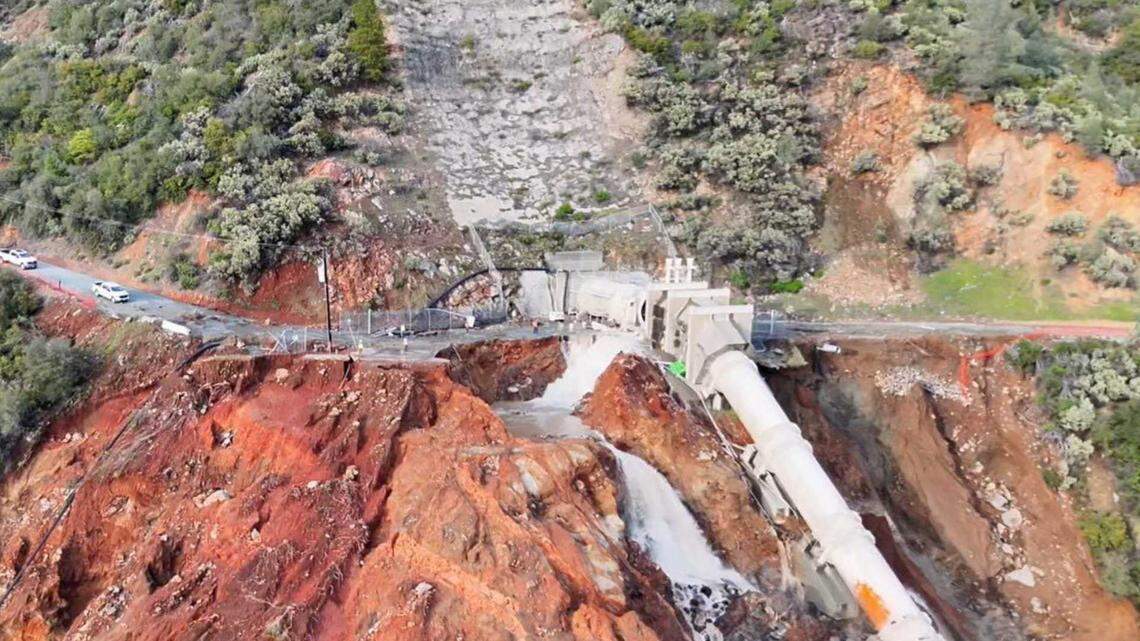
River conservationists on Wednesday urged state regulators to reassess how aging hydropower infrastructure is operated and maintained — and, in some cases, whether certain facilities should remain in place — following a 14-foot diameter, high-pressure water pipe ruptured last week.
While praising the immediate emergency response of Yuba Water Agency and California Department of Fish and Wildlife, advocates said the rupture raises broader questions about how dams and related infrastructure are managed in California.
Friday’s penstock rupture in Yuba County, which hit as Yuba Water Agency was finishing a major tunnel and penstock upgrade at its New Colgate Powerhouse, has left the utility and state wildlife officials scrambling to clean up sediment and debris and to restore flows on the lower Yuba. A penstock is a large, pressurized pipe that carries water from a reservoir into a hydropower plant and then back into the river.
The incident, which took place about five miles downstream of New Bullards Bar Dam, led to the deaths of hundreds, possibly thousands, of juvenile salmon after lower Yuba’s river flows dropped by more than half and remained low for roughly two hours, stranding fish along the margins of the river.
“Introducing risk to rivers, river management and communities is just something that goes hand in hand with putting infrastructure in a river, whether that’s a dam or a hydropower facility or a levee, whatever,” said Ann Willis, California regional director of American Rivers.
“And occasionally that risk comes with consequences like what we’re seeing here, and those consequences extend beyond the ecosystem impacts. They end up being community or human safety impacts as well.”
Operational challenges ahead
Following the rupture, Yuba Water Agency said it is aware of reports of dead salmon in the lower Yuba River and is working with the California Department of Fish and Wildlife and the South Yuba River Citizens League to evaluate how the incident may have affected river conditions, including fish mortality.
Vance Staplin, executive director of the Golden State Salmon Association, is among the conservation advocates assessing the extent of potential impacts to salmon runs on the Yuba River.
“This accident comes at a time when we’re hoping to see the decimated salmon runs in the Sacramento Valley rebuilding after huge losses in the last drought,” Staplin said, emphasizing that the next four months are a critical period as young salmon begin migrating from Central Valley rivers and tributaries toward the ocean.
“It’s important that state and federal water managers allow enough water to flow in the rivers and Delta to get these surviving fish safely to sea.”
DeDe Cordell, a spokesperson for the water agency, said river flows were restored within about two hours and that operations on the lower Yuba are being maintained through the Narrows 1 and Narrows 2 powerhouses, which draw directly from Englebright Dam, adding that the river also receives direct releases from New Bullards Bar Dam.
But Ron Stork, a senior policy advocate with Friends of the River, said challenges could emerge later in the year if the penstock remains offline, particularly once seasonal inflows decline and reservoir managers must rely more heavily on releases from New Bullards Bar to meet downstream flow commitments.
Essentially, Stork is worried that losing the Colgate penstock means New Bullards Bar now has only about a third of its usual capacity to send water downstream through lower outlets, which he worries will leave operators with less room to maneuver on environmental and other releases later in the dry season.
“This is not ideal for floodwater management operations,” he said, while adding that the broken penstock “shouldn’t affect the core of the floodwater management operations.”
Managing rivers in a warming climate
Meghan Quinn, California dam removal director at American Rivers, said the rupture underscores the risks that come with trying to manage rivers primarily through aging dams and pipelines in an era of more extreme swings between drought and downpours.
“It’s really important as extreme weather accelerates for us to be working with our rivers instead of constantly trying to manage them with built infrastructure that ages and tends to fail or require enhanced maintenance with age,” Quinn said.
Emphasizing that the rupture is not, in itself, a call to dismantle dams, Quinn stressed some infrastructure provides essential services and must be carefully managed, while other outdated facilities may warrant removal.
Willis agreed, pointing to the Klamath dam removals, which she said showed how the services once provided by aging hydropower dams can now be replaced by other technologies.
“(The Klamath) produced electricity, and when they were built, they were really state-of-the-art, but today, we have better technology that can replicate the services that those dams were providing without actually needing the structure of the dams themselves.”
This story was originally published February 18, 2026 at 6:52 PM with the headline "Busted pipe at Yuba power plant kills salmon, renews infrastructure fears."
