Newsom cheers Trump backer’s firm. What does it say about immigration politics?
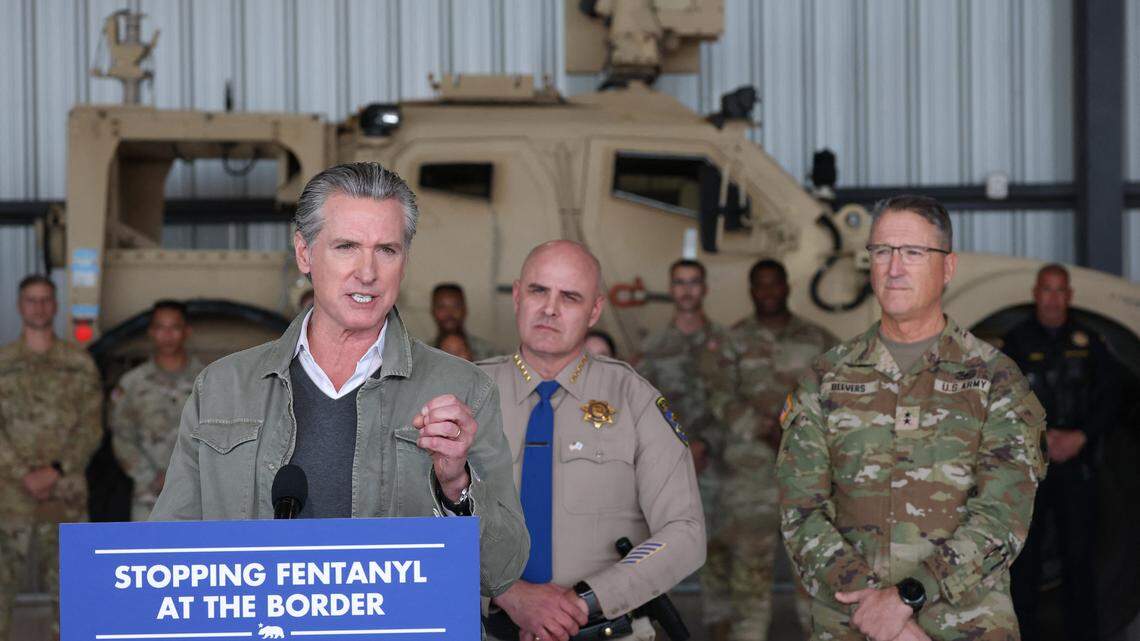
Gov. Gavin Newsom has been making headlines for a steady stream of broadsides against President Donald Trump, accusing the Republican leader of crony capitalism, authoritarianism at home and reckless military adventurism abroad.
“It’s 1930s (Germany) all over again,” Newsom said at a Feb. 2 news conference near California’s southern border. He was speaking about the U.S. Department of Homeland Security and recently demoted immigration enforcement chief Greg Bovino.
“Every night you should be running reports on this,” Newsom told gathered reporters, “all the propaganda coming from Kristi Noem’s DHS.”
It is a drum the governor has been beating for months, using both national and international platforms to encourage, and at times browbeat, political and business leaders to stand up against what he characterizes as Trump’s authoritarianism.
So it was notable, though largely went unnoted, when on Jan. 26 his office issued a news release to cheer defense technology company Anduril’s $1 billion investment in a new Southern California business campus.
“Anduril’s world-class innovation and deep California roots are helping shape the next generation of America’s aerospace and defense industry,” Newsom said in the release.
The company was founded by Palmer Luckey, a Trump supporter with deep ties to the Make America Great Again movement and whose company is a major beneficiary of Republicans’ drive to pump unprecedented amounts of money into immigration enforcement. Luckey, just 33 years old, is a colorful figure, known for wearing Hawaiian shirts and for rhetoric about “warriors” that echoes that of Trump’s controversial defense secretary Pete Hegseth.
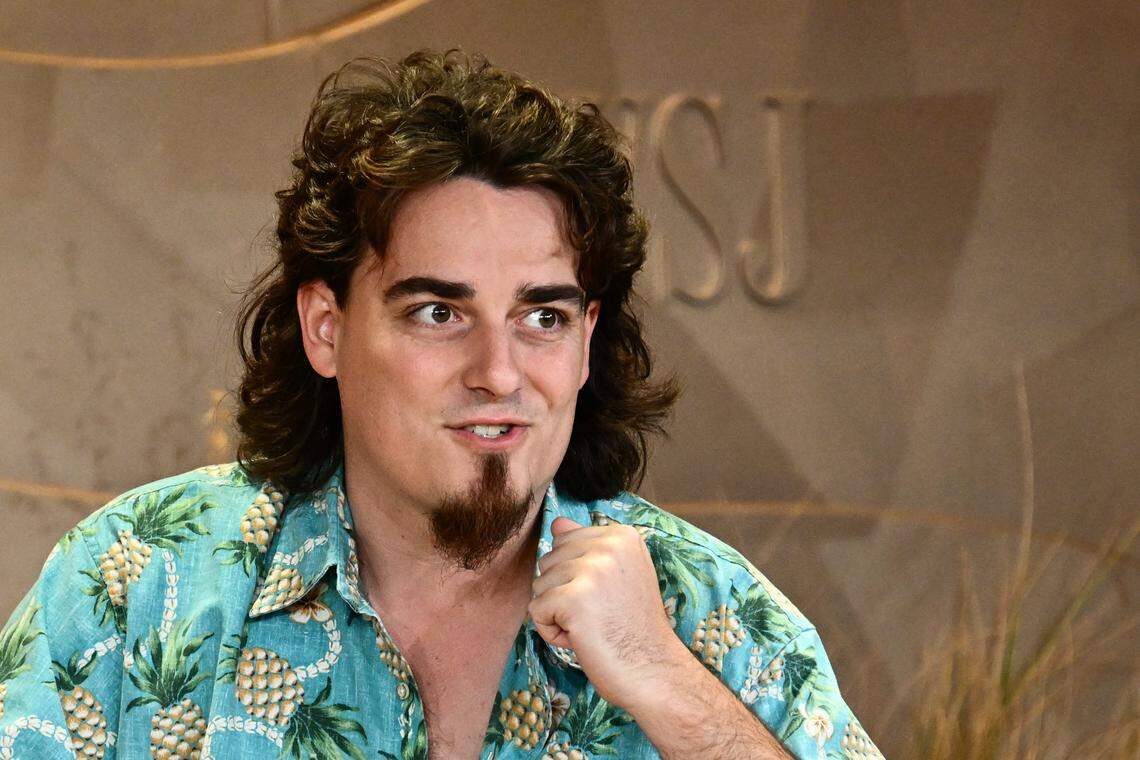
“Societies have always needed a warrior class that is enthused and excited about enacting violence on others in pursuit of good aims,” Luckey told Pepperdine University President Jim Gash in 2024, after the university awarded Luckey its “Excellence in Freedom” award. “You need people like me who are sick that way and don’t lose any sleep making tools of violence in order to preserve freedom.”
Luckey grew up in Long Beach, the city in which he is expanding his company. Working in a camper in his parent’s yard, according to a profile in Tablet Magazine, he invented the virtual reality headset Oculus Rift, which he went on to sell to Meta and earn his fortune.
Anduril, which was founded in 2017, builds drones and other modern weaponry, and sells much of its work to the U.S. military. But Trump’s One Big Beautiful Bill Act also injected more than $500 million into another part of Anduril’s business — its construction of autonomous sentry towers used for surveillance along the U.S.-Mexico border.
Newsom’s office has frequently cited Anduril for its role, along with other firms, in powering the state’s technology economy and dominance in Silicon Valley. He tapped an Anduril representative last year for the California Breakthrough Project, a consortium of tech executives advising state agencies on how to streamline operations.
“The press release celebrates that yet another company has chosen to expand in California, and is not a broad endorsement of its founders’ politics or beliefs,” Newsom spokesperson Tara Gallegos said in a statement to The Sacramento Bee.
“Companies and business leaders of all political leanings see the value in making the Golden State home,” she continued. “This is due to California’s robust business climate and the strongest talent pipeline in the US, which is why businesses like Anduril and SpaceX continue to expand in California.”
Anduril did not respond to requests for comment.
Benefiting from a crackdown
Luckey has supported the president since Trump’s first campaign, which at the time made Luckey an outlier in the tech industry. Luckey is also a major donor to Republican efforts to hold their congressional majorities this year. That puts the founder on the opposite side of Newsom in a midterm election cycle the governor has cast in terms of the utmost urgency.
“Our founding fathers did not live and die to see the kind of vandalism to this republic and our democracy that Donald Trump is trying to perpetuate,” Newsom told reporters on Election Day 2025, minutes after voters passed Proposition 50, his signature effort to shape that midterm fight.
Luckey also has personal ties to the world of Mar-a-Lago — his brother-in-law is former Florida Congressman Matt Gaetz, the conservative firebrand who was Trump’s first pick for U.S. attorney general until withdrawing during a congressional investigation scrutinizing his alleged illegal drug use and sexual misconduct.
Luckey and Newsom do share antagonism toward labor unions’ proposal to levy a one-time 5% tax on billionaires.
Anduril began contracting with the federal government during the first Trump administration but continued under the Biden administration. Much of its business fits with the aerospace and defense technologies that have long called Southern California home.
California’s elected officials, including Newsom, have spent much of the last year responding to the One Big Beautiful Bill Act, which is set to devastate federal funding streams for health care, food benefits and other social programs.
But for Anduril, the One Big Beautiful Bill Act represented a major boon. According to reporting by The Intercept, the bill not only injected billions into Customs and Border Protection, it also put into law requirements for automated surveillance towers for the border that, for now, only Anduril’s technology meets — essentially giving the company legal exclusivity for such sales.
The company is among a group of Homeland Security contractors, headed by Trump supporters, that have seen rapid growth in government contracting over the last year. Anduril sits on that list alongside private prison contractors like CoreCivic and GEO Group, the deportation airline CSI Aviation and a construction company building Trump’s border wall. Top leaders also share a commonality, like Luckey, of supporting Trump’s political campaigns.
Towers worry civil liberty advocates
The most basic models of Anduril’s towers stand 33 feet tall and are equipped with video cameras and artificial intelligence software that can spot a person nearly two miles away and log a vehicle from even farther, according to the company’s website. Beginning in 2020, the company has deployed hundreds of them along the border.
Surveillance watchdog group the Electronic Frontier Foundation has raised concern about the towers because they are not only placed in the vast empty stretches of land along the nearly 2,000-mile border but also in some communities that dot it. The AI programming in the towers means they do far more than highlight potential incursions for border patrol officers, EFF Director of Investigations Dave Maass told The Bee.
“The Anduril towers aren’t just like a live feed,” Maass said. “It is indexing everything it sees. It is indexing people. It is indexing animals. It is indexing cars. It is following them around. It is tracking things as they move within the range of one tower to the next tower.”
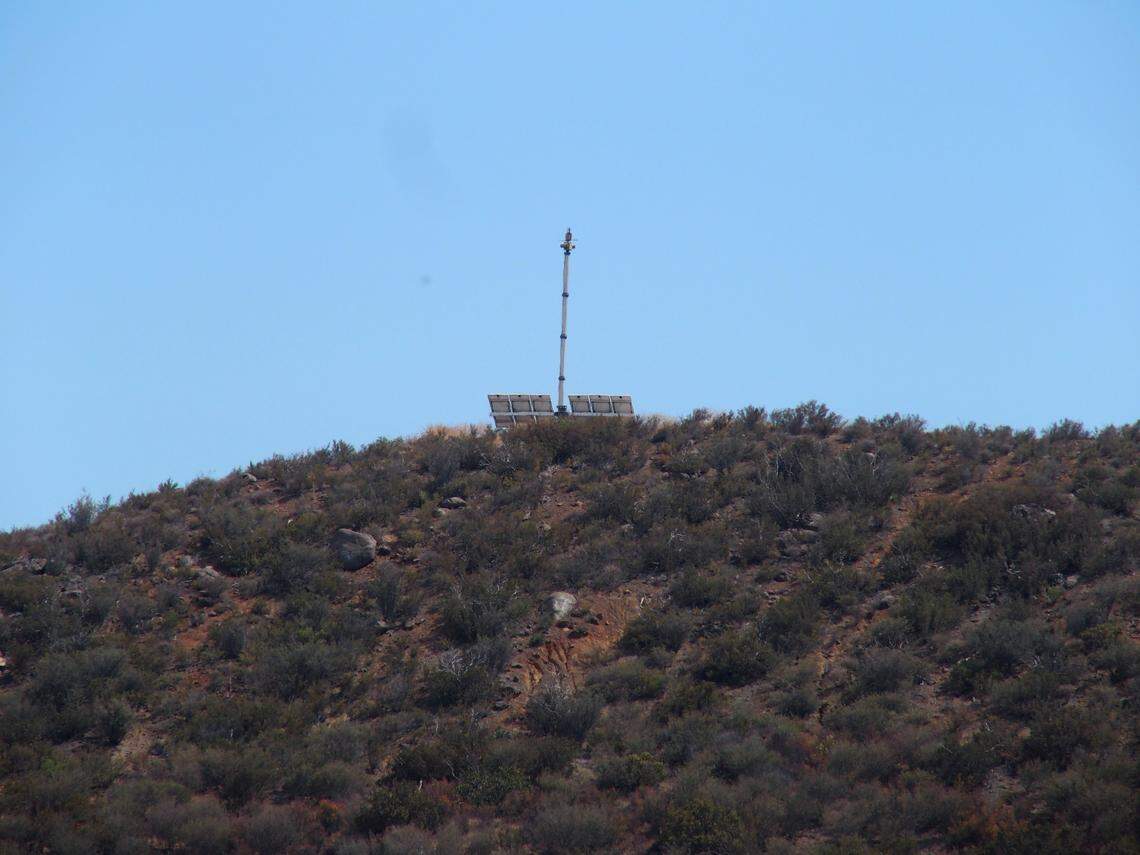
EFF maintains a map of Anduril’s automated towers that it keeps up through citizen reports and satellite imagery. The group has mapped more than three dozen in California, though most of them appear to be in remote areas. In other border states, Maass and other researchers have found towers with views of public parks and houses in U.S. communities, he said.
Beyond privacy and civil liberty concerns, Maass also questioned the towers’ effectiveness, saying he hasn’t seen indications they play a particular role in targeted enforcement against drug running or human trafficking. But they do help make the border more militarized.
“Is it actually going to have any impact on border security?” Maass said. “Part of the problem is, at the end of the day, treating the border as an invasion issue and not a humanitarian issue.”
Border politics
In public remarks, Newsom has distinguished between ICE’s interior immigration enforcement, and border security, which he views as a political liability for the Democratic Party.
“Trump is very unpopular on immigration,” Newsom said on stage at the World Economic Forum in Davos, Switzerland. “He’s successful on the border. Separate issue, connected.”
Newsom has called for compassionate enforcement but also said he disagreed with how former President Joe Biden handled the border. He recently said he disagreed with calls to dismantle ICE in the wake of the deaths of Renee Good and Alex Pretti at the hands of immigration agents in Minnesota.
Mike Madrid, a Republican consultant and expert on Latino politics, said he was unfamiliar with Anduril but echoed the governor’s comments about border security and immigration policies being separate issues.
While public sentiment toward DHS plummeted after agents killed Pretti and Good, positive views on increased border security don’t appear to have moved as significantly, Madrid said. Part of that is the public’s view, reflected in polling, that border security more to do with a sentiment that the U.S., as “a sovereign nation, has a right, almost a duty to protect its borders,” Madrid said.
“Border security is not the same as immigration enforcement is not the same as ICE overreach,” he continued. “(Voters) see (increased immigration enforcement) as militarization and government overreach on civil rights… The public doesn’t like the overreach, but they’re very hesitant at all to abolish ICE.”
The governor’s endorsement of Anduril’s business does not clash with his public remarks on immigration enforcement, UC Davis School of Law Dean Kevin Johnson said, though it was still surprising given the high visibility of Luckey’s ties to Trump. But Johnson recalled how in 2024 Newsom vetoed a bill that would have allowed undocumented people to work at public universities, rankling activists.
“That’s the ticket for any Democrat running on the national stage,” Johnson said, referring to Newsom’s rumored presidential aspirations. “We’ll see Republicans challenge him as an ‘open borders’ guy like Biden…Newsom is focused on the border and keeping undocumented people out, which is very different from endorsing roving ICE patrols on the streets of Los Angeles.”
The governor’s February news conference, held at a California National Guard hangar in San Diego, was an example of that distinction. Before tearing into Noem and comparing Trump’s immigration crackdown to 1930s Germany, Newsom touted California’s border security efforts. Together, national guardsmen and California Highway Patrol officers had seized more than 34,000 pounds of fentanyl, Newsom said, a quantity whose street value officials estimated at $506 million.
Two weeks later, on Feb. 12, Noem also gave a news conference in San Diego County. Standing in front of boxes and bags of seized narcotics at a federal building in Otay Mesa, the homeland security secretary touted her own seizure figures, according to news reports.
Since Trump came into office, border officers had seized 100,000 pounds of methamphetamine, 59,000 pounds of cocaine and 7,400 pounds of fentanyl, Noem said.
She went on to criticize Newsom as soft on immigration.
This story was originally published February 15, 2026 at 5:00 AM with the headline "Newsom cheers Trump backer’s firm. What does it say about immigration politics?."