California wolves hunt down family horse; Lassen County sheriff begs state for help
AI-generated summary reviewed by our newsroom.
- Sheriff urges state intervention after New Year wolf attack kills horse, calf
- Ranchers report repeated losses and sell stock early to avoid further depredation
- Wildlife agencies plan more GPS collars, but ranchers say alerts arrive too late
A bloody New Year’s Day wolf attack that killed a family horse and a newly weaned calf in Lassen County has left community members shaken and prompted the local sheriff to send a strongly worded letter to Natural Resources Secretary Wade Crowfoot warning of public safety risks.
The attack that killed Smoke, a beloved 20-year-old horse who had spent his later years giving rides to Wyatt Hanson’s children and nieces, marked the latest example of wolves moving closer to homes and ranches as the apex predators rebuild their populations after a century of local extinction in California.
It came just two weeks after state wildlife managers said they had given up looking for three juvenile wolves from a pack in nearby Sierra County that had killed more than 90 calves over a six-month period.
“He was in so much pain,” Hanson, 39, said of Smoke, named for his white color with dark undertones, who had to be euthanized after wolves believed to be from Lassen County’s Harvey Pack tore out a six-by-four inch chunk of his hindquarters. “It makes me choke up even thinking about seeing his face.”

California’s struggle to balance the needs of an endangered predator species with the safety and well-being of residents and ranchers is mirrored throughout the U.S. West, where wolves are making a resurgence amid protections that, in many cases, make it illegal to kill or harass them.
In California, wolves are protected by both the federal and state endangered species acts. At the national level, the Trump administration has said that wolves no longer need protection, and a bill passed in the House last month would remove them from the federal endangered species list. It has yet to pass the Senate and faces opposition from conservation groups.
In October, the California Department of Fish and Wildlife, with help from federal conservation officials, killed four wolves from the Beyem Seyo pack, which had become unusually habituated to preying on cattle from ranches in Sierra Valley. The rare move came after months of failed efforts to deter the pack from preying on livestock. It was called a tragedy by environmentalists, who along with ranchers accused the state of taking too long to try nonlethal ways of controlling the animals.
Lassen County is becoming a flashpoint in the growing debate over wolf presence in Northern California’s ranchlands.
With most of the region’s summer-grazing calves now removed, wolves are turning to the remaining livestock near homes and ranches. The horse and 600-pound calf killed at Willow Creek Ranch, Hanson’s family operation, were attacked in a pasture near the house where he lives with his wife and children.
Out of concern for further losses, the family plans to sell about 100 remaining calves early — well ahead of the typical February market window. Hanson said the ranch has lost 11 animals to wolves over the past two years.
Wolves killed between 42 and 45 calves in Lassen County last year, Sheriff John McGarva said in an interview.
Sheriff seeks help
Last March, the county joined other Northern California jurisdictions in declaring a public safety emergency over wolf activity. Now, McGarva said, the animals are encroaching on communities, and he wants a containment plan in place before wolves move closer to Susanville, the county seat.
On Monday, McGarva begged California Natural Resources Agency Secretary Wade Crowfoot to step in.
In a letter dated Jan. 5, McGarva said he had asked the California Department of Fish and Wildlife, which Crowfoot supervises, for help as long ago as last March, only to be told that the problem in Lassen County was not the state’s priority.
“While meetings were held and intervention was taken in the Sierra Valley, I was told that the issues in Lassen County were not as pressing and not addressed,” he said.
But the pre-dawn New Year’s Day attack on Smoke and the calf represented a new escalation, McGarva said, because the animals were not consumed.
“I now ask for assistance and intervention into wolves that are no longer just hunting to survive, but killing for the sake of killing,” McGarva wrote. “This introduces a continuing and looming danger to the residents of Lassen County.”
McGarva asked Crowfoot to authorize local law enforcement to euthanize wolves posing a public safety threat, and expressed support for removing endangered species protections for wolves.
“We need to address this in partnership before it becomes the public safety risk it is on course to become,” he wrote.
Environmental groups criticized McGarva’s request to make it easier to kill wolves, calling instead for improved nonlethal strategies to manage wolf-human interactions.
The group Women for Wolves said it was “deeply disturbed” by the idea that lethal action was necessary.
“These narratives risk distorting science, inflaming conflict, and pushing California toward outdated wildlife management approaches that have repeatedly failed across the American West,” the group said in a Tuesday statement. “We cannot out-predator our way out of human–wildlife conflict.”
The group also rejected the claim that the wolves were killing for sport, saying no scientific evidence supports that behavior.
Crowfoot did not directly respond to a request for comment. But CDFW said in a statement that officials had been in contact with McGarva’s office and that the attacks were likely linked to gray wolves.
The state will assist McGarva’s investigation, including conducting DNA testing to confirm wolf involvement and identify the animals responsible.
“The department remains committed to supporting communities impacted by gray wolves and the successful management of gray wolves statewide,” the statement said.
The department’s longtime director, Chuck Bonham, announced in December that he was leaving to lead the Nature Conservancy in the new year.
Collaring, tracking wolves
As part of its efforts to manage California’s expanding wolf population, the state aims to increase GPS collaring of wolves to better track their movements. In February 2025, officials collared 12 wolves — seven female, five male.
Biologists plan to go out again this month to try to collar more, and their movements are released every morning in a mapping tool that is accessible to the public.
Ranchers can also sign up to receive daily notifications of wolf activity. But Hanson, echoing ranchers in Sierra Valley, said that the notifications come too late.
He and his brother, Brad, often patrol at night to protect their property. But by the time wolf location data arrives the next morning, any damage has already been done. Earlier notification would help identify where to go, Hanson said.
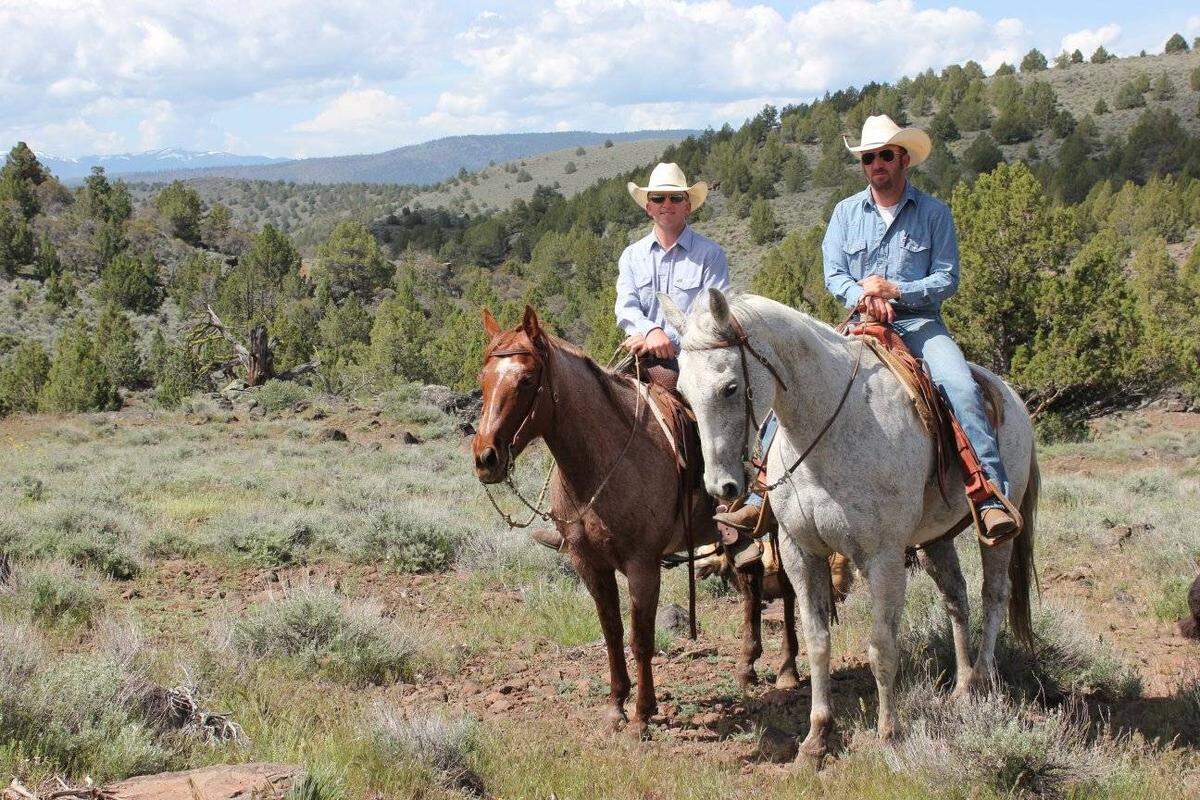
In the days since the Jan. 1 attack, fear of further violence has consumed the family.
“The loss of our gentle horse serves as a devastating reminder that nothing is safe with wolves so close to our home,” he wrote on Facebook.
He said he can’t shake the image of Smoke’s sad eyes. Though wolves rarely attack humans, Hanson said he worries for his young children, Townes and Josie.
“When it is literally out your back door and right in your front pasture, to just think of what could happen is awful,” he said. “It keeps you up at night, makes you mad and makes you think about what could happen tomorrow. It’s a lot of fear.”
This story was originally published January 6, 2026 at 11:05 AM with the headline "California wolves hunt down family horse; Lassen County sheriff begs state for help."