Can California protect wolves along with people and livestock?
AI-generated summary reviewed by our newsroom.
- California confirms 10 wolf packs, with rising livestock attacks in rural areas.
- State deploys patrol teams and GPS collars to monitor and manage wolf activity.
- New programs balance endangered species protection with community concerns.
Axel Hunnicutt stood by the side of a dusty dirt road in California’s high country rangeland and howled like a wolf.
He waited a beat, and then it came. From just over a nearby hillock, a howl floated back. And then another one.
“I’ll come down here at night and howl in each of these valleys,” he said, gesturing toward the mountain-ringed flatland north of Truckee where wolves have established themselves among the cattle ranches and farms. “It’s always rewarding when they howl back.”
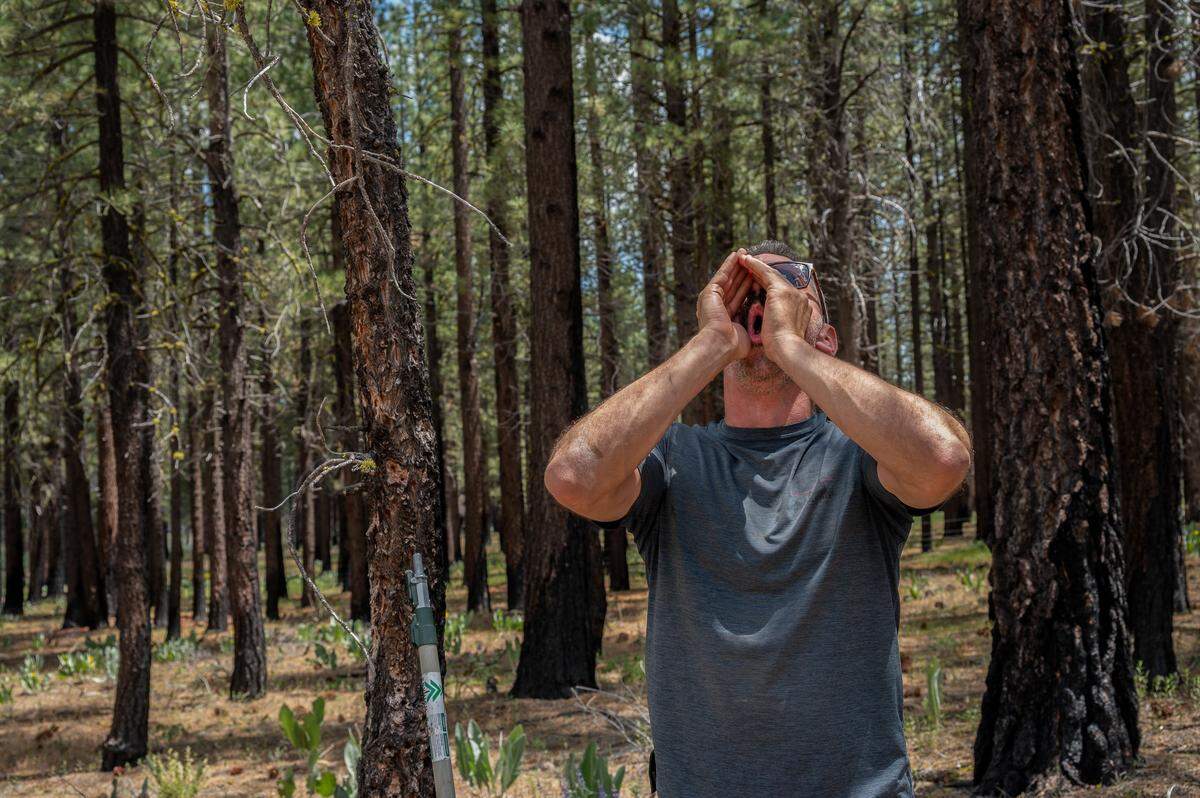
Hunnicutt is the gray wolf coordinator for the state of California, responsible for the complicated and nuanced job of protecting a re-emerging species that was once hunted out of existence here, while also making sure that humans and livestock can live alongside them.
It’s a tough balance to achieve.
Gray wolves were eliminated in California in 1924, when the last wild wolf in the state was believed to have been captured and killed in Lassen County. People feared living among wolves, apex predators that hunted in packs, targeting livestock and sometimes people.
Fast-forward a century, and attitudes about wolves among many people have changed. The canines were protected under the federal Endangered Species Act in 1974, and two decades later were re-introduced in Yellowstone National Park.
Their offspring spread further west, and in 2011 a wolf dubbed OR7 by biologists made its way from Oregon to California, achieving minor celebrity as residents watched his progress on online cameras and cheered the breed’s success. Wolves were added to California’s statewide listing of endangered species, and it is now illegal to kill a wolf that is not directly threatening human beings.
But as they re-established themselves, wolves began doing what they did before, targeting livestock and frightening people. Most are in the high rangeland in the northeastern part of the state where the Sierra Nevada mountains meet the Cascades.
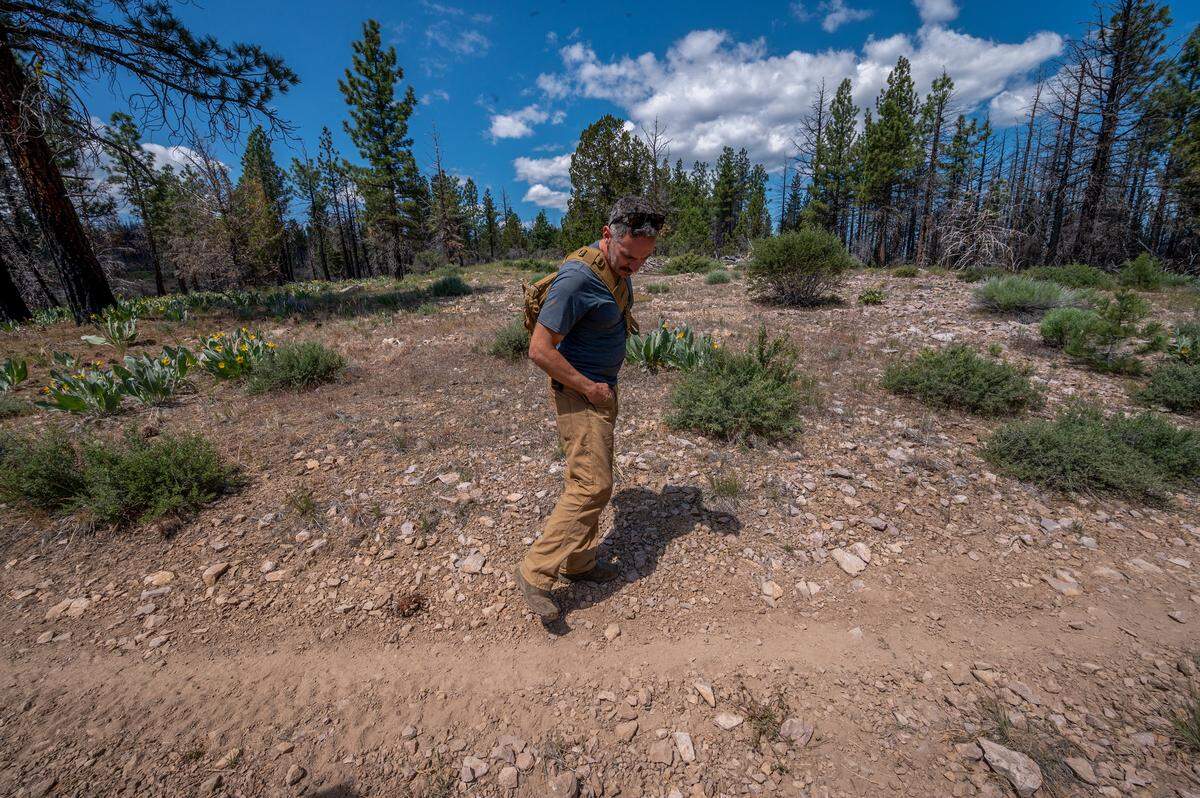
Ten packs have been confirmed in the state, with another likely to be identified soon. Wolves have established themselves closer than expected to ranches, farms and communities in the high rangeland in the northeast corner of California, and were responsible for killing 39 cattle and one sheep in the roughly three months from January 29 through May 5 of this year, state data shows.
The wolves’ resurgence — and the accompanying spike in livestock killings — has sparked a level of panic among ranchers that some urban residents of the state have a hard time understanding. A Sierra Valley ranch manager received a death threat from someone who claimed to be protecting the wolves, while for their part ranchers say privately that if it comes to it, some might just shoot a rogue wolf that is threatening their animals or venturing too close to their homes.
“Every pack in Northern California overlaps to some degree with agricultural area, and we know that they are utilizing livestock in some areas to an extreme degree,” Hunnicutt said.
So what can be done?
California wildlife managers have implemented two new programs aimed at helping rural communities respond to the presence of wolves.
The first is an online mapping tool that shows where about a dozen canines are located every morning, based on signals from collars they wear. Biologists have located and temporarily tranquilized 12 of the state’s wolves, placing collars on them in order to track their movements. Ranchers can check the map daily to see if the wolves are near their properties, and take steps to manage them if needed.
The state has also established what it calls a “strike team” of officers and scientists who are on patrol day and night in Sierra, Plumas and Siskiyou counties, where the wolves are ranging closest to livestock and people.
.JPG "SAC_0546_RCB_20250605_SierraValley (1).JPG")
About 20 people have been assigned to the team, working in pairs consisting of one biologist and one sworn wildlife officer, said Chris Stoots, assistant chief for the agency’s northern enforcement district. Some are coming from as far as three or four hours away, camping on CDFW property or staying in hotels or with friends, he said.
They cover the three counties in a police car or off-road vehicle, and are authorized to shoot wolves with rubber bullets, beanbags or other nonlethal ammunition. They may also haze the animals with drones or all-terrain vehicles, he said.
Since the patrols started last month, his teams have engaged daily with at least one wolf, he said. Under the program, which is a pilot scheduled to last through the summer, ranchers may also take advantage of training and other assistance for ways to keep wolves from killing their livestock, Stoots said.
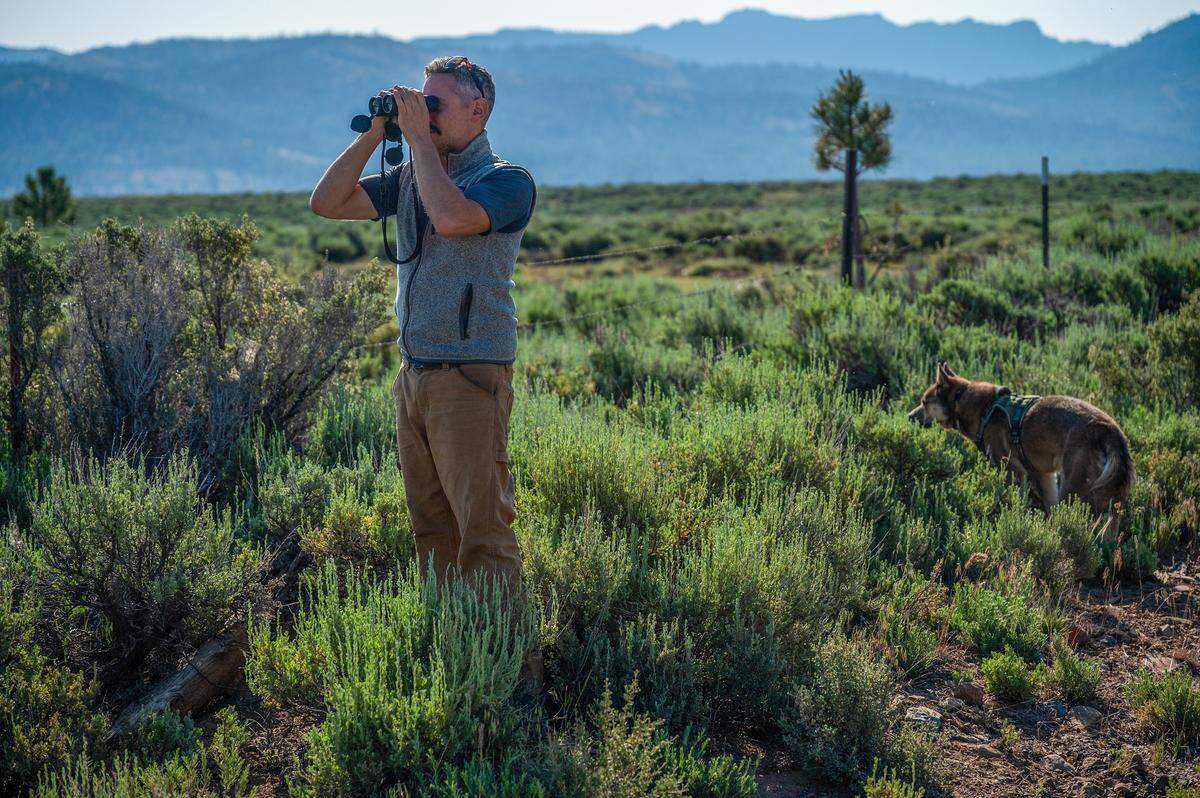
The key, wildlife officials say, is to respond to the legitimate concerns of rural communities while also protecting an endangered species.
“These animals have not been present in these landscapes for one hundred years,” CDFW director Charlton H. Bonham said at a recent meeting of the state Fish and Game Commission. “It’s 100% legitimate to say this is causing a big challenge in our communities.”
Achieving that balance calls for a mix of biology and law enforcement. On a recent June morning, Hunnicutt walked along a dusty path in the high Sierra Valley. He spotted tracks that were made by wolves, bears and coyotes, and scat that looked like it came from a wolf, delighting him because it meant that wolves in the area had not come to harm.

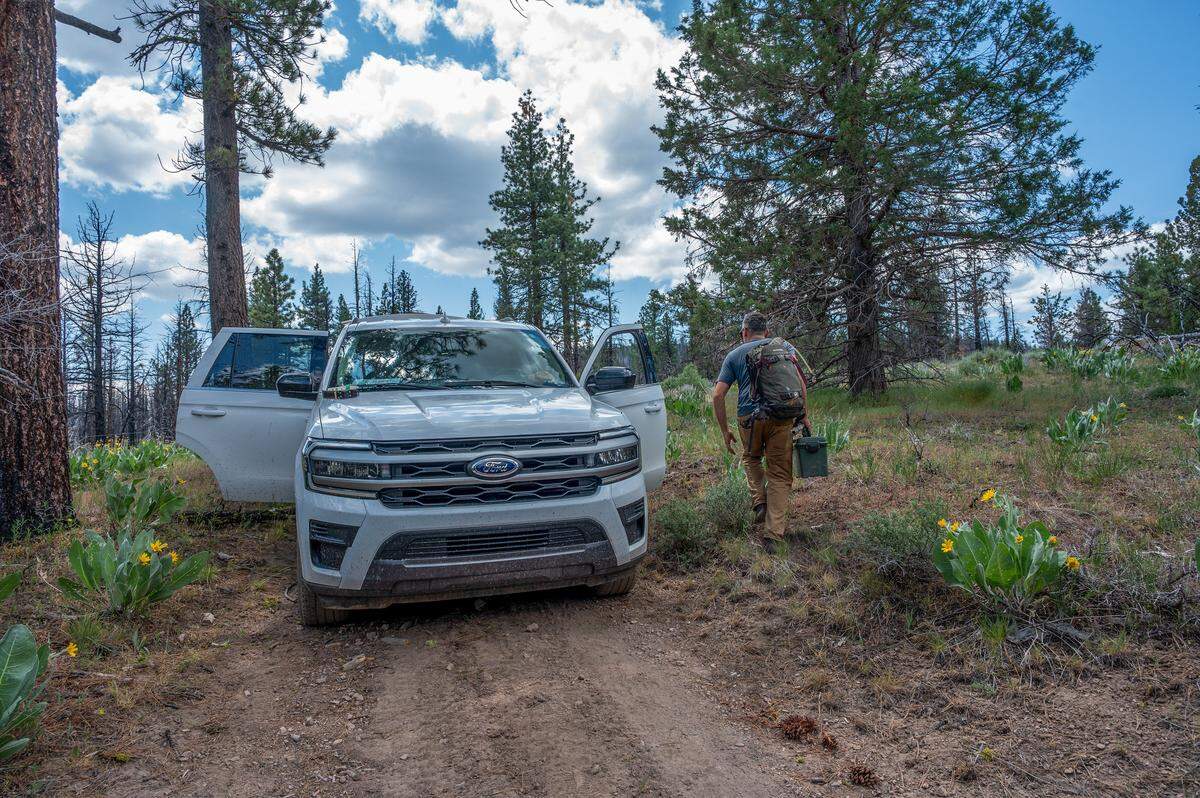
He went to his truck and pulled out a long pole, using it to mount a camera about 20 feet high in a nearby tree. He pulled out a jar filled with a liquid meant to smell like wolf urine, and placed it on a rock within sight of the camera. The idea was to attract wolves to the rock. If they came within view of the camera, it would take a picture, and if they rubbed against the rock, biologists could return and retrieve hair or other biological matter to test their DNA.
On this day, he was hoping to discover whether the state has yet another new pack, consisting of two or more wolves who are traveling together.
But in the afternoon, Hunnicutt will shift from working on ensuring that biologists can study and protect wolves, to helping a rancher who fears he saw one on his property. He plans to fly over the person’s ranch in a small airplane, looking for the animal and for any injured livestock it might have hunted.
If it is a danger to people, he knows, the wolf will need to be euthanized.
“If we want to have a healthy wolf population in California, we’re going to have to have real management,” he said. “And that’s part of it.”
The Bee’s Renée C. Byer contributed to this report.
This story was originally published August 1, 2025 at 5:00 AM with the headline "Can California protect wolves along with people and livestock?."