
Unusually complete whale fossil excavated from California beach
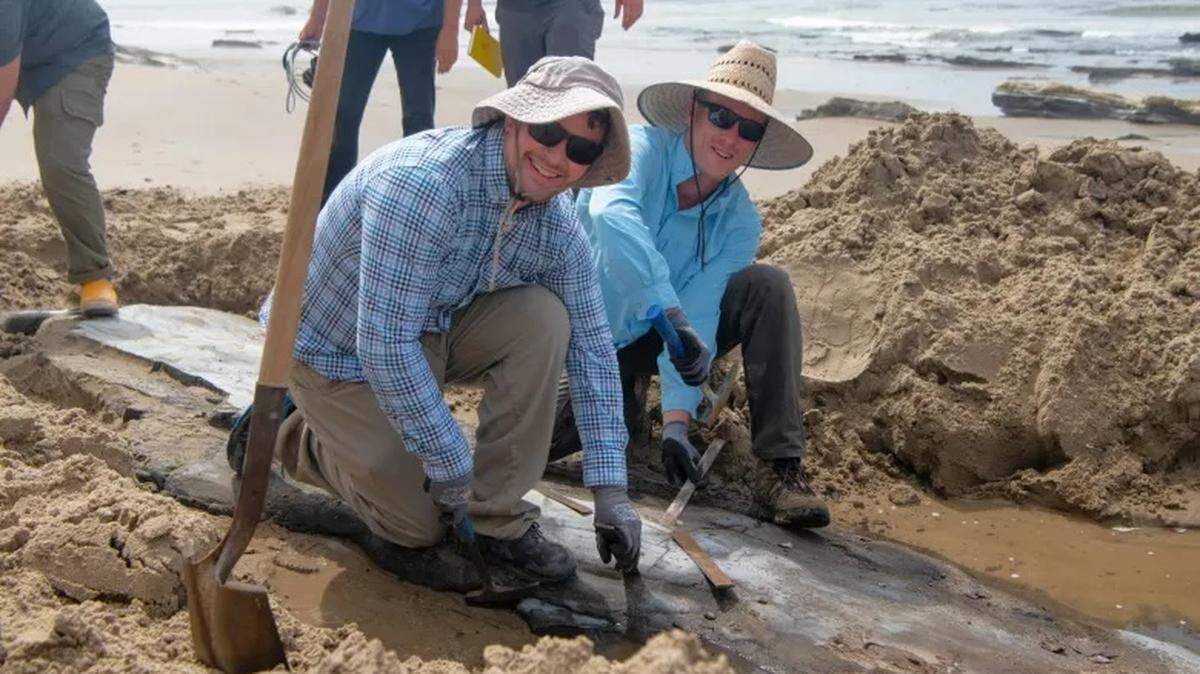
After the storms from 2024 pummeled the Gaviota Coast, fossil enthusiast and geologist Chris Driesbach decided to take a trip to the beach to look for petrified wood and small rocks.
Instead, he found something far bigger and unexpected.
“In the winter, the beach was completely cleaned of sand . . . I was going along the beach, sat down to take a rest, looked over and there’s an entire whale just exposed in the shale,” Driesbach said in a statement.
In April, the Santa Barbara Museum of Natural History announced that it had successfully excavated the fossilized remains of a mid-Miocene whale and had relocated the remains to the museum for further study. The Miocene period dates from 23 to 5 million years ago.
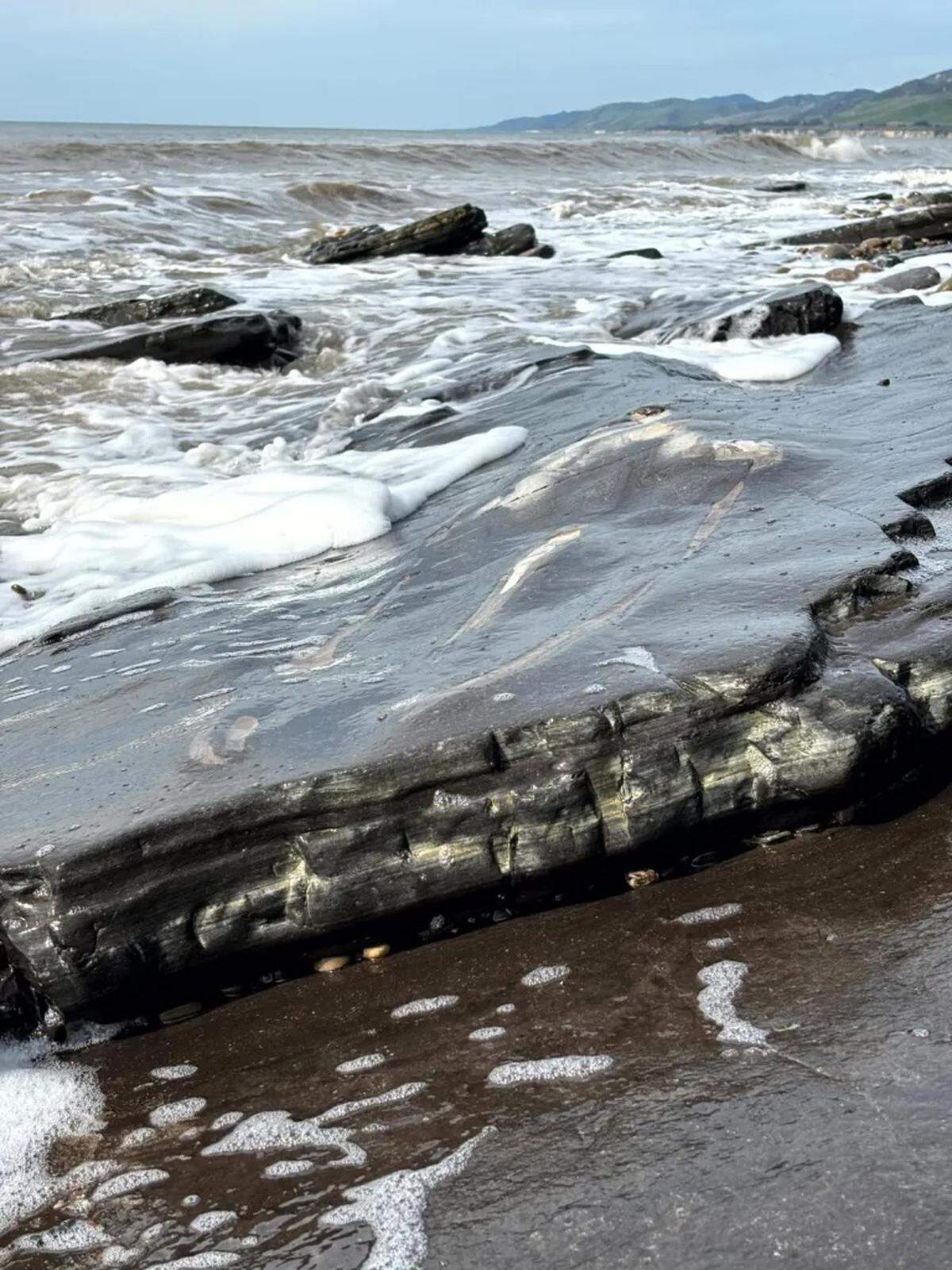
Even though fossils of whales are not rare in the Santa Barbara region, the fossil Driesbach discovered is unique because of how complete it is. The fossil includes the head and a significant portion of the vertebrae and tail.
“You find a vertebra here, a chunk of a skull there. To see it all lined out like that is absolutely nuts,” he said.
The fossil includes the entire skull with jawbones, the vertebrae, and ribs.
Upon finding the fossil, Drisbach reached out to the museum and let them know where they could find the fossil.
“Chris, thankfully, once he saw it, he recognized the significance of its complete nature and contacted us to see about excavating it,” said Jonathan M. Hoffman, the Dibblee curator of Earth Science for the museum.
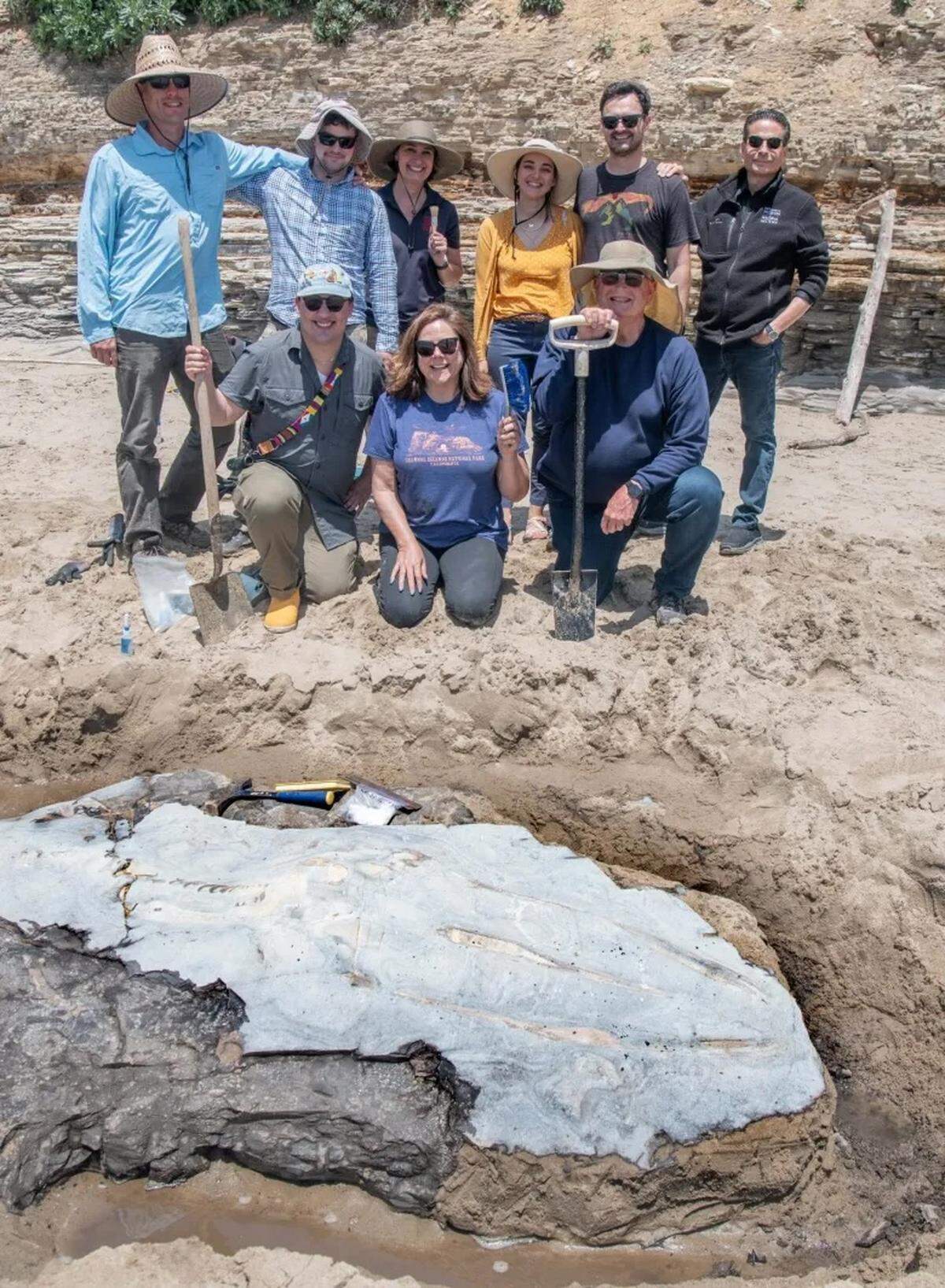
Hoffman believes waves from the storm helped scour some of the sand away from the shale.
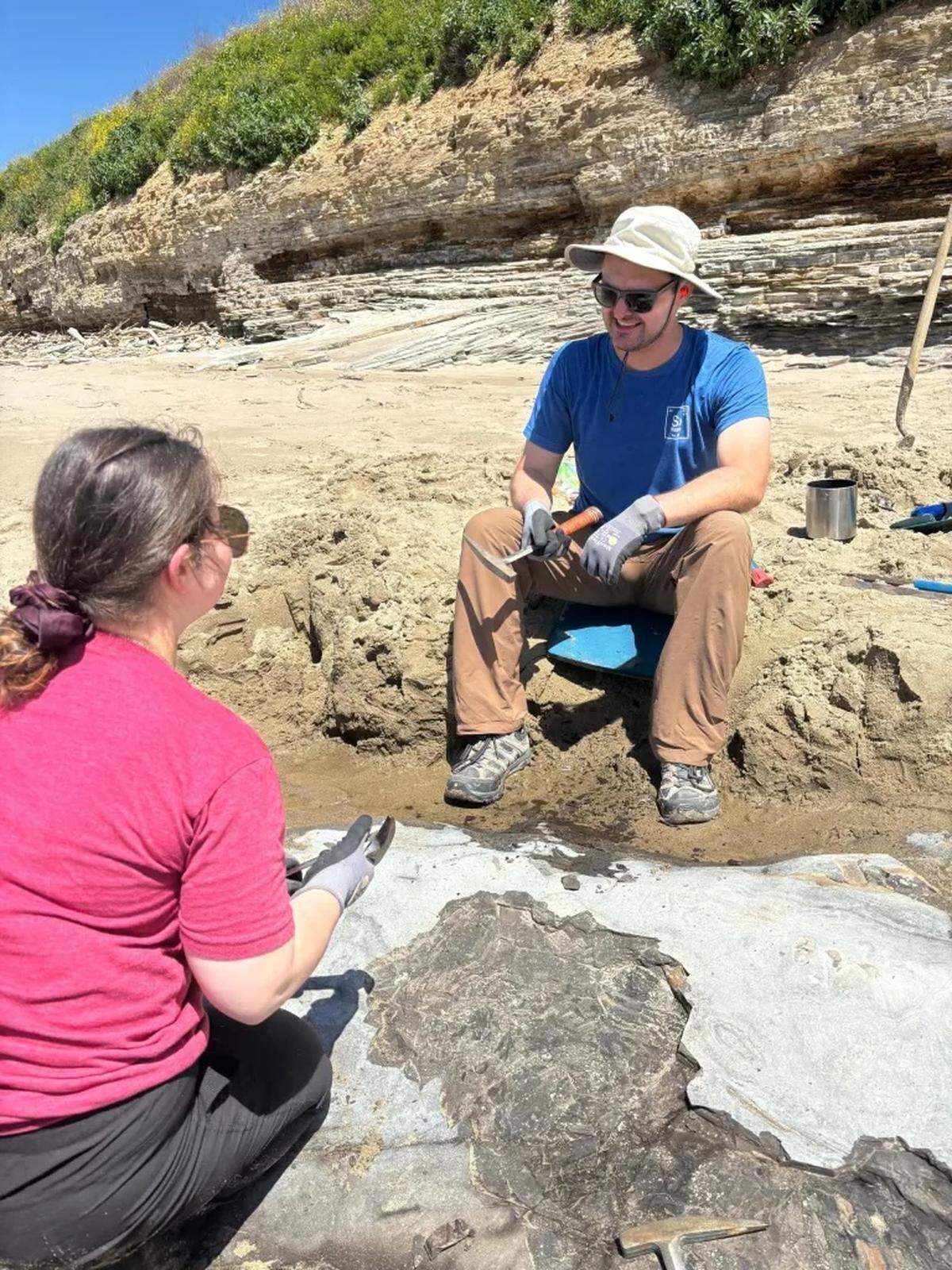
Excavating the fossil from the beach was a complicated process for the team. First, the team had to gain authorization to remove the fossil from different agencies.
“We were going to have to kind of race against the clock to get authorizations before the sand started piling back on, as well as (we were) going to have to work around the tide schedule,” Hoffman said.
Hoffman has led other excavations, but they often occurred in desolate areas like deserts where a major concern was bringing water. However, along the Gaviota Coast, the excavation team had to worry about too much water.
The fossil was encased in stone along the beach and was originally hidden due to sand being pushed up the shore by the waves. Making the matter harder was high tide, when the ocean completely covered the fossil.
The excavation turned into a months-long process of returning to the site, clearing wet sand from the beach, and figuring out how to remove the 1,500-pound fossil.
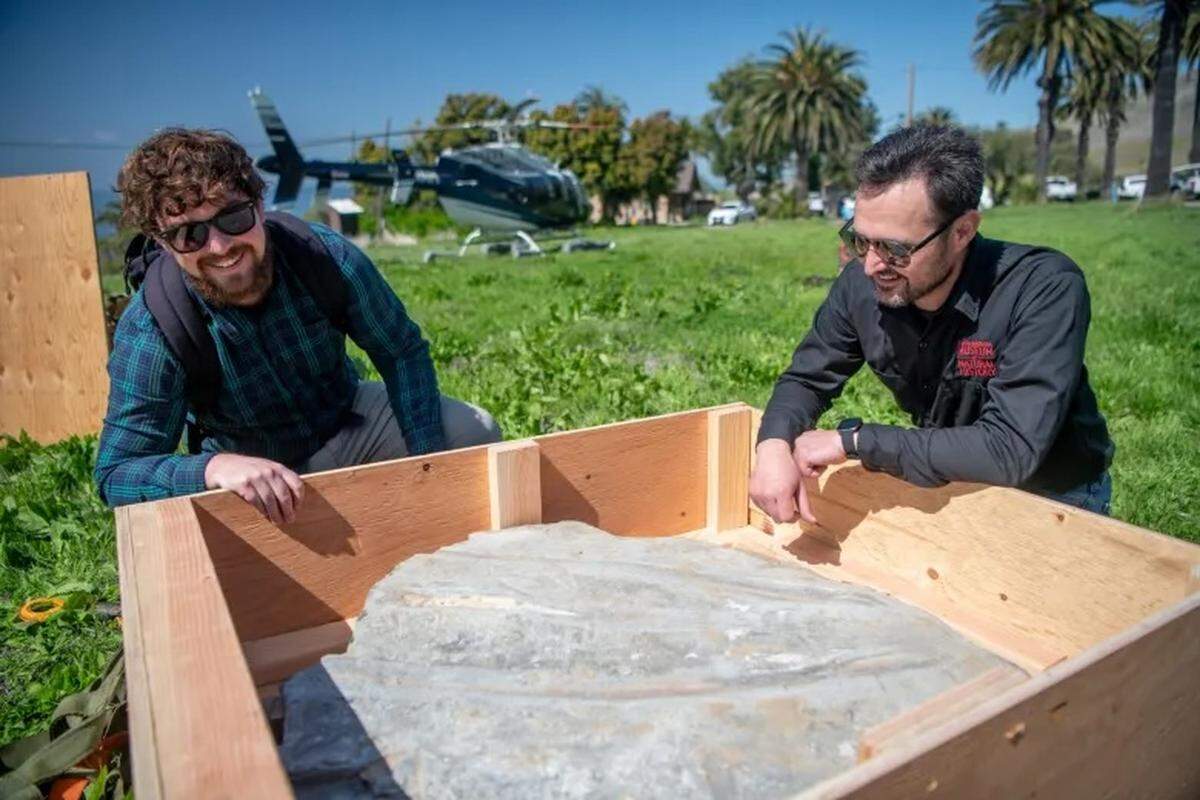
The team was eventually able to separate the fossil into different pieces and used a helicopter to transport the larger parts off the beach. The parts were transported by chopper to a private portion of Refugio State Beach.
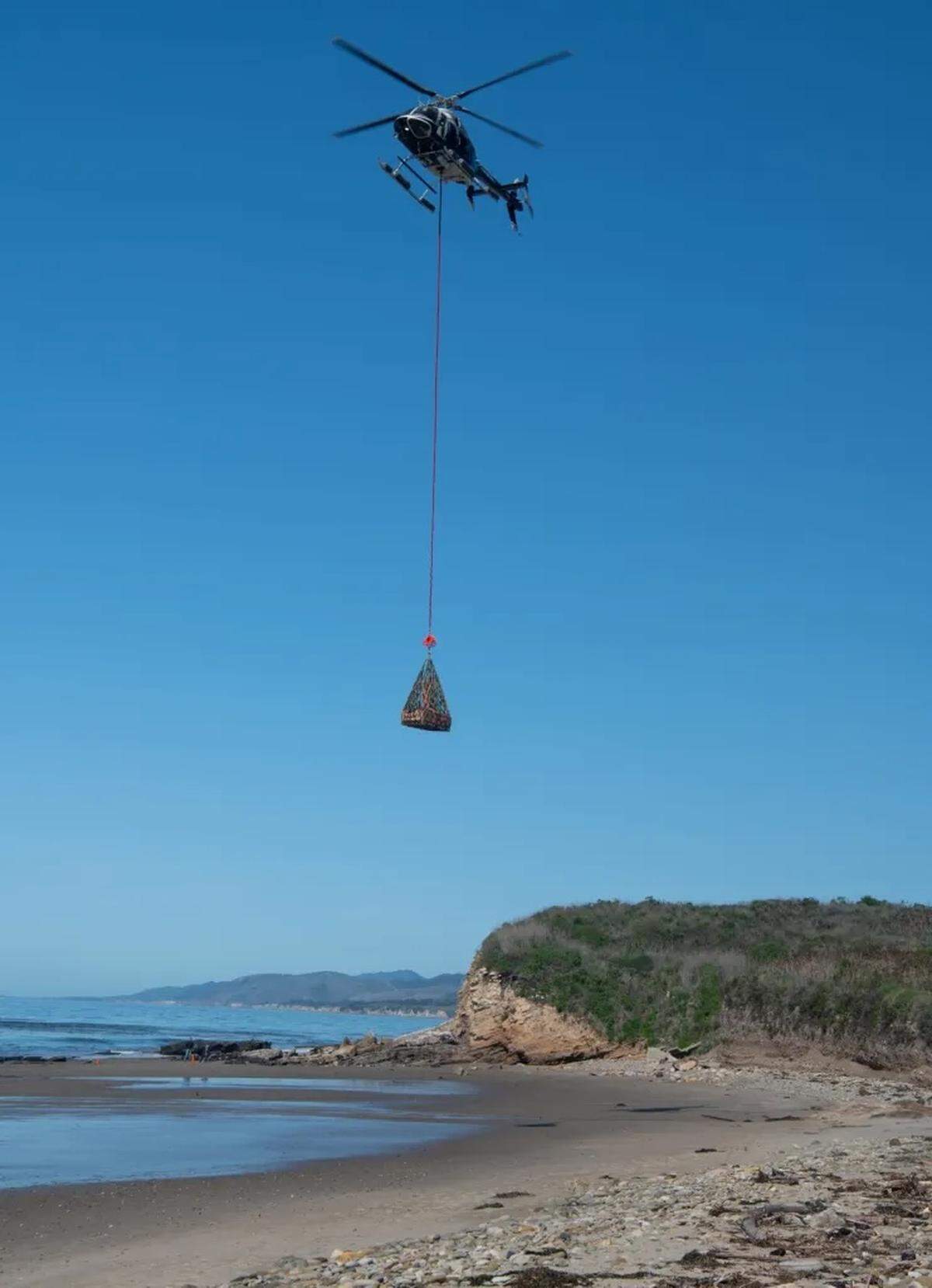
Hoffman says the goal for the museum is to make the fossil available for research as well as education, and exhibition.
Hoffman also credited Driesbach for finding the fossil and alerting the museum to its location. He said the public should feel free to reach out if they think they have found something.
“My message to the public would be let us know, give us a message when they do find significant fossils, and we will do our best to help conserve those resources,” Hoffman said.
This story was originally published April 21, 2025 at 4:27 PM with the headline "Unusually complete whale fossil excavated from California beach."