Mary’s Chicken plant sewage strained Fresno-area water system. Inaction cost residents millions
AI-generated summary reviewed by our newsroom.
- Sanger delayed wastewater pretreatment enforcement for over two decades.
- Untreated poultry waste overwhelmed city plant, causing citywide foul odors.
- Taxpayers now fund multimillion-dollar repairs to address years of odor issues.
For years, residents of the Fresno County city of Sanger endured foul, overbearing odors caused by a wastewater treatment plant stressed by immense amounts of raw sewage from the nearby Pitman Family Farms chicken processing plant.
The stench worsened from August to October, when the local winery entered “crush season” and poultry production ramped up for Thanksgiving, locals and city officials say.
During summer months, one resident said she could smell a mix of “rotten eggs and poop” from her home about a mile from the wastewater treatment plant so overbearing she refused to open her windows.
A city councilmember said the pungent odor reached his home more than four miles across town from the treatment plant.
Another resident complained to regional water officials that the smell of sewage seeped into their car and home.
Today, most of the smell is gone, locals say, but only after the problem became too big for city officials to ignore.
Since 2024, Sanger taxpayers have funded millions in repairs to address the cause of stench — the city’s wastewater treatment plant. Years of neglected maintenance work on the water treatment facility — compounded by local industrial companies sending raw, untreated sewage water to the city — created an odor that loomed intermittently over the city for almost a decade, according to residents and water board officials. The smells and number of odor complaints rose between 2022 to 2024, residents and records state.
The smell worsened as Pitman Family Farms steadily grew its production of high-end poultry in recent years. The family-owned business is best known for its brands of free-range, humanely-raised birds sold under the Mary’s Chicken, Mary’s Turkey and Mary’s Duck brands.
The increased production meant the city was receiving more untreated wastewater from the company that, at times overwhelmed the city’s water treatment plant with feathers, chicken parts, fats, oils, and grease — all contributing to the city’s smell.
“Industrial scale chicken processing is a dirty business, and when these corporations don’t adequately clean their wastewater, community members pay the price,” said Stacy Woods, a program director with the Union of Concerned Scientists who has studied industrial poultry water pollution.
Why did the problem fester for so long?
The city of Sanger failed to fully enforce a state-required wastewater pretreatment program for industrial dischargers like Pitman Family Farms for more than two decades, a Fresno Bee investigation has found.
Pretreatment refers to the process of filtering out harmful pollutants from a water source before it is sent to a sewage treatment system. Without it, solid materials found in some discarded water can clog pipelines and cause foul odors.
The Bee’s investigation also found:
By 1999, the city of Sanger was supposed to implement an industrial pretreatment program with requirements for industrial businesses to clean its wastewater, but never did.
The Sanger City Council approved an industrial pretreatment program in 2017. However, the city started implementation in 2024 only after the state issued a notice of violation in response to odor complaints.
Chicken feet, heads and feathers ended up in the city’s municipal water treatment plant on multiple occasions between 2017 to 2024, at times overwhelming the plant, emails show.
For this investigation, The Bee interviewed regional water regulators, city officials, wastewater experts and reviewed hundreds of pages of city and state reports, including years of emails between city leaders and the poultry company obtained via the California Public Records Act.

City officials lacked the expertise in pretreatment, political will and sense of urgency to get their largest private employer into compliance, according to an analysis of city emails with company officials.
The issue is emblematic of the challenges small, cash-strapped cities face when trying to police large, multi-million dollar companies they desperately need in their communities for jobs and tax revenue.
William Wright, an expert in civil and environmental engineering at Fresno State, said small, rural cities often do not have sufficient resources to afford to construct, operate and maintain a wastewater treatment plant, “especially one with complex equipment and processes.”
%20-%20feathers%20domestic.jpg "IMG_0321 (002) - feathers domestic.jpg")

A ‘neglected’ sewer plant
City leaders started to worry about Pitman’s untreated wastewater and its impact on the municipal system as early as 2017, shortly after the poultry plant expanded and dramatically increased its production.
It would take years to wrangle the company into compliance.
Sanger City Manager Nathan Olson joined the city in February 2024. Addressing the wastewater plant problems has been one of his first orders of business. Last July, Sanger declared a state of emergency of its treatment plant to expedite critical repairs.
“It was neglected,” Olson said of the wastewater treatment plant in an April interview with The Bee.
It’s likely former city leaders failed to maintain the treatment plant because they had plans to build a new one during the early 2000s housing boom, Olson said. But those plans fell through after the ensuing 2008 financial crisis.
“Guess what? It’s 2025 and there’s still not a new plant,” he said.

Olson said Pitman Farms has been a good partner to the city and is cooperating to help the city reach compliance with water board regulations. As of August, the city is in the final stages of reviewing the company’s pretreatment process.
Pitman Farms company representatives did not respond to requests for comment on the status of their wastewater pretreatment implementation.
Sanger wastewater plant ‘overwhelmed’ by Pitman Farms
In the early 2000s, the Pitmans, third-generation Central Valley poultry farmers, were struggling to stay in business selling their poultry to processors. So they pivoted and opened a processing plant in Sanger and created the Mary’s Chicken brand, according to a company promotional video.
David Pitman of the ownership family said in an April 6, 2023 council meeting that they chose Sanger over other locations because of the welcome from the city, the availability of labor and the wastewater treatment plant.
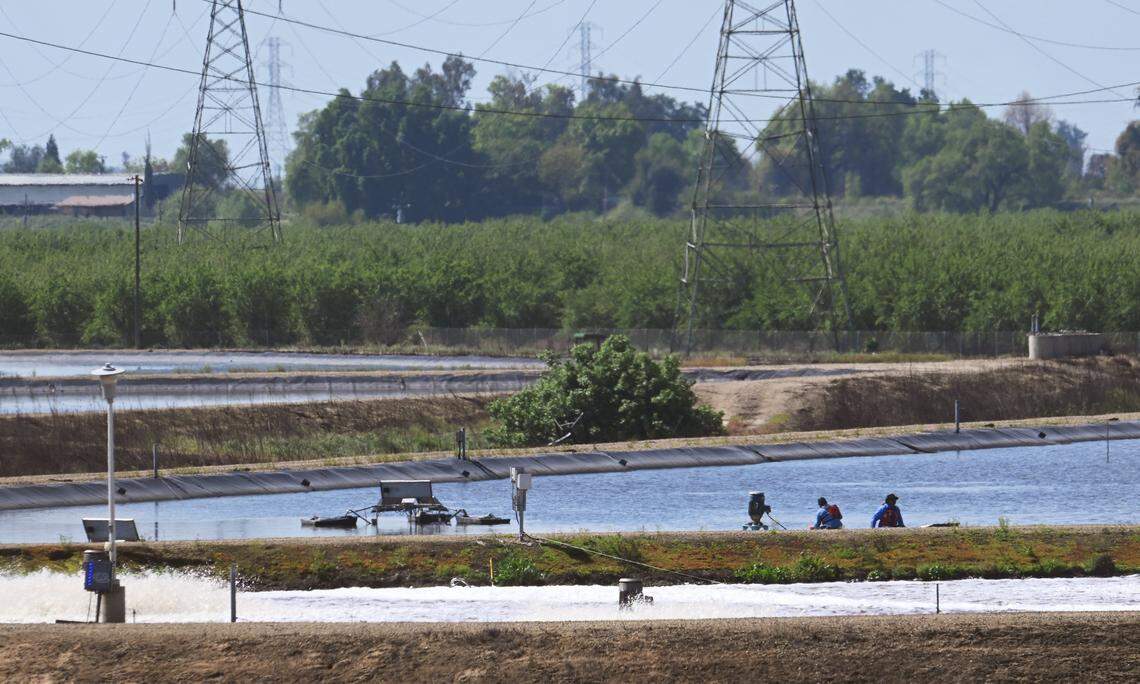
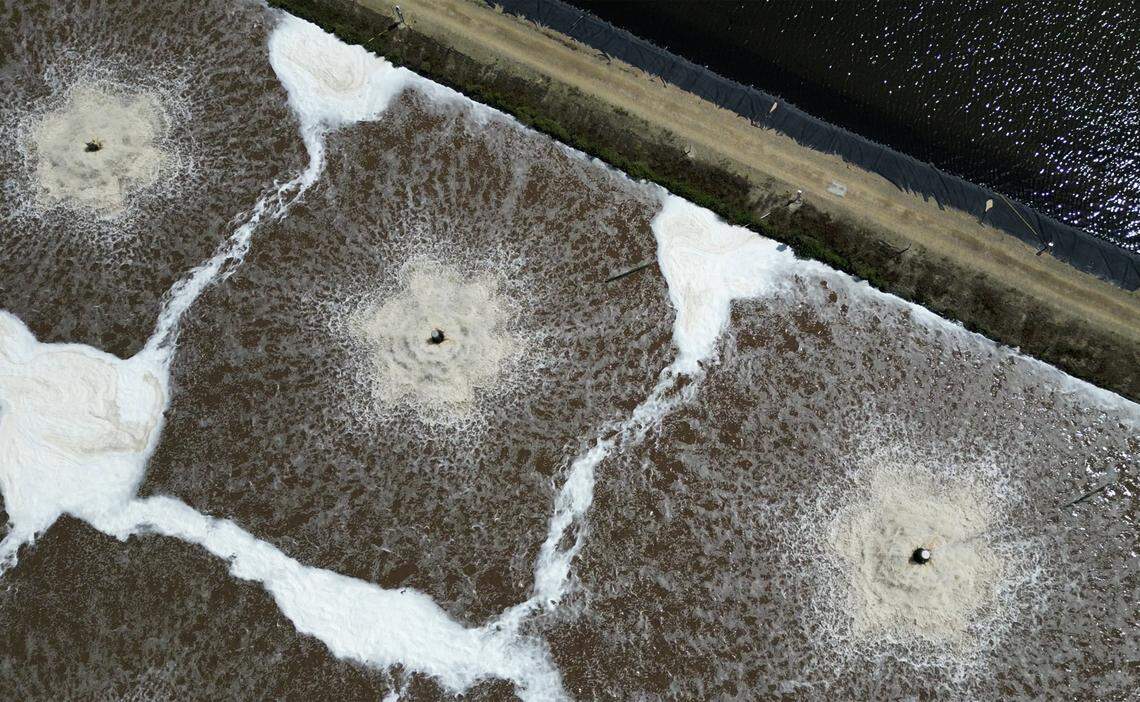
The city of Sanger operates an industrial wastewater treatment plant that can process up to 1.3 million gallons of wastewater per day. Treated sewage is used as fertilizer for surrounding fields, according to the city’s sewer system management plan.
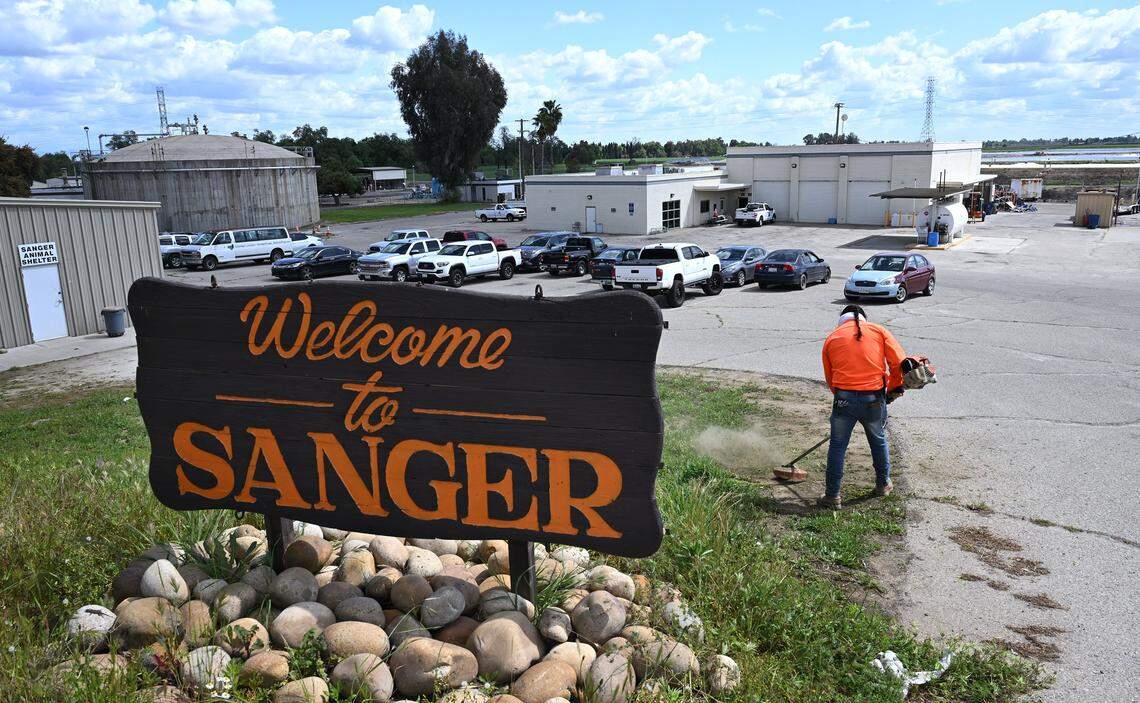
In 1999, a few years before Pitman Farms moved to town, Sanger adopted industrial discharge rules that said the city was supposed to create a pretreatment program that included “source control.” In other words, the city should have required industrial polluters to clean up their wastewater before sending it to the city’s plant.
Nearly 15 years later, “the Industrial Pretreatment Program was never implemented and is not being administered by the City,” said a 2014 report from the Central Valley Water Board.
Pitman Farms slaughters an estimated 500,000 chickens per week at the Sanger facility, according to animal rights advocates. That’s more than double the 200,000 birds processed per week in 2010, according to previous Fresno Bee reporting.
More chickens meant more dirty water.
By 2020, Pitman Farms poultry plant was producing 1.2 million gallons of wastewater per day during peak season, according to an operational statement submitted to the city. By comparison, when the processor opened in 2002, it only used an estimated 250,000 gallons per day, according to a city report.
In the mid-2010s, Pitman Farms embarked on a multi-million dollar plant expansion to meet the growing demand for its free-range, humanely-raised and organic birds.
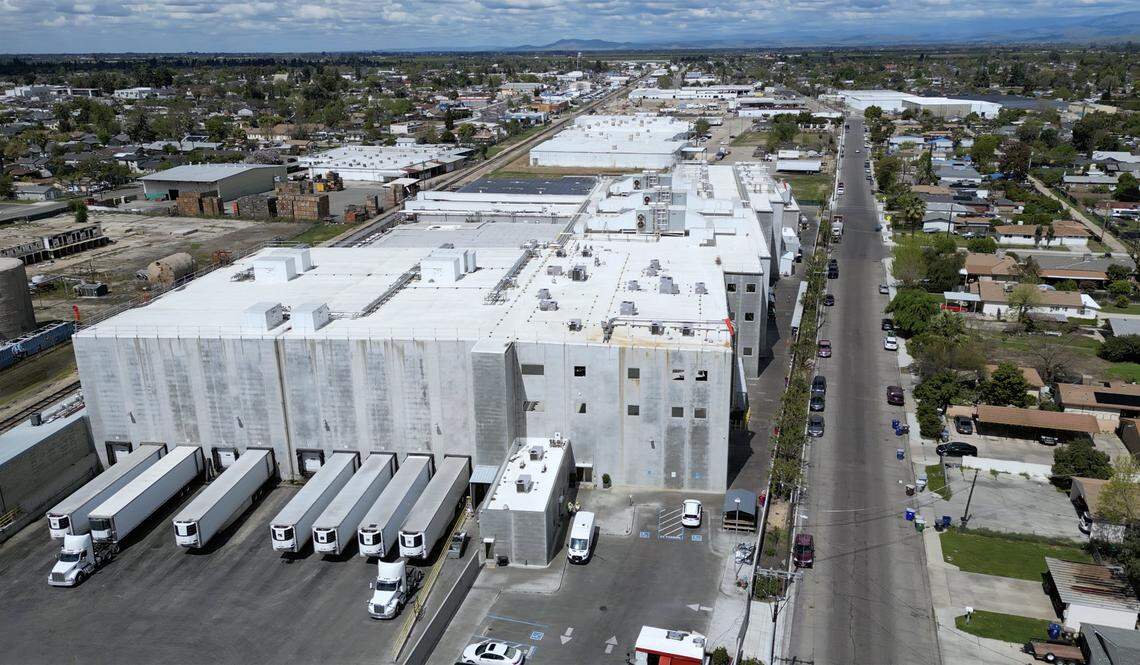
City leaders were unprepared and caught off guard by the company’s increased water use and sewage as a result of the expansion.
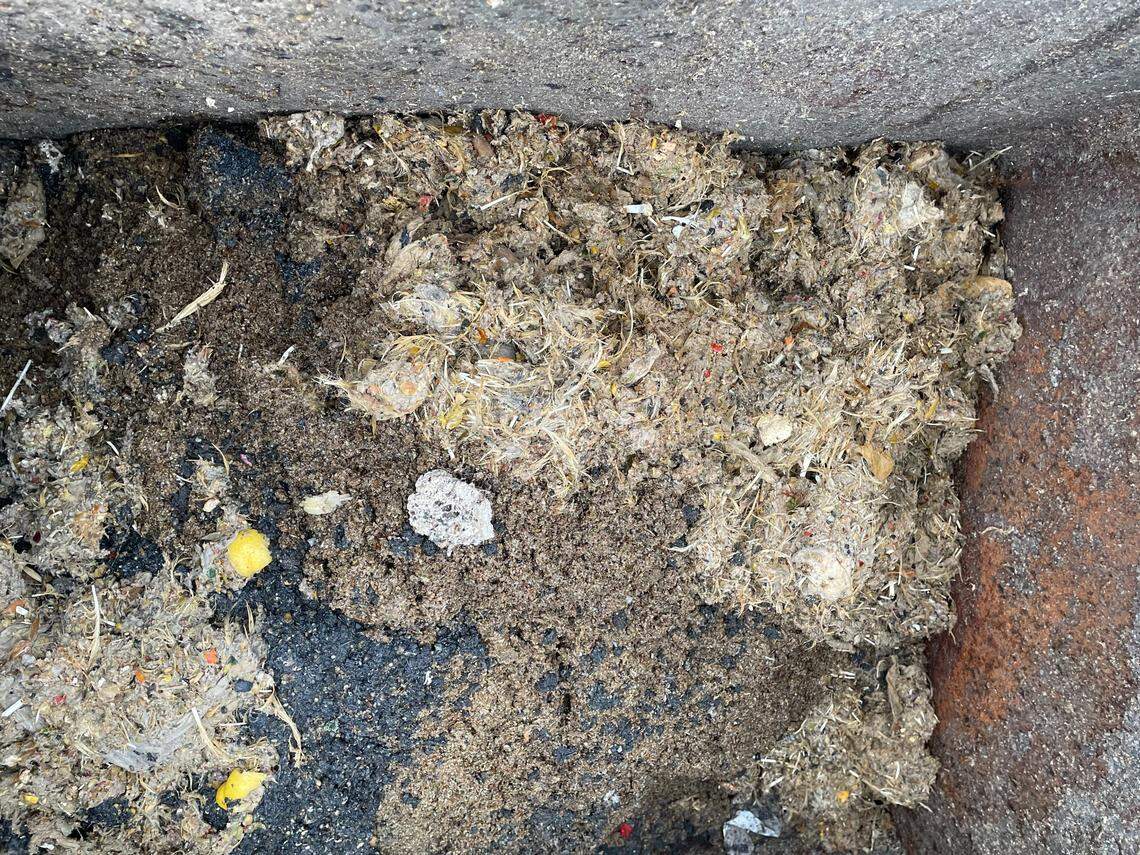
In September 2015, city staff alerted Pitman Farms staff about what appeared to be chicken parts plugging up airlift pumps at the city’s industrial treatment plant.
%20-%202015%20material.jpg "20150926_081852 (002) - 2015 material.jpg")
A few years later, on June 12, 2017, the former public works director, John Mulligan, tried to take a “team” approach with Pitman Farms when he approached the company about concerns about its wastewater. In an email to Pitman Farms CEO Richie King, he praised the Pitman plant expansion as an “amazing project” and positive boost for the community, but said the impact on the water and sewer systems had been “significant.” (When reached by phone in November 2024, Mulligan declined to comment on this story.)
“These discussions should have happened years ago prior to any expansion plans and permits,” Mulligan said. “The impacts could have been calculated and Pitman would have been held responsible to mitigate the related impacts… I feel strongly that Pitman has some opportunities to better manage both the water and waste effluent.”
In 2019, regional water regulators asked the city for an update on the industrial pretreatment program, according to a city staff report. The city never responded to this request.
In the meantime, the problem — and the smells — continued to fester.

Pitman Farms wastewater violated city regulations
City records show that, nearly every week between July 2022 through the end of January 2023, the company sent its used poultry processing water to the city with a concentration of fats, oils and grease that violated the city’s allowable limit of 100 mg/L.
On three occasions during this seven-month period, this water had more than three times the allowable limit for fats, oils and grease.
The company was only in compliance during four of the 30 weeks tested.
Silvestre Perez, Sanger’s plant manager, wrote to company officials in an Aug. 11, 2023 email that “the excessive amount of oil and grease (from Pitman Farms) is severely impacting the biology of this wastewater treatment facility.”
He again asked the company when the pretreatment equipment would be operational.
It wasn’t just fats and oils ending up in the city plant. An “excessive amount of feathers,” chicken feet and chicken heads were found in the city’s treatment plant between 2023 to 2024, according to multiple emails from city staff.
Residents started to get a whiff of the treatment plant problem when foul odors increasingly permeated the city.
The San Joaquin Valley Air Pollution Control district received 14 complaints about smell from the wastewater plant and Pitman Farms between 2016 to 2024, according to complaints obtained via record request. Most of the complaints were issued in the late summer, fall months of September and October, especially in 2022 to 2023.
City officials attempt to regulate Pitman Farms
The Sanger City Council passed an ordinance on Nov. 16, 2017 explicitly directing the public works director to implement the pretreatment program.
It was never implemented.
Former City Manager Tim Chapa was busy with another problem related to Pitman Farm’s water use.
In 2017, city staff realized the poultry plant was using hundreds of thousands of gallons of water above the permitted amount and not paying for it. Chapa spent several years negotiating a nearly $1 million settlement with Pitman Farms to recoup uncollected funds from the company for its increased water and sewage use. Chapa threatened to sue the company to get them to sign the agreement in 2020, email records show.
In exchange for a lower settlement, Pitman Farms agreed to “improve some of the discharge from the facility.” The company paid in full last fall. (Chapa declined to comment when reached by The Bee in August 2024.)
Sanger raised the city’s water and sewage rates for the first time in 15 years in July 2023, which included a nearly 300% increase on certain types of industrial discharges/pollutants. According to an April 2023 water rate study, Sanger charged significantly less to process industrial wastewater compared to nearby cities like Hanford, Fresno, Visalia, Tulare, Parlier and Reedley. Its monthly fees didn’t even cover its cost-of-service, the study found.
The study also found residents, schools and commercial business had been “subsidizing” industrial water users like Pitman Farms.
In a series of email exchanges about these increased rates on April 14, 2023, David Pitman emailed Mulligan, the former public works director, saying the company was looking into pretreatment equipment.
“This is difficult. The monthly chemical cost and cost to haul the sludge always is VERY costly,” Pitman said in an email. “However, we want to do the right thing and help the city.”
Mulligan admitted in a separate email to his boss later that day that he knew “very little about the pretreatment process.”

It was during this back and forth with the company on its pretreatment that a tragedy occurred.
On May 6, 2023, Jesus Salazar, a 66-year-old production worker, drowned in a waste pit at the company’s plant — a large swimming-pool lagoon that contained a mix of water, feathers, grease, and blood from discarded poultry parts. The pit is the company’s wastewater is separated and treated prior to being sent to the city’s municipal treatment plant, according to a Sanger Police Department report.
The death once again drew scrutiny to the company’s internal wastewater management practices, this time from another state agency.
California Department of Public Health officials said in a September 2024 fatality investigation report that Salazar likely fainted after inhaling hazardous levels of rotten egg-like odors from hydrogen sulfide while working near the stagnant wastewater. The highly flammable gas — common in meatpacking plants and in sewage operations — can cause death within minutes at high concentrations. Better safety protocols, wastewater testing and worker protective gear could have helped prevented his death.

‘A much more aggressive stance’
The smells got so bad that residents complained to regional and state authorities.
An anonymous Sanger resident complained about nuisance odors to the Central Valley Regional Water Quality Board, which conducted an investigation. The board issued a notice of violation to the city of Sanger on August 14, 2023, saying the industrial and domestic wastewater treatment plants had over 100 areas of noncompliance.
Mulligan, the former public works director, said in a Feb. 15, 2024 email that the city’s industrial pretreatment plant was “completely overwhelmed” by oils, fats and grease in Pitman’s wastewater.
In light of the scrutiny from state air and water quality regulators, Mulligan said Sanger would be taking “a much more aggressive stance on compliance enforcement.”
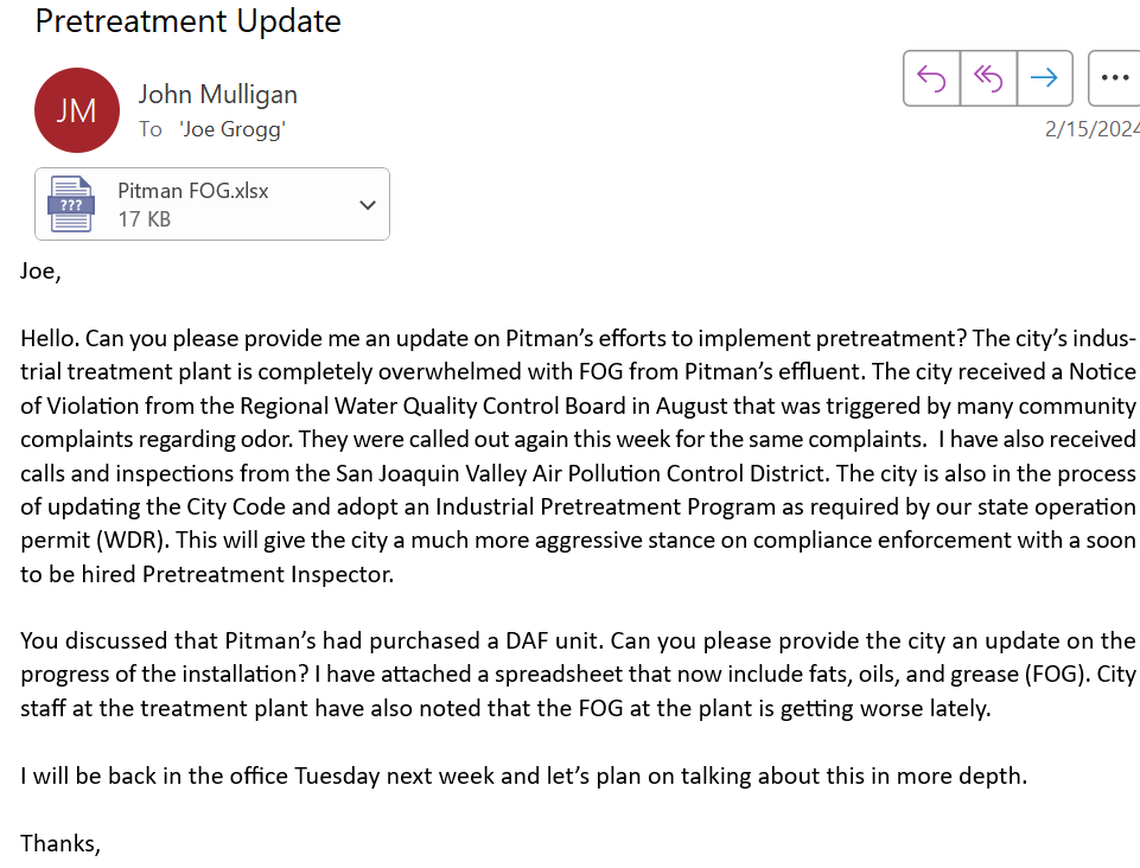
A month later, Mulligan sent another email to Pitman Farms.
“The city is no longer going to be able to accommodate Pitman Farms untreated effluent,” Mulligan told David Pitman in a March 22, 2024 email. Mulligan toured the treatment plant with a council member and Olson, then the new city manager, and said they were “very disappointed” to see the level of fats, oils, great and feather build-up at the plant.
“The odors are citywide and the city may be facing state penalties for the inability to be in compliance,” Mulligan said.
Sanger recently extended its state of emergency over the industrial wastewater plant nearly a year after the order went into effect. Repair and maintenance work is in the final stages, Olson said this week.
He estimated in April that the city had spent approximately $1 million to clean the digester used to treat wastewater, repair the “headworks,” which are part of the first screening step of a wastewater treatment process to remove solids and debris, as well as epoxy coating to line and protect the equipment.
In April, the council also approved a contract for up to $1.6 million for additional repair needs.
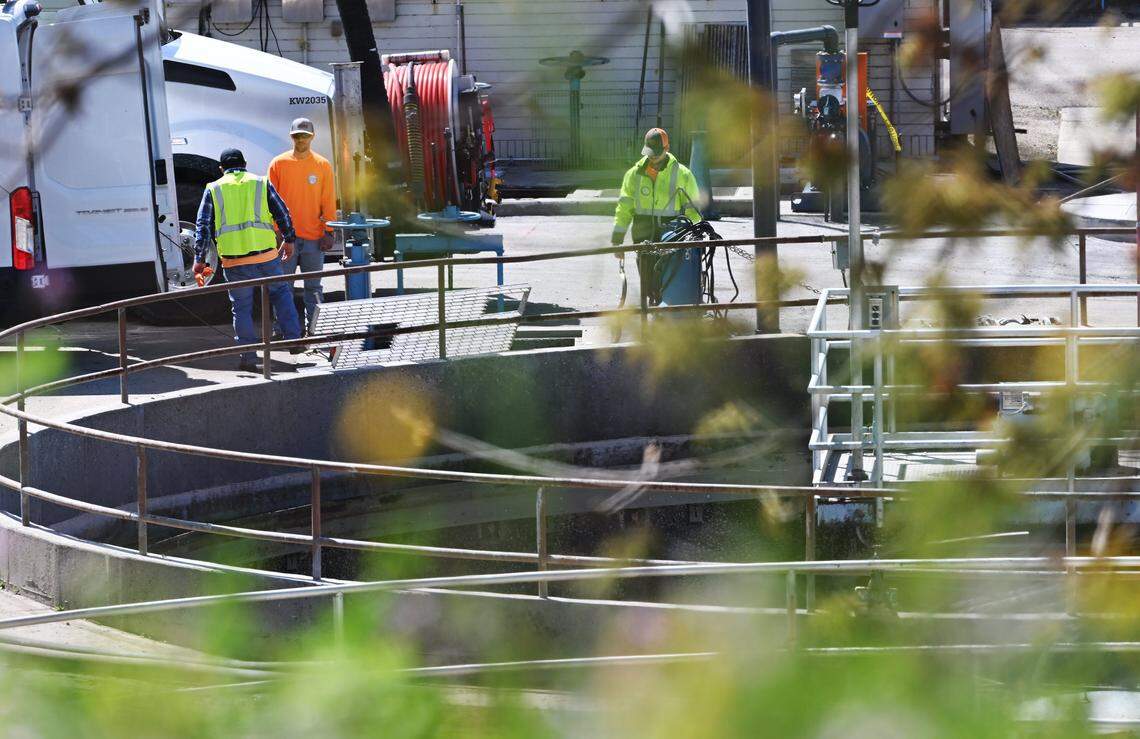
It’s not immediately clear how much taxpayers will pay on total plant repair needs.
A 2023 report prepared for the city found the industrial wastewater treatment plant needed an estimated $12 million in deferred maintenance and capital repair needs.
Olson is working with water officials and the city’s industrial companies to bring the city into compliance with the water board’s 2014 order. He said state regulators came out to inspect the wastewater treatment plant in June and were happy with the progress.
As of August, Olson said he’s “not getting any complaints about smell.”
State water officials say they’re “encouraged” by the city’s efforts.
Experts say regulators like the water board could have done more to pressure the city into action sooner, such as issuing fines.
“Regulations still need to be realistic but also enforced,” said Jason Bowman, an industrial wastewater expert with the Fluence Corp.
Bowman said the multi-billion dollar poultry industry has the money to clean its wastewater “upstream” before it becomes a problem and financial burden for small municipalities and taxpayers.
In the meantime, residents like Christina Reyes are hope the treatment plant’s foul odors don’t return.
Standing in her doorway in April, a few blocks from the poultry factory, Reyes was encouraged by the news of the city’s remediation efforts.
But she was disappointed when she learned Sanger residents like herself had long been subsidizing the city’s industrial water users.
“We were paying for it to smell,” she said.


This story was originally published August 22, 2025 at 11:59 AM with the headline "Mary’s Chicken plant sewage strained Fresno-area water system. Inaction cost residents millions."