
Fentanyl, climate change, housing: California wants to solve these issues by borrowing billions
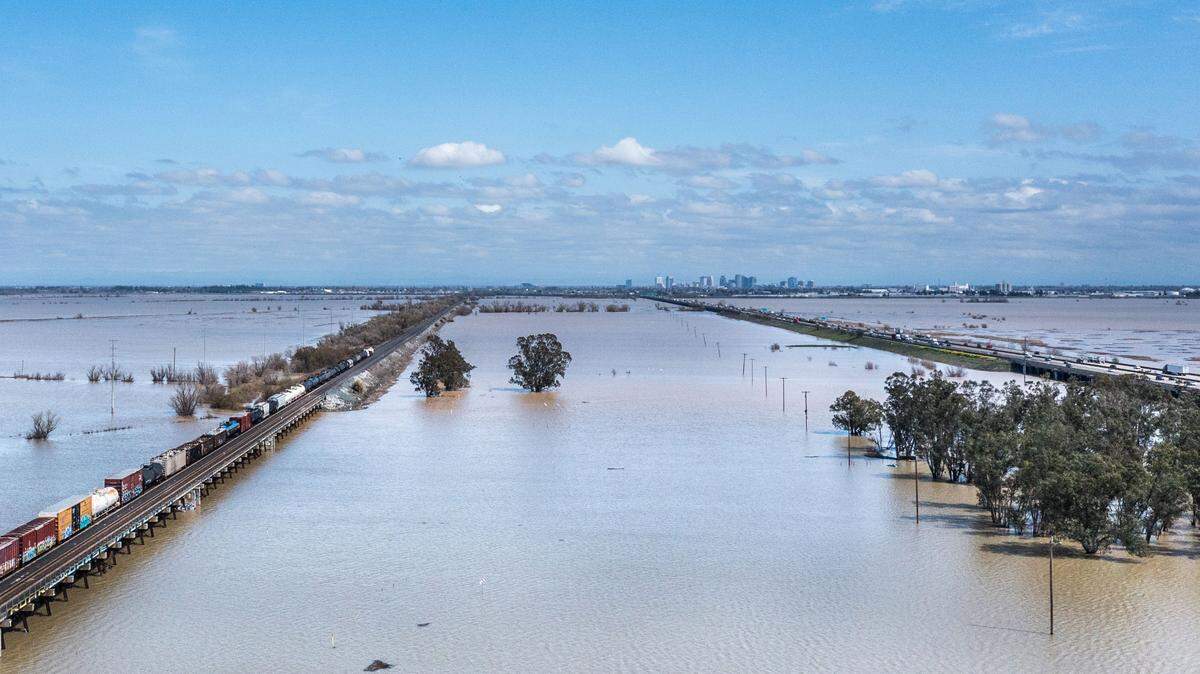
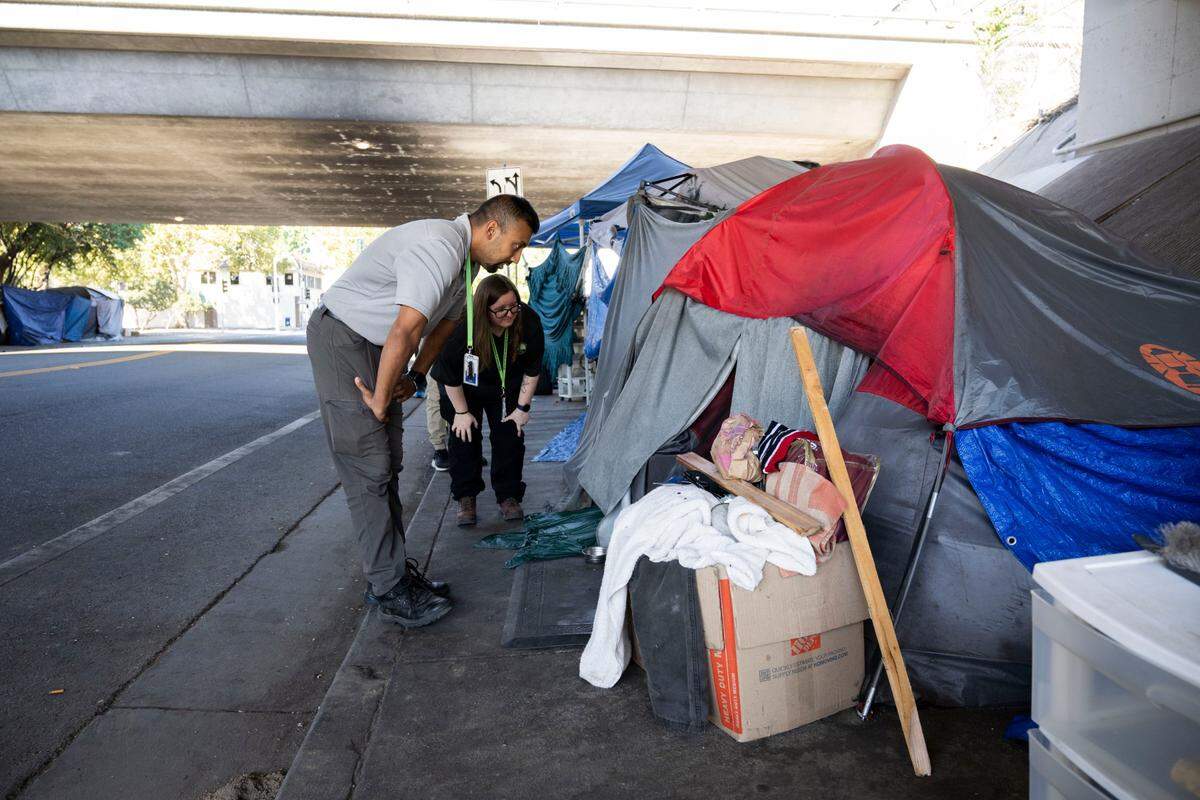
Housing for homeless residents living with mental illness. Defenses against wildfires, droughts and floods. New and renovated school campuses. Treatment centers for fentanyl users.
California voters can expect to be asked to approve billions of dollars in bonds in 2024 to help the state address a myriad of pressing issues.
Lawmakers in Sacramento have proposed about a dozen bond measures that they want on ballots in March or November of next year. They include a $4.7 billion ask for up to 10,000 new behavioral health beds, $15 billion to make the state more resilient to climate change, $14 billion to modernize school facilities, and $10 billion for affordable housing construction.
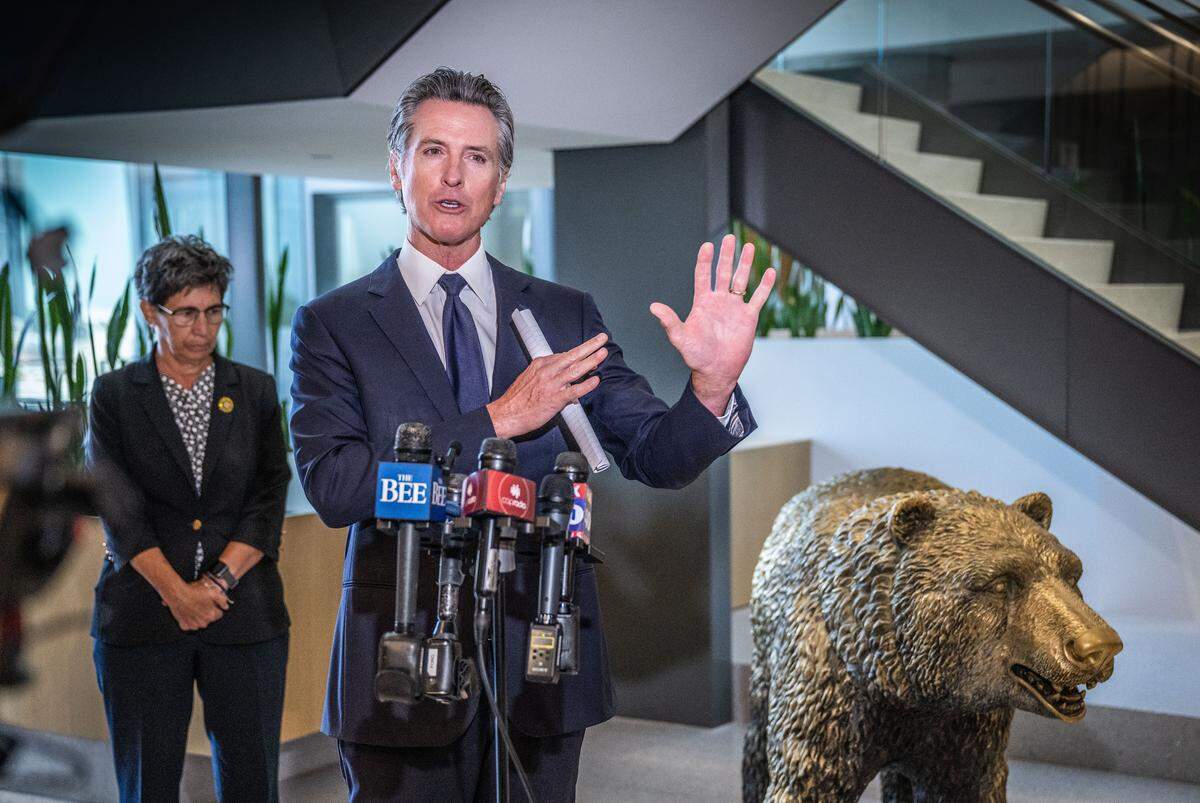
In a strategic move to boost his chances for victory, Gov. Gavin Newsom is working to secure priority on the March ballot for his proposed $4.7 billion bond to address the homeless crisis by building new behavioral health beds. But that could mean trouble for sponsors of other bonds jockeying for funds, ballot space and voter support in November.
“Passing multiple bonds on the same ballot is doable, but multiple bonds can also serve to strengthen voter skepticism and opposition arguments around fiscal concerns in ways that can prove fatal,” said Ned Wigglesworth, a longtime California ballot measure strategist.
When lawmakers return from summer recess next month, they’ll make a final push to place their proposals on an upcoming ballot. Bond measures for the March primary ballot must be approved by two-thirds of lawmakers by the end of the legislative session on Sept. 14 and then signed by Newsom. Items for the November election can be voted on until early next summer.
Newsom told reporters recently that he was working closely with Assembly Speaker Robert Rivas’ office to determine “what the priorities are going to look like for November.”
“It’s a pretty comprehensive list of ideas that are out there,” the governor said.
California bonds cover housing, education and fentanyl
There issues covered by proposed bond measures run the gamut, from mental health and homelessness to affordable housing, schools, agriculture, climate change, floods and fentanyl.
Assemblyman Reggie Jones-Sawyer, D-Los Angeles, is selling his $5.2 billion Fighting Fentanyl Bond Act as the “golden opportunity” to not only curb the use of fentanyl but also other powerful drugs like Xylazine, also known as Tranq, which could cause even more overdose deaths
“We’re poking at the problem,” Jones-Sawyer said about the opioid epidemic. “I want to go ahead and knock it out once and for all.”
Polling is underway now to help legislators and the governor determine what proposals have the best chance for success. As they analyze voter opinion around fiscal issues, some bond requests could be reduced, moved from March to November or crowded out entirely.
The state of California, like corporations and other local, state and federal governments, issues bonds as a way to raise money for certain projects. The state borrows from investors, like a loan, and usually repays with interest over anywhere from 10 to 30 years.
California doesn’t cap how much the state can borrow, but in deciding what to prioritize the Newsom administration will be weighing a number of factors. Those include voter sentiment, the state’s economic outlook and its debt service ratio — the percentage of the state’s general fund that is spent paying down its debt.
Allowing the debt service ratio to rise too high could affect the state’s bond credit rating. The state’s annual debt service from the general fund sits at $8.1 billion and is expected to grow to $8.9 billion in 2026-27, according to estimates from the California Department of Finance.
Proposals to take on more debt almost always activate anti-tax groups like the Howard Jarvis Taxpayers Association.
“I don’t think we’re getting a lot of bang for our buck for what we’re spending,” said Jon Coupal, president of the Howard Jarvis Taxpayers Association. “There comes a point at which our political leadership loses all credibility with the voters, and I think we’re at that point.”
Selling a bond measure to California voters
California voters are typically more willing to pass bonds than raise taxes as a way to fund projects. The key to a bond measure’s success, according to political consultant Gale Kaufman, is convincing voters that there is a problem and that putting more funding toward it is the best option.
“That’s where proponents have to spend their money — making sure people understand the rationale for a new bond,” Kaufman said.
Beyond voters’ opinion on a specific issue, Wigglesworth said other factors such as the voters’ trust in government and attitudes on fiscal issues could also play a role.
“Even if voters believe we need action on an issue, it doesn’t always translate into support for more funding for that issue,” he said.
A recent example was Proposition 13, a $15 billion education bond measure spearheaded by Newsom that was defeated in March 2020 by a six-point margin.
Some chalk up the measure’s failure to confusion over the fact that it shared the same name as the 1978 cap on annual property tax increases. Others say it may have been due to voters’ unease in the early days of the COVID-19 pandemic and the $15 billion price tag, making it the most expensive school bond measure ever before California voters.
Proposition 13 was the first failed school bond in more than two decades. The last to build and maintain schools was approved in 2016.
Assemblyman Al Muratsuchi, D-Torrance, said he is optimistic that “California voters will get back to what they have done” and support the $14 billion education bond measure he’s proposed for the November 2024 ballot.
Also vying for a top spot on the ballot are two leading climate bond bills — AB 1567 from Assemblyman Eduardo Garcia, D-Coachella, and SB 867 from Sen. Ben Allen, D-Redondo Beach.
Garcia, Allen and the governor’s team are working to consolidate the proposals into one measure that could become the largest environmental bond measure ever placed on a California ballot. Although the bills are both drafted for March 2024, negotiations are underway over the timing and the size of the ask.
Both bills call for $15 to $16 billion to fund projects to control floods, thin forests to prevent wildfires and plant trees in cities to help ease deal with extreme heat.
“We’ve got massive infrastructural challenges, especially around water, drought, wildfires,” Allen said. “These funds are needed ... and we’re going to craft this reasonably and we’re going to make sure we’re not borrowing too much.”
The Bee Capitol Bureau’s Lindsey Holden contributed to this story.
This story was originally published July 24, 2023 at 5:30 AM with the headline "Fentanyl, climate change, housing: California wants to solve these issues by borrowing billions."