Food benefits are decreasing for millions of Californians. Can two new proposals help?
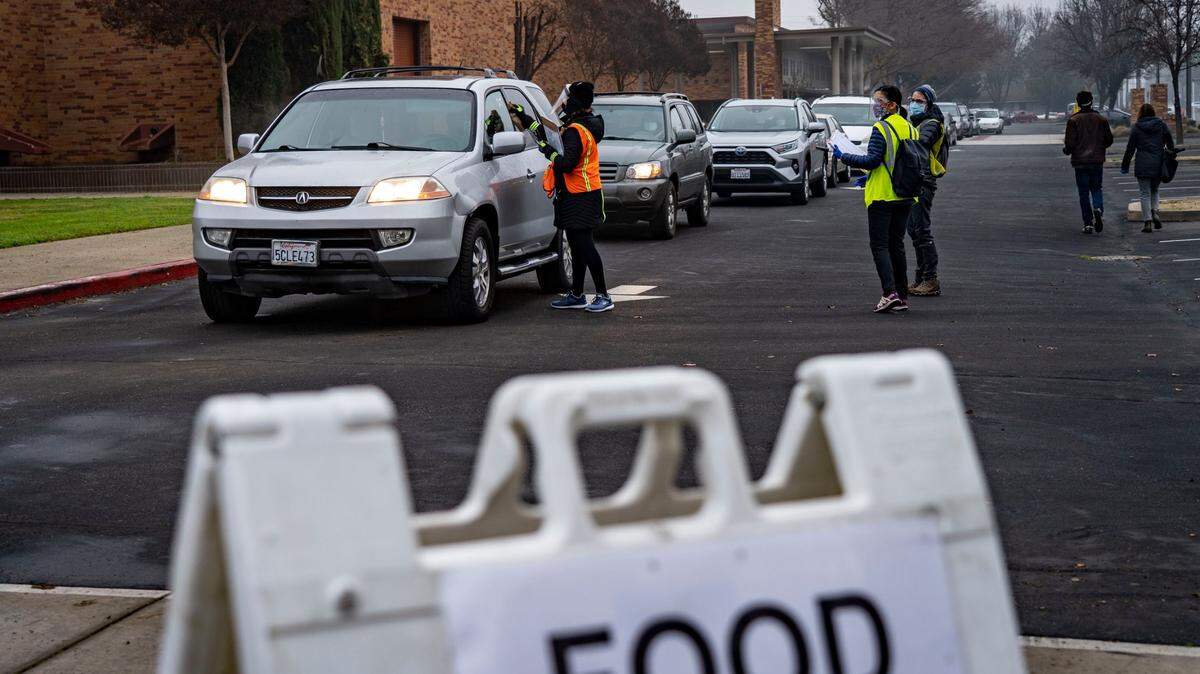
Millions of Californian households will soon stop receiving extra food assistance benefits that were granted during the COVID-19 pandemic.
The emergency allotments began in March 2020 with low-income families seeing an average increase of $262 in monthly CalFresh benefits, the state-funded version of the federal program. But relief ends this month following Congress’ decision to terminate the extra benefits.
On average, each CalFresh participant will lose about $82 a month, with some households losing more than $200, according to the California Association of Food Banks. For some people, benefits would decrease to $23 a month.
In response, California lawmakers are pushing forward bills to bolster funding and address increasing concerns of food insecurity.
“We need people to realize that these are our neighbors, grandparents, single parents with children that are going to be impacted if we don’t protect them,” said Sen. Caroline Menjivar, D-Panorama City. “This is a drastic decline that’s going to further push people into homelessness and hunger.
Menjivar has recently introduced SB 600 to raise the CalFresh minimum from $23 to $50. She said the increase would better reflect the inflated costs in California while also helping recipients who are still experiencing effects of the pandemic.
Last month, New Jersey raised its minimum monthly food benefit to $95.
If approved, the bill would require an estimated annual allocation of $95 million and begin on Jan. 1, 2024. Menjivar said the legislation is particularly important for seniors as many are on a fixed income with limited options.
Impacts on children considered
Another newly-introduced bill is also trying to address the end of the emergency allotments with a focus on children.
Sen. Nancy Skinner, D-Berkeley, has authored SB 348 to provide an additional $80 in food benefits per month to students during the summer. The bill would also limit school meals to 25 grams of added sugar per day.
“We want to do our best to eliminate food insecurity and certainly for children,” Skinner said. “In the summertime, kids are still learning and very often they’re in different kinds of programs, but your ability to learn and thrive is seriously impacted if you’re hungry.”
Skinner said the bill’s cost is still being examined.
Advocates like Nourish California say both bills are a step in the right direction to help mitigate food insecurity that will likely come from emergency allotments ending.
“It’s nothing less than a full blown crisis,” said Jared Call, a senior advocate for Nourish California.
Roughly 20% of California residents face food insecurity, according to 2021 data from Northwestern’s Institute of Policy Research.
Call said various organizations continue to “press the legislature and governor” as current proposals do not address the nearly $500 million a month that will disappear. The loss of the pandemic food benefits also means a 30% loss to the state’s food safety net.
“They’re in a really tough spot where they’re going to be forced to choose, in a lot of cases, between food and rent,” said Call.
This story was originally published March 4, 2023 at 5:00 AM with the headline "Food benefits are decreasing for millions of Californians. Can two new proposals help?."