
After years of debate, California cuts subsidies for rooftop solar
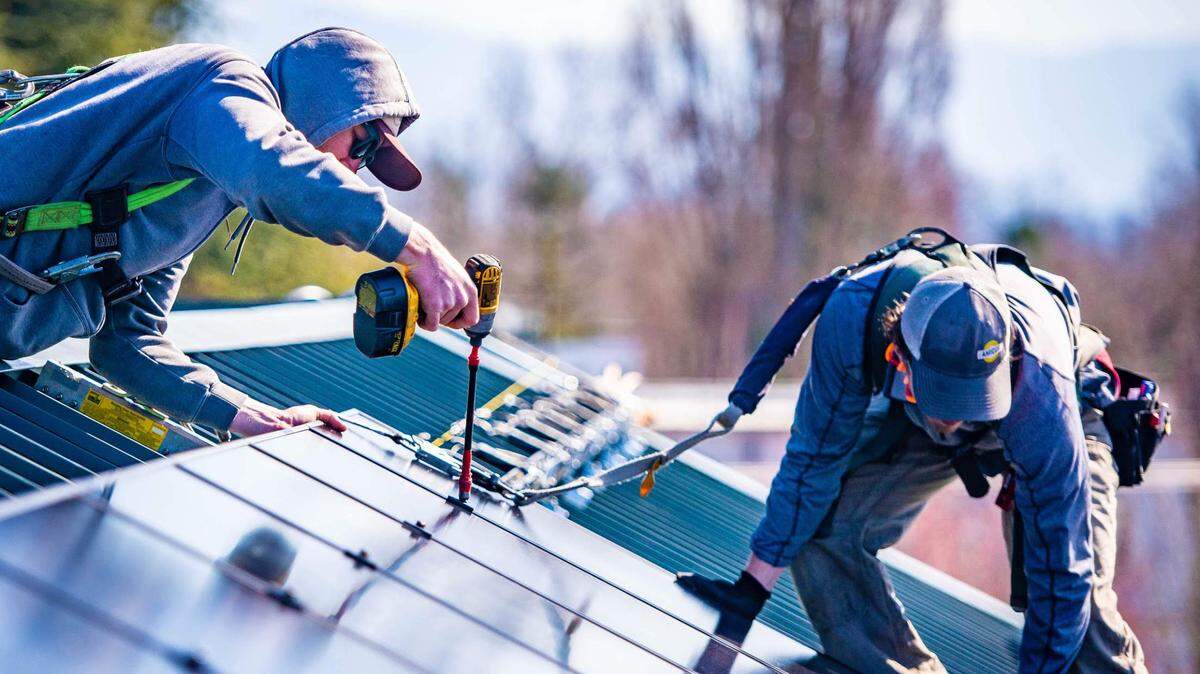
California’s utility regulator voted Thursday to significantly reduce subsidies for rooftop solar installations, sparking outrage among solar industry leaders and marking an end to a years-long battle over the scope of incentives that supported the industry’s growth.
The hotly contested rules approved by the Public Utilities Commission will lower compensation home solar owners receive from utilities for their excess energy and encourage the adoption of battery storage. The agency cited the need to support grid reliability and avoid burdening lower-income energy customers as reasons for the changes.
Known as net energy metering (NEM), the subsidies have been an incentive for homeowners and businesses to install solar panels on their rooftops. Under the program, solar customers are paid for the excess energy they generate and sell back to the grid, which eventually helps offset their initial costs of installing the system.
“California is poised to unlock the next phase of our ambitious climate change agenda, and this decision is part of that,” said CPUC president Alice Busching Reynolds. “This decision is about encouraging solar and storage but also fundamentally about the right way to charge NEM customers for use of the grid.”
The discussion comes as California pushes forward with ambitious targets for weaning the state off oil and gas. State air regulators are also set to vote Thursday on a climate roadmap that says California must quadruple its solar and wind power to achieve carbon neutrality by 2045.
Solar industry leaders lambasted the changes as counterproductive to the state’s goal of supplying the grid with 100% clean energy by 2045, and said the move could lead to a slowdown in growth of rooftop solar. The state’s largest utilities have long sought to eliminate rooftop solar subsidies.
NEM, first implemented in 1995, established a framework for California’s three largest monopoly utilities, Pacific Gas & Electric, Southern California Edison, and San Diego Gas & Electric, to buy excess solar energy from homeowners and supplement power to the grid. It helped turn the state into a solar powerhouse with more than 1.5 million systems installed today.
The new rules will reduce utility payments to homeowners by as much as 75% over five years and implement a new system for energy pricing. By paying solar users less money for their power per kilowatt-hour during the day when the sun is shining and more at night, the new program aims to incentivize battery installation to support grid reliability.
The California Solar & Storage Association estimated that the number of years it would take for a household to recoup its investment in solar would increase under the new rules, to about nine years from about 7.5 years today. That will likely affect installation rates, companies say.
Rooftop solar becoming less affordable?
California currently has an overabundance of solar power, meaning renewable energy supply exceeds demand when the sun is shining. But at night, the grid relies on gas-powered energy. The new pricing based on time of day is meant to encourage the adoption of lithium-ion batteries that can protect homes against blackouts and help the state keep the lights on during heat waves.
The changes will also require utilities to pay $900 million in new incentive payments to help purchase rooftop solar systems, with $630 million set aside for low-income households. Payment rates will fall almost immediately for nonresidential solar system owners, like businesses and schools.
The changes do not apply to homeowners with existing solar systems, who will remain on their current plans for 20 years.
Solar industry groups and clean energy advocates have fiercely opposed the commission’s proposal since it was released last month, arguing the subsidy reduction will make rooftop solar less affordable. Trade groups estimate the change means a solar system buyer would need two more years to recoup their investment, a time frame that today can range from five to seven.
Bernadette Del Chiaro, executive director of the California Solar & Storage Association, said the new rules are bound to hurt the industry and puts rooftop solar further out of reach for middle class and working class households. Battery costs have not fallen as quickly as solar panels.
“The CPUC’s final proposal is a loser for CA,” she said in a tweet Wednesday. “It puts us behind our goals and out of step with the national pro-solar agenda. The proposal is a step backwards when we really need to be moving forward with solar and battery storage.”
Rooftop solar groups launched an ad campaign in newspapers and on social media attacking California’s major utilities and asserting that the commission is doing their bidding, vying to protect monopoly utility profits from rooftop solar’s threat to their bottom line. But other clean energy advocates and experts argue strong utilities are necessary to decarbonizing the grid.
Commissioner John Reynolds, no relation to the president, responded to those concerns ahead of the vote.
“Net energy metering, for all its success, was paying more for rooftop solar exports than it would otherwise pay for a similar clean renewable electron. In other words, we were overpaying,” he said. “Some decrease after this decision is absolutely expected but will not signal the end of the industry.”
Matt Baker, director of the CPUC Public Advocates Office, said the changes contribute to a more equitable and nimble system. Under the current arrangement, utilities offset the savings solar owners receive and grid maintenance fees they avoid by increase electrical bills for other customers.
“Net energy metering is effectively funded by ratepayers that do not have solar, and the tab makes up about 10% to 20% of the average customer’s monthly bill” or a total of more than $3 billion in 2021, said Baker in a recent op-ed. “This proposal aims to create a fairer rate structure.”
Utilities make money by building infrastructure like power lines and charging customers a profit margin on their expenditures. While utility executives say they support the continued growth of both rooftop and large-scale solar farms, decarbonizing the economy depends both on investment in power lines and keeping electricity rates low — which widespread rooftop solar undermines.
Solar industry leaders do prefer the new rules to a previous proposal, which largely reflected the interests of the state’s three largest utilities. It would have imposed an $8 per kilowatt monthly fixed charge, or a “solar tax,” on new home solar owners.
Clean energy advocates aligned with the solar industry urged the commission to change course in rallies across the state last week, many of whom fundamentally oppose the monopoly investor-owned utility model of energy distribution.
A handful of environmental nonprofits including the Natural Resources Defense Council, however, have urged the state to reduce payment rates for rooftop solar power, in part because electricity from large solar farms is cheaper at a time when low electricity costs are needed to transition away from fossil fuels.
Mohit Chhabra, senior scientist at the NRDC said the CPUC’s final decision will contribute to a growing future clean large-scale distributed energy “in a robust, reliable and equitable way.”
“The final decision gives new rooftop solar owners a shorter payoff period than the original, encourages storage adoption, maintain commitments to existing solar customers, and provides significant critical funding for low-income customers to garner the benefits of solar and storage.”
This story was originally published December 15, 2022 at 3:21 PM with the headline "After years of debate, California cuts subsidies for rooftop solar."